
If you would like a printed copy of any of our back issues, then they can be purchased on Farm Marketplace. You can also download the PDFs or read online from links below.
-
How To Start Drilling For £8K
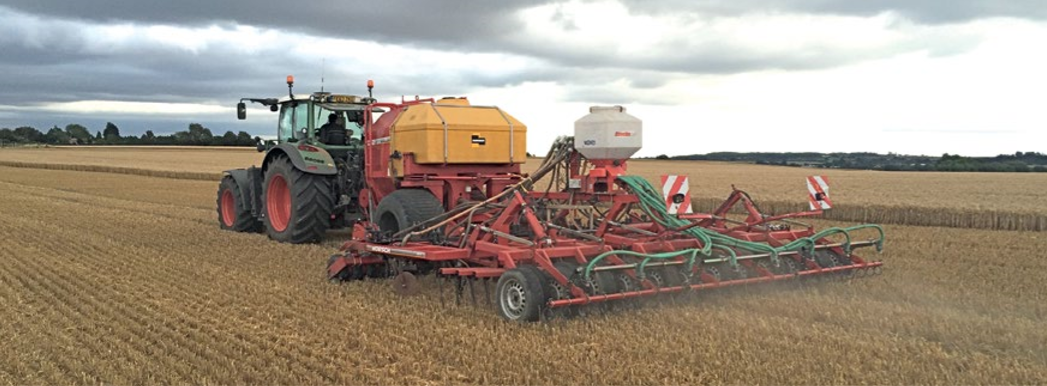
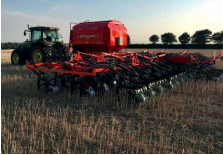
Clive Bailye’s seed drill of choice is his 6m John Deere 750A , which has been used exclusively for 3-4 seasons. Last year, with an increased acreage, the founder and publisher of this Direct Driller magazine thought a second seed drill was necessary. Having just the one machine was a risk and in a difficult season would mean drilling was delayed. He looked around and found a good condition Horsch CO6 tine drill advertised in Germany.
Words and pictures by Mike Donovan
After delivery he rebuilt the coulters to a narrow profile so as to reduce soil disturbance. He says the tine drill is very useful driling after straw crops such as osr and also through the straw on second crop cereals.
Buying the drill from a German farmer was not particularly complicated, and provided him with a higher spec machine than Horsh sell in the UK. The seed dart tyres are much wider, and the machine is fitted with blockage monitors as well as full width front packers and also a liquid fert application system.
A sheaf of photos were taken, and Clive then asked for some of specific parts to show wear. The deal was done at under £5,000 which Clive says is the market value of these machines which are too large for small farmers to buy. Original owners like to buy new and sell when the machine is still in good condition.
Narrow tines with wear tiles
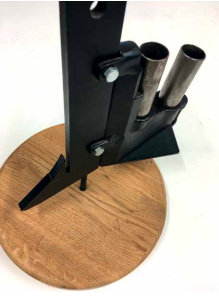
@Clive knew he wanted to make changes, substituting the Horsch tines and coulters for something far narrower, and has ended up getting his own design of tine made, which has a wear tile made from Ferobide, far harder than tungsten. The drill is on the farm primarily for osr and 2nd crop cereals drilled into chopped straw and the 25cm spacing is okay for these crops.
Comments on Clive’s on-line forum, TFF, said the drill many not be so good with beans, as the slot is a mere 12mm wide. And in barley the spacing may well be too wide as it needs to be thick. Clive points out that the seed pipe can actually be a bit wider than 12mm as it is in the shadow of the point. It would be good to have the option of using it for beans.

Above left: The cheap CO6 is being calibrated ready for its first outing

Above right: The adapted Horsch is being filled by the home built drill logistics trailer with seed and liquid starter fert.
Getting around the German instructions
The Horsch came, of course, with a control box and instructions in German. More on-line discussion revealed that English instructions were available on the Horsch website, and another explained that Horsch was sourcing some of these parts from Agton in Canada anyway. Zealman from New Zealand explained that the button marked with callipers should be held down for around 5 seconds. The menu is where you adjust the tramline sequence, valve layout and row numbers.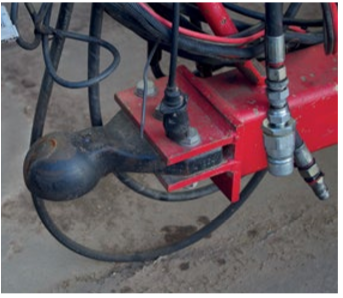
Ball hitch is a continental standard and provides a positive connection between tractor and drill

The Stocks Wizard has a rotor modified for Avadex which otherwise leaks everywhere
A Stocks Wizard is on the back of the drill and used for Avadex. Here again the knowledge of actual farmers is helpful. Alistair Nelson warned that the rotor and the surrounding shroud need to be changed, and he got good advice “from Rick at Stocks”. Clive has the same setup on the 750A and says that the Avadex leaks everywhere unless the modification is made. The drill was acquired and modified in 2016 and the results have been excellent.
The machine went through the residue without many problems and having the second drill has meant more timely planting. Clive has shown that moving into No-Till is not the expensive exercise so many farmers think it might be. The total cost, after modifications which included replacing all tines and coulters, was under £8,000.
Author Mike Donovan writes: we have featured a number of home made direct drills in @Practical Farm Ideas, and are always interested in seeing more. Please contact mike [email protected] or 07778877514.
-

A Guide To On Farm Trials From ADAS
GPS and other modern technologies, along with thorough trial protocols, can make farm trialling straightforward and routine. Decisions and innovations can then become thoroughly validated and tailored to real farming conditions.

This useful guide from ADAS outlines processes leading to successful farm-trialling and how to avoid the pitfalls. The guide covers trials conducted with ADAS Agronōmics support, trials using yield mapping technology without ADAS support, and trials where the yields are assessed by weighbridge.
Firstly – What Question are you asking?
• What decision do you want to test? E.g. rotations, cultivations, varieties, fertiliser rates, new products, application timings? Does the importance of this decision merit the effort invested in a trial?
• Most questions have been asked and many answered already. Check with an expert (or search the internet) to see what research has already been done.
• Share your plans: several farms doing the same trial and getting the same results will make the conclusions much more trustworthy and valuable. • Define the control or ‘standard’ practice with which you want your new idea to be compared.
• For any question posed, you need an answer that you can use in future. So ensure that the results will be relevant to your farm and unaffected by expected future changes on farm.
• Average farm trials can ‘prove’ grain yield differences of 0.3-0.5 t/ha. Only the very best farm trials can ‘prove’ differences as small as 0.1 t/ha. Think about what difference you expect and what imprecision you can tolerate.
Secondly – Is your Farm set up for a Trial
Fields
• Do you have fields with the right crop which are big enough, square enough and even enough?
Equipment
• How easily can you apply the different treatments that you want to test?
• How will yields be measured: using yield mapping or a weighbridge? This will affect trial design and management.
• If using yield mapping, do you know how to retrieve and process the data?
• Can you geo-locate tramlines, treatments and yields accurately? Mobile phone precision is crude (>5m). RTK gives the best GPS accuracy (<1m).
• Can you acquire other useful measures? E.g. soil maps, crop sensing, satellite imagery, or drone photos.
Attitude
• Will you be willing to put up with extra hassle at harvest?!
• If using a contractor, are they fully on board?
Designing the Trial & Choosing the Field
Split fields versus Replicated Trials
• With split fields it is difficult to tell if any effect is real, or simply due to underlying variation. At the least, test any new treatment in a block with standard on either side, then gauge the variability between standard areas to judge your confidence in the treatment effect.
• Applying treatments in replicated plots takes more effort, but allows greater confidence in the results.
Designing your trial
• There is no single ‘best design’.
• First set the plot size according to the bout widths of treatment machinery, and your attitude to hassle at harvest.
• Plots should be two or more spreader bouts wide when testing fertiliser applications by spinning disc.
• Wider plots are necessary if you want to view treatments with satellite imagery.
• Rotational or cultivation comparisons (e.g. cover crops) normally need larger plot sizes than spray treatments, and are more hassle to replicate.
• Replicate your farm standard treatment at least twice, and ideally replicate all your treatments. The more replication, the more sure you will be of your result.
• Only test the number of treatments that allows sufficient replication within the uniform area available within the field. Avoid testing more than four treatments per trial.
Design of yield-mapping trials
• Plan your harvesting procedure before you finalise your plot size and layout. Aim for at least two full harvest swaths per plot. Wider plots are best if a precise harvesting plan cannot be guaranteed.
Choosing the right field and area
• Choose a field which is big enough, square enough, and even enough.
• Choose a field with suitable soil type, previous crop, variety, etc.
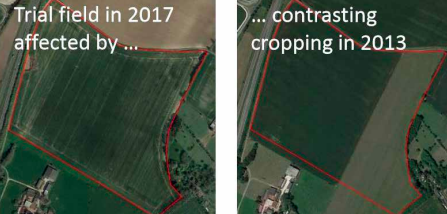
• Avoid fields and areas with recent differences in management e.g. fields previously split (see example below).
• Avoid areas with known problems of drainage or weeds (unless central to your question).
• Exclude headlands and areas which include trees, telegraph posts, etc.
• The trial area should be wide enough to accommodate the trial; using a thin field will limit the number of comparisons that can be made.
• The trial area should be long enough for sufficient yield measurements (ideally >200m) and to maximise the area over which the comparison(s) will be made.
Laying Out the Plots Fairly
Fit with prior patterns of field variation
• Note that ‘natural’ within-field variation in yield will almost always exceed the expected effects of your treatments, so you need to locate your plots very carefully to be as fair as possible.
• Inspect available satellite images (e.g. on Google Earth) and past maps of yield, soil conductivity, nutrients and NDVI, if available.
• If there is obvious variation, arrange the treatment areas so that comparisons will be fair. Ideally any patterns of variation should run across the tramlines, so that variation is not confounded with the treatments.
• Where the likely pattern of yield variability will run at rightangles to your treatments this can be an advantage, as you can see the effect of the treatment across different conditions e.g. soil zones.
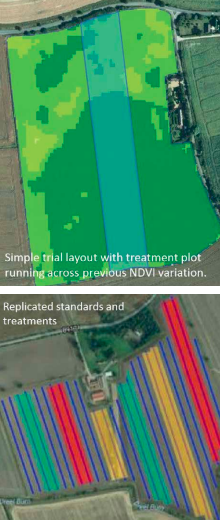
Allocate treatments to plots
• Statisticians prefer treatments to be allocated to plots randomly, within blocks of replicates. This is especially important if there is a spatial trend across the treatment lengths.
• There can however be advantages in systematic designs, not least simplicity. We prefer to alternate the standard treatment with the test treatments as above, so that a good estimate of spatial variation can be made, and good comparisons can be made with the standard.
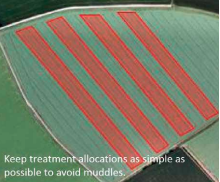
Applying and Recording the Treatments
Mark and record trial and treatment locations unambiguously
• Make a proper record of which treatments were placed where, ideally using mapping software/ apps, or at least using a sketch on a field map.
• It is also worth marking the locations of the plots in the field using canes or flags.
• Tell all those that might be carrying out field operations about the trial and its requirements.
GPS for yield-mapping trials
• To accurately analyse yield mapping data, GPS positions of plots are essential for yield data to be correctly assigned to treatments.
• Your tramline and treatment locations may be recorded accurately on your tractor, but this is often difficult to extract and share.
• Record the GPS co-ordinates of the centre of the tramlines for all the treatment plots where they meet the headlands at both ends of the field.
• Ideally use a proper GPS device with a correction signal (e.g. RTK or EGNOS) as the accuracy of smart phones and sat navs is typically poor (>5m). GPS locations can be displayed in various websites and apps, including http:// gridreferencefinder.com/
Apply the treatments
• Equipment being used for applying treatments should be calibrated.
• When applying treatments, it is important that only the thing of interest is changed so that you can understand what is having an effect on yield. For example, if you are testing a spray, ensure that the different standard and test treatments are applied within a short time of each other and at the same water volume and pressure.
• Apply all other inputs uniformly over the whole field, so that the comparison of your chosen treatment with the standard is not confounded. It is usually best to avoid variable rate fertiliser applications over the trial area.
Crop Protection
Make explanatory measurements
• Depending on your question, it will usually be worth making some explanatory measures (e.g. of disease or by sampling for nutrient analysis).
• The more measurements you take, the more confidence you are likely to have in the outcome of the comparison you are making.
• Point measurements should be in adjacent positions along the length of each plot, georeferenced if possible.
• Effects ‘to a line’ coinciding with the boundary of a treatment can be particularly convincing. Take photos of any visual effects you can see.
• If you are able, it is often worth getting aerial imagery from a drone or plane.
• It is possible to acquire satellite imagery, though free imagery at 20m resolution is unlikely to show treatment differences unless plots are quite wide.
• Spatially referenced measurements (such as drone images) can be analysed statistically to gauge how much confidence you can place in any comparison.
• Keep a dated record of any visual effects of the treatment, or any spatial differences that could affect the results.
Plan for harvest
• Good harvesting is critical for trials whether you are comparing treatments using yield mapping, weighbridge or a yield monitor. Your optimal strategy will depend on the relative widths of plots and combine header, your willingness to harvest discard areas separately, and harvest logistics, e.g. the need to unload on the move.
• Key factors for success are accurate harvester calibration, ensuring full header widths, not cutting across treatment boundaries, and maintaining consistency between plots. Harvest the whole field with the same combine on the same day.
• Yield mapping gives the best confidence that treatments differences are real rather than from spatial variation.
• Using a weighbridge gives accurate weights, but you need accurate measures of the area to get good yields
• Simply using the combine monitor for separate plots can give instant answers, but will be affected by measuring the area in non-full swaths, start and ends of combine runs and shortwork.
Harvesting – Harvesting your trial
• Harvest the headlands first
• Aim to be as consistent as possible between plots. Inclusion of wheelings in the combine swath can depress reported yield by around 0.5 t/ha.
• If not using yield mapping, you must avoid cutting across the treatment boundary in your yield area. If yield mapping, this data will need to be removed from treatment comparisons.
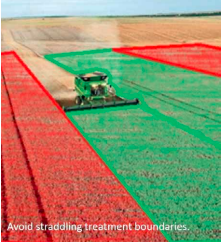
Harvest of yield-mapping trials
• Calibrate the yield monitor according to the manufacturer’s instructions. Ideally test the yield monitor against harvested grain weights over a weighbridge.
• Keep to a constant speed and try to harvest the whole trial under the same conditions and on the same day.
• Harvest in line with the tramlines.
• Keep the combine header full wherever possible, and aim to cut at least two full header widths per plot. A cut with standing crop on either side of the dividers will be fuller than cuts with an edge or wheeling to one side, even though the widths may be assumed to be the same. For example, a 30cm difference in actual swath width on a 10m header can give a 3% difference in calculated yield, around 0.3 t/ha.
• Combine direction can also affect measured yield, especially on slopes or in lodged crops. Extract yield data promptly
• Each combine system is different in the types of files used to store data and how these can be transferred and viewed.
• However, most yield data can readily be imported into farm management software such as Gatekeeper. The data are then relatively easy to export for comparison and analysis.
Keep good records
• Record how you harvested the trial, the time and date, and describe any problems.
• Take grain samples from each plot if appropriate, e.g. for grain protein analysis.
Harvest of weighbridge trials
• Accurate measurement of the harvested areas of each plot is essential for accurate calculation of yield. It is best to compare equal lengths of runs of a known harvested width (e.g. two combine runs per plot). Use good quality GPS tools or a measuring wheel to measure the length.
• If weighing grain from different areas of the field, remember that irregular areas are difficult to measure accurately and may compromise your results.
• If measuring harvested area with the combine yield monitor, avoid non-full headers and adjust width as necessary.
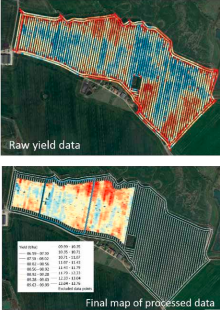
Analysing Yield Mapping Results
Sort out and clean the data
• Remove data from headlands and any values that are clearly aberrant. Various filters are available to remove data where the combine has stopped or changed direction. Also remove data from combine runs that straddled two treatments, or where the header was not full, even if the software has adjusted for width (sometimes an overcorrection is applied).
• Assign the yield data to treatment plots and calculate the mean of the cleaned data for each plot.
• Unfortunately, analysing yield map data from trials is not straightforward in many farm software packages. As an alternative, you can try QGIS mapping software, available free from www.QGIS.org.
Assess treatment effects
• Treatment differences will rarely be visually obvious from the yield maps
• Look at the spatial variation in the field and judge whether this was likely to have affected the comparisons.
• Variation in yields of standard plots can indicate whether treatment differences are real. Any treatment effect needs to be bigger than the difference between standard plots.
• If your treatments were associated with different input costs, you can calculate a gross margin for each plot.
• Remember that an absence of evidence of a treatment effect is not evidence of absence – it may be that your trial was not precise enough to detect the effect.
Drawing Conclusions – Check to avoid false conclusions
• Remember that inherent spatial variation in fields is normally larger than any treatment effect you may have imposed.
• Double-check that yields were assigned to their rightful treatments.
• Was the yield map similar to previous yield map(s) without treatments?
• Some spatial variation is inevitable, but this must be assessed and compared to gauge how sure you can be that a yield difference was really a treatment effect.
• How well did yields of replicates agree? • Consider the counterfactuals and any possible confounding factors.
• Spatial data from other sources, including in-season images and monitoring, should be used with the trial yield data to gauge how likely it is that treatment effects are real.
Share and discuss your conclusions
• If possible, compare your results with those of others. The same trial conducted on another farm or in the subsequent season can build further confidence in the results.
ADAS’ Agronōmics service
ADAS has d e v e l o p e d a process, software and new statistical p r o c e d u r e s so those c o n d u c t i n g farm trials can reach the right c o n c l u s i o n s quickly and easily. This includes;
Geoprocessing to define harvest d i r e c t i o n s , combine runs and distances.
Assignation of data to t r a m l i n e s , treatments and headland areas.
Data cleaning and processing to remove e x t r e m e outliers and anomalous runs, filter data anomalies, and correct for any offset between opposing harvest runs.
Spatial analysis to model spatial variation both related and unrelated to treatments, estimating the average treatment effect(s) and their uncertainties.
Reporting, displaying yields as maps with a standardised colour key and providing clear conclusions.
Meta-analysis of trial series.
For further information, and queries about analysing farm trial data using ADAS’s Agronōmics service, contact [email protected]
This guide was been prepared by ADAS’s Agronōmics team including Daniel Kindred, Sarah Clarke, Susie Roques, Damian Hatley, Pete Berry and Roger Sylvester-Bradley and they can be contacted on +44 (0) 333 142950
-

Drill Manufacturers In Focus…
DALE DRILLS – MEIR AGRICULTURAL

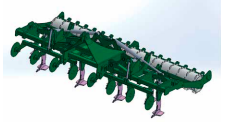
LAMMA 2019 will see the launch of a new low disturbance Soil Conditioner developed by the team at Dale Drills. As a non-drilling piece of equipment, the Dale’s decided to launch the product under a new brand, Meir Agricultural, named after owners Tom and James Dale’s late maternal Grandfather, Thomas Meir, who worked as an engineer in Teeside in his youth, before taking on the challenge of farming on the plains of Manitoba, Canada in his later years.
The Meir SC has been designed to complement reduced tillage strategies, such as those employed on the Dale’s own farm. ‘Much of the soil we farm is not naturally self-structuring,’ explains Tom Dale. ‘Consequently, it is often a requirement to assist nature to provide optimum drainage through the soil, even in a well maintained soil structure.’ Having tried many other combinations of subsoiler frames and legs, the Dale’s decided that exactly what they wanted didn’t exist. ‘We were looking for a reduced surface disturbance, whilst ensuring effective soil loosening through various depths and conditions as well as maintaining a firm finish. Most legs caused excessive surface boiling, whilst many frames positioned legs in ways that prevented effective loosening.’
The Meir’s Hardox leg leads are fitted with a 25 mm wide tungsten point at a shallow angle to reduce surface boil. The wing is 140 mm back from the leading tip, this allows the wing to run in a zone of fractured soil, reducing wear and improving loosening. A shallow angle on the wing further reduces potential disturbance in the seeding zone whilst still ensuring an effective loosening in the compacted area below.
Dale Drills – Have it your way
Dale Drills’ award winning range of Eco drills now comes in 4 different layouts each suitable for a different size farm. The tractor mounted Eco-S comes in widths from 3 – 5m and can be fitted with a drill mounted or front mounted hopper. The Eco-M has seen significant interest since its launch at Cereals 2015 and represents the mid-sized offering available in sizes from 3 – 9m. The M utilises a more orthodox layout than their larger machines with land wheels positioned between the 1st and 2nd row of tines whilst the seed hopper is mounted towards the front of the drill to ensure an even distribution of weight.
The Eco-L is designed for high output drilling and is available in sizes from 6 – 9m. With the seed hopper mounted at the rear of the drill and designed to be wide enough to be filled straight from the average forklift bucket, the company say outputs of up to 200ac/day can be achieved with a 9m drill. The new Eco-XL was launched at Cereals 18. The improved layout boasts a stretched chassis with a 6.5 tonne hopper upfront, this allows for an uncluttered folding area with widths up to 13.5 meters achievable. Seed delivery is by a pressurised system ensuring both seed and fertiliser can be easily be blown out to the drill extremities. The XL is available in sizes from 8 – 13.5m and is able to fold down to less than 3m wide and 4m high using a 5 section chassis. Sales since Cereals 18 have seen over 40 meters of drill sold in this range.
Additional Options
The versatility of the Eco range doesn’t stop at the layout. The drills come as standard with an adjustable row spacing of 12.5 or 25cm, and 50cm as an optional extra. ‘Drilling at 12.5cm allows farmers to increase competition, whilst 25cm reduces disturbance, so the drill can be set to match your preference’, said Director James Dale. A cover crop cutting disc has also been developed over the last 18 months which improves residue flow through the drill, particularly in green covers by cutting a path for the tine to follow. ‘The drill ‘sails’ through thick green cover crops when the cutting disc is fitted, and the tine ensures seed is placed into clean soil. The added benefit of reduced disturbance certainly helps in the battle with blackgrass’, added Mr. Dale.
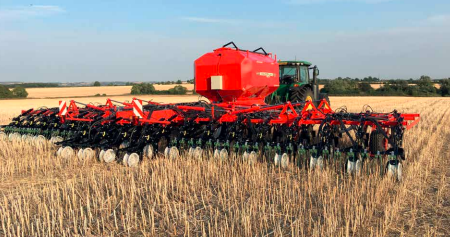
A banded coulter has also been developed which fits straight onto the back of the existing seed knife. Seed can be banded to almost 100mm and fertiliser (either liquid or granular) can be applied down the centre of each band and to a slightly greater depth. The coulter is made from hardened steel and is fitted with tungsten carbide plates to improve durability.
Dale Drills will be showing their extensive range in Hall 20 Stand 20.76 at LAMMA 2019.
-
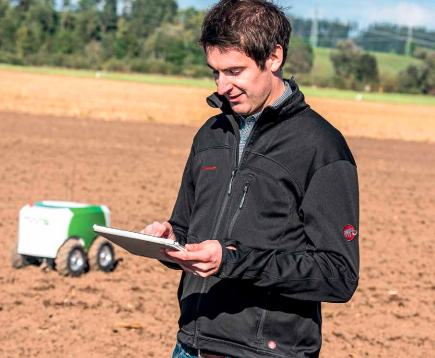
XAVER: Robot System For Planting And Accurate Documentation
After successfully completing the multi-year research project MARS (Mobile Agricultural Robot Swarms) in collaboration with the Ulm University of Applied Sciences and the EU research funding, AGCO and Fendt decided to develop the robot project up to series-production readiness for the Fendt brand.
The entire system, including small robots operating in swarms and a cloud-based system control will now be operated under the product name ‘XAVER’. ‘Xaver’ is a traditional Bavarian name with deep roots at Fendt. In the 1930s, the brothers Hermann and Xaver Fendt founded ‘Maschinen- und Schlepperfabrik Xaver Fendt & Co.’, named after their grandfather Xaver Fendt. Regarding the new robots the name ‘Xaver’ incorporates tradition and the latest agricultural technologies.
Fendt’s new Xaver system uses small robot units operating in swarms and a cloud solution to plan, monitor and accurately document the precise planting of corn. Satellite and data management in the cloud allows navigation around the clock operations, with permanent access to all data. The exact position and sowing time of each seed is accurately recorded. Knowing exactly where the seed has been planted opens up new potential for further processes, since subsequent operations such as crop protecting or fertilising, can be performed precisely at the individual plant. Planning for the required field, for seeds, seed patterns and -density is carried out via the Xaver app.
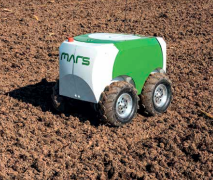
The intelligent OptiVisor algorithm plans the robot’s deployment based on the entered parameters, and calculates the optimal paths for the units involved and the time required for completion of the job. Software updates for the system can be downloaded “over the air”, just as a remote diagnostic can be run conveniently and locationindependt via the smart device.
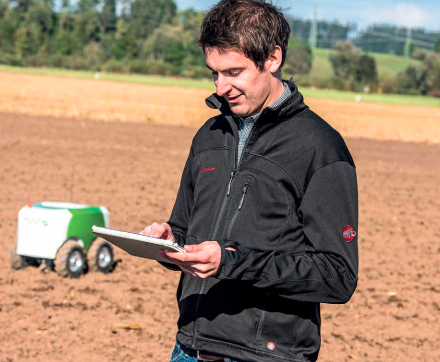
Intelligent fleet management
A key element of the Xaver project is the intelligent management of the deployed robots. For example, a Fendt robot system consists of 6–12 units, and can therefore attain an area coverage of around 1 ha/h. Each robot is in constant communication with the control intelligence. Data buffering and redundant communication help covering breaks in the network coverage. If a robot malfunctions, the paths of all units are automatically reoptimised, and the remaining robots take care of the work. Additionally, a mixed variety of crops can be planted in the field, since each robot can be filled with different seeds.
Resource efficiency and soil protection
Thanks to the battery-operated, electrical motor (approx. 400 W), the low weight (approx. 50 kg), and the autonomous operation, planting can continue round the clock, 7 days a week, even in conditions which conventional machines find difficult, e.g. due to the state of the ground or noise emissions. This increases the productivity and flexibility of the system. In relation to the large tyres, the ground pressure is almost negligible (approx. 200 g/cm²).

The robots need around 70% less energy to do the same work, and accordingly produce less CO2 when doing it. Since neither diesel nor oil is required to operate the robots, there is no leakage and there are no local emissions.
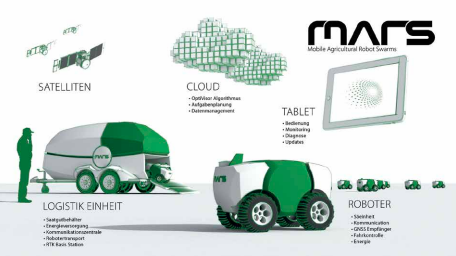
The robots are easy to mechanically assemble, do not use complex sensors, and are therefore highly robust. Their small size and light weight make maintenance easier, and means that the system is intrinsically safe.
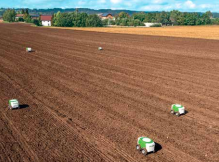
If you were at Agritechnica in 2017 then you will have seen the XAVER robots up close and the static demonstrations. For innovative farmers focusing on precision farming they are certainly of interest. Lets hope that more is unveiled at Agritechnica 2019 with regard to when we will actually see this technology on farm, but it certainly sounds interesting and not that far away.
-
Events In Focus Overbury Estate
Mike Donovan writes…
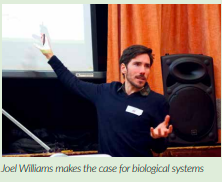
Joel Williams is a familiar face to many with an interest in soil health and biology, and first spoke to a UK farming audience in 2010. The Australian plant and soil health educator has a global audience and Direct Driller magazine caught him at the Overbury Estate in Worcestershire where he joined the estate manager and no-till enthusiast Jake Freestone and also Simon Cowell, a long term no-tiller who farms heavy land in Essex who was voted Soil Farmer of the Year 2018. The day provided a mass of information both in the field and from the podium for farmers thinking of transitioning to no-till as well as others who have already made the change. The event was superbly organised by QLF, quality liquid feeds, who have developed the foliar product Boost which is used by both featured farmers.
Joel provides workshops and consultation on soil management, plant nutrition and integrated approaches of sustainable food production as well as giving soil-based talks for farmers, advisors and others. At university he specialised in plant and soil dynamics and he has a particular interest in managing soil microbial ecology along with crop & soil nutrition to optimise plant immunity, soil function and soil carbon sequestration.
In the last few years he has been working in the UK and Europe with both conventional and organic farming systems, integrating soil chemical & biological assessments and in addition integrating plant nutritional analyses as a joined-up strategy for managing crop production. In the UK he was a headline presenter at the 2018 Groundswell Show in Herts and in the year did two presentations in Herefordshire and others in Sussex and Derbyshire, Haddington and Perthshire in Scotland, Northumberland , Shropshire and Tullamore, Ireland. He has enthusiastic audiences in Australia, UK, Ireland, Netherlands, Latvia, South Africa, Kenya, Canada and the US.
At the podium Joel is a convincing speaker who talks with his hands, while in the field he is often in the bottom of a soil pit explaining what is revealed to an audience around the edge. Soil, its use and misuse, is his passion but the MSc he is currently doing in Canada is in the wider area of Food Policy, illustrating his belief in the need to acquire a wide knowledge of the whole business of food supply. Joel has a wide understanding of the issues surrounding soil, the way farmers use it its biology and science.
The breadth of knowledge means that he has a suite of soil subjects within his expertise. “We live in exciting times in farming, as the industrial, ecological and agrarian factors of farming overlap to produce production systems, and the question of ecology is introduced at any part of the spectrum.” The third is ecology which is described by diversity conservation and the ecosystem. This is the leg which Joel considers most neglected. While the industrial or conventional farming contributes to the deterioration of soil components, including water quality and sustainability, the agrarian system relies on natural processes. Joel spends time exploring the area between the two, proposing farmers maximise the use of the natural processes which the farmer can harness to substitute for a proportion of artificial inputs.
Plant nutrient sources and supply
There are two basic sources: chemical and natural. Soil health is the provider of natural sources of nutrients, so the farmer who understands the mechanism of soil will have the tools to stimulate natural organisms that improve nutrient production. Soil health equals plant health and vice versa. Plants absorb nutrients fast, foliar feed getting to the roots in about an hour. Farmers using foliar products are advised to spray in the early morning for best take up.
Joel explains that the UK, along with many other countries, has a history of over-application of nutrients, and says this is due to a focus on N, P and K and a disregard micro-nutrients and a casual interest trace elements. He explains that all components are needed if the soil’s potential is to be made available for the crops being grown. Smaller quantities of micro-nutrients may be needed, but their importance is equal to other elements. Healthy soil with adequate supplies of Mo, Fe, Ni and Co are able to feed healthy bacteria that are able to sequester N from the air as well as creating the right growing conditions for N fixing legumes and clovers. The science applies to all plants, and he stressed the importance of molybdenum.
Tissue tests can mislead. Testing for total N doesn’t reveal levels of amino acid and the tests can show an N deficiency when the actual problem is in the trace and micro elements. Adding N from the bag will be far less efficient Soil biology is combined with soil physics and soil chemistry in creating a productive medium for crop growth, and Joel underlines the importance of all three, and explains that each has an influence on the other two. Chemical changes affect the physical structure as well as the biological activities; physical changes like compaction affect the biology and the chemistry… Joel focusses on soil biology because it is less well understood than the others.
Most are aware of the huge number of living organisms, from the primitive algae which are the first form of life, to bacteria and fungi, protozoa (the single-celled microscopic animals, which include amoebas, flagellates, ciliates, sporozoans, and many other forms); nematodes; arthropods which include spiders and other invertebrate insects; other insects like centipedes and others; and earthworms. Soil carries billions of organisms which work together in what is called the soil food web, where carbon is the common denominator. Bacteria and fungi break down the organic matter by feeding on it and incorporate it into their biomass.
Up the chain and the critters are feeding on organic carbon and excreting it, breaking it down. At the top of the chain are creatures which eat each other producing dung for bacteria and fungi to enjoy. Mycorrhizal fungi is of major importance for plants as they are attached to the roots and contribute to plant development by being fed the sugars and carbohydrates which are the product of photosynthesis and in return feeding the roots mineral and organic nutrients needed for plant growth. Mycorrhizal fungi exist in nearly all soils and provide a secondary root system for the plant, a wider and efficient network attached to the plant’s roots with spreading spidery arms extending beyond the plant roots. These fungi can increase the plants access to soil volume from ten to a thousand percent, and so increasing water absorption, plant size and production.
Further up the chain the protozoa
Nematodes are well know to farmers and growers. Root feeding ones feed on the sugars from roots having first punctured the root with a stylus. Beneficial ones scoop up bacteria and feed on it, others feed on fungi having a straw like structure,and others again that feed on other nematodes. Each process excretes waste products which are then available to the the plants. The process creates nutrients which can be measured and analysed. Some nutrients are highly soluble and almost instantly available to the plant once connected to the root structure. Less available are the exchangeable nutrients which will take a short time to become available.
The third category, the insoluble ones, can move down the soil strata and will, in time, change their nature and become available. When a soil test shows a deficiency of soluble nutrient the temptation to add more from the bag is compelling, but in reality the soil may well have enough nutrient, but lack the means of accessing it. More biological activity would bring the nutrients above the root zone and closer to the surface to allocation where they can be used.
Farm tour of Overbury
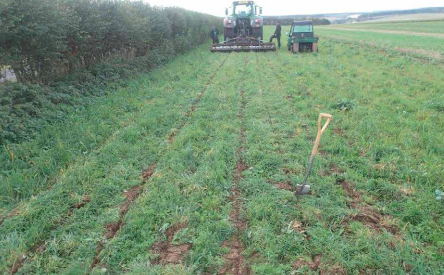
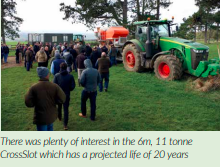
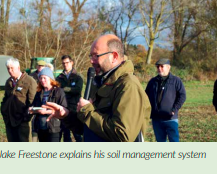
The group of 90 toured the higher land at Overbury and Jake Freestone explained that the management moved towards no-till in 2003 and has since taken up cover cropping and companion planting. The first field we saw has been no-till since 2012 and undressed Cruse wheat was coming through well. The crop had some Zn and Mg and 15 t/ha of FYM in addition to the pea residue. Blackgrass populations are in decline and the aim is rouse minimal insecticides. One of the visiting farmers named Ken put forward the idea that their neighbours’ use of the product provides protection, but Jake’s view is that as soil condition improves so the crop condition is raised and so become stronger and more resistant to insect damage. Rotational grass is used to clean land. They use a soil penetrometer to measure soil compaction and provide some comparative data of soil resistance at differing depths, and on the day of the visit we found that there was little difference between measurements in and out of the tramline. They also measure water infiltration using a drain pipe
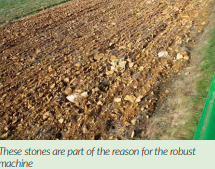
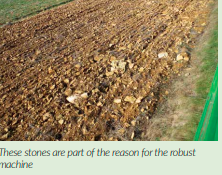
The three tractors and tour trailers climbed right to the top of Bredon Hill passing a large area of stoney brash to where the 6m CrossSlot direct drill was parked. Jake explained that the hugely robust machine was designed for New Zealand conditions where farmers were regularly tackling stony ground, and the expense was justified by the expected 20 year lifetime of the machine. The drill can handle four products at a time, with two hoppers with air, so it can do a main crop and granular fertiliser. Two side pods are used for small seeds, slug pellets and other product that is spread at a low rate. The drill weighs 11 tonnes and the tractor 9t, and the fuel is 13 – 15 litres /ha. Jake’s straw policy varies with the field. It is baled and removed before osr because of the slug challenge.
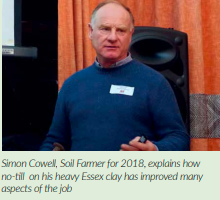
Simon Cowell, judged Soil Farmer of the Year for 2018 provided a fascinating account of working some of the heaviest clay on the Essex coast. His farming has involved working with soil to improve plant performance, and this has involved numerous trials of ideas he thinks might work. The result is that his growing medium has improved hugely. “The soil has lost its stickiness and it is 20 years since we have applied any phosphate. The farm carried a dairy herd and after each grazing we would put on some more nitrogen, just as we were told to do. Grass now grows as well without the top dressing of N.
Simon explained the plant hierarchy and how their nutritional needs change dependent on their place in the list. Moving the soil composition up the scale through the use of compost has resulted in a noticeable reduction in blackgrass which has been a major problem on these bacterial soils. The compost has reduced the germination of weed seeds and has meant that Atlantis is now working again. Simon says that the no-till system keeps the soil aerobic, while working these soils with tines and power harrows breaks the structure and causes slumping.
“I see the compost heap providing an inoculant rather than a fertiliser or soil conditioner. The compost provides a home for good bacteria and fungi which then help feed the cash crop.” The compost is mixed with a bespoke machine rather than a fork and the stirring increases both carbon and nitrogen levels. The heap is kept at 70C and is left to stand for a year. He makes the most of horse compost, ditch soil and plasterboard. Fed this way the crops tend to have stronger straw, deeper roots while plots given regular fertiliser have softer tissue making it easier for destructive fungi and insects to attack.
Every field has a ‘holiday’ by being down to lucerne for three years. The crop goes to local company Dengie crop driers and the plants get a chance to drive their roots deep into the soil – they can go as deep as 45ft and more. While conventional farmers would break up the root network created by these roots, by leaving them well alone Simon preserves the matrix of pores which aid drainage and provide new roots with a highway rich in fungi and bacteria from the rotting roots. The field surfaces are better able to carry farm traffic and the need for ultra flotation tyres is now much reduced. Simon also trialled the effect of fungicides – stopping using them on some fields – and found they were depressing yields. So while they reduced disease they had side effects.
He also has developed his own wheat mix blend, choosing 4 varieties that are unrelated and mixing them prior to drilling. The next year’s crop comes from home saved seed, and this has now continued for five years. He was interested in how this mix compared with seed from KWS and was pleased to see his mix performed well. He has done other trials into N and concludes that often the plant needs a combination of trace elements and bacteria in addition to the N feed. “The processes we are dealing with are far far more complex that is presented in textbooks and by experts.” Simon describes the trials as ‘addictive’ and the information gained is always worth more than the money spend on doing the work.
-
Conference Highlights Calcium’s Vital Role In Soil Nutrition

10th October 2018 – At Nantwich Football Club
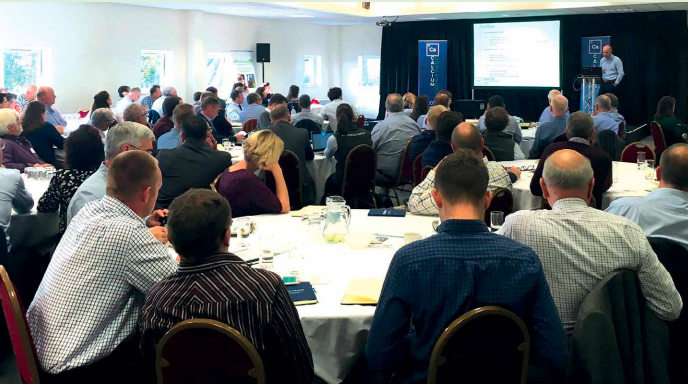
Calcium has a key role in maintaining healthy, fertile soils and the production of high-quality crops and forages. Yet it is estimated that 60% of UK soils are below optimal levels of pH and calcium, and the importance of this key nutrient is often overlooked. To help put calcium under the spotlight, granulated lime manufacturer, Calcifert, hosted the UK’s first Calcium Conference back in October. The event attracted an audience of more than 100 agronomists, arable producers, soil specialists and livestock farmers; highlighting the wide range of applications that calcium has within the agricultural sector. Whilst the day’s seven speakers tackled a diverse range of subjects – from the practicalities of measuring calcium levels in soil, to interpreting calcium test results – what was clear from all of the presentations is just how important-a-role calcium has on plant growth and soil biology, and that this should be of significant interest to arable farmers.
Ian Robertson urges detailed approach to soil testing
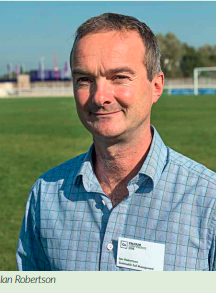
Agronomist and managing director of Sustainable Soil Management, Ian Robertson, highlighted the need for detailed soil testing before decisions on nutrient inputs are made. Ian’s presentation looked closely at both the importance of calcium to plant health and cell wall development, but also calcium uptake and how much of this vital element needs to be supplied to a plant. Ian advocates carrying out more than a simple pH,P,K and Mg soil test, as focusing on these elements alone may not be enough to improve soil conditions. The four major cations (Ca,Mg,K,Na) should always be included as part of a test.
Calcium is a major component of any soil test, but a simple PPM result is not enough to inform a nutrient program. A soils Cation Exchange Capacity (CEC) should also be determined to help balance the cations in a soil in order to achieve the optimum soil pH and soil structure. An understanding of both available and total calcium in the soil, which can be matched to crop demand, will improve production and health. As well as reminding the audience that pH is not the measure of calcium and consideration of other cations was vital, Ian also emphasised the importance of CEC and its relation to soil calcium results. Ian’s overarching message when it comes to calcium recommendations is a straightforward one – a simple calcium analysis will not provide you with all the information needed to make an informed decision when formulating a soil nutrient program.
Calcium in a zerotill system
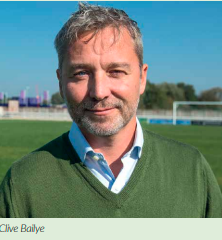
As part of the afternoon session, Clive Bailye, managing partner at TWB Farms, shared the importance of calcium within his zerotill farming system. Clive has used a zerotill system for 10 harvests, judging it to bring both financial and environmental sustainability to his business. According to Clive the only way to achieve healthy crops is through healthy soil, and the factors he believes make the difference between success and failure are soil nutrition, rotation and attitude – not soil type or machinery. Recognising calcium’s key role to soil nutrition, Clive pays attention to understanding what calcium requirement his soil needs and uses pH zone testing to compensate for the highly variable pH in his soils.
High quality ground Derbyshire limestone is used for bulk calcium applications ahead of spring cropping. Where a maintenance dressing is required to keep pH at the required level, Clive applies 100kgs per hectare of Calcifert Lime in spring, running machinery along existing 36m tramlines. In his presentation Clive highlighted an issue with acidic phytotoxins, which had been identified in wet anaerobic conditions. To help prevent seedling damage, Calcifert Lime is also applied at drilling with the help of a modification to the drill.
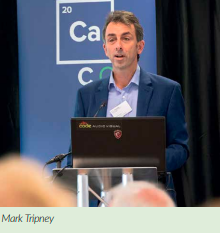
Clive’s key message for all growers was to use calcium to flocculate the soil; restoring its natural aerobic environment and enabling the soil biology to thrive with the aid of the available calcium. Summarising the messages from speakers at the conference, agronomist and conference chair, Mark Tripney, encouraged farmers to challenge the norm when it comes to soil testing, and in particular calcium testing. He concluded that only by carrying out detailed analysis can you really strive to achieve a better balance of nutrients and ensure you get the most from your soil.
-
National Organic Combinable Crops (NOCC)
By Richard Harding
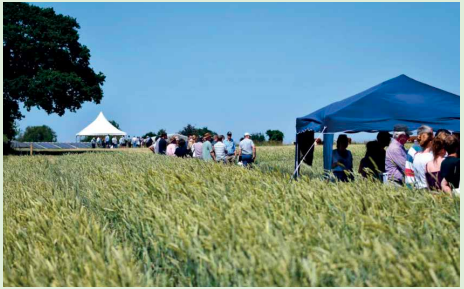
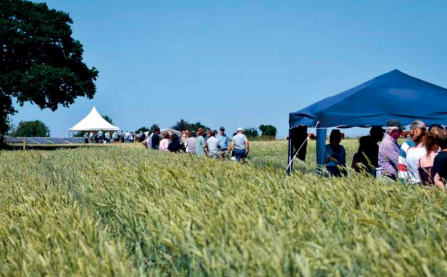
Organic’s potential for whole farm improvements came under focus at the UK’s largest organic on-farm eventThe 2018 National Organic Combinable Crops (NOCC) conference brought organic and non-organic growers together to hear the benefits organic systems bring to the farm business and the farmed environment. It is noticeable again this year the increasing number of farmers and agronomists practicing Conservation Agriculture who have become regular attendees. Held by Organic Farmers & Growers at Green Acres Farm in Shifnal near Telford, Shropshire. The day took place on another extremely hot July day, NOCC featured experts from across the production and supply chain. The day began with first speaker NIAB’s head of farm research Liz Stockdale, who discussed the organisation’s £1m, five-year project to improve understanding of soil health and biology as part of a whole eco system management. Liz is someone who has a natural gift to make a complex subject easily understood by all.
It is always welcomed by organic and conventional growers alike to reinforce the importance of soil biology as the driver of a sustainable farm business. Joel Williams an independent plant and soil educator followed Liz in echoing the importance of soil as a complex ecosystem and drilled down further into the integral relationship between the soil biology, chemistry and physics. Stating “they all have equal importance”. As with any farm system effective marketing is crucial. Lawrence Morden of seed merchant Walnes, joined the line-up to discuss the company’s project with farmer collective Organic Arable to develop plant varieties which will thrive equally in low-input regimes or an organic systems.
This year’s renowned NOCC lunch was provided by Kimberley Bell of the award-winning Small Food Bakery. As a conventional agronomist it is very noticeable the stark difference between the quality and care taken over food at organic events compared to conventional grower meetings. Kimberley and her team, who won Best Food Producer at the previous month’s BBC Food and Farming Awards, included many of the key crops grown on the farm in their menu to demonstrate the bakery’s approach to reconnecting food with the farmers who produce it.
The day was rounded-off with a farm walk, looking in detail at NOCC host Mark Lea’s business, which includes a green waste composting operation. It was a chance to look in detail at all the crops being trialed on the farm. These including wheat varieties Evolution and Spyder, KWS Basset, Crispin, Montana and Siskin, as well as the results of a bicropping trial of peas and triticale. The triticale being used to hold the peas up making harvest easier and improving the overall quality of the peas.
Mark explained “We’re always interested in trying different things on the farm, and hosting NOCC has given us even more motivation to experiment with what we trial here”. “Being organic has opened up a huge number of opportunities for us, not just in terms of what we grow and our production cycles, but also in how we manage the land to ensure that it is in the best possible state to produce food.” OF&G chief executive Roger Kerr explained that NOCC – which is now in its 11th year – has long been the highlight of the organic farming calendar.
With so much uncertainty on the horizon, all farmers could benefit from learning more about the developments and opportunities offered by this system. “A profitable and successful farm businesses need to be resilient in terms of economics, agronomy, and the environment,” he says. “Organic farming simultaneously offers all of these and in the face of major challenges, farmers need to build greater resilience into their businesses.” Whatever your views on Organic farming NOCC always provides an opportunity for farmers to come together and learn from each other whatever their system. It’s also a place to get new ideas and leave inspired by what is possible when you work more closely with nature. However, it is also a cautious reminder of why many farmers are addicted to a solution in a can. Here’s looking forward to next year and I hope to see you there
-
Base UK French Farm Tour Nov 18
By David White
A predicted slowish drive down the M11/25/20 turned out as predicted. Richard Harding my observer and I had left in plenty of time to catch our EuroTunnel train so a coffee and croissant in the terminal building we slipped under the channel on route Dieppe. Day one had been reserved for travelling down but rather than fill it with a long lunch stop at Le Touquet I had researched the resting places of some family members killed in the Great War so I could pay my respects. Blue sky and 17 degree temperatures made for a very pleasant drive across to Auby our first cemetery destination. November 1st was All Saints Day in France which meant the town cemetery was still brightly decorated with Chrysanthemums. After somewhat of a struggle we found a pair of simple graves that had been immaculately looked after by the Commonwealth War Graves Commission in the decades since the war, as they will be going forward.
Next stop Louvencourt, a CWGC cemetery, again immaculately tended on a quiet country lane which looked out over the peaceful French countryside, very different from what the scene would have been 100 years earlier. A plaque detailed the history of the battles on the Western Front and highlighted areas that had been fought over several times as each side gained a temporary advantage. I laid a poppy, left a note in the book of remembrance and we headed off for our overnight stay, covering miles in minutes that had been hard fought over for years ten decades earlier.
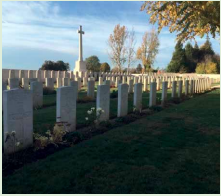
If you have family members who fought and fell in either of the wars a visit to their resting place is something you should try and do. My two relations, both young men were sadly killed in the last few months of the war. It was a special thing to be able to visit their resting places 100 years on in memory of their sacrifices.
Normandy
The French countryside in this area was punctuated by fields containing either just mustard that was being flailed and disced, through to a few with very varied cover crop mixes. Although spade-less we could not resist getting out to have look at what was growing in some of these fields. As some of the species growing we didn’t recognise Richard did he usual taste test to see if we were looking at turnips or radish, hot after taste so radish! Lots of questions for Victor about French farming regulations when we meet tomorrow. We dined very well in Dieppe, this was France, and after a comfortable night in a sea front hotel and a good continental breakfast we headed along the coast road through some lovely seaside villages to meet great friend of BASE UK Victor Leforestier at his first field.
This land, just in from the Normandy coast is very productive, capable of growing vegetables and roots and as evident from the operations being carried out, the plough and power-harrow drills clearly still favourite. These farms can produce 10t/ha of wheat quite easily, why change? The rules governing greening in France allow for destruction from Nov 1st so there were discs, ploughs and drills turning mustard cover into wheat everywhere. We have the impression that many farmers were “greening” because they had to, not because they could see the wider benefits.
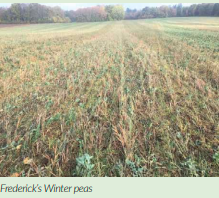
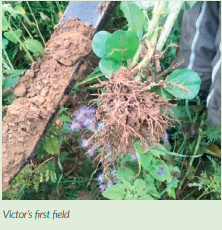
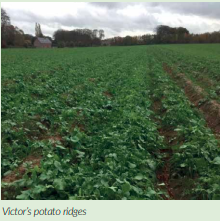
We were greeted by a very different scene when we arrived at Victor’s field, no mistaking that we were in the right place (see pic 1). Victor is somewhat unusual in the world of Conservation Agriculture in that he is working with three root crops in his rotation, beetroot, potatoes and sugar beet, but still extensively using cover crops to build SOM and biology. He strip-tills for sugar beet but practices fuller cultivation for beetroot and potatoes. He rotation is built around flax, widely grown in Normandy, but also grows wheat and barley and we saw some impressive clover “understory” in some barley stubble. Initiatives like this and cover crops growing in potato ridges show what is possible in a non 100% combinable crop rotation. Victor had his tele-handler at the field to dig some soil profiles which demonstrated very well how he’d built up the organic matter near the surface and how roots had taken advantage of the impressive worm holes.
We enjoyed a very relaxed (this was France) lunch at Les Fregates Resturant in a little coastal village Veulettes-sur-Mer, then escorted by Victor who was acting translator for the afternoon visited Emmanuel Bellest who farms at Paluel. Emmanuel is also growing sugar beet in his rotation using strip-till with autumn sown cover crops, also like Victor he had the most amazing fields of multi species cover crops in flower and was using compost amendments and carrying white clover companion established in rape through several years of his rotation. You don’t get to visit some of the very best BASE France farmers without clocking up a few miles so on leaving Victor and Emmanuel we headed 150 kms west to Amiens for our second night.
Our town centre Ibis didn’t promise to much from the outside but the rooms were clean and comfortable (to comfortable for one who slept waaay to well….), it had a bar and secure underground parking, Result! So as to not dilute the memory of the exquisite dinner we’d had in Dieppe, and also to keep the trip on budget we went for a less upmarket resturant this time, we reasoned that as some locals were dining there it should be ok but the laminated menus should have been a clue to the fare we were about to have, if you value steak by how much chewing it takes to be able to swallow it we got great value!!!
Early to rise (for most of the team) resulted in a quick breakfast and check-out then 100 km drive south to the beautiful estate farm of Frederic Remy. We were greeted by Frederic and our host for the afternoon Julien Senez at a very impressive machinery shed and grain store. I had my usual attack of French trailer envy, gosh they do have fabulous trailers, and the Fendt on a new Horsch Avatar drill just off the do some contract work for a neighbour equally impressed. But as we know its not all about the machinery so over a coffee and croissant we enjoyed a very informative short presentation on Frederic’s farming history at the estate he manages and journey into Conservation Ag.
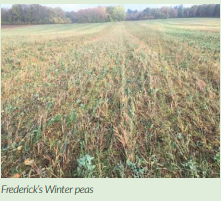
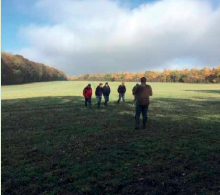
Both Frederic and Julien had a good enough command of English for us to have a good understanding of what they are striving for on their farms, Conservation Agriculture is of course an international language. Frederic does indeed have a very beautiful farm, just 14 kms from Paris he can see the Eiffel Tower from his tractor cab. The farm with its woods and glades, lake, beautiful old buildings, a small estate church and Castle make it the most amazing place to live and work. Frederic’s fields were immaculately farmed too, crops edge to edge even, save for a wheat headland grubbed up by wild boar, and his attention to detail and huge enthusiasm for how he is now farming and the success he’s had over the last five years was infectious.
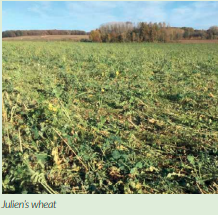
Lunch time again and this time courteous of Julien in a gorgeous conservatory at a golf club near his farm at Vignemont. Julien has been zero-till for eight years and in that time has done around 60 trials on his farm to work out how to improve his soil to give increasing and reliable yields. Standing in a flowering cover crop that was around 5 feet tall made up of a 15 way mix looked to be cover crop perfection. But due to the high carbon to nitrogen ration of the crop residue in Julien’s wheat, barley and grain maize rotation he wanted to increase the nitrogen element so this cover was about to be terminated and then have a high % legume mix drilled into it to provide fresh new growth for the next 5 or so months before maize planting time.
The soil in this field had around 40% clay content but had the colour and structure of something you would find in a grow-bag at a garden centre. As France has already lost neonic seed dressings on cereals we saw many later planted crops which helped offset the need for early insecticide sprays as did planting into “the green” with the cover crop vegetation hosting some of the aphids instead of the cereal plants. Our final field stop was at the bottom of a sloping field which had a newly planted agri forestry scheme on it to help overcome drainage issues.
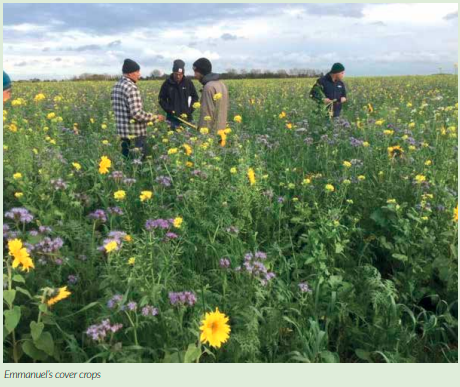
Some common themes on the very innovative farms we visited were; improving soil structures and nutrition, the use of cover crops in a rotation with roots, companions with rape, clover lasting through 2 or more crops in the rotation, strip tillage, very dense diverse cover crop mixes with investment in seed much higher than would be considered in the UK, the importance of on farm trials and time spent on research plus visiting other farms to build a personal knowledge base, the reduction in inputs, machinery labour and tractor hours that Conservation Ag brings to a farming business freeing up time for those farmers to spend doing other things, enriching their lives. On behalf of the group I’d like to thank Victor @VictorHolistic Julien @Senez8 Frederic @fredericremy95 and Emmanuel Bellest for their hospitality, generous time given and knowledge sharing that made the trip so worthwhile.
-
Discs Versus Tines At Petworth Monitor Farm
AHDB’s Petworth Monitor Farm group reignited two popular debates at their recent meeting (18 October 2018): discs versus tines and ‘to till or not to till’.

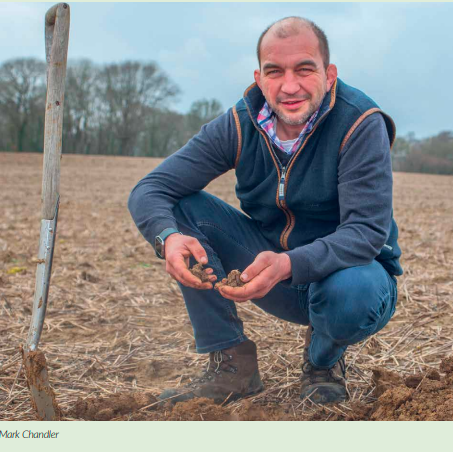
The Monitor Farm group is hosted by Mark Chandler at Moor Farm in West Sussex. Mark and the other farmers in the group wanted to see how different levels of cultivation and types of drilling affected his first wheat crop, following beans. In a normal year, Mark would cultivate behind the combine with a Simba SL600 cultivator running LD legs and points. He would usually use an LD subsoiler and carrier disks on compacted areas or tramlines, before drilling with a Horsch Sprinter Drill or Amazone Cayena lowdisturbance tined coulter drill. Paul Hill, AHDB Knowledge Exchange Manager, said: “Does Mark actually need all the machinery he has and can he get away with doing less tillage, so saving time and money? We looked at these questions and more during the Monitor Farm meeting.” The experiment at Moor Farm includes:
• Six plots, 2ha each, two tramlines wide
• Three plots undisturbed
• Three plots cultivated
• Simba SL cultivator straight after combine
• Vaderstadt Carrier Disk
• Weaving LD
• Half of each plot was drilled with Skyfall wheat to a depth of 2.5cm with a Horsch drill (tines) and half with a Sky Easy Drill (discs).
At this stage in the season, Mark and the group assessed the different plots by digging pits with soils guru Philip Wright. These pits were compared with un-moved ground in a neighbouring field which had generally very good soil structure. Paul said: “During the meeting, perhaps the most crucial topic we covered was how to dig a soil pit correctly. It sounds simple, but if not done right it could make it extremely difficult to analyse your soil structure properly.” Mark found that looks can be deceiving, early on in the season. He said: “The cultivated plot, although it looked good, was over-cultivated because actually the baseline soil structure was ok.
But by cultivating, we’d made the top four inches too fine which held the moisture up. It sat wetter and didn’t walk as well. “But the unmoved ground which we’d disc drilled was cosmetically poor but actually the soil structure under the surface was good, with good water penetration. Although it’s very early to judge the emergence, the rooting depth was looking good.” Throughout the growing year, Mark will be measuring seed germination, plant counts and, finally, yield. Paul Hill said: “This kind of measuring can be done with the AHDB Wheat Growth Guide. The Guide gives farmers a great baseline to compare different approaches against. It’s also a good idea to repeat the same on-farm tests over a number of years.”
Mark said: “The key so far, we’ve found, is to be versatile and make each decision according to the conditions in the field. Our soils are quite variable, so our management approach needs to be variable too, although this does take more time. We need to fine-tune our decisions and pay close attention to the soil.” What’s next? Over-wintered stubble before barley. Ordinarily Mark would cultivate the field and spring crop for black-grass control. The soil doesn’t need working, so he’s looking at keeping the surface cultivation as shallow as possible, but enough to get a black-grass germination. Find out more about the Petworth Monitor Farm at cereals.ahdb.org.uk/ petworth or contact Paul Hill on 07964 243699 or [email protected]
-

Drill Manufacturers In Focus…
CAN’T AFFORD A CROSS SLOT, THINK AGAIN…

The Cross Slot from New Zealand has for many become the pinnacle of drills, with unique coulter, ADF technology and heavy build quality that was second to none. This unrivalled quality came at a price, built in and imported from New Zealand any Cross Slot Drill that arrived in the UK or Europe represented a significant investment for the buyer.
We are excited to announce that things are changing. Cross Slot drills will now be built in Europe bringing the unique NZ designed coulters together with a frame built in Europe and electronics from Germany. With this new process comes better efficiency and a new pricing structure for what has always been the “Rolls-Royce” of no-till drilling machinery.
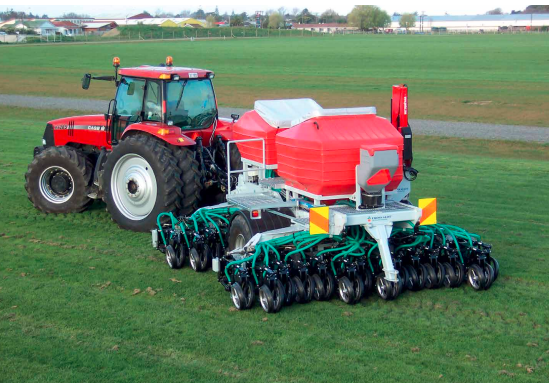
The Cross Slot branded drill will be the only drill to feature Dr Bakers coulter design in the UK and Europe, branded and in the familiar red/ white colours of the original New Zealand built Cross Slot machines. In a world where other manufactures seem to constantly be raising prices Cross Slot prices are now set to drop significantly in both Europe and the UK. If you weren’t considering a Cross Slot before, now you should be. If you have always thought highly of the technology and quality build that comes with a Cross Slot drill but felt it was out of your price range – think again.
For more information about this exciting development contact us [email protected]
-
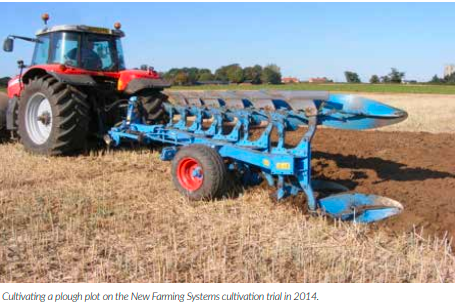
Primary Cultivation And Wheat Yields – Long-Term Work At NIAB, Lessons From STAR And NFS
By Nathan Morris, Elizabeth Stockdale, David Clarke – NIAB
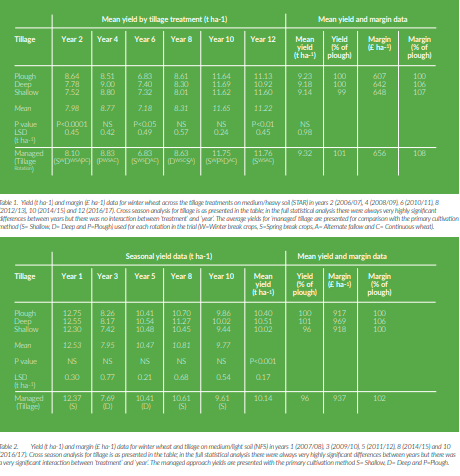
Long term findings from field-scale experiments (STAR and NFS) show that while yields with non-inversion tillage are similar in most years to yields with ploughing, when decreased costs of labour and fuel are factored in, gross margins under non-inversion tillage were better than under ploughed systems. Hence non-inversion tillage is advocated under ‘normal’ conditions.
The influence of primary cultivation method on crop yields will no doubt continue to cause debate, but long-term findings from the STAR (Sustainability Trial for Arable Rotations) and NFS (New Farming Systems) projects are giving some hard evidence of impacts across seasons and soil types. The long running STAR project in Suffolk (medium/heavy, clay loam soil) and NFS studies at Morley in Norfolk (medium/light, sandy loam soil) started in 2005 and 2007 respectively. Both studies therefore allow us to study impacts over the long-term and have allowed the impacts of the tillage systems to become established. NIAB co-ordinates and manages these trials but they are funded by a number of charities. The Morley Agricultural Foundation (TMAF) and the JC Mann Trust provide continued support for the NIAB New Farming Systems projects; the Felix Cobbold Trust and, historically, the Chadacre Agricultural Trust provide support for the STAR project.
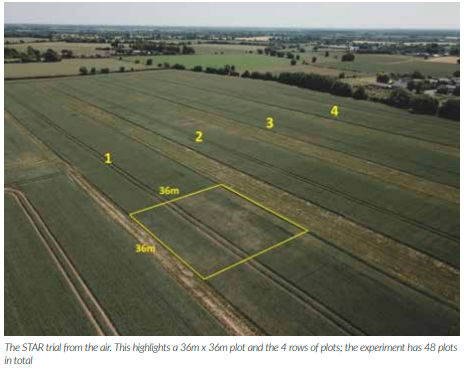
The STAR and NFS projects are field-scale trials using farm scale equipment and techniques with fully replicated large plots. The experiments have the same primary cultivation treatments; however, the difference in soil type between the two sites provides an important contrast when considering tillage impacts. The proportion of particles of different sizes (soil texture) that make up the soil have a large impact on the soil structure and properties such as trafficability and workability. For example, clay soils usually have more small pores than sandy soils and these can hold on to more water for longer. Soil structure results from the interaction of the mineral particles (sand, silt and clay) with soil organic matter as they aggregate together to form the crumbs, blocks and other aggregates that we see when working the soil. In some ways, it is the gaps (pore space) between these aggregates that is the most important part of structure as the pores control the balance of oxygen and water available to plant roots and soil organisms.
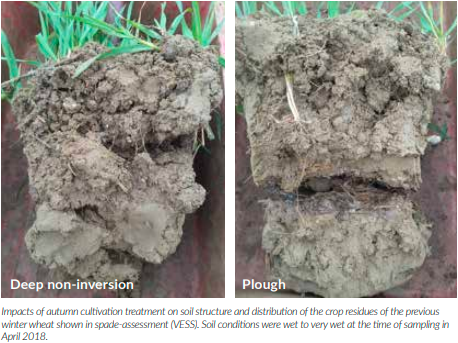
Cultivation has a key role in shaping the soil structure. However, plant roots and some soil organisms (known as ‘ecosystem engineers’) also change the structure of soil by moving through the soil, moving soil particles around and extracting water. Along with a range of physical (drying-wetting) processes, these biological interactions have a central role in soil structure development and create micro-habitats for other soil organisms; in temperate agroecosystems, earthworms are very dominant within this group. In the STAR and NFS trials we are comparing 3 contrasting primary cultivation practices: inversion (c. 25 cm plough) and non-inversion tillage (using the subsoiler / disc-based combination, e.g. Sumo Trio) set either deep (c. 20-25 cm) or shallow (c. 10 cm).
These systems are used typically for primary cultivation each year to give the three main treatments. In addition, each study also has a treatment which allows a ‘managed approach’ where the cultivation system used changes with study, season and crop. The annual cultivation decision in these treatments is based on soil conditions, field assessments, previous cropping, weed burden and local best practice (see Table 1 and 2). Secondary cultivations (e.g. power-harrow, press) are used as needed on a treatment by treatment basis. The specific crop rotations used also differ between the sites, however, in both studies rotations employ only combinable crops and include regular winter wheat alternating with combinable break crops.
Winter wheat yield
In both STAR and NFS the regular cropping of winter wheat in the rotations provides a unique opportunity to examine the impact of primary tillage on long term performance of first wheat yields in large scale fully replicated studies. Statistical analysis has focussed on the ‘consistent systems’ (where treatments have remained the same over this time period). Winter wheat yield data for from harvest years 2, 4, 6, 8, 10 and 12 of STAR project are presented in Table 1. Analogous data from harvest years 1, 3, 5, 8 and 10 of the NFS Cultivations study are presented in Table 2. In both studies, winter wheat yields vary markedly with the season; i.e. year has a statistically significant impact on yield. In terms of the impacts of tillage systems, there is no clear pattern in all years.
Considered on average across seasons, in STAR there is no difference in the yield of the different primary tillage systems. In NFS taken across all years, there is a significant reduction in yield (-4%) in the shallow non-inversion systems compared to the other approaches; however, the difference is not significant in any individual year. This is possibly associated with the lighter soils being more prone to loss of structure where some rectification / management is not used. Overall these findings suggest only small percentage yield reductions with shallow tillage (cf. plough systems) indicating that wheat yields are relatively robust with respect to the tillage approaches assessed on these sites. More data analysis and crop modelling may help to explain the differences in the treatments year by year e.g. in terms of the direct impact on seedbed quality and consequent establishment.
At STAR the managed approach to cultivation gives a slightly higher average yield compared with the treatments where the primary cultivation techniques are applied consistently. At NFS yields are 4% lower under the managed approach compared to deep and plough tillage, possibly as a result of the high proportion of shallow tillage used (3 out of 5 years).
Winter wheat margins
When considering gross margins, both STAR and NFS non-inversion treatments (shallow and deep) resulted in greater margins in first wheat crops compared to the plough. For deep non-inversion treatments this benefit was 6–7% and for shallow non-inversion treatments gain was 1–4%. Margins were also increased in the managed approach compared with the ploughed treatments. However, in addition to margin it should also be noted that ploughing would have also resulted in slower speeds of working (cf. non-inversion tillage systems); this would potentially improve a farmer’s capacity and hence ensure timeliness of operations over the total farm area. This is potentially of greater importance than small differences in rotational margin.
Other impacts
In soils under non-inversion tillage, we found increasing tightness in soils in the upper subsoil; however we also sometimes found large improvements in soil physical conditions over a growing season driven by the growing crop. Where there were no changes in the organic matter inputs, there were no gains in carbon storage over the whole soil profile under noninversion tillage (compared with ploughed systems). However, with non-inversion tillage, organic matter becomes more stratified in the soil with higher amounts in the surface soil and lower amounts at 20-25 cm compared to ploughed plots. Currently herbicides are managing the weed burden on all treatments effectively – however, this year we are monitoring some un-treated areas to assess the role of the primary cultivation strategies on the weed seedbank.
Overall, the work in these studies and others is confirming that alongside decisions about primary cultivations, farming systems that support the biological processes of structure formation and increasing soil organic matter content have been shown to help create resilient soil structures that can both absorb heavy rainfall and hold water in drought; however, there is still a way to go before we have fully uncovered the mechanisms supporting structural resilience.
Acknowledgments and thanks are extended to The Morley Agricultural Foundation (TMAF) and The JC Mann Trust for their continued support of the NIAB New Farming Systems programme; also to The Felix Cobbold Trust and historically The Chadacre Agricultural Trust for their support of the STAR project.
-
Medicine’s Gone From Invasive To Keyhole, Farming From Keyhole To Invasive
Based on Interview with Dr John Baker, CrossSlot New Zealand.
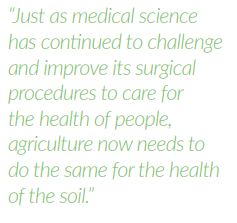
Medicine has made quantum leaps in research, treatment and surgical procedures in recent years – now it’s time for arable farming to follow suit.Where medicine has moved from invasive to keyhole surgery, agriculture has gone from keyhole to invasive farming, resulting in the depletion of quality soil and contributing to global warming. International soil scientist, John Baker, says medical science, since last century, has learned to operate on people without disturbing anything more than the immediate part of the body being replaced or repaired. That meant the body wasn’t violated unnecessarily as surgeons identified the problem area. “This quantum leap resulted in significant improvements in survival rates, healing times and postoperative stress,” John Baker says. “Medical science is leading the way and continues to strive for improvement.
Why isn’t agriculture doing the same?” Dr Baker acknowledges that aspects of farming such as GPS guidance and precision farming have shown advances in accuracy, but the most fundamental task of all – seed sowing – is millenniums old. Arable farmers are still sowing seed with the same method that Jethro Tull invented in 1701. He explains our first farmers in Biblical days poked a hole in the ground and sowed a seed – an early form of keyhole surgery – but when someone shackled a primitive plough to a bullock, they started practising invasive farming. “The idea of the plough was to bury the weeds and loosen the soil to make it soft so they could create a trench and deposit the seeds more easily. Today farmers are still ruining the soil using the same system but with more sophisticated machinery,” he says.
Every time any form of tillage tool opens the soil, it releases carbon dioxide into the atmosphere which contributes to global warming. About 20 percent of atmospheric CO2 results from the world tilling its soil each year. It also loses humidity, essential for seeds to germinate and destroys microbes and earthworms which maintain the health of the soil. Dr Baker points out that this is not how nature intended it to be done. He explains that, in nature, most deciduous plants flower first, then form leaves. At the end of summer the flowers become seeds which drop to the ground followed by leaves. The end result is that seeds are covered by a mulch of dead leaves which maximises their opportunity to germinate and sprout new seedlings. “But farming hasn’t repeated nature’s lesson. Instead the leaves are buried or burnt – both of which cause more carbon discharge than the soil gains – and seeds are sown into bare soil without the benefit of the rich, decaying organic matter around them,” he says.
Dr Baker says primitive man had a better solution when he poked a stick through the debris on top of the ground to plant a seed. Without realising it, he minimally disturbed the soil, preserved the humidity, retained the microbes and gave the seed the best chance to flourish. While conventional tillage or ploughing increased cropping, its constant rape of the soil has had a damaging global effect. Most of it has gone unnoticed until we woke up and realised that the projected 50 percent increase in the world’s population by 2050 will result in insufficient food to feed everyone and famines in some areas. Low-disturbance no-tillage, which, like rugby football, was invented in Great Britain but refined in New Zealand, uses a method of keyhole farming that primitive man perfected centuries ago.
Low-disturbance, no-tillage drills penetrate through the residue or vegetation on top of the soil to create seed slots beneath it. They can sow the seed and fertiliser in separate bands at the same time. As we have seen the process traps the humidity, preserves the microorganisms which enrich the soil, prevents carbon from escaping and increases crop and pasture yields. “Arable farmers now need to forget about how seeds were sown in the last few centuries and take the quantum leap to do it right from now on,” he says. “Fortunately leading farmers are already doing so.” “While a strong humanitarian reason is to preserve our planet, the most compelling reason for besieged farmers is that it’ll make more money for them.”
-
THE CHALLENGES OF NO-TILL
No-till remains the most exciting, and challenging, development in global farming today. My six years of continuous and enthusiastic journalism on the subject has come at a time of an ever-increasing flow of information. For notillers and those contemplating it, knowledge is essential. However there’s another challenge: getting information into the world of farm supplies and also farm education. Making the most of the new techniques; having knowledge and sharing the experience to predict and avoid pitfalls, all involve effective research and development. No-till has already had an impact on machinery, but crop rotation, fertiliser use, seed rates, timeliness are topics that present equal challenges to both the notill farmer and advisor, and all are comparatively new. Farm suppliers have an obvious need for genuine knowledge and experience which they can hand on to customers. Education is front-line and key to success. This third issue of Direct Driller shares a great deal of information that is of direct relevance to all those involved in the technique. Behind these pages is a huge wealth of knowledge, and the intention of this publication is to bring people together for the benefit of everyone involved.
SUPPORT FOR DIRECT DRILLER MAGAZINE FROM GEORGE EUSTICE MP
In February, just before the first Issue of Direct Driller was launched, we were invited to speak to Michaels Gove’s Defra
team about what constitutes systems of reduced cultivation and how they can be monitored in the future.After Issue two we again contacted the Defra team to see what they and the government in general thought about the focus of Direct Driller Magazine on improving our soils and reducing cost of establishment in the UK. In response, Farming Minister George Eustice said: “The work that farmers do to replenish our soils, cleanse our seas and rivers and cut greenhouse gas emissions is vitally important. “Leaving the European Union provides an opportunity to design a new system – public money for public goods – that delivers for British farmers and rewards them for the invaluable work they do to improve the environment. “In our 25-year Environment Plan, we have set how we will improve our soils, including investing in soil health metrics so that we can deliver the connected benefits for water quality and the wider environment.” Which reads to us like those farmers who are running a conservation agriculture based system, with high levels of focus on soil health are going to be those farmers who benefit most from public money in the future. What no one knows, is exactly how Defra will implement this, but we certainly have interesting times ahead!
-
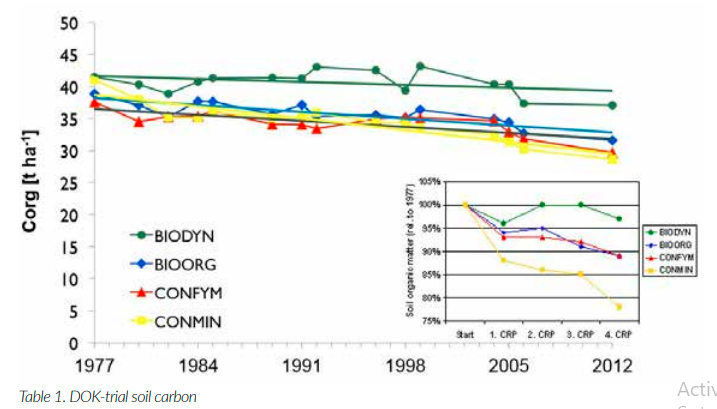
SOIL ORGANIC MATTER AND ITS ROLE IN CLIMATE CHANGE MITIGATION
Written by Mark Measures BSc. (Hons.), IOTA (Accredited), ARAgS, Churchill Fellow 2017 of the Organic Research Centre,
first Published July 2018SOM is important and that poor rotations and lack of organic matter inputs might be something to do with their poor soil structure and static or declining yields. Organic farmers have always believed that SOM is important, not just for soil structure but also for mineralisation, which results in nitrogen release, needed for crop growth and they have in the back of their minds the idea that SOM has something to do with pest and disease control. More recently it has been realised that SOM plays an important part in overall soil biological activity and nutrient release.
The potential for carbon sequestration and for the soil to function as a carbon sink has led some to think that SOM can play an important and major role in reducing green house gases and addressing climate change. Many organic farming practices will contribute organic matter to the soil; grass clover leys, use of farmyard manure, compost, green waste, cover crops and green manures will all contribute to SOM.
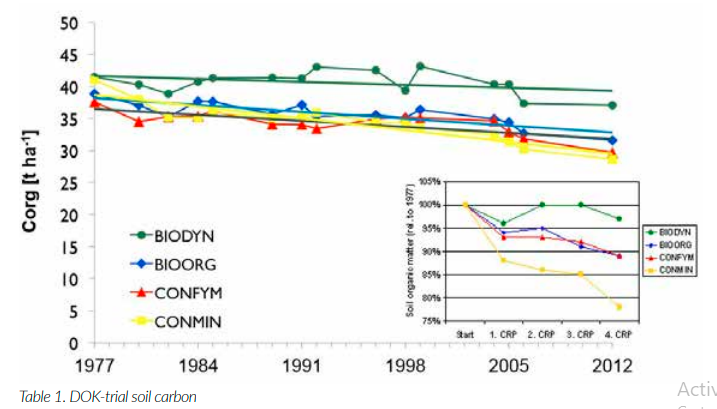
The extent to which these inputs will result in a net sequestration of carbon is dependant on how they are processed in the soil, the level of nitrogen input and C:N ratio, on the initial SOM levels, on cultivations, soil type and climate. The evidence for long-term ongoing carbon sequestration from organic farming is not clear-cut and categorical statements that organic farming will have a significant impact on green house gasses and climate change should be treated with caution. The fate of organic matter, or carbon, added to the soil is particularly dependant on its form; fresh manure and slurry will contribute little to the build-up of SOM, but it will supply readily decomposable material that will provide nutrients to the plants.
Compost, on the other hand will provide a more stable form of organic matter, which will contribute to SOM build up. Mineralisation is the oxidation of the chemical compounds in organic matter by the soil microorganisms, in the process releasing nutrients, particularly nitrogen, phosphorus and sulphur in a form available for plant uptake, together with the release of carbon dioxide. This process of mineralisation is brought about by cultivations and aeration and is absolutely central and fundamental to providing the nutrients for organic crop production. Humus is an important component of SOM and of compost.
Humus is relatively stable and is primarily the result of fungal decomposition of lignin and has many roles in the soil including water holding, soil structure and nutrient retention. Farms that use well-made composted manure or green waste will tend to build SOM, while fresh or once turned FYM and green manures will not result in the same build up of SOM. They will of course be tremendously important for providing nutrients in a plant available form, either directly or indirectly as a result of biological breakdown.
Multiple cultivations, whether that is ploughing or repeated use of cultivators will tend to deplete organic matter as it encourages mineralisation. Soil type will have a major impact on SOM accumulation potential; dry, light sandy soils will tend to be difficult to build SOM and such soil in an arable rotation will often have naturally low levels of 1.5 – 2.5%, unless they have evolved under acidic conditions in which case levels of 6 – 10% may be found. Clay loam soils in the UK will typically have SOM in the range of 3 – 4.5%. Clay soils will tend to have higher SOM than other soil types. Finally we need to recognise that the SOM accumulation reaches some equilibrium. Depending on the soil type, management practices, organic inputs, rotation and the cultivations used the accumulation of SOM will tail off at some point; it is not realistic to expect to be able to increase SOM from say 4% to 10% under normal farming practices, an equilibrium will be reached before that.
Does organic farming increase SOM?
The evidence from farm experience in the UK is limited because there has been very little thorough and reliable monitoring; inconsistent sampling methods and field locations, changes in analytical methods and infrequent sampling are all a problem. Experience from the arable organic farms that I have worked with is that sometimes, but not always, SOM levels initially increase following conversion to organic farming from continuous non organic arable cropping;
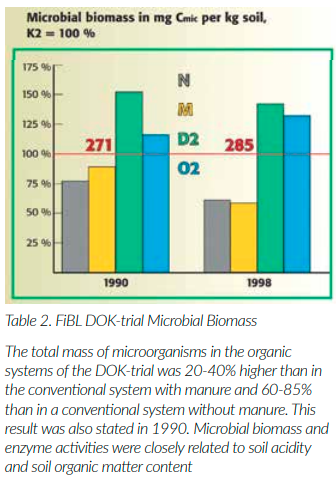
an example from Holme Lacy College shows an increase from 2.7 to 3.1% over 10 years, and average of 0.04% SOM per year. Experience elsewhere is that subsequently increases are small. Replicated research over long periods of time is a more reliable indication. The 40-year-old DOK trial at FiBL (Switzerland) compares conventional, organic and biodynamic systems. The results after 35 years, Table 1. show that SOM levels have declined slightly in all four treatments.
The conventional and the organic treatments are not significantly different, however it would be expected that if the conventional had followed a continuous cropping rotation that this would have resulted in a greater decline and that the difference between the organic and the conventional would be expected to be greater. The biodynamic treatment resulted in a small but significantly higher level of SOM than the conventional or the organic; this may be a result of the use of wellcomposted manure rather than the fresh manure in the organic.
Interestingly there is a significant difference in the soil microbial biomass between some treatments, Table 2., Showing that Organic (O2) and Biodynamic (D2) has greater biomass than Conventional both with manure (M) and without manure (N). The Aarhus University (Denmark) farming systems trial was set up in 1997 on 3 sites, the one at Foulum continues to run. A replicated trial compares organic using both green manure and manure with a continuous cropping non-organic rotation.
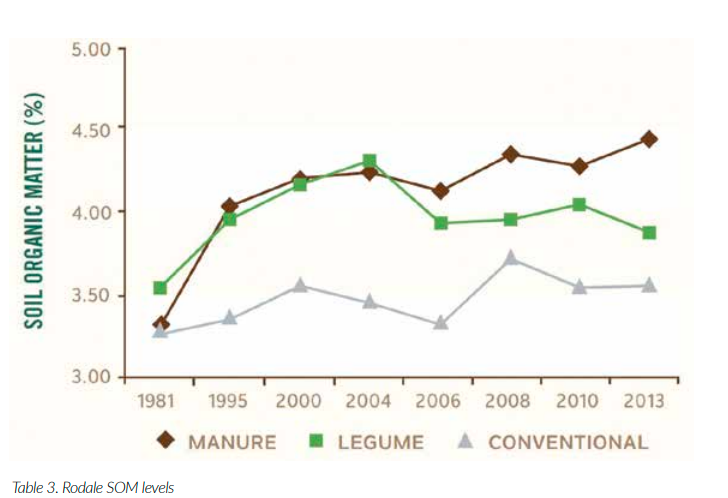
While there are significantly higher levels of carbon inputs to the soil under organic management and there is indication that a one-year green manure with residues returned does increase SOM, overall the conclusion is “not able to detect consistent differences in measured Soil Organic Carbon between systems”. The Rodale Farming Systems Trial (USA) has been running since 1981, it is a replicated trial comparing an organic manure system with an organic legume system with a conventional continuous arable cropping system. Table 3. The SOM levels in both the organic systems increased from 3.5% to approximately 4.25% in the first 20 years (0.37%/year) thereafter stabilising or in the case of the organic legume system subsequently declining to approximately 3.9%.
The conventional has shown some recent decline to approximately 3.3%. In the absence of trial data and peerreviewed papers it is not possible to know the statistical significance of these results. The Scotland Rural College (SRUC) organic systems trial was set up in 1991 following a period of conventional ley arable farming. The results, Table 4. show over a period of 20 years that organic ley-arable under a rotation of 50% ley, 50% arable maintains SOM, but that under the prevailing conditions SOM did not increase, even during the conversion period.
This reflects the previous cropping regime and the fact that these are inherently high SOM soils, in the order of 8%. The stockless organic rotation introduced 8 years ago indicates a slight decline in SOM, but which may not be significant. The conclusion of the review of available evidence undertaken by Organic Research Centre in 2011 is that: Organic cropping systems have considerable potential for increasing soil carbon, through the incorporation of fertility building grass-clover leys and use of livestock manures within diverse crop rotations, when compared with specialist (e.g.: monoculture) cropping systems;
The exact amount of carbon that can be sequestered through organic management of cropping systems is still uncertain, due to the disparity in assessment methods, and farming/ land-use systems; The difference between the wide range of organic and conventional farm types is not yet clear, partly because of the current difficulty in defining these systems and their individual characteristics; Organic management of grassland is unlikely to increase soil carbon levels over those from conventional management, but the reliance on legumes and biological instead of industrial nitrogen fixation will still have a positive impact on climate change mitigation through reduced fossil energy use and related carbon dioxide and nitrous oxide emissions
The ratio of Clay to SOM is considered important by some of authorities (Agroscope and Aarhus University) and it may be a more important measure of the need and potential to increase SOM levels than SOM% per se. Claims that the practice of Mob Grazing results in substantial increase in organic in the order of a change from 3 to 5% over 3 or 4 years have not been substantiated under UK conditions.
The use of very high levels e.g. 50 tonnes/ha/year of imported manure, compost or green waste will undoubtedly result in SOM increase over time, up to a point, but that is not typical of organic farming. The studies that I have seen have focused on arable systems, the situation with permanent pastures is very different, and soils under permanent pasture generally have higher SOM and will have developed an equilibrium. This higher level may be due to both the lack of cultivations and the use of manures and fertilisers as well as forage residues. In my experience there is very little difference in SOM levels between conventional and organic management of permanent pastures.
Conclusions
Based on the evidence of the three farming systems trials that I visited under the Winston Churchill Fellowship in 2017/18, the results of the SRUC trials, my personal experience and the review of research by Organic Research Centre I draw the following conclusions. SOM is important for soil physical, biological and nutrient reasons and mineralisation of SOM is particularly important in organic farming.
The following practises will all tend to increase SOM: Grass clover leys, farmyard manure, compost rather than fresh manure, green waste, over-winter cover crops and annual green manures. The following will tend to decrease SOM: cultivations, continuous cropping, nitrogen supply. Given that organic arable farming involves many of the beneficial practises identified above, there is likely to be some advantage to organic farming during conversion from conventional, continuous cropping conventional farming, particularly where longer leys are involved.
There is no evidence that organic arable farming offers potential for on-going, long term sequestration of carbon in the soil. The indications are that increased SOM levels of between 0 and 0.4% per year may be possible during the first 10 – 20 years of organic conversion, but that this depends on the initial SOM levels, soil type and management practices. Thereafter increases are unlikely. SOM is likely to be higher under some established organic arable rotations than under conventional rotations, but this is not necessarily so and will depend on various management practices, particularly the length of the ley and use of compost. 65% of organic farms in the UK are permanent pasture, not in an arable rotation.
These farms are unlikely to show a significant difference between conventional farms. Organic arable farming has higher levels of soil microbial biomass compared to conventional. Organic farmers wanting to improve crop productivity should focus on improving the quality and biological activity of their soils rather than merely focusing on total SOM. Given the wide range of results from arable system comparisons and the fact that the majority of organic farming in the UK is permanent grassland claims that organic farming will contribute significantly to climate change mitigation through carbon sinks should be avoided.
Climate change mitigation is one the principle challenges of our time and needs to be addressed by a radical change in the food and farming system as a whole, including food distribution and with a particular focus on drastic reduction in use of fossil fuels. Organic food and farming systems offer the best agricultural system to do that. Soil carbon sinks play a supporting role.
-
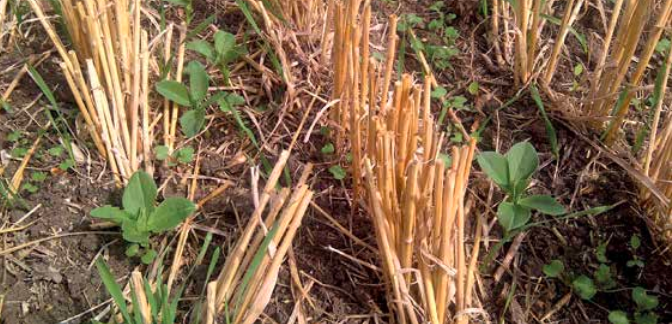
FEATURED FARMER
DAVID WHITE – HAWK MILL FARMS
Farming 160ha of combinable crops on light “boys” land over chalk between Cambridge and Newmarket, I’ve just had my third direct drilled harvest. I’m 100% combinable having been a sugar beet grower since the days of hand hoeing as well as offering a drilling and harvesting service with a 6 row tanker in the past, I have since stopped growing beet when I wanted to start direct drilling. All crops types are grown for premium markets and are stored in Camgrain central storage which makes having a rotation of 6 or 7 crops and different varieties very easy.
Rumours of my retirement are very much exaggerated
There comes a time in life where the pressure of being either at work or on duty (ie on stand-by in case the wind should drop to allow some spraying to be completed or it being dry enough to drill or harvest a crop) most days of the week for most of the year becomes tiresome.
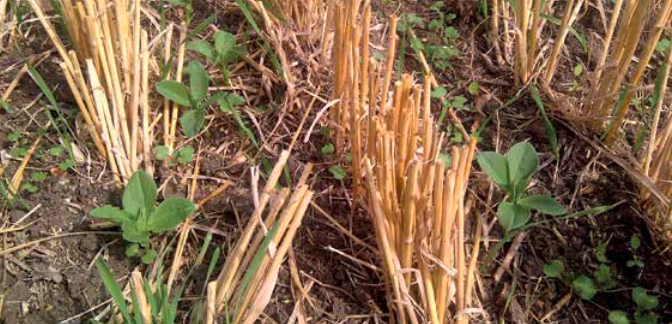
An opportunity arose to reduce my contracting workload, the distance I travelled and the area I farm. The need to be “on duty” so often came along, so I took it thinking this would be staged or semi-retirement, something farmers are very bad at! This coincided with an interest in a different type of farming being stimulated through discussion on Twitter and The Farming Forum, (I won’t name the culprits as where there is blame there is a claim!) which also requires less “intensity” in many forms. I also have other business interests which bring diversity to my business life through selling Trimble GPS correction signals for precision farming www. rtkfarming.co.uk and the other being Vice Chairman of Camgrain Stores, both of which make farming a less solitary profession and life very much more interesting. So, back to this different type of farming.
Some of the local walkers that use the footpaths through Hawk Mill clearly had heard mention, probably down the pub, of “retirement” and noticing that my fields appear to be growing what are in their eyes weeds thought I had thrown in the towel as the farm looked as if it had gone to pot. “Farming Ugly” as the Americans call it is something that takes some adjusting to as traditionally the best farms have been the smart tidy farms, but I quickly realised that beauty is in fact soil deep.
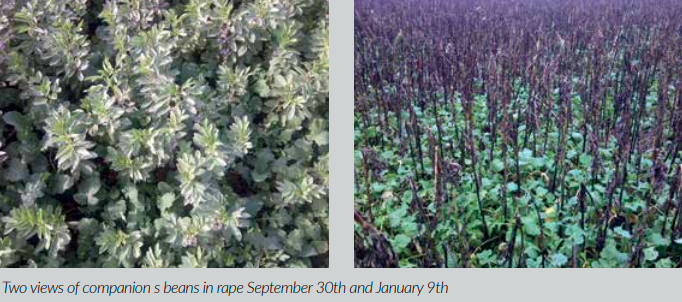
The journey to a new way of farming.
Conservation Farming, it’s like going back to school and questioning and unlearning most of what I thought essential to be a successful arable farmer, but am now largely not bothered about.
• Inversion of “trash” to stop disease carryover; trash is good
• Deep loosening, especially tramlines so crops can root well; none done
• Annual dressings of P and K to maintain fertility; very little now purchased
• Short stubble for easier management; long is better
• Fine seed beds achieved through intensive mechanical soil manipulation; none done
• Multiple seed dressings to stop disease or early insect attack; not used
• No green bridge to prevent disease and insect carryover
• Wide tramlines so no green grains at harvest; no coulters blocked off as green living tramlines stay drier
• Pre-em herbicides and active stacking essential; use now reduced
• Autumn insecticides essential; reduced through later drilling and companion cropping
A farming career born of ploughing, subsoiling one year in four to 18” deep, discing, harrowing, rolling, harrowing again, rolling again all went out of the window the minute I got my head around the fact that roots and worms do all that for you 24 hrs/day for very little effort and expense. Instead of increasing the size of tractors purchased each change in the traditional way of the agri rat-race I find the smallest on the farm is more than enough for most jobs.
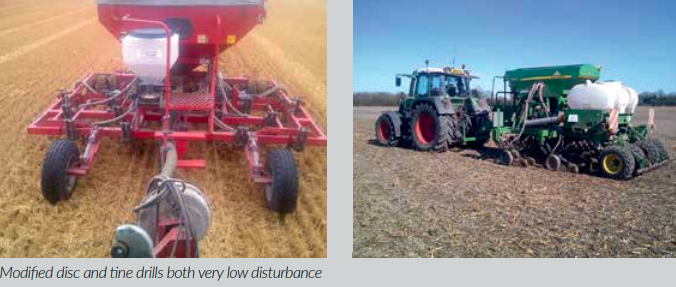
Instead of a tine and disc machine, a plough, a press, another press, a disc-roller and a harrow for every soil condition I now have two drills and some infrequently used rolls doing all the establishment. Homework consisted of reading catalogues of seeds of plants that I’d mostly not heard of, never mind grown before such as Phacelia, Vetch, Black Oats, Buckwheat, Crimson Clover, Forage Rye, Tillage and Oil Radish, White Mustard and Sunflower. What type of root system do they have, how do they influence soil biology? So the result of the changes has been to reduce the fixed costs of running a farm through requiring smaller tractors, less machinery, lower labour and tractor hours, reduced consumption of fuel and wearing parts but with the requirement of increased level of management skills and understanding of how nature works. Trying to work with it not work against or change what naturally happens is a new mindset you have to want to buy into to make Conservation Farming work.
Machinery inventory, listed by importance
• Polaris Ranger (used daily)
• Spade x 2 Fork x 1 (kinder on worms)
• Fendt 716 and 415 with Trimble RTK Auto-Steer
• S/H Horsch CO4 with Dutch openers and Bullock Tillage small seed hopper (soon to be 2)
• John Deere 3mt 750a bought new with Techneat small seed hopper
• Bateman RB25 24mt with full Trimble control
• JCB Loadall 530-70
• 6 of 1.25t Tote bins (extremely useful)
• KRM Bogballe spreader
• Grain and seed trailers
• 9mt Cousins rolls
• Note, Combining done on contract by a neighbour
Three years in how’s it been?
Fascinating, the farm is now a more interesting place, it supports more wildlife and with a more diverse rotation relies less on artificial inputs and feels much more sustainable. Whilst yields of spring beans and oats can’t be compared BCF (before Conservation Farming) as they weren’t grown. The yields of winter wheat and spring barley have been maintained but are still influenced by occasional partial flooding in a wet spring or over 30-degree temperatures in June. Not much we can do about that, and oil seed rape now grown again has increased.
Reduced cultivation and direct drilling have quickly changed the look, feel and structure of my soils which I’m hoping will make this light land yield potential be more resilient in a dry year with a more reliable margin through reduced costs. There is no question that the soil is now better able to resist compaction from machine trafficking due to higher organic matter levels, like driving on a spring mattress. Tramlines despite being perinatally placed with RTK are level not rutted and the ground carries harvest equipment very well. Fertilizer indices have remained stable at 2/2+ despite not having an annual dressing of P and K. The top 3” of soil have changed colour a are more friable leading to easier slot closure with a disc drill if using it in the right conditions, something we all get excited about in the early years of direct drilling.
Eureka moments
Visiting Agrii Stow Longa site and seeing a difference in soil comparing a cultivation plot and a cover crop plot 50 yards away that was like moving to a different county! Seeing pictures on Twitter and The Farming Forum of the variety of cover and companion crops in flower being grown in the UK! A social media contributor saying that if this field has just grown a 10t/ha wheat crop and I don’t do anything to change it (mechanical interference) why won’t it do it again! Attending a BASE UK arraigned talk arranged by Frederic Thomas @ FthomasTcs and subsequent visit to his and other farms in France which highlighted the value of a flexible rotation and companion cropping with rape. An Irish direct drilling farmer in America describing how the “fines” get washed down in cultivated soil upsetting the natural structure. Buying a spade and starting to open my eyes to what goes on underground.
Farm trials past and Ongoing
My future aims are to keep trying new things and on-farm trials, as I thought when I started out drilling wheat with the JD 750a for the first time in four foot high mustard, if this doesn’t work I can always plough it in and stick in some spring barley, truth is I’d now spray it off not plough but pushing the boundaries and making mistakes is the only way to learn. I also want to reduce reliance on Glyphosate, reduce nitrogen rates and maintain yields and ultimately to become an insecticide free farm, only trying on one field at present that is my target.

-
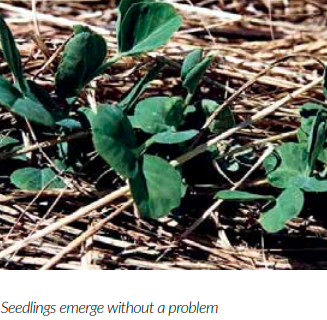
CHOOSING BETWEEN DIRECT DRILLING OPENERS
Dr C John Baker, Feilding, NZ
If you want to start a pub debate amongst farmers, try telling them which direct drilling (no-tillage) opener is the best. Everyone has an opinion. Here are some of the problems that direct drilling openers have to cope with, plus summaries of what published science and field practice tells us about how close each generic opener type comes to fulfilling those functions. This is an opportunity to sort fact from fiction. Please note, this author uses the terms direct drilling and no-tillage synonymously. It is helpful to firstly understand that the functions we have asked drill openers to do have changed over the approximately 60 years since the first attempts at direct drilling were reported in the 1950s.
• In the 1950s, the main purpose was to introduce new and improved pasture species into cloverdominant pastures in New Zealand’s Central Plateau without tilling the soil.
• In the 1960s and 1970s, the main aim changed to reducing wind and water erosion in North America and reducing on-farm costs and historical soil compaction in arable soils in the UK.
• By the 1990s and early 2000s, although the original soil erosion and cost objectives remained, emphasis shifted to making food production sustainable.
• Now the objectives have morphed further into reducing Green House Gas (GHG) emissions and regenerating soil health, plus all of the above.
Early direct drilling demanded disc openers because of their ability to handle residues. But most disc openers at that time produced patchy establishment and were expensive and difficult to use. So farmers gravitated to tined or shank-type openers over time. In the UK, the chemical company ICI Ltd (now part of Syngenta) sparked a lot of the early
developments.ICI had developed the herbicide paraquat but no European machinery company was prepared to design a special drill for untilled soils. ICI therefore designed its own triple disc openers. But these turned out to be so limited in their functions that everyone in Europe eventually gave up direct drilling altogether and reverted to minimum tillage, because it did not require a special drill – just shallower tillage tools.
Fermentation of “hairpinned” straw, slot wall compaction, difficulty in closing the slot, stimulation of unwanted grass seed germination and an inability to band fertilizer separately from the seed, were just some of the shortcomings of triple disc openers. Most USA drill designers simplified the design of triple disc openers to double disc openers and also introduced single angled disc designs. But these only partly overcame the shortcomings of the original triple disc design. On the other hand, Argentina and Brazil managed to live with triple (and double) disc openers, mainly because their soils and climates are so kind that it is difficult to fail with any opener design. Australia and North America were the first arable countries to abandon disc openers in favour of simple shanks or tines.
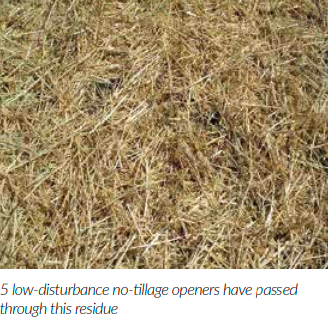
While these designs allowed fertilizer banding to be added to the list of desirable functions, tines disturb a lot more soil than most discs and block with long residues. This, in turn, severely limited the opportunity to use crop residues as a mulch to smother weeds, reduce evaporation, control the slot microenvironment and re-stock the soil with photosynthesised carbon.
Tined openers made crop residues into a partial enemy of no-tillage systems rather than their greatest asset. Their limitations in this regard forced farmers to change their notillage cropping practises to minimise the amount of residues that tined openers had to cope with. Burning made a comeback and other practices included pushing the residues aside, chopping them into shorter lengths and even burying them in vertical trenches. Most of these actions either required an additions pass over the field with a separate machine or demanded additional power from combine harvesters when they were asked to chop the residues during harvesting.
Over time, tined no-tillage openers have become synonymous with strip tillage because many farmers take comfort from seeing the seeds embedded in tilled strips of soil as they used to in fully tilled seedbeds. But the science shows clearly that re-positioning residues (chopped or un-chopped) over the sown slots in otherwise undisturbed slots (in order that the mulch of residues forms the top layer of the slot-covering medium with little soil visible) is one of the best things a no-tillage opener can do. It traps soil water vapour (humidity) in the seed slot itself, creates a barrier against the soil-discharge of CO2 into the atmosphere, and sequesters new carbon into the soil for the first time since mankind began arable farming on a large scale.
These are scientifically proven facts that are very significant for several reasons:
a) The world’s arable soils have already lost approximately 75% of their organic matter from oxidation caused by repeat tillage and other soil disturbance.
b) The residues left after harvesting arable crops are rich in carbon that has been re-captured from the atmosphere by photosynthesis. If left to decompose on the surface of undisturbed soils, this carbon is taken back into the soil by earthworms and other soil fauna.
c) All undisturbed soils contain 100% relative humidity in the pore spaces between individual soil particles, even when very dry.
d) Most seeds can germinate in 90- 100% relative humidity, even in the absence of liquid water.
e) All soil disturbance (including strip tillage) allows this pore space humidity to escape.
f) Because we have tilled soil for centuries (and thereby eliminating the role of pore space humidity) we have come to believe that seeds only germinate in contact with soil.
g) But it is no accident that the world’s network of seed testing stations germinate their seeds on blotting paper where there is no soil present at all.
h) In the field, untilled soils therefore have two moisture resources for germinating seeds, vapour and liquid water. Tilled soils have only one, liquid.
i) Strip and minimum tillage simply eliminate one of those germination resources altogether and therefore defeat one of the main objectives of no-tillage in the first place.
j) Not only does strip tillage allow water vapour to escape it introduces excessive oxygen to the soil, which re-oxidises soil carbon into CO2, that escapes at the same time.
Mankind has therefore inadvertently moved backwards in its otherwise understandable preference for highdisturbance no-tillage openers. We must now move back towards lowdisturbance no-tillage Against this background of conflicting problems and solutions, this author spent 30 years identifying and mitigating the issues that had been hampering direct drillers from the outset. Some 30 graduate students and numerous fellow scientists at New Zealand’s Massey Universities published a multitude of research reports in the international scientific literature that explain the many hitherto unstudied interactions between machines, soils, seeds, seedlings, fertilizer, growing plants, weeds, and pests. For those practicing no-tillage, the following list of issues might be familiar:
1. My drill or planter only works well if some prior surface tillage has taken place.
2. I only get reliable establishment if I cause maximum slot disturbance with the openers.
3. Most of the time I get lower crop yields that when I practiced tillage.
4. Although I get reasonable germination when the soil is crumbly, I get only patchy results when the soil is wet or even sometimes just damp.
5. I find that although crumbly soil is preferable, it is also drier and this sometimes creates germination problems if I don’t get rain or can’t irrigate immediately after seeding.
6. Where irrigation is available, I nearly always irrigate after notillage seeding.
7. In damp soils, although I can usually get adequate seed cover, I am often left with poor establishment when the soil dries after drilling causing slot shrinkage that exposes seeds. 8. I find that the timing of no-tillage drilling or planting is critical.
9. I find that my machine will direct drill some crop types well, but is limited with other.
10. I find I often have to make significant adjustments to the openers when going from one field to another, or even sometimes in the same field when conditions change.
11. I have had to modify the drill or planter openers significantly since purchasing the machine in order to make the machine work best in my soils.
12. I find that my machine works fine on flat land but is not very effective on hillsides.
13. I frequently have difficulty drilling into sod or dense pasture.
14. Stony soils cause numerous breakages and other problems with my machine.
15. My machine can cope with stones but in doing so brings many of them up onto the surface.
16. The soils on my farm have become more difficult to drill since I changed to no-tillage.
17. I seldom see 70% or greater residue-cover over the slots after drilling or planting.
18. I often find I have retained less than 50% of the residues that were there before drilling.
19. Getting good seed-to-soil contact is often an issue for one reason or another.
20. I try to avoid spring drilling if at all possible because establishment is problematical.
21. I restrict my no-tillage to lowvalue crops, cover-crops or pasture and seldom risk it with high-value crops.
22. My machine has difficulty handling heavy residues without blocking.
23. In addition to spraying, I nearly always need to pre-treat the residues or soil in some way before drilling or planting.
24. My machine handles chopped straw, sod or standing stubble OK but has difficulty with long un-chopped residue or straw, especially if it is damp.
25. I never attempt to direct drill through long rank grass or weeds without at least a 6-month spray-fallow beforehand so the residues can decay somewhat.
26. I frequently get residue blockages that are sufficiently severe to require stopping.
27. My machine physically handles residues OK but has difficulty avoiding hairpinning (tucking) of uncut straw into the slot, which in turn affects germination.
28. The way that my openers handle residues is to push them to one or both sides of the row.
29. My machine cannot position seed and fertilizer in separate bands at seeding.
30. I would like to drill in narrow rows but my machine can’t band seed and fertilizer separately in narrow rows so I am forced to drill in wider rows than desirable or broadcast fertilizer.
31. My machine can position seed and fertilizer in separate bands in some soils and at certain drilling speeds, but not in other soils or at other drilling speeds.
32. My machine can position seed and fertilizer in separate bands but uses two openers per row to achieve this, which increases soil disturbance.
33. My machine could not be described as a low-disturbance no-tillage drill or planter.
34. Seeding depth varies noticeably across the field, especially where the surface is not smooth.
35. My machine cannot seed consistently shallower than 1” (25 mm) without risk of the openers riding out of the ground altogether in some places.
36. I have difficulty getting enough downforce on the openers when the soil is hard or dry.
37. I cannot vary the downforce on my openers without leaving the tractor cab.
38. My machine is not capable of constantly and automatically increasing and decreasing the downforce applied to the openers on-the-move to match soil hardness.
39. I find I need to seed deeper than desirable in order to be sure of getting adequate covering.
40. The maximum speed I can seed at is seldom greater than 5 mph (8 km/hr).
41. My openers stimulate too much weed seed germination. 42. There are a large number of greasing points on each opener that need frequent attention.
43. I expect that the useful life of my current drill or planter will be less than 5 years.
44. I experienced a reduction in crop yield during the first few years of direct drilling.
45. Even after several years of direct drilling, my crop yields seldom beater tillage yields.
46. I do not believe that no-tillage opener design can influence crop yield.
47. Purchase price is more important to me than the machine’s potential to influence crop yield.
48. My dealer does not seem to know a lot about no-tillage as a farming practice.
49. I find no-tillage to be altogether more risky than tillage.
50. If it wasn’t for the environmental issues, I would prefer to go back to conventional tillage.
Our research sought to mitigate as many of these issues as possible and the results can be seen in the Table below, which quantifies how well (or badly) 8 generic no-tillage opener types perform 29 identified functions. Five of these functions (shown in red) are considered to be vital to all no-tillage cropping.
COMPARISONS OF 8 GENERIC NO-TILLAGE OPENERS BY FUNCTION
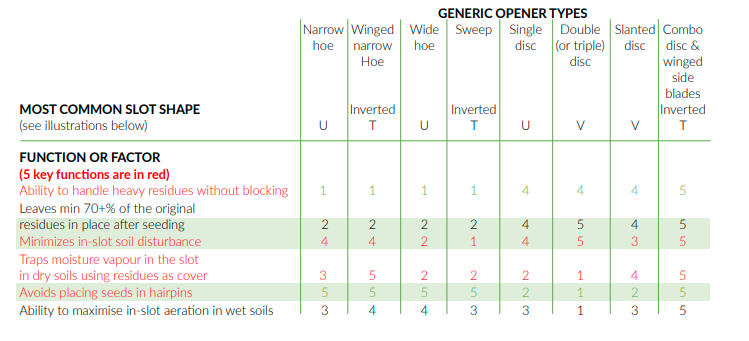
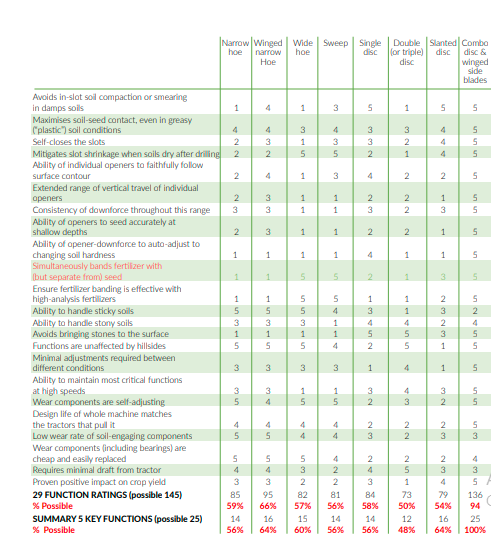
CONCLUSION:
• 5 of the 8 generic no-tillage opener types (63%) performed little more than 50% of the 29 desirable functions listed.
• 3 of the 8 (38%) performed about 2/3 of the 5 vital functions listed.
• Only 1 of the 8 (12%) performed all of the vital functions and 90% of the desirable functions.
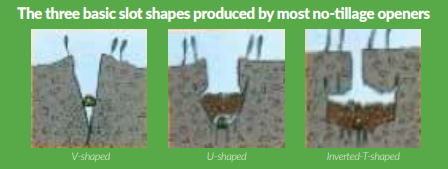
OVERALL CONCLUSION:
Most people are little more than half way towards mastering true notillage or direct drilling – but at least they are that far. And half way means progress in the right direction. Keep learning!
-
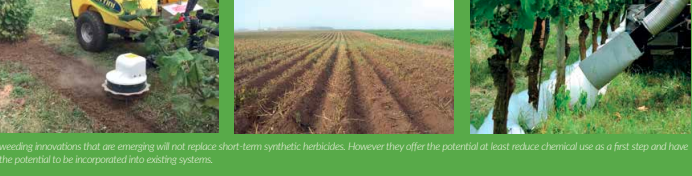
ALTERNATIVE WEED CONTROL – A WORLD WITHOUT GLYPHOSATE BUT WHAT ARE THE ALTERNATIVES?
Written by Maxime Barbier. First Published in TCS Magazine N°97 in March 2018
With the list of agrochemicals that is available to agriculture constantly shrinking and a threat hanging over the use of glyphosate, there is a growing interest more and more in alternative weeding solutions. All over the world many alternatives are being investigated; electricity, microwaves, thermal foam, water jet and bio herbicides. However a cheap and reliable alternative systemic weed killer at the same unbeatable price as glyphosate is not available currently. But who knows, from the emergence of all these innovations there will perhaps come new tools to help control the most challenging weeds growers and farmers face.
Will these alternatives consolidate or even improve our systems in both Conventional and Conservation Agriculture systems? The first problems appeared with the beginning of agriculture. Without the domestication of animals and crop raising we would probably have had to stay as hunter- gatherers, feeding on berries, acorns and wild meat. So busy finding food we wouldn’t be able to write this article! We evolved from largely a dense forest canopy of oak and beech to a succession of annual plants which has led to an incessant energy expenditure against Mother Nature who only wishes one thing; to return to a balance of perennials.
A struggle, helped in recent decades through the development of synthetic herbicides, has allowed us to maintain a perpetual crop of annuals. Now the list of usable agrochemical products as well as their efficiencies is decreasing, the situation is more and more urgent to find replacement techniques. Encouragingly, solutions exist already and interest is much revived and accelerated with the regulatory and consumer pressure on the use of glyphosate.
A complete herbicide through using an electrical current
The use of electricity as weed control technology was invented in the early 20th century but little interest was shown in the technique and had been largely forgotten due to the growth of synthetic herbicides after the Second World War. The first patents were issued in 1913, however it wasn’t until 1990 that the researcher NippoBresilien Satoru Narita, restarted the research on this method of weeding, with the help of private funds from a large owner of a forest that wanted to manage his weed problems which including herbicide resistance in some areas of the plantations he owned.
A project 10-year research was set up with the University of Brazil and in partnership with a Brazilian private sector company Sayyou, the first prototypes were launched in 2012. Large-scale trials of electrical current have been conducted in forestry and horticulture and also on wheat, soya, and citrus plantations. One major benefit is that the systemic action killing the whole plant. The current destroys both parts of the plant. The foliage and its root, preventing the plant from being able to regenerate.
“In the tests, the level of weed regrowth after 3 or 6 months is comparable to treated plots using glyphosate” says Benjamin Ergas, director of the company Zasso Group AG, from which Sayyou (now Zasso Brazil) is now part. Indeed, the machine, called the Electroherb, is distinguished by a destructive effect that kills foliage of the target plant to the root system. This mode of action is possible because the machine runs on a closed circuit. The PTO generator transfers the electricity to a row of “plant” applicators located on the front linkage made up of metal spatulas spaced every (10- 20 cm). Working widths are available from 1 to 10 meters. These applicators are interchangeable with a cultivator. As the spatulas touch the plants, the current flows through the tissues returning through a second row of spatulas which act as an earth closing the circuit. By getting into the vegetative parts of the plant, electricity has the action of breaking the vessels and damaging cells.
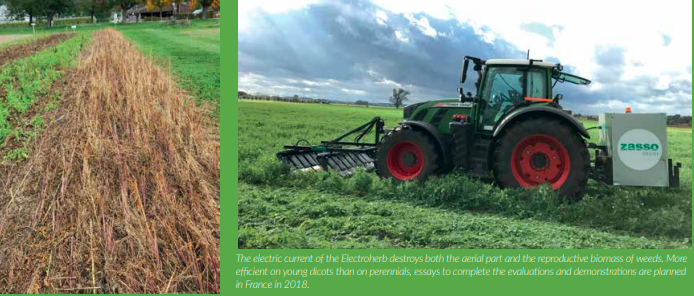
The machine delivers a high alternating current frequency (3-30 kHz), with a voltage (5,000-15,000 V), the charges usually don’t exceed 6000V. The dose of voltage is determined by field conditions and type of plants encountered. “The system self regulates according to many parameters: height and density of foliage and weed roots, soil moisture and density, topography, tractor speed and lastly width of Applicators. There are several patents that revolve around this problem, the main challenge being to provide a continuous and stable feed of current” explains the director. The energy needed varies from 100 to a 1,000 joules, enough to dry out foliage without burning or cooking it.
The destructive effect is better in full sun, although the manufacturer indicates that the machine can operate under most conditions, except heavy rain. There are less favorable conditions at dawn, because of the dew, and also when the plants to be destroyed are very close to the ground. In this case, the current may tend to dissipate more easily, the loss of effectiveness can then be order of 10% “ comments the specialist. The machine seems to have a useful action on dicotyledons, identified as having non-parallel leaf veins, tap roots and seedlings with two cotyledons. “The lower the dry matter of the plants, the more they are sensitive to the electrical current. This is equally the case for their root structure also.
Weeds with rhizomes like wild buckwheat are harder to destroy than grasses, which have a network of roots more which are more concentrated.” explains Matthias Eberius, technician at Zasso. New evaluations in 2018 were carried out in France. “We tried the prototype on organic plots of soybeans sown direct in the stubble of the previous crop. The technology is very interesting in organic systems as it may be possible to evolve towards a direct seeding approach. The operation was used just after sowing because we have a window of 5 days before crop emergence. The tool has controlled annual weeds, which measured between 5 and 25 cm above ground.
Control was less effective on some perennial plants, especially those well-established root systems, where it took two or three passages to achieve a kill. In our conditions, we must also be careful that the soil is not too wet so as to cause compaction because of the weight of the machine. In terms of diesel consumption, we’ve seen numbers between 10lt and 12 ltr / ha “, says Marcio Chaliol, from the Swiss company Gebana who supervises a group of organic producers “ABC” in southern Brazil. Since, the manufacturer worked on the machine weight, they have sold 15 machines in Brazil weighing on average 800 kg (200 kg for applicators and 600 kg for the generator). The aim is nevertheless for a significant weight reduction for future agricultural equipment.
The current working speed of Electroherb is around 3 to 5 km / h, although it is possible to go up to 10 km / h. The biggest constraint remains the contact time between the electrodes and the plant: it must be between 0.1 and 1 second dependant on the height of weeds present. With a current width of 2.5 m to 3 m wide, the machine has a work rate of 1 ha/hour. In terms of risks to soil fauna, worm tests of earth and springtails are in final stage of testing. At the moment, the final report is not available but according to the manufacturer, the impact is limited. “The results of tests carried out in 2017 under normal conditions and typical dose rates, did not show any significantly negative effects on earth worms, soil mites and microorganisms.
However tests carried out in non-targeted areas under normal use of equipment, such as wet permanent pasture, have revealed a sensitivity at very high doses, says the director. The scheduled tests for 2018 will seek to evaluate the dosage optimal for ensuring complete destruction of weeds while having minimal impact on non-target organisms. Is the magnetic field potentially harmful for the user? “Intensity of these fields was measured and the main source of radiation comes from the generator, which is shielded. The applicator’s radiation field that is produced is well below critical values for man and the environment” concluded Mr. Eberius. The price of the machine has yet to be announced by the manufacturer. They hope to launch the machine on the market in 2019.
By then, Arvalis and the French Institute of vine and wine will have finished conducting assessments on the safety of the machine. The current version will be available for demonstration in France in second half of the year.
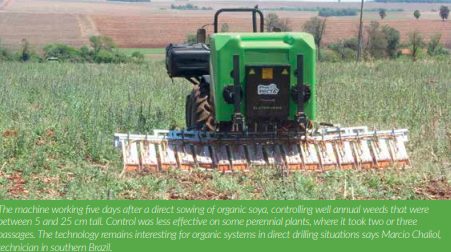
Microwaves for “Cooking” weeds.
Another technology that has the advantage of not touching the soil is weeding by microwaves. Created initially in order to warm up frozen dishes, his interest in destroying unwanted plants has been studied since 1920. From pizzas to weeds, there is only one step. Graham Brodie, of the University of Melbourne in Australia, in 2006 used a kitchen microwave with a power of 600 watts to study its weeding potential. “Microwaves make the water molecules contained within the food stuff or plant to oscillate very fast.
Plant moisture is transformed into steam that generates a strong pressure that will degrade the cellular structure. It’s also very impressive to hear the vegetation cracking as the machine moves across the field”, says Graham Brodie. Since 2008, he has been developing an experimental version with a power of 8 kW. It consists of four independent generators of 2 kW each. The output antennas are 11 cm wide which allows the wave to be directed between rows where cultivation has taken place. “The tool is used at a speed of 1 km / h, which generates a temperature 60 ° C on the floor, enough to eliminate weeds at a young stage. With a power of18 kW, it would be possible to work between 6 and 10 km / h, and there are already generators of nearly 100 kW “, he says. The machine is also used to treat the soil in order to reduce the weed seed bank and will also destroy some organisms, pathogens such as nematodes, bacteria and fungi various fusarium and slerotium).
This operation however requires much more energy and operates at a much slower forward speed: 40-50 m / hour. The effect on weed development, on the other hand lasts for much longer. Of the tests carried out before sowing cereals (rice, wheat) it was showed that under certain conditions a weed pressure reduction up to 85% over to the untreated cultivated land. The tests have also shown gains in yields that varied between + 35% and + 92%. “Microwaves will only penetrate to 5 cm, but that is enough to kill some of the bacteria present.
Which is the same as a tillage operation but without the soil movement. This destruction also causes a mineralization effect and the release of nitrogen is where the yield increase comes from. Populations of bacteria regenerate very quickly and after a few weeks, there are more bacteria than before the passage of the machine. It was noted that this effect on the soil treatments performance persists even during the next three seasons, “added Graham Brodie.
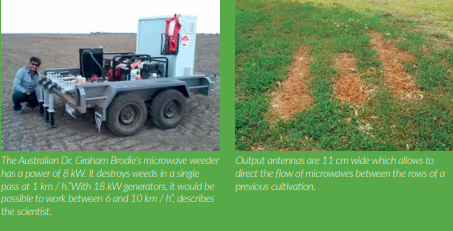
Microwaves also have a positive effect on slugs.
In addition to weeds, the technology helps to control slugs and snails. Tests show, the energy required to kill them was ten times less than those needed to destroy the plants present (see table). The flip side or these kill rates also relates to their effect on earth worms and all other useful macro fauna that can be found on the soil surface. “At this point we don’t know the effect of this on this macro fauna. Microwaves will probably kill earth worms very close to the surface just as a tillage pass would.
Those at depth are protected because the effect is not going below 5 cm”. The other major drawback of this technology is energy consumption. The 8kW machine needs two electricity generators of 7 kW. There is therefore a loss of energy inherent in the process of running the machine that emerges as heat lost to the atmosphere and which is not recovered. “The efficiency of a household microwave is less than 50% whereas in the agricultural system current is around 75-80%. But industrial generators in closed systems ensure efficiencies of 90%, concludes Graham Brodie.
Further green chemistry
In addition to these mechanical technologies, another solution to consider is bio herbicides. These are obtained from natural active molecules found in living organisms: bacteria, fungi, and plants. A quick overview of available solutions brings one particular product to the top of the search. Marketed by the company Jade, this is a product which has gained approval for field crops in France. Belukha is non-selective herbicide consisting of pelargonic acids (nonanoic acid), an acid fat obtained after during the extraction process for rapeseed oil.
These molecules act by contact dehydrating the cells of the plant, causing it to dry out. Belukha is a non-systemic product. In 2018 it was approved for use on vines, fruit trees and for desiccation of soil beneath the apple trees. Like all products of this type, it is advisable to apply in the spring or summer, on weeds in full growth. Its efficiency for certain weeds is know if used in good conditions and must be accompanied by crimping. “In our tests, when crimping and defoliating have been made in sunny weather it has increased the efficiency by 20% when used at the recommended dose (16 l / ha). The main problem to this approach is the cost per hectare. A price that is, hopefully, likely to decrease over time.
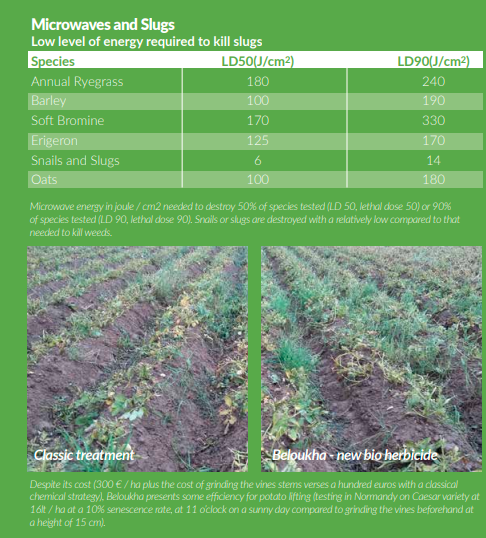
A Bio herbicide with potential – But at a Price
Another solution is pine oil extract. Marketed in New Zealand and Australia for several years, it is produced in Quebec by AEF Global. Efficiency has been increased by raising the purity of the refined oil. The product has been shown to achieve up to 100% control on some broadleaf weeds and also on some annual grasses. Used at a dilution rate of 10% (on plants at the cotyledon stage) at 20% (on plants over 5 leaves) without addition of adjuvant. Here again the problem lies in the cost which is around 600 € / ha. The product can however find its place in agriculture when used for spot treatment with a jet directed in the row of maize combined with hoeing inter row hoeing. “It can be used in cereals from the five leaf stage of the crop” says Claude Dubois, director of the company, which will launch the product in 2019 in the Canadian market.
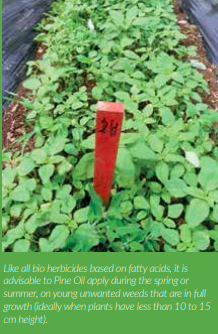
In the United States there is another bio herbicide based on fatty acid which interests the organic market. Marketed by the company Westbridge under the name of Suppress, it’s a mixture of caprylic acid and the acid caprique, two fatty acids that it is possible to extract from Goat cheese! On sale for four years it’s been used on several thousand hectares and claimed to be effective on dicotyledons and also on grasses, even in cold conditions. Applied at a dilution rate that varies from 3 to 9% (on average 6% for an application rate of 230lt/ha of water) depending on level of the plants development.
The product is used mainly on fruit trees and vines, taking care not to touch the foliage of crops with a cost of 250 €/ ha. It also has some use in cereals as a pre-harvest biological desiccant but remains a very expensive approach. It is also used on soybeans as an interrow herbicide, with directed applicators which protect the soya foliage. In Argentina it is used in soybean oil production by organic farmers who are trying direct drilling. The key to the products effectiveness is the lecithin contained within the legume that causes a drying effect. Lecithins are complex molecules, phospholipids, consisting in part of fatty acids. “It’s necessary to choose varieties rich in lecithin, while the dilution rate for this is 5%”. Attempts have been made to use it when direct drilling soya into a crimped crop of cereal rye.
A first application is made during the first pass when rolling the rye to create a mulch. While the second application is made after drilling. The product has a residual effect which lasts for ten days allowing the soya time to establish. The oil is not easy to use because it’s hard to mix in the tank of the sprayer and requires constant agitation. Levels of control are in the order of 66% on young seedlings at the 1 to 2 leaf stage, which is very useful for organic farmers. According to producers, sunflower oil could also be used, provided that the varieties are lecithin-rich.

Further products in the pipeline
Finally, another bio herbicide who might have a use for permanent cover crop situations, is a product is called Organo-ground. It consists of a lactic acid bacteria mixture of the Lactobacillus family, which comes from the fermentation of dairy products which produce citric acid and lactic. This product provides partial control of some legumes like white clover or bird’s-foot. Authorized by the Canadian Government, it is currently only available for domestic use under the name of Bioprotec herbicide and the cost is still too high for use on broad acre crops.
“The substance is attractive enough for use in amenity situations but because of the regulatory context in place, this is also limiting its use as a conventional herbicide. Due to its limited selectivity and its cost it never been marketed widely “ says Claude Dubois, from the company AEF global. He concluded it must be made clear that the development of products based on microorganisms is much easier outside the EU due to the less restrictive regulations. In France, INRA work a lot with the development and potential long term impact of this type product as the effects can take many years to become apparent. Because of this they will take longer to bring to market and therefore be more expensive. This is just a taste of some of the current developments in the bio herbicides arena one thing is certain is that they are likely to be less effective than current synthetic weed killers.
-
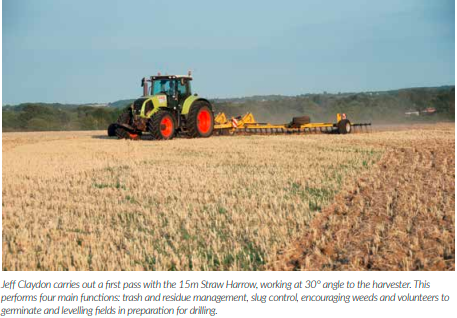
DRILL MANUFACTURERS IN FOCUS…
HORSCH PRONTO NT EXPANDS SEED DRILL FAMILY

Available in 6m, 8m and 9m working widths, the Horsch Pronto NT features the well-proven TurboDisc doubledisc coulter at 20cm row spacing in combination with a compact, leading wavy disc, making it ideal for low disturbance drilling and direct seeding. Operational speeds up to 20kph allow for a high area output even at smaller working widths. Horsepower requirement is very low as the wavy discs cut through organic material and cultivate the soil only in the seed rows, creating a fine earth in the seed horizon.
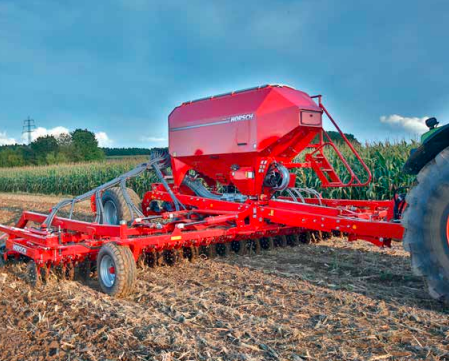
The necessary weight for operation of the wavy discs and seed coulters is transferred via the sophisticated hydraulic system of the machine. In very hard conditions, additional weight up to 1400 kg can be mounted on the frame. A large 4,000-litre seed hopper guarantees low idle times while a 5,000-litre double hopper allows seed and fertiliser to be applied at the same time. A micro-granular unit can be combined with double hopper as well as with the single hopper version allowing seed, fertiliser and microgranular compounds to be metered in only one pass.
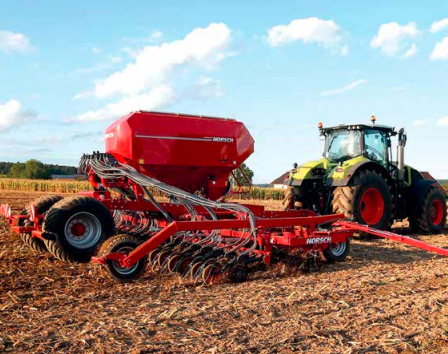
A PERFECT YEAR FOR EFFECTIVE STUBBLE MANAGEMENT

Stubble management is an essential part of any efficient, sustainable, profitable crop production system and conditions this season have been perfect to maximise the benefits. Jeff Claydon, who farms in Suffolk and designed the Claydon OptiTill® System, explains why.
Stubble management is an essential part of any efficient, sustainable, profitable crop production system and conditions this season have been perfect to maximise the benefits. Jeff Claydon, who farms in Suffolk and designed the Claydon Opti-Till® System, explains why. I guess that many who enter the world of no-till crop establishment think that all you need to do with such a system is to spray the stubbles with glyphosate and then direct seed. In a utopian world where Mother Nature is always kind, the farm is very clean and slug free you might be able to get away with that, but it’s not like that for most of us.
Back in 2002 when we were in the early stages of developing what is now the Claydon Opti-Till System we used to think that way too. Sometimes that approach produced fantastic crops, but others would be poor or even an outright disaster, so we spent many years trying countless different ideas, techniques and equipment to overcome this variability and achieve consistently good results. Initially, we genuinely thought that if we did not disturb the soil surface the weed seeds would degenerate, the chemical we applied would be closer to them and more effective, so our weed problems would quickly vanish. As it turned out we had more problems and to overcome them increased our use of expensive chemicals, thereby negating some of the savings in establishment costs that we were making. After years of continuous research, we have subsequently developed the knowledge and machinery to achieve the very best results, in all crops, soils and conditions.
Every season is different and the conditions it presents require careful assessment, regardless of which system you use, so we have learned to address the challenges that Mother Nature sets us. The last two years, for example, have provided perfectly contrasting conditions. In 2017 when we were harvesting in August the soil was wet and gummy, but this year it was dry and crumbly with plenty of natural cracking which went down much deeper than any subsoiler. When we finished harvest in July the soil was bone dry. As I write, on 28 August, over 80mm of rain has fallen in the month since harvest and we are seeing real benefits in terms of managing stubbles, which is a critical because otherwise slugs can pose a major risk. The adults rise to the surface, lay thousands of eggs under crop residue and quickly populate the area, making it hard to establish the following crop.
Where the combine stops there is a tendency to leave ‘Skylark’ patches due to the extra straw left in that area and the following crop growing on them will lack vigour, allowing weeds to develop while any seed in the straw, and sometimes on the surface, will lay dormant only to reappear in the next crop. We overcame those issues, and others, by developing the Claydon Straw Harrow.
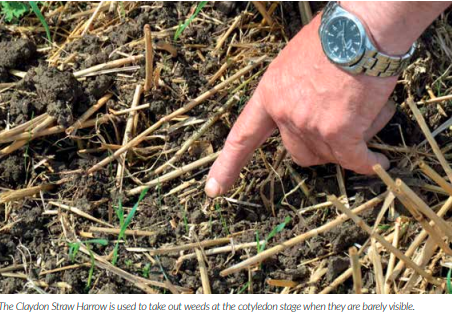
In 2007 we tried using a straw harrow on the Claydon farms, but quickly dismissed it because it appeared to do very little. How wrong we were, because where it had been used the crops were much better and more even, with far fewer slug and weed issues. After that, we further developed the straw harrow into the implement it is today, getting the weight and balance exactly right to achieve the best results. Within a week of finishing harvest this year we ran our 15m straw harrow across the entire farm (see it in action on www.claydondrill.com/videogallery). Operating at 18kph, at an angle to the combine, the 15m straw harrow covers 25 hectares an hour and, using less than 2.5 litres of diesel per hectare, distributes the chopped straw while creating a fine, level, 2cm-deep tilth which encourages volunteers and weeds to grow. The key is to follow quickly behind the harvester before the soil bakes hard, because creating this fine tilth on the surface will halt the capillary action in the soil, preventing it from drying and baking out.
Two weeks later, on 15 August, we had liberated countless one-leaf volunteers and the first flush of weed seeds had germinated. We then went over all our 400-hectare farm with the straw harrow to remove them. Everything wants to grow in a healthy soil and after just a few days we had another flush, so on 25 August the straw harrow was used again to remove them, with the benefit of destroying any slugs that had emerged in the meantime.
In the days and weeks before drilling we will have the opportunity to take out additional flushes. The weather is currently ideal and with each shower more germinate. Ideally, we will stop straw harrowing two weeks before drilling and will apply full-strength glyphosate to clean up any remaining weeds before winter wheats are established quickly and efficiently with the unique Claydon Opti-Till® drill. We use the straw harrow only when necessary, after we have assessed weed and pest issues. A pass of the harrow is fast, uses very little fuel and has a very low wearing parts requirement. Compared to a single pass of a deep cultivator, it is very inexpensive, and the cost is minimal in the overall scheme of things.
Our 15m Straw Harrow operates at 18kph and covers 25 hectares per hour, 400 hectares in 15 hours, which is the same output as our 24m sprayer. We use around 2.5 litres of fuel per hectare, so each time we straw harrow the farm we use around 900 litres. With red diesel at around 60p per litre it costs £540 to complete one pass with the Straw Harrow. With glyphosate costing around £3 per litre and applied at three litres per hectare the cost of chemical alone would be £3240, added to which you would still require nearly as much fuel to power the sprayer as to operate the Straw Harrow.
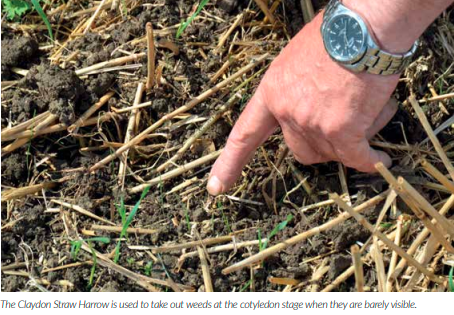
That means we can cover the farm four times with the Straw Harrow for roughly the same cost as one application of glyphosate, which is considerably cheaper than any other single cultivation pass using traditional cultivation equipment. Having farmed in the days before glyphosate I would not wish to return to that situation, so we must do all we can to preserve this valuable chemistry. When, finally, we do apply glyphosate it is as a single, fullstrength dose prior to drilling, which maximises its effectiveness and reduces the risk of resistance developing.
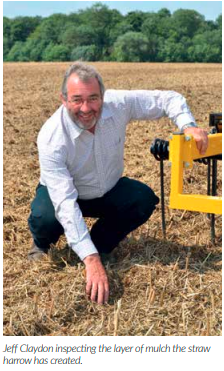
The Claydon Opti-Till system has been continuously developed over the last 16 years to enable crops to be established much more cost effectively and efficiently with reduced pressures from slugs and weeds. It also allows us to produce consistent highyielding crops. Our long-term average wheat yield is 10t/ha, but even with just 23mm of rain falling between 1 May and harvest this year yields were just 10% below that at harvest. Grain quality was excellent, achieved the top specification and with 13.8% protein, 350 Hagberg and a specific weight of 78h/l at 12% moisture it sold at £192 per tonne. I am sure that many farmers would be happy with that, whatever system they operate. To learn more about the Claydon OptiTill System and techniques to improve your farm’s performance contact your local Claydon dealer and arrange to visit our farm. You have nothing to lose and everything to gain.
-
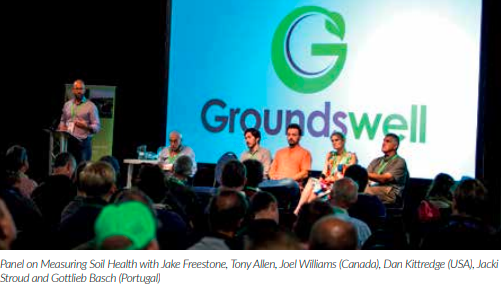
THIRD ANNUAL GROUNDSWELL SHOW ILLUSTRATES THE PARADIGM SHIFT TOWARDS MORE CONSERVATION – MINDED FARMING PRACTICES
The third annual Groundswell No-Till Show and Conference took place at Lannock Manor Farm on 27th and 28th June at Lannock Manor Farm attended by over 1,200 farmers, landowners and other delegates with a shared interest in soil health. The theme of the conference was health, the idea being that health is fundamental for soil, plants and the humans and animals that survive off the plants. The additional health argument lies in a healthy balance sheet and the take home message from Groundswell this year was the sense of achievability of this through a more conservation – minded approach to agriculture.
It was difficult to decide what to see at Groundswell with over 70 different sessions taking place with discussions ranging from no-till practicalities to small robots. The keynote speakers who had flown in from all corners of the world brought with them fresh ideas and ways of thinking that sometimes are hard to fathom for traditional UK farmers. Highlights included Dan Kittredge (Bionutrient Food Association, USA) questioning the assumptions when it comes to nutritional density of food. Packing out the Seminar Barns was Greg Judy (Green Pasture Farm, USA) who engaged both pasture and arable farmers. It was an inspiration to hear how mob grazing has transformed his farms soils and bottom line.
Ademir Calegari from Brazil was an entertaining and informative speaker, somewhat a Latin American no-till legend and a fountain of knowledge. The key message UK farmers took home was just how much improvement in soil quality can be made after a few decades of direct drilling and cover cropping. Ademir acknowledged that the climate differences between South America and Europe are indeed tangible but the principles of soil health are universal.
Joel Williams gave a talk each day of Groundswell covering Diversity and Carbon and Advanced Plant Nutrition which had the Conference Barn hanging on his every word. Delegates also had the opportunity of hearing Joel on the panel discussions on Measuring Soil Health which concluded, as we all know, that we are quite far from agreeing on a standard test to quantify this metric. The results of the much-anticipated No-Till Benchmarking Group, the first of it’s kind in Europe were released to a packed-out Conference Barn by Gary Markham of Land Family Business. The independent group of 12 no-till farms revealed an average £10/t saving on wheat production and machinery costs averaging at £31/t, compared to £54/t with other establishment systems. Delegates also heard from Jake Freestone of Overbury Enterprises who claimed his establishment costs have fallen to just £52/ha on their 1,200ha Worcestershire estate.
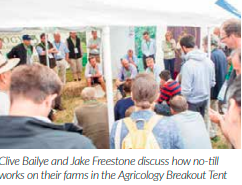
Extreme conditions in the demonstration field really tested the 13 Direct Drill Manufacturers who illustrated the establishment, either by tine or disc into a waist high multispecies cover crop. Some crimper rollers attached onto the front provided a forward-thinking approach to helping terminate the crops and this is certainly an area for more investigation. Amongst other highlights in the field; Cranfield University showcased their rainfall simulator showing a constant rainfall event on different soil conditions and how the water percolation and soil organic matter run-off is affected. In the AHDB Soil Pit Elizabeth Stockdale was keen to explain to farmers how significant it was that a root from the cover crop had followed a worm hole nearly 2m deep to find moisture and even in the drought conditions there were visible water drops forming at the bottom.
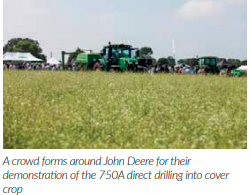
There were a significant number of campers at Groundswell this year and the weather was definitely on their side. As the sun started to set on the Wednesday evening, “The Earthworm Arms” Bar was packed out with thirsty minds sharing ideas over a pint or two of local ale and a grass-fed Argentinian asado. Adam Horovitz’s words from his book “The Soil Never Sleeps” could not have been more appropriate!
Groundswell Host Farmer writes..
It was good to see so many of you at Groundswell at the end of June. Like the best parties, the whole thing passed in a bit of a blur, leaving memories of snippets of talks and conversations and demonstrations, as well as regrets for all the things I missed. I was worried that the ground would be a bit hard for the drills to make much impression on, but they all, in their own ways, scratched through the surface and planted their seed and each drill was followed by a mob of eager farmers looking for all the world like a flock of seagulls, studying their performance. I’ll leave it to others to rate which was considered the most successful… Of course, planting the seed is vital, but by no means the most important aspect of making no-till work on your farm.
Keeping on top of weeds and disease, getting fertility right, planning what crops to grow and nurturing the soil are all crucial as well. All these subjects were covered in the various talks throughout the two days. For those who weren’t there, as well as those who were but couldn’t be in two places at once, we’ve now uploaded most of the talks from the two main halls onto our YouTube channel (type in Groundswell Agriculture on YouTube to find them). There’s a lot of fascinating ideas and hard won knowledge in there.
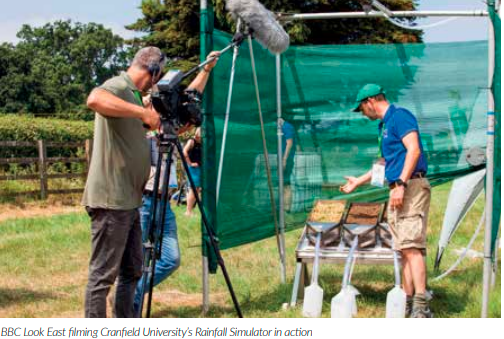
One thing we’ve struggled to find on the farm here, is anything resembling a coherent rotation to adopt. Talking to other farmers, it seems we’re not the only ones. Diversity of cropping is one of the cornerstones of Conservation Agriculture, but decent paying break crops are hard to find, peas and beans have been disappointing to say the least (although we tend to get a cracking wheat crop after them), rape is a nightmare with flea beetle, pigeons and constant expense from the moment you drill it until it leaves the farm and the various alternatives leave a lot to be desired.
So we’ll be focussing on rotation, rotation, rotation next year, as well as companion cropping (aka getting all the diversity in at one go). Having ruminant animals on the farm gives us opportunities to grow summer covers for grazing, but not everyone has this option. We had the idea of having some form of speed-dating arrangement to pair arable farmers with graziers looking for out of season land to feast on. If anyone has an idea of how we can make this work, please get in touch. We are also planning on moving the demonstrations to another field on the same side of the road as the lecture barns, as we reckon it’s about time we took a crop off the demo field before club root or some similar horror infects it. It’ll also reduce the risk of losing delegates to a road traffic accident…
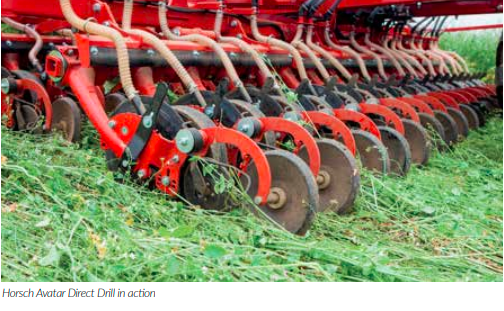
This is a show for farmers, by farmers, as we keep emphasising. So if any of you have thoughts or suggestions of what you would like to see covered next year, please get in touch. We know no-till works and we know it can work much better… there is not much enthusiasm from the mainstream advisory bodies for doing this, so it’s up to all of us farmers to share our experiences and ideas to make it successful.
With this in mind, there will be more focus on adapting the lessons that our colleagues in the Americas and the Antipodes have learned, to European conditions. We’re hoping to book more local speakers, remembering that local post-Brexit, still means European… We’ve been quietly pleased with this years harvest, although everything suffered with the dry weather, nothing was a complete write-off and the barns are full enough and our costs this year have been very low, which means more money in the bank to add to more carbon in the soil. Life just gets better and better! John Cherry [email protected]
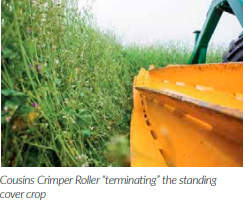
-
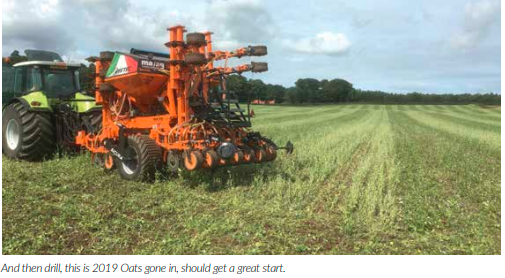
DRILL MANUFACTURERS IN FOCUS…
Interesting things?

My experiences so far with the Ma/ Ag direct drill, if you want to direct drill then some thought must be given to the system well before you even have a demo. Yes we can drill into almost anything from last year’s crop aftermath to fully cultivated seedbeds. Direct drills, especially low disturbance machines can’t work the ground and certainly don’t level undulations, tramlines or carry out any remedial work so best not to do the damage in the first place. Tractors, trailers and implements with the right tyres, operators with the right instructions and also the knowledge and reasons of what is trying to be achieved. For example, on a recent demo a telehandler complete with bag of seed drove halfway down the headland to fill up the Ma/Ag drill, just adding to headland paddling, far better take the drill to the gateway surely?
Great experiences with cover crops, holding nutrients and moisture, tap roots driving through the pan, lots of organic matter back into the soil and far cheaper than using diesel and steel to do the same job !
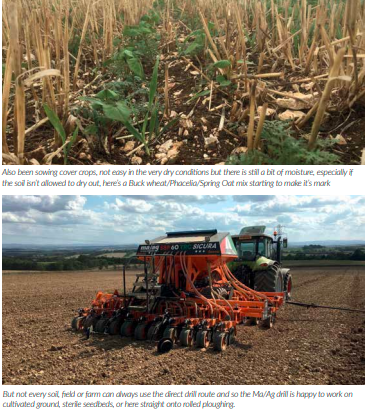
-
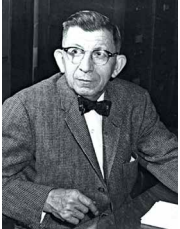
THE ALBRECHT METHOD
Written by Steve Townsend
Think you have your soil fertility mastered? Well-read on about possibly the most misunderstood soil scientist Dr William
Albrecht, skip this article and you could be missing somethingI don’t think there is anybody in agriculture more misunderstood or misquoted than Dr William Albrecht, who was emeritus professor of soils at the University of Missouri from 1919 – 1959. He began his work in medicine but soon switched to agriculture when he realised that medicine focused on symptoms and not the cause. He reasoned that most health issues were the result of poor nutrition and this could be best addressed by focusing on the soil. He coined the phrase ‘healthy soil, healthy crop, healthy animals’, and we could possibly add to that ‘healthy humans’. Many critics dismiss his work entirely but I believe they are missing the point and that is that crop production is an expression of the soil.
The trouble started, as I see it, when Professor Albrecht allegedly said that the ideal ratio in the soil for calcium and magnesium was 68% and 12% respectively. The wider scientific community took umbrage at this as it threatened the status quo and what they had been preaching on soil fertility. This position still exists today with some scientists saying that Albrecht’s work has been peer reviewed and so doesn’t work or is not relevant. The scientists of this persuasion then set out to prove that this statement was wrong and they found soils could yield just as well without the calcium and magnesium being in these proportions.
This is the crux of the matter. I have read many of Professor Albrecht’s works but not once have I found the alleged statement. He refers to it as the average ratio as you could expect across many different soil types. The ratio he did talk about was that the calcium and magnesium should add up to 80% of the base saturation, then a soil could be considered balanced. Balanced soils he believed gave the most consistent yield and quality, not necessarily the greatest yield at one time. Hopefully that has helped to clear up some confusion and that the Albrecht method of soil testing could have some value to your farm business. Albrecht talked about the soil as a complete entity encompassing chemical, physical and biological attributes.
He recognised that correcting some mineral balances took care of the chemical part of the soil which in turn allowed the physical structure to improve which then provides an environment for the correct biology to flourish. It is a selfsustaining cycle. Of course, like the minerals, the biology has to be there in the first place for it to flourish, it could well be argued that decades of intensive agriculture have depleted our soils to the brink of extinction and the biology may well need re-establishing. Conversely though what this also shows is that there will be little response to ‘bugs in jugs’ if the chemical and physical environment is not there to allow them to flourish.
Exploring Albrecht’s research further, he suggested that there is an ideal ratio between the levels of calcium and magnesium in the soil, which should be related to the soils clay content. While Albrecht did not discover cation exchange he did link cation exchange to the colloidal clay particles within the soil. The clay colloids are negatively charged and have the ability to exchange calcium, magnesium and potassium (amongst many others) for hydrogen with the plant.
Albrecht research initially focused on forage production, and he discovered that calcium was essential in increasing protein content within the forage. He then took this a step further and began trying to relate the calcium content of the soil to the forage and then onto the health of the animal. With this work he found that improved animal health was reflected by the improved forage. This led him on to his hypothesis of the ideal cation ratios in the soil. For the soil he was working on he suggested that the calcium saturation percentage should be 65% and the magnesium should be 15%. But the important point to note here is that the calcium and magnesium percentage should total 80%. Further work by Albrecht and others then suggested that there was a range of ratios depending upon soil clay content. These ratios are where we are today with ideally calcium 60-70% and magnesium 10-20%. Albrecht ignored soil pH reasoning that if the cations are in these ratios the pH will look after itself at around pH6.3
So what does this mean to you?
Many consultants will measure the cation exchange and calculate the calcium and magnesium percentages. A typical result, from a calcareous soil, may look something like this; calcium 84% and magnesium 5% to which you would conclude that all is well. The excess calcium can’t be giving me a problem, after all the calcium is the beneficial element isn’t it and I have low magnesium? But if the calcium level is too high that generally means other cations have suffered as a result. Albrecht discovered that as calcium becomes excessive it ‘masks’ magnesium. In the example above the calcium and magnesium percentages totals 89%, which is beyond Albrecht’s ideal of 80%. If you try to ‘strip’ out the calcium the magnesium level will rise by the corresponding amount. Thus if you lowered the calcium to 70% you would increase the magnesium by 14% to the more accurate figure of 19% which is now a soil with excessive magnesium!
Magnesium in excess is a problematic element in the soil. Excessive magnesium causes clay aggregates to disperse. Clay dispersion reduces soil aggregation in turn reducing pore space (the soil has slumped) and consequently reducing water and air movement. Without air and water movement your soil will no longer have beneficial functioning biology which facilitates nutrient cycling, soil carbon building, and help with soil aggregation to produce the crumb structure and tilth that you need. It has long been known that calcium can ameliorate the effects of heavy soils and their tendency to slump and compact. If your soils slump and compact your crop production will suffer. Your soil will no longer have the pore space to facilitate air and water movement.
But simply adding limestone to correct soil pH using a rough formula based around soil type is imprecise. And what happens if the soil pH is at pH 6.5 or above and there is still a calcium deficiency? I will use the example of a client who had a pH of 7.8, but when the cation exchange was measured revealed a calcium percentage of just 46%. That’s just not possible is it? Well, yes it is, if magnesium and potassium have filled the cation exchange sites they will have a stronger basicity than calcium alone, and result in a high pH.
A simple pH test would suggest that calcium is not necessary, in this situation, and would result in poor crop production (as was the experience in this case), through lack of calcium, poor drainage, low air content and low health soils. Making sure you have the correct calcium content in your soil therefore can’t be achieved by pH alone! Why is this important you might ask? It’s not just about calcium, but blackgrass hates correct calcium & magnesium levels and as mentioned before, producing a healthy soil is difficult without a good balance of these and other elements. If soil health, conservation agriculture or reduced tillage establishment systems are your goal don’t overlook the basics and assume your soil will cope without the right chemical balance. You may be spending money in the wrong areas when a simple soil test will put you on the right track or leave you fighting a chemical imbalance with the cards stacked against you, leading to poor future and present crop performance.
-
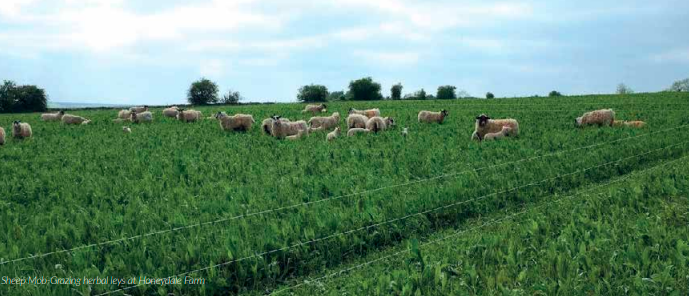
PUT THE BIG ‘G’ – GRASS – BACK INTO YOUR FARMING SYSTEM
Article adapted from a presentation given by Cotswold Seeds MD Ian Wilkinson at this year’s Groundswell event
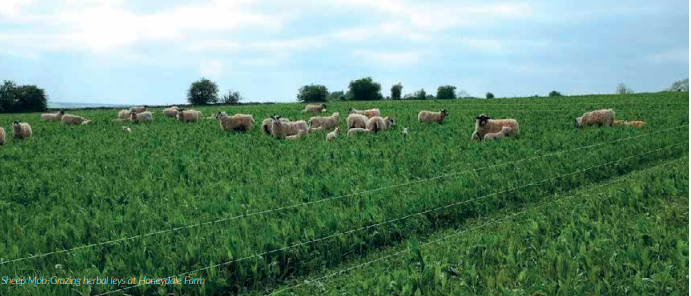
In 2016, the NFU reported the biggest year-on-year fall in farm profitability since the millennium, as farmers deal with the impact of devastating cuts in the value of their products and the rising prices of nitrogen fertiliser. There are two ways to increase profit: Intensify to produce more, or lower cost of production with self sufficiency. ‘Farmers should have a low cost of production…be a seller not a buyer’ said Roman statesman Cato back in 234 BC. But how to achieve this?
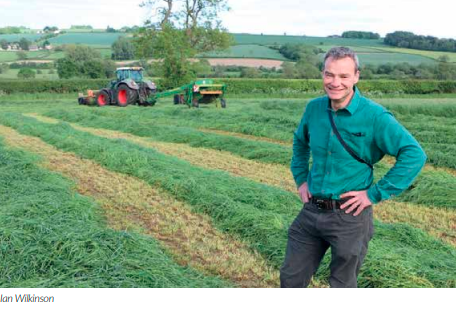
Free Fertilising
After the Second World War, Sir George Stapledon advocated the ‘dual aspects’ of ley farming. In his book ‘The Plough Up Policy and Ley Farming’ he wrote: ‘Considered as an agent for the promotion of soil fertility, the grass sod must be regarded as perhaps the most valuable foundation upon which the farmer can build.’ In his book, ‘Thirty Years Farming on the Clifton Park System,’ William Lamin recounts how he took over poor sandy land near Burton-on-Trent and made it one of the most productive in the district, giving credit to Robert Elliott, of Clifton Park, who demonstrated how ley farming and rotational grasses helped to build fertility.
A clover rich ley will reliably produce the same amount of nitrogen that farmers typically apply in costly artificial fertilisers. Nitrogen accumulates in small nodules found on clover roots, with some of it being released as the clover plant matures. But after the ley is ploughed in, a large amount of nitrogen is released into the soil and is available over many months. Peak nitrogen availability is around four months after termination, making it available to the following crop which is often a cereal or brassica.
Humus Building
Present day farmer Rob Richmond, who farms light land near Cirencester, has shown how effective ley farming can be for humus building. Twelve years ago soil organic matter on his farm was 2-4%. In 2017 it had risen to 8-9%
Soil Enriching
Data collected by McCance and Widdowson shows the mineral content decline in food over a 50 year period (1940-1991). Levels of sodium, potassium, magnesium, calcium, iron and copper have all significantly dropped in vegetables, milk and meat. Minerals come from the soil and deep rooting plants (ribgrass, chicory, sheep’s parsley, yarrow, and burnet) extract them.
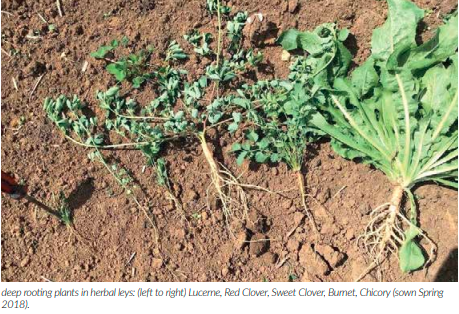
Drought Resisting
The extreme dry conditions this summer have demonstrated the need for drought resistance. Ryegrass has a fibrous shallow root structure and can’t reach down to moisture, but plants in a deep rooting herbal ley can and many farmers have reported that the only crop that’s remained growing on their land this summer is the herbal ley. The best drought resistant species in mixes this year were chicory, sainfoin and birdsfoot trefoil.
Pan Busting
Chicory, with its deep tap-root, also busts through pans to improve the structure of the soil and help water infiltration.
High Yielding
Charles Darwin first noted how different plants grown together yield 50% more than their average, due to their overlapping growth habits and patterns. With some species providing their yield early season and others maturing later, the grazing season is also extended.
Black-grass Suppressing
Long grass leys kill blackgrass. It’s an annual, and doesn’t survive the grass ley part of a crop rotation.
Carbon Capturing
Plants capture carbon from the atmosphere and transfer it to the soil where it’s utilised by the soil biology to help unlock precious nutrients which would otherwise be unavailable to the growing plants. A small increase in soil carbon content can also have a huge impact on its ability to hold moisture, so vital in times of drought.
A m a z i n g Grazing
A herbal ley (with 30-50% legume content) is more palatable as forage. Livestock eat 10- 15% more and the live weight gain and milk production is improved. Some plants such as sainfoin and birdsfoot trefoil contain condensed tannins in their leaves and stems, which can reduce worm burdens. Charles Hunter-Smart, who farms 2500 acres on the Bradwell Grove Estate, has not needed to worm ewes for two years and didn’t worm any lambs in 2017.
Crop Rotating
The key to success with a herbal ley is shallow sowing and good seedbed consolidation. For the best results, herbal leys should be left in the ground for four years, giving optium forage yield, root growth, nitrogen fixation and species diversity. Though they are traditionally grazed, herbal leys can also be tailored for cutting for silage (or AD plant) or they may be cut and mulched with a topper.
Put the Big G back into your farming system. Get back on the grass!