
Written by Jen Hawkes
Consumer resistance is often seen as a potential barrier to the adoption of precision-bred crops, but new research suggests low awareness may not necessarily translate into opposition.
Precision breeding has an awareness problem. But does that translate into an acceptance problem? The distinction could prove crucial as precision-bred crops move closer to UK fields.
Consumer resistance has long been seen as a potential barrier to adoption, yet new research suggests attitudes may be characterised more by uncertainty than opposition.
A recent survey explored farmer and consumer views on precision-bred oilseed rape (OSR) and products made from it. Conducted as part of the three-year, £2.5m Defra-funded LLS-ERASED project, 200 consumers and 120 farmers were questioned about their awareness, attitudes and trust of the technology. It found that 93 per cent of the consumers surveyed had heard “nothing at all” or “not very much” about precision breeding, compared to 51 per cent of farmers.
Once the concept was explained via a brief description, 90 per cent of consumers correctly identified what precision breeding involved. Importantly, consumer awareness levels did not appear to link to rejection of the technology, with 66 per cent saying they would be “fairly” or “very likely” to buy rapeseed oil made from precision-bred oilseed rape.

Dr Rachel Wells of the John Innes Centre and LLS-ERASED technical lead says the findings are encouraging, but recognises there is a communications challenge.
“With so many consumers unaware of precision breeding and its benefits for sustainable food production, it is clear that advocates have a job to share messages more widely.”
Uncertainty over opposition
Following the theme of sustainable food production, 71 per cent of consumers were fairly or very confident that breeding crops to resist disease was a good way to reduce chemical treatments, rising to 91 per cent among farmers.
This was seen as part of a bigger picture solution however, with farmers and consumers recognising that disease resistance would not completely remove the need for other forms of crop protection, and most agreeing that resistance should be used as part of a wider approach rather than a single silver bullet solution.
Attitudes became less decisive when consumers were asked whether precision-bred crops could pose risks to human health or the environment. A substantial proportion selected a neutral response, rather than either agreeing or disagreeing. For Rachel, this represents a need to build understanding.
“Once people understand what precision breeding involves and the problem it is trying to solve, many are prepared to consider its potential,” she says.
“That doesn’t mean concerns should be dismissed. It means people need clear information, credible evidence and the opportunity to form an educated view on precision breeding.”
The right to choose
Three-quarters of consumers said food made using precision-bred crops should always be labelled, but their main motivation was not a stated fear about safety; among those who wanted labelling, 76 per cent selected the statement “I have the right to choose what I eat” as a reason.
The term “precision bred” was the most popular information to include on a label, selected by 66 per cent of consumers. Farmers were less likely to consider labelling necessary and showed more interest in using a QR code to provide additional information.
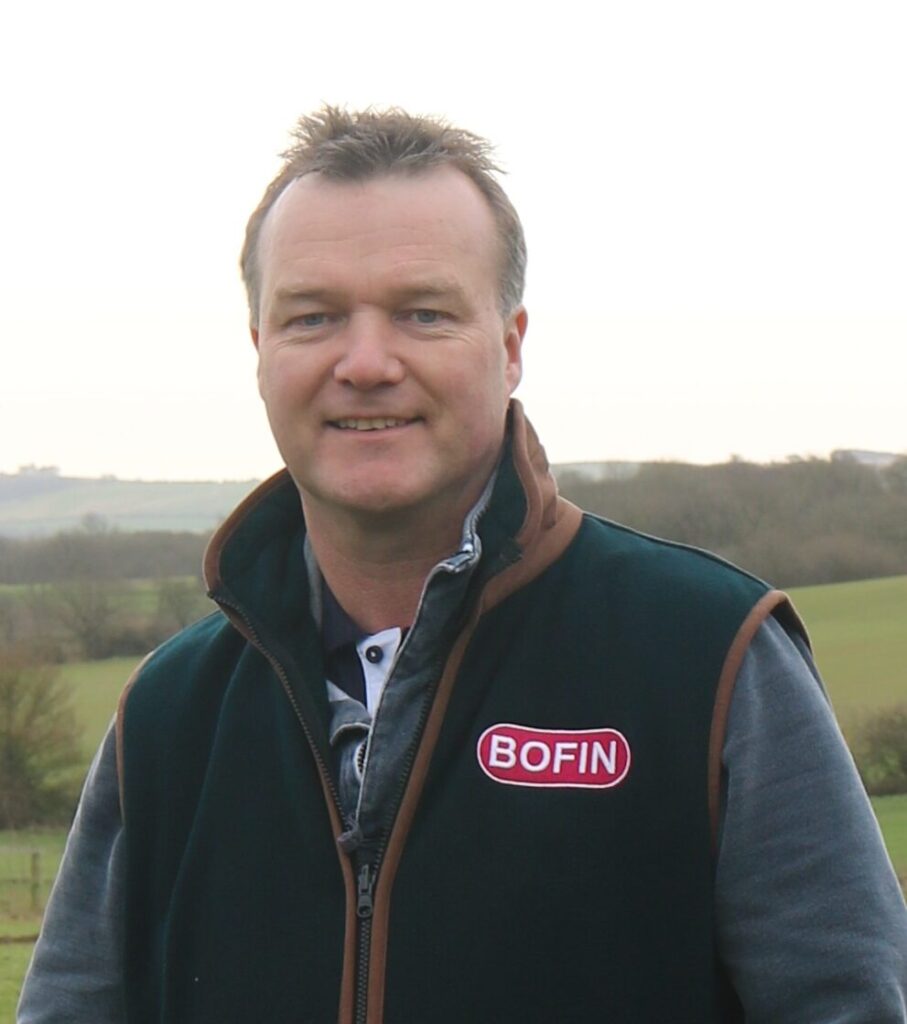
Tom Allen-Stevens, managing director of the British On-Farm Innovation Network (BOFIN), who commissioned the survey, says: “The survey shows that once consumers have some knowledge of precision breeding, they are open-minded about food products made from it, but they want appropriate labelling so they have the right to choose.”
How that information is presented, and who provides it, may prove just as important as the label itself, he says. Universities and academic institutions were among the most trusted sources of information for the farmers and consumers surveyed. Farmers themselves also ranked highly for trust.
Farming organisations, plant breeders and the farming and food media occupied the middle ground, while retailers and food processors or manufacturers were among the least trusted sources.
“That creates a clear role for independent researchers and farmers with first-hand experience of growing precision-bred crops,” continues Tom. “It also suggests communications led solely by those selling or processing food from the resulting crop may struggle to command the same confidence.”
Ready to grow?
Some 85 per cent of the farmers surveyed said they would be “fairly” or “very likely” to grow precision-bred oilseed rape when available, yet 91 per cent needed confidence that buyers and processors would accept it.
“Farmers can see the potential, particularly where precision breeding could improve disease resistance or reduce reliance on chemical controls,” says Tom. “Potential alone will not justify growing a crop commercially.”
Some 89 per cent said they need independent evidence of yield or disease-control benefits before considering growing precision-bred OSR. Eight out of ten said they would grow it if seed cost was similar to conventional varieties, while 73 per cent expected improved gross margins from precision-bred crops.
The survey also identified additional monitoring or auditing requirements as a potential deterrent. Once buyer acceptance was assumed, ongoing monitoring required by seed suppliers became their greatest concern.
“They need to know how it performs in the field, what the seed will cost, who will buy the crop and whether growing it will create additional requirements,” says Tom. “Unless those questions are answered, interest will not necessarily translate into hectares.”
About LLS-ERASED
LLS-ERASED – Light Leaf Spot Enhancing Resistance And reducing Susceptibility with EDiting – is a three-year, £2.5m farmer-led project, funded by Defra’s Farming Futures R&D Fund. Defra is working in partnership with Innovate UK, the UK’s innovation agency, which is delivering the programme. Project number: 10167261.
Led by BOFIN, the project brings farmers and scientists together to advance and test precision-bred traits, alongside developing new disease-management tools and integrated pest management strategies. Other project partners are the John Innes Centre, University of Hertfordshire, ADAS, UK Agri-Tech Centre, Cibus Europe, Elsom Seeds, KWS UK, Limagrain UK, DSV UK, NPZ UK Plant Breeding, and Scottish Agronomy.