
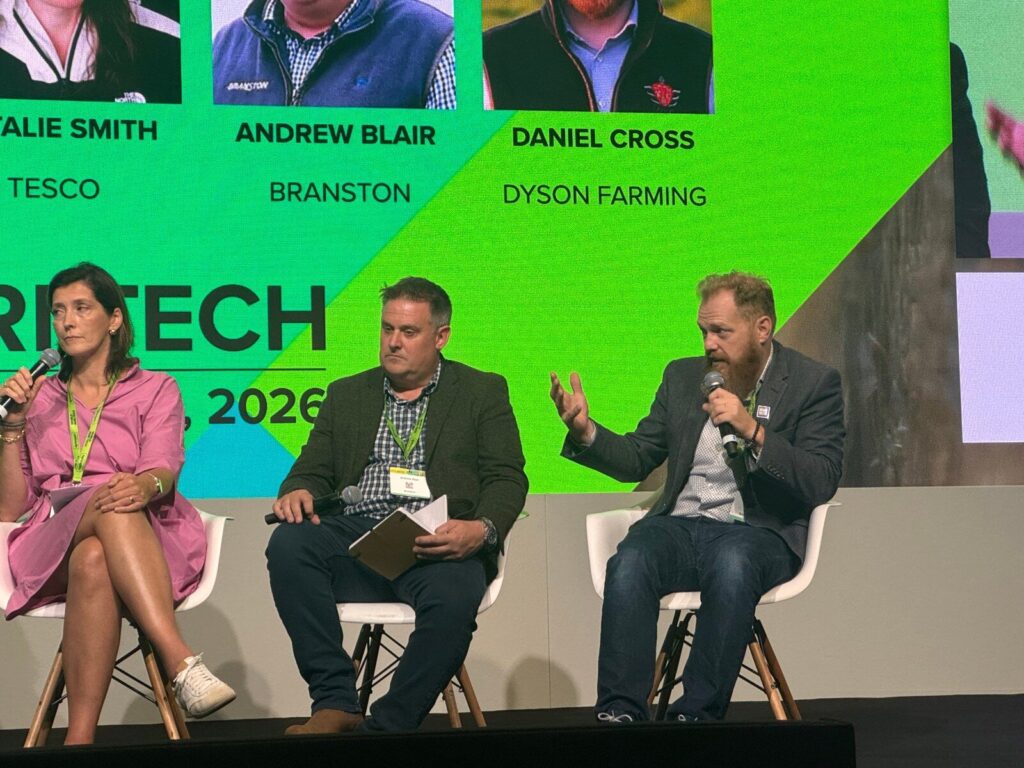
At World Agri-Tech in London, a growers’ panel including Dyson Farming, Branston and Tesco got down to what actually pays on farm, and why so much clever kit never gets past the trial.
The chair, Harrie Vollaard of Dutch co-op Agrifirm, opened with a fair point. A conference about farming innovation, held in the middle of September, isn’t going to get many farmers through the door. “September is actually one of the busiest months of the year for the farmer,” he said, and asked whether the organisers had got the timing right.
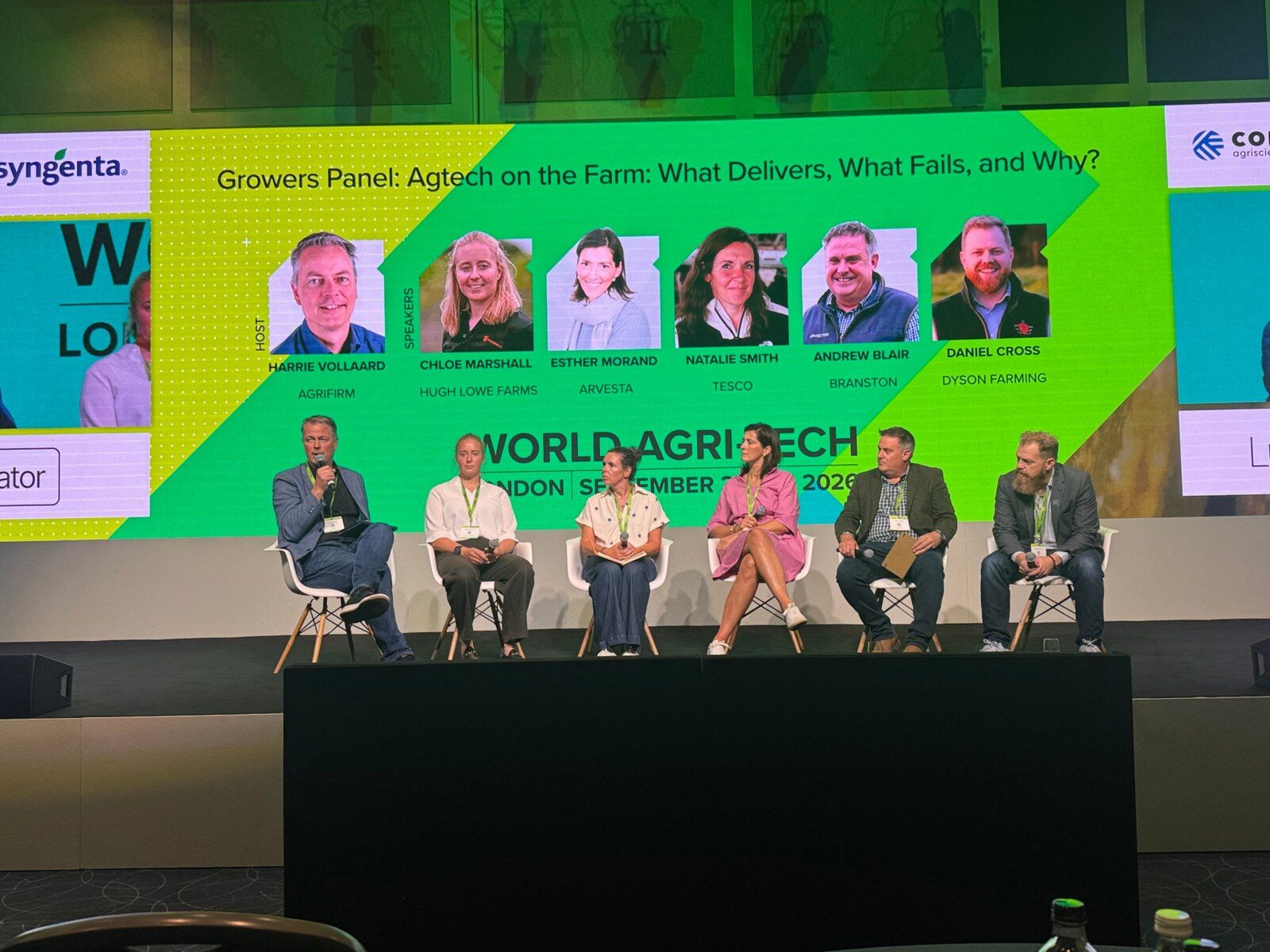
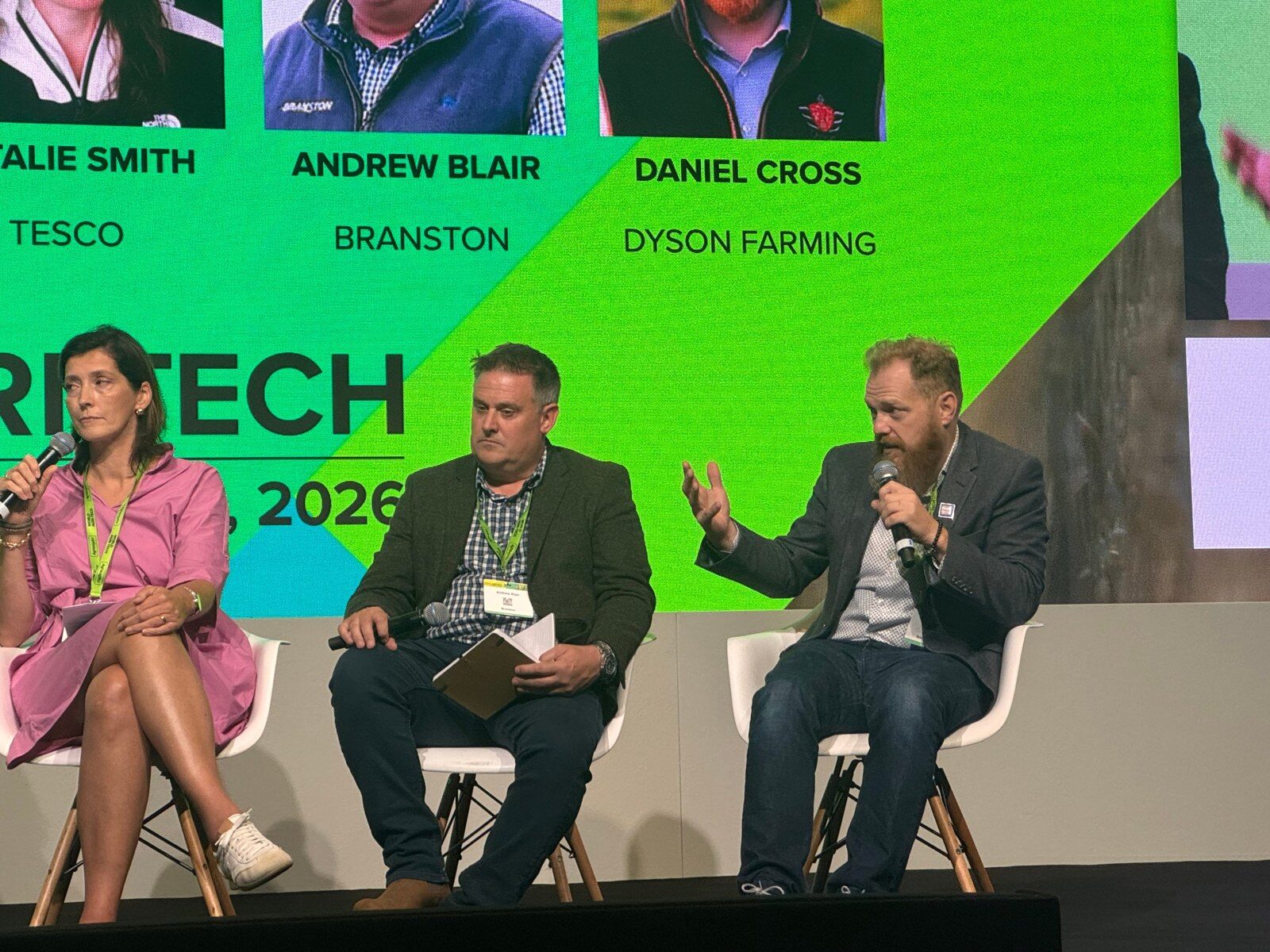
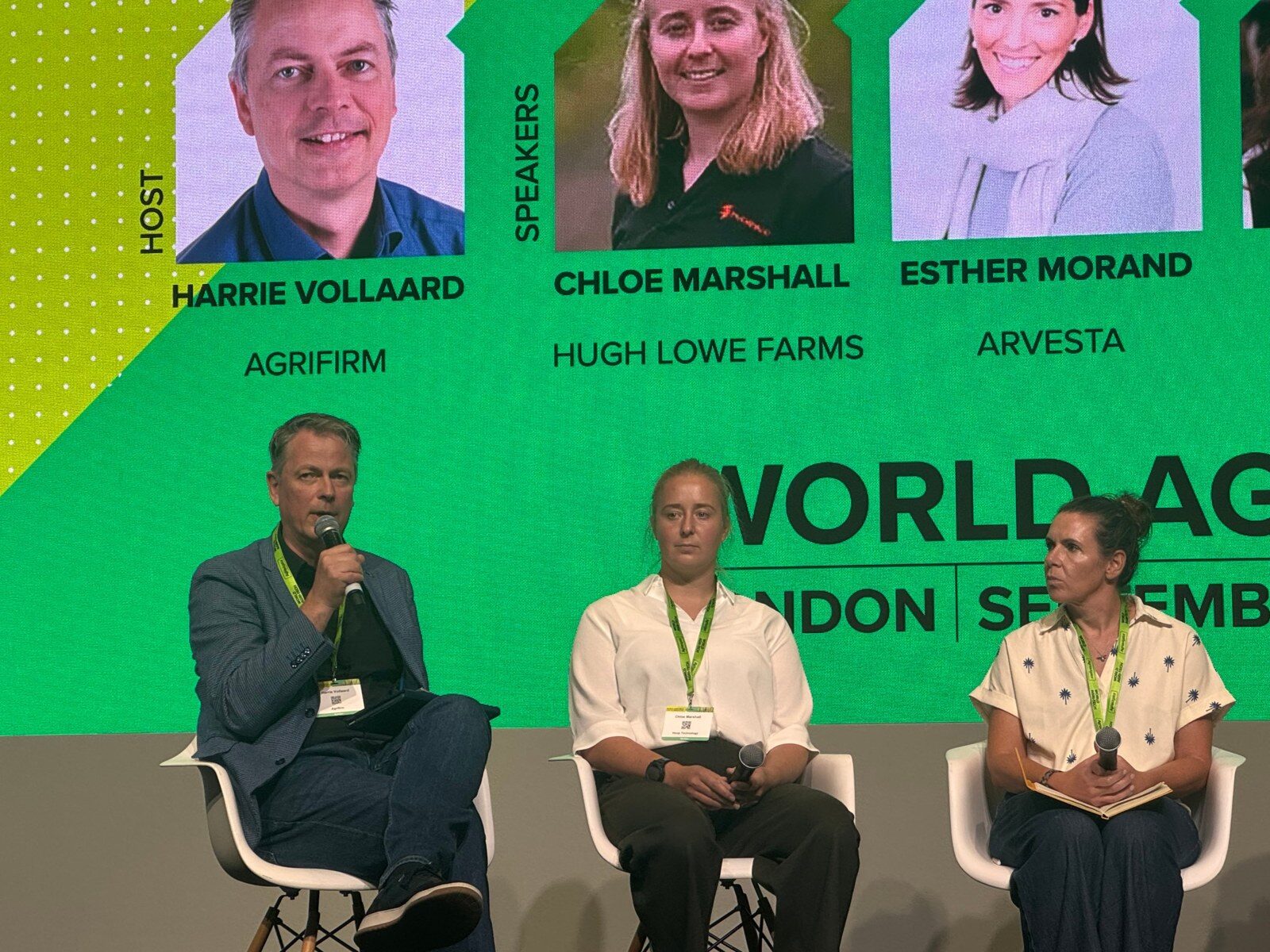
The panel he did get was a good mix: Dan Cross, managing director of Dyson Farming; Andy Blair, field technical manager at potato supplier Branston, who works with around 100 growers from the Suffolk coast up to Yorkshire; Chloe Marshall of Hoop Technology, speaking for Kent soft fruit grower Hugh Lowe Farms; Natalie Smith, head of sustainable agriculture and fisheries at Tesco; and Esther Monard from Belgian distributor Arvesta, who also farms arable crops and onions at home.
Rarely one thing
Dan put his finger on the industry’s oldest problem straight away: Agtech has “lots of very smart people, great ideas, but it rarely involves a farmer at the outset.” Dyson has built 1,000 acres of research farm into its operation to get the farmer’s voice into development early.
His view was that real value “is rarely one thing individually”. It comes from stacking things together. Two that have earned their place at Dyson are acoustic sensors for pollinators, pests and birds, which help decide where to sow wildflowers and how to pull hoverflies into potatoes to deal with aphids; and aftermarket telemetry, meaning that every tractor, harvester and even the minibus has the same plug-in box regardless of make, so diesel use and location all land in one place. Anyone who’s tried to get two manufacturers’ systems talking to each other will see the appeal.
Chloe said soft fruit is a good sector for agtech because it already uses so much of it. UV-C treatment from robots like Saga’s Thorvald has “started as a small trial and scaled up from there.” Her point on adoption was one every farmer will recognise. “A lot of us farmers love to see something in action so that we can see how it would apply to us on our farm first before we jump with two feet into it.”
Risk versus reward
Andy said farmers are “really savvy” at weighing risk against reward, and that’s where most tech falls down. When the sums land on the wrong side of the line, it doesn’t get bought.
His game changer was the Ecorobotix vision-guided spot sprayer. “Yes, it’s an expensive piece of machinery, but farmers aren’t afraid to invest in expensive pieces of machinery if that value-to-risk calculation is there.” Harrie added that the Netherlands has the biggest Ecorobotix footprint in the world.
Andy was just as clear that nobody can push this on growers. “Thinking that you can force innovation upon farmers, I think is a non-starter.” He wants the supply chain to act as a test bed instead, through trial and concept farms, so the value is proven before anyone is asked to pay for it.
Who pays?
This is where it got interesting. Harrie put it plainly. Most of the cost and the operational change sits on the farm, so where does the benefit land? He gave the example of low-carbon fertiliser: nice idea, extra cost, different way of working, “and there was no one actually willing to pay for that.”
Natalie’s answer was that it “depends on what the tech is.” If it cuts the cost of production, the farmer benefits. If it improves quality or welfare, there can be a better price. But shoppers’ top two priorities are still “the right quality at the right price.”
Dan was more direct. The UK food system comes down to efficiency and getting product on the shelf every day of the year, and “there’s not much money left on the farm to think about the bigger picture.” Anything that knocks yield adds cost, and it’s hard to get paid for better-tasting or more nutritious food. When Natalie pointed to Tesco’s Finest range, Dan suggested taking a bit less margin there and putting it back into the supply chain. “Retail’s tough, right? Very high volume, low margin. So is farming. You’re in the same boat.” He said it politely, but plenty of farmers would have liked to have seen that one followed up.
Esther said pilots often find value, then stall when the trial budget runs out, and nobody is paying the premium needed to scale. Her answer was to tell the farming story to consumers better. “We are taking care of their food, of what they eat every day.”
Natalie also admitted the shopper can be a brake. Tesco has “definitely had challenges in the past” bringing in new tech that customers didn’t accept. And on gene editing, now allowed in England, “we would be very cautious in terms of making sure our customers recognise the benefits.”
Who sells it matters
On how new tech should reach farms, the panel favoured going through people farmers already trust. Esther, who works for a distributor, said a local distributor knows the farms and can fit a product into a full crop programme. Chloe backed that up from her UV-C work: she never found two polytunnels set up the same. A start-up can’t afford to learn every farm, but the local supplier already knows them.
Andy picked out biologicals as the hardest sell, because growers struggle with the risk versus reward sums when the products are most likely to be needed in the most stressful conditions. A recommendation from someone “I respect and have worked with for a long time” beats “a cold call from a start-up.” Harrie said crop protection has gone from six or seven big suppliers to hundreds of start-ups, and making sense of them all is a job in itself.
Drowning in data
Asked what’s most promising, Dan pointed to data. Dyson Farming has collected 1.9 billion data points in five years but runs the business on about 60 million of them. The rest are “just unmanageable, honestly.” He expects AI to sort out which ones matter, especially when machinery data is combined with weather and biodiversity records.
Andy said growers and agronomists are “absolutely bombarded by data layers”, and decisions are not currently being made on the data that farmers have. At the moment, that falls to farm managers and agronomists. “Some have that skill set, and some don’t, and some have the time, and some don’t.” His message to developers was to stop building yet another layer in isolation and think about how it will actually be used.
Chloe’s wish list was better long-range weather forecasts for yield prediction, three or four weeks out rather than next week, and robots to move trays so pickers can get more kilos an hour.
Do and don’t
The session ended with one piece of advice each for the agtech companies in the room. Dan said get the farmer in the room early and “begin with the end in mind.” Andy said match the cost of the innovation to the size of the problem. Esther said listen to farmers’ feedback, because “that’s your most valuable asset.” Natalie said be clear on the economics and don’t overcomplicate it. And Chloe said hire engineers who’ve actually driven a tractor.
None of that is new to anyone who farms. But it’s telling that, after a decade of agtech hype, a panel still has to remind the industry to ask farmers first and to show them the money. The kit that’s winning, from spot sprayers to telemetry, has done exactly that. Plenty of what’s on the stands hasn’t.
So, what’s the bit of tech on your farm that has actually paid its way, and what’s gathering dust in the shed?