
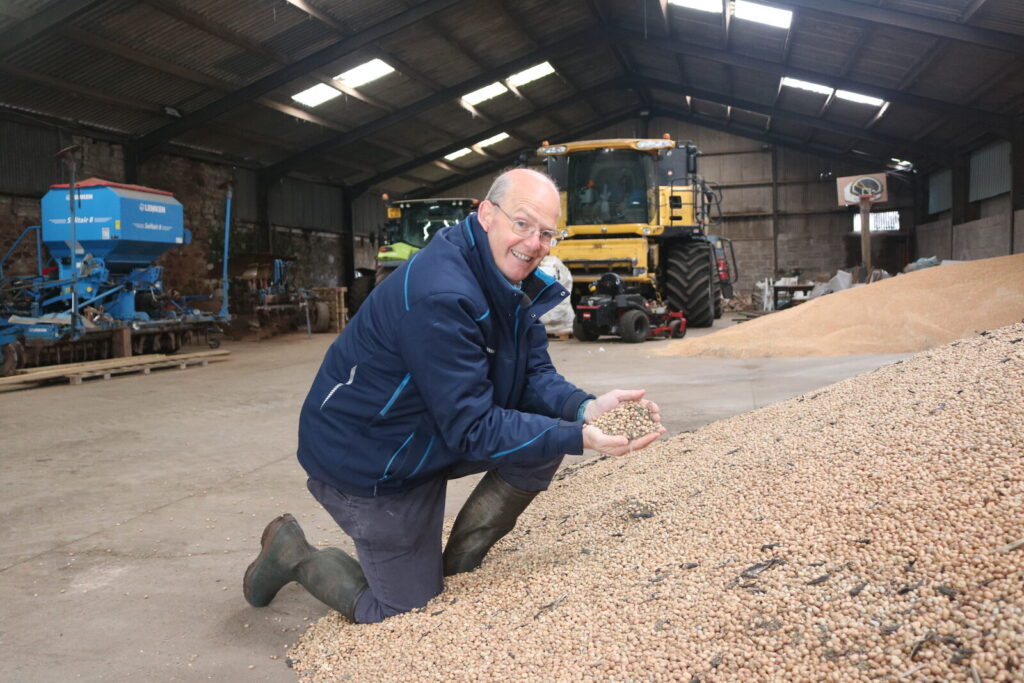
At Woodend Farm in the Scottish Borders, arable cropping, poultry production, nutrient recycling and renewable energy are managed as a single integrated system.
At Woodend Farm in the Scottish Borders, arable cropping, poultry production, nutrient recycling and renewable energy are managed as a single integrated system.
The business combines 195ha of combinable crops with a free-range laying flock of 32,000 hens, alongside wind, biomass and solar generation. Poultry manure is composted and returned to the land, home-grown crops feed the birds, and renewable energy powers much of the operation. It is a deliberately closed-loop approach, designed to reduce reliance on imported inputs while building long-term resilience.
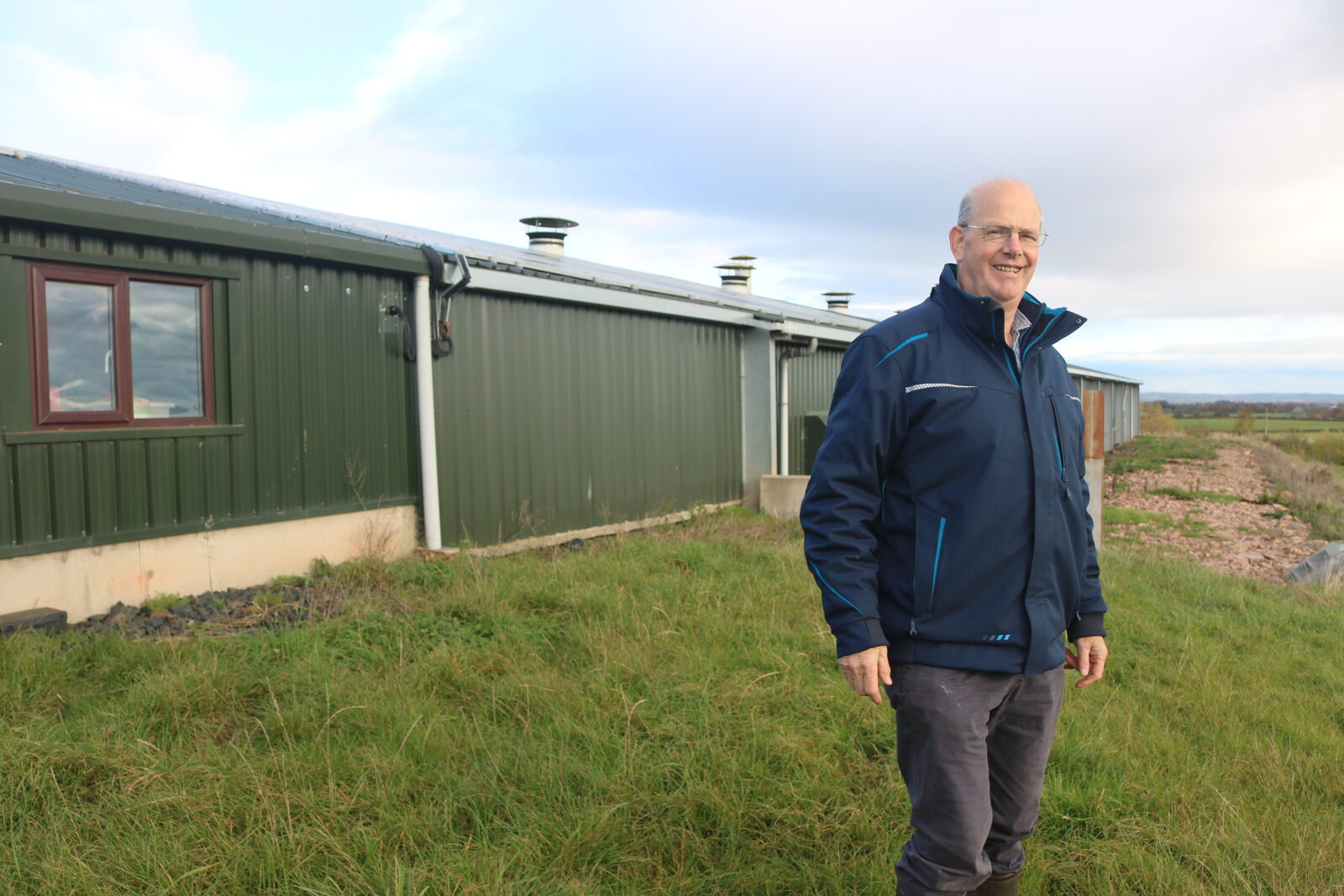
For partner John Seed, protein has always sat at the heart of that system. “We mix our own feed,” says John. “So, the more protein we can grow ourselves, the less we have to buy in. That’s better financially, environmentally and for the whole business.”
That principle has shaped Woodend’s cropping strategy for more than a decade. But sharp rises in global protein prices during and after the Covid period intensified the focus. “At one point, protein was costing well over £500/t,” John recalls.
Although the farm had long grown beans for the human consumption market, rising feed costs prompted a rethink. Instead of selling the crop, more of it began to be retained and incorporated into rations.
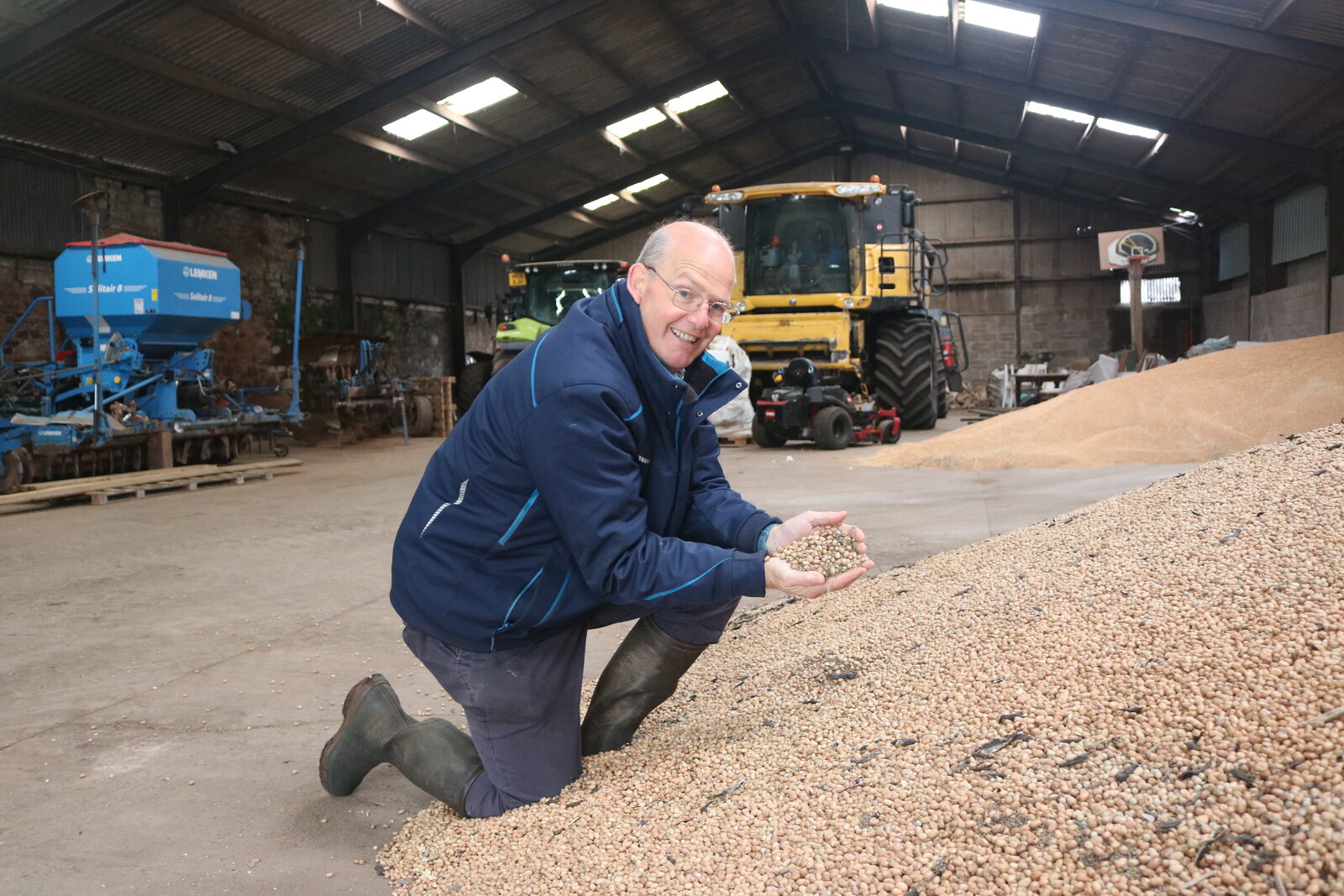
At the same time, John began experimenting more widely with alternative protein sources, including peas, lupins, lentils and higher-protein cereals. “We tried just about everything,” he explains. “Some worked, some didn’t. We had a fantastic stand of lupins once, and then one night of frost wiped the lot out.”
Despite these setbacks, the central objective remained constant – maximising usable protein per hectare without undermining rotational resilience. “You don’t want legumes any more than one year in five. Ideally longer,” he says. “So, it’s about getting as much value as possible when you do grow them.”
Joining up crops, feed and performance
John’s frustration during this period was not simply technical; it was also structural. “There wasn’t really any joined-up research,” he explains. “Animal producers, feed compounders, merchants, crop growers; everyone was working in silos.”
Much of the available data dated back decades, offering limited relevance to modern, high-performance poultry systems.
When the NCS project was launched, John saw an opportunity to address that disconnect. “It brought everyone together,” he reflects. “Crop science, nutrition, carbon, economics. Suddenly it was all connected.”
Nitrogen Efficient Plants for Climate Smart Arable Cropping Systems (NCS) is a four-year £5.9 million research programme involving 200 UK farms and 17 partners led by PGRO. The project aims to bring about a reduction of 3.4 million tonnes of CO₂e per annum through increasing pulse and legume cropping in arable rotations to 20 per cent across the UK and replacing 50 per cent of imported soya meal used in livestock feed rations with home-grown pulses and legumes.
Participation also made on-farm experimentation viable at a meaningful scale. “We’d been paying for our own trials before,” John explains. “But we couldn’t afford to do them properly. NCS made that possible.”
For Woodend, this coincided with major changes in poultry management. Flock cycles were being extended from around 76 weeks towards 85-90 weeks, placing increasing emphasis on diet precision, micronutrient balance and long-term bird health.
“When you’re running birds for that long, everything matters,” he adds. “Protein quality, methionine, feather cover, shell strength, air quality. It’s all linked.”
This sharpened focus on nutritional performance exposed a key limitation. “We were getting reasonable bean yields,” he explains. “But we were running into issues with amino acid balance, particularly methionine.”
Excessive bean inclusion at one stage led to measurable declines in flock performance. “That was a wake-up call,” he reflects. “It wasn’t just about growing protein. It was about growing the right protein.”
Designing practical, scalable trials
Woodend’s approach to trial work has been deliberately pragmatic. “If it doesn’t work on a commercial scale, it doesn’t interest me,” says John.
Most trials have been laid out in 2ha tramline blocks within commercial fields, typically on 36-metre systems. Treatments are applied across full tramlines, harvested separately, weighed, sampled and analysed. “It takes time,” he admits. “But if you’re doing the trial, you might as well finish it properly.”
Early work focused on phosphate availability, using Agrii’s Agrii-Start Release to improve phosphorus utilisation on soils already high in P due to long-term poultry manure applications. “We ran treated and untreated tramlines,” he explains. “We saw a yield uplift and an economic return.”
The approach was then extended into rotational work. In one field, beans and spring oats were grown side by side, with clover undersown in selected tramlines. The following season, the whole field was planted to wheat and managed uniformly.
Despite nitrogen applications being adjusted using soil mineral nitrogen tests and tissue analysis, the wheat following beans consistently outperformed that following oats. “We saw about a 1.5t/ha yield increase behind beans,” John says. “That was even after accounting for nitrogen.”
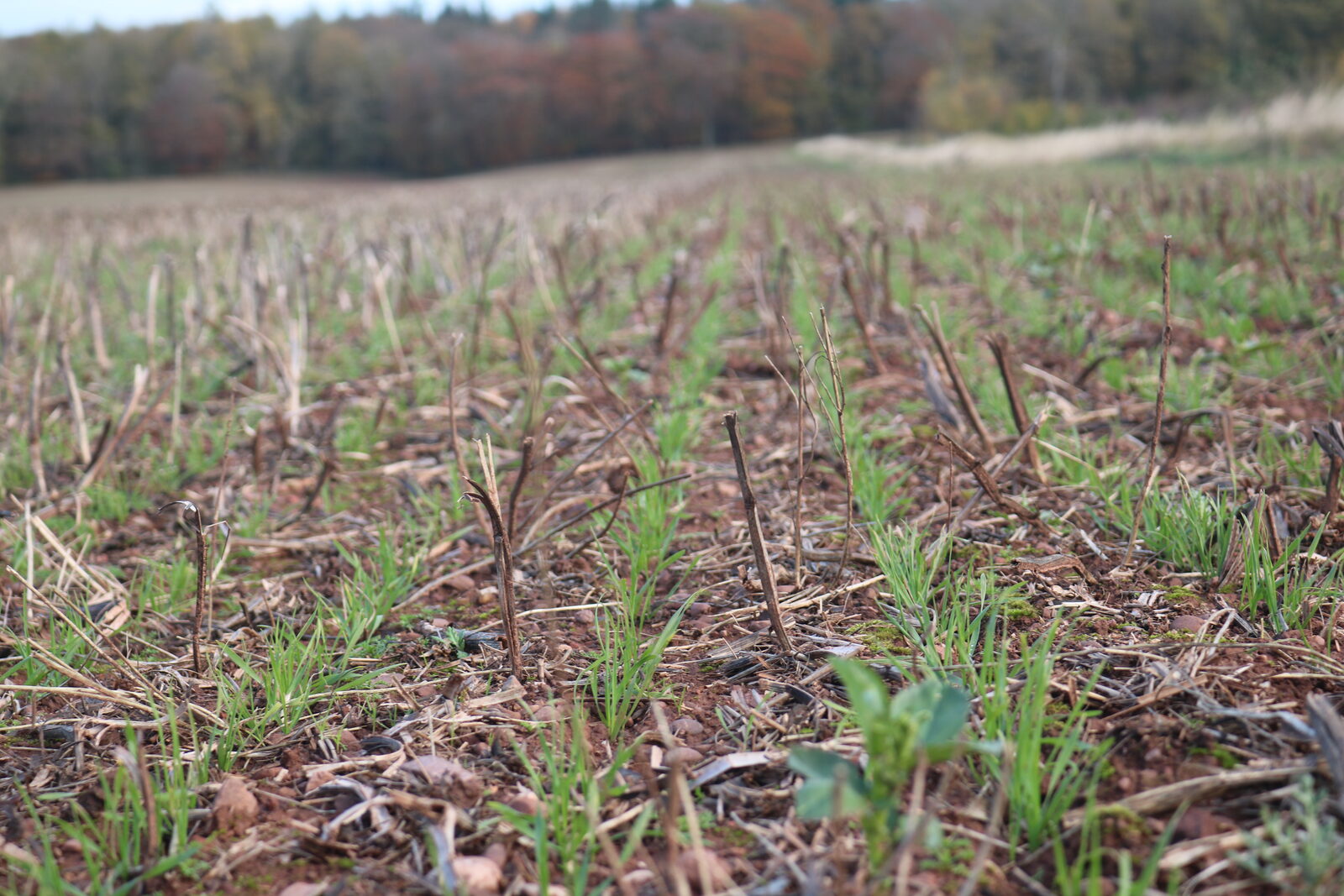
Similar rotational effects were observed in subsequent seasons, reinforcing the agronomic value of beans within the system. “We’re not guessing,” he adds. “We’re measuring it.”
Expanding the focus: biochar and micronutrients
More recent work has broadened the scope of investigation. Current trials include combined drilling of wheat and beans with varying biochar rates, alongside targeted sulphur and trace-element strategies. “We’re trying to optimise protein synthesis, not just yield,” he explains.
Tissue testing and nutrient monitoring now play a central role in management decisions, supported by close collaboration with agronomist Gavin Robertson of Agrii. “You can’t do this in isolation,” he adds. “It’s a team effort.”
The practical implications have already been significant. Phosphate-release treatments are now used across the whole farm, improving nutrient-use efficiency and reducing reliance on additional fertiliser inputs.
Biochar trials are being assessed both for yield and longer-term soil function, while sulphur management is increasingly seen as critical to protein formation.
Reframing the protein challenge
Through his involvement in NCS, John’s perspective on beans has evolved. “Agronomically, they perform well,” he reflects. “Rotationally, they’re excellent and nitrogen capture is strong.”
Yet in feed systems, the binding constraint has often been protein quality rather than quantity. “Particularly methionine,” he explains. “That’s what limits inclusion rates.”
Recent discussions within the NCS network, supported by emerging trial data, suggest this may be driven by nutrient availability during protein synthesis rather than fixed biological limits. “There are indications that sulphur and trace elements play a much bigger role than we realised,” he adds.
This opens up the possibility of targeted agronomic interventions delivering meaningful commercial returns. “If you could lift bean protein from low-20s into the high-20s, the extra usable protein per hectare would be substantial.”
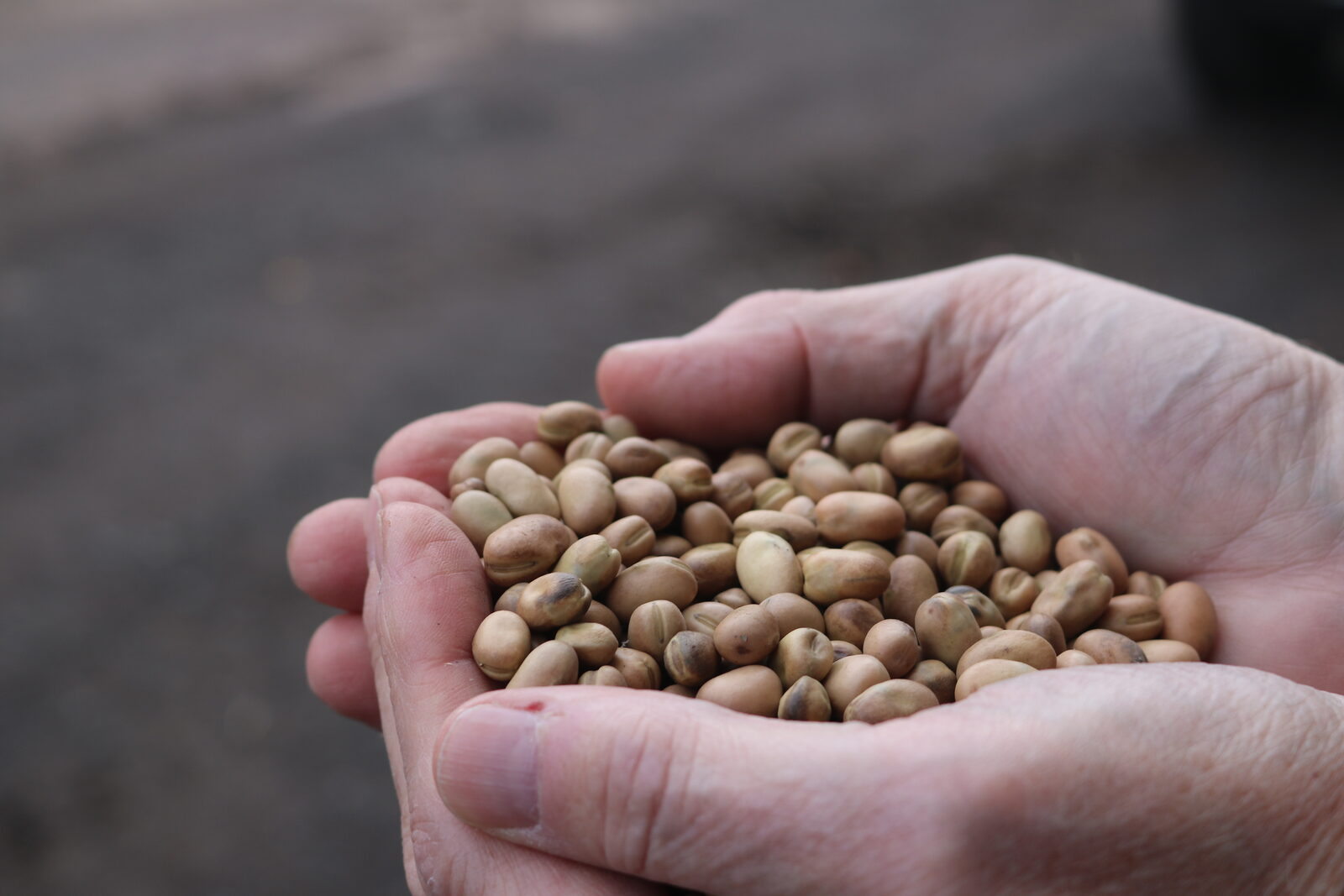
Even conservative estimates suggest that relatively modest input costs could generate strong benefit-to-cost ratios if the biology responds as expected. “That’s exciting,” he adds. “Because it means it’s potentially solvable.”
Carbon performance and system context
Carbon accounting has long been part of decision-making at Woodend, with whole-farm audits undertaken for more than a decade using recognised tools including Agrecalc (SRUC) and the Cool Farm Tool.
Recent figures generated through the Farm Carbon Toolkit indicate:
- Emissions: 2,402t CO₂e
- Removals: 350t CO₂e
- Net carbon balance: 2,052t CO₂e per year
John is cautious about interpreting headline totals in isolation. He notes that integrated arable–livestock systems are not always fully represented in current models.
In particular, the value of poultry manure in displacing manufactured fertiliser, closing nutrient loops and supporting soil carbon is not always fully reflected.
At Woodend, manure and bedding are composted through a bokashi system and returned to cropped land, reducing reliance on imported nutrients and lowering embedded emissions. “Carbon audits are useful for showing where inputs cost carbon as well as money,” he argues. “But they don’t always capture the efficiency of producing food here rather than importing it.”
Viewed as a whole, Woodend’s closed-loop structure spreads emissions across multiple enterprises and reduces carbon leakage beyond the farm gate.
Within NCS, John sees carbon as one part of a wider assessment that also considers nitrogen use, protein quality, system resilience and economic performance.
For him, the real measure is carbon efficiency per unit of usable protein produced. “That’s what tells you whether a system is genuinely sustainable. Not just whether it looks good in one spreadsheet,” he says.
A system-level learning network
For John, the greatest benefit of the project has been access to expertise and shared learning. “Without NCS, I wouldn’t be speaking regularly to nutritionists, crop scientists and carbon specialists,” he says.
Recent insights on sulphur nutrition and amino acid synthesis have already begun influencing management decisions. “I learned things last week that I simply wouldn’t have known otherwise,” he adds.
Equally important is the peer network, he says. “It’s about lived experience – what works on real farms.”
Looking ahead
Woodend’s next phase of work will continue exploring biochar, sulphur and micronutrient management, alongside further rotational analysis. “We’ll keep testing,” John says. “That’s the only way forward.”
There is also a strong desire to translate findings into wider industry practice. “If retailers said they wanted 5 per cent home-grown protein in poultry diets, that would change everything.”
He believes that such signals would unlock investment and collaboration across the supply chain. For now, the focus remains firmly on incremental, evidence-based improvement. “We can grow better beans,” John concludes. “We can grow better protein. And we can do it in a way that strengthens the whole system. That’s what this project has shown us.”
From Soya to Sustainability 2027
The third From Soya to Sustainability conference will explore how UK-grown pulses can help build a more sustainable and resilient food system. Organised by partners in the NCS project, it brings together farmers, researchers, industry and government to share the latest evidence, examine the barriers to wider adoption and discuss what needs to happen next.
When: Tuesday 26th January 2027
Where: KingsGate Conference Centre, Peterborough
For more details and to book visit www.tinyurl.com/FSTS2027