
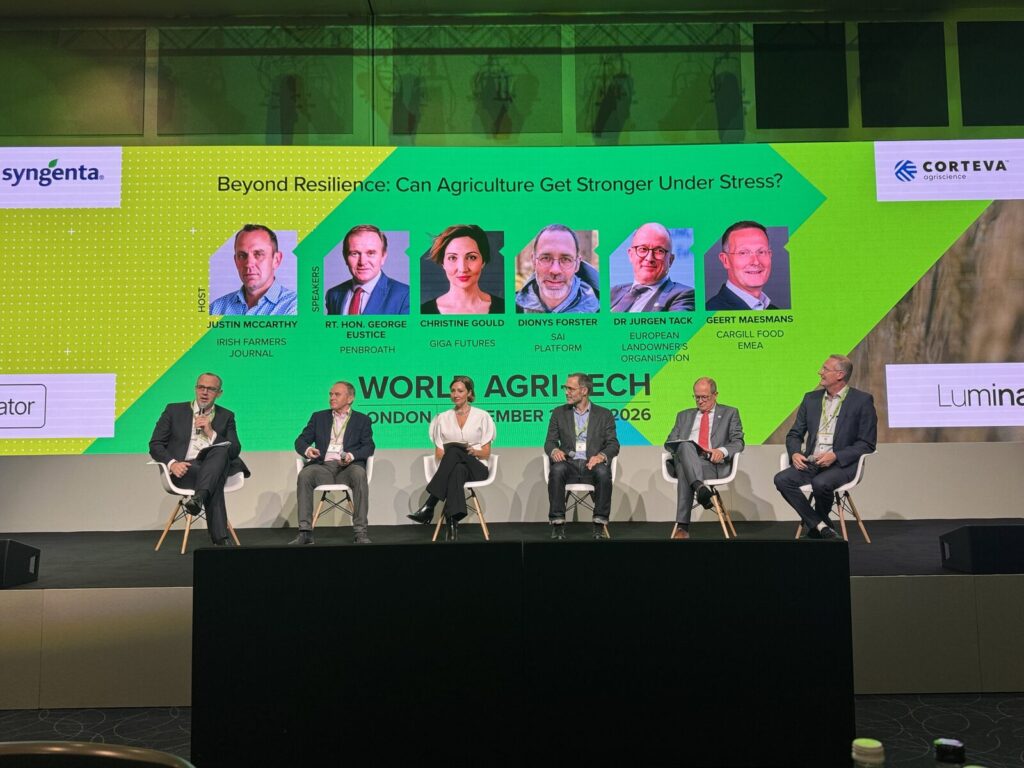
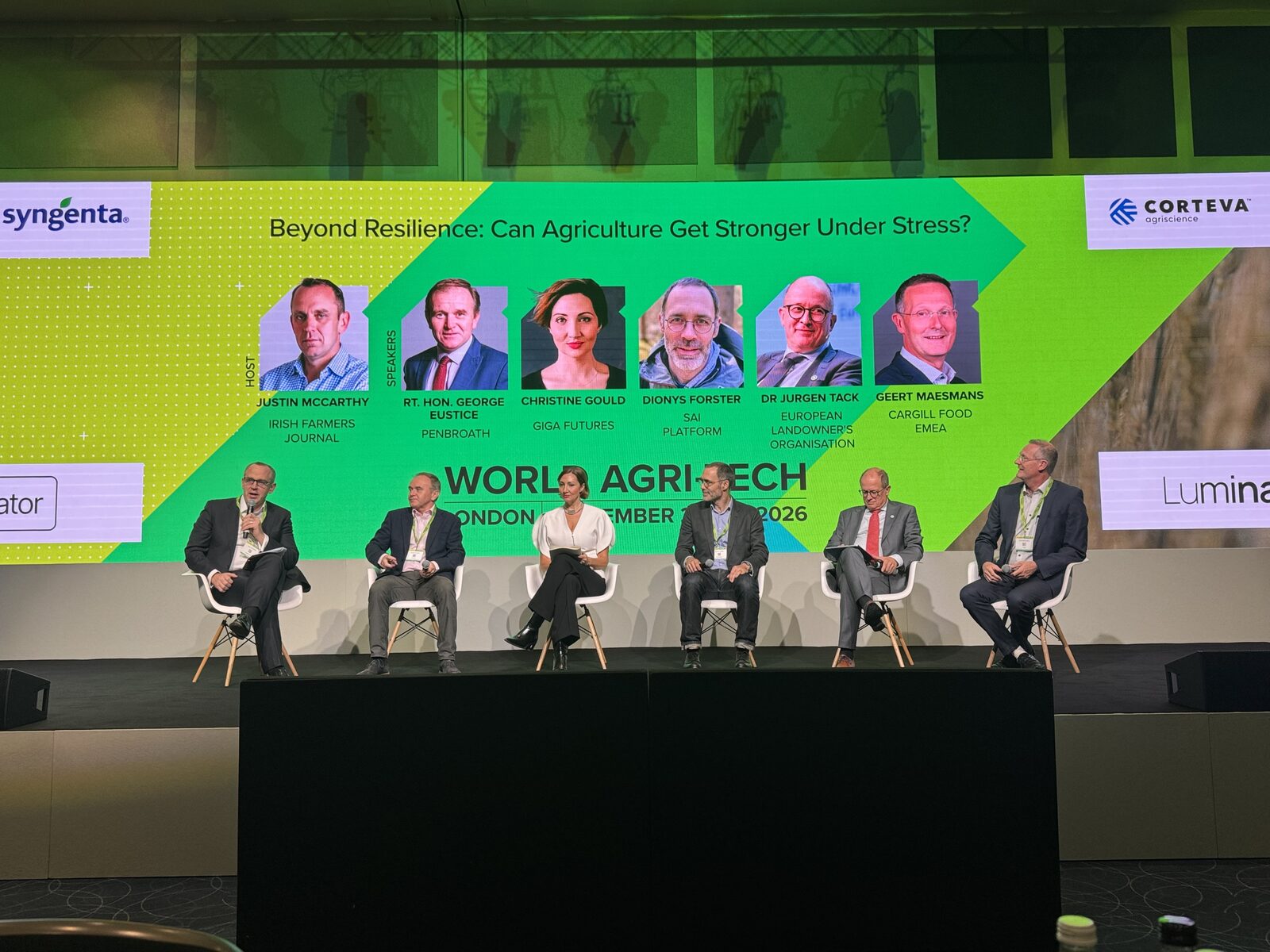
At World Agri-Tech in London, a panel including former Defra Secretary of State George Eustice asked whether agriculture can do more than just survive the next shock. The answer came down to who carries the cost.
Resilience has become one of those words that gets used so often it’s stopped meaning much. Most farmers would say they’ve been resilient for years, mainly because the alternative was going bust. So the main stage session at World Agri-Tech London on 22 September set itself a harder question: can farming actually come out of a shock stronger, rather than just limping through it?
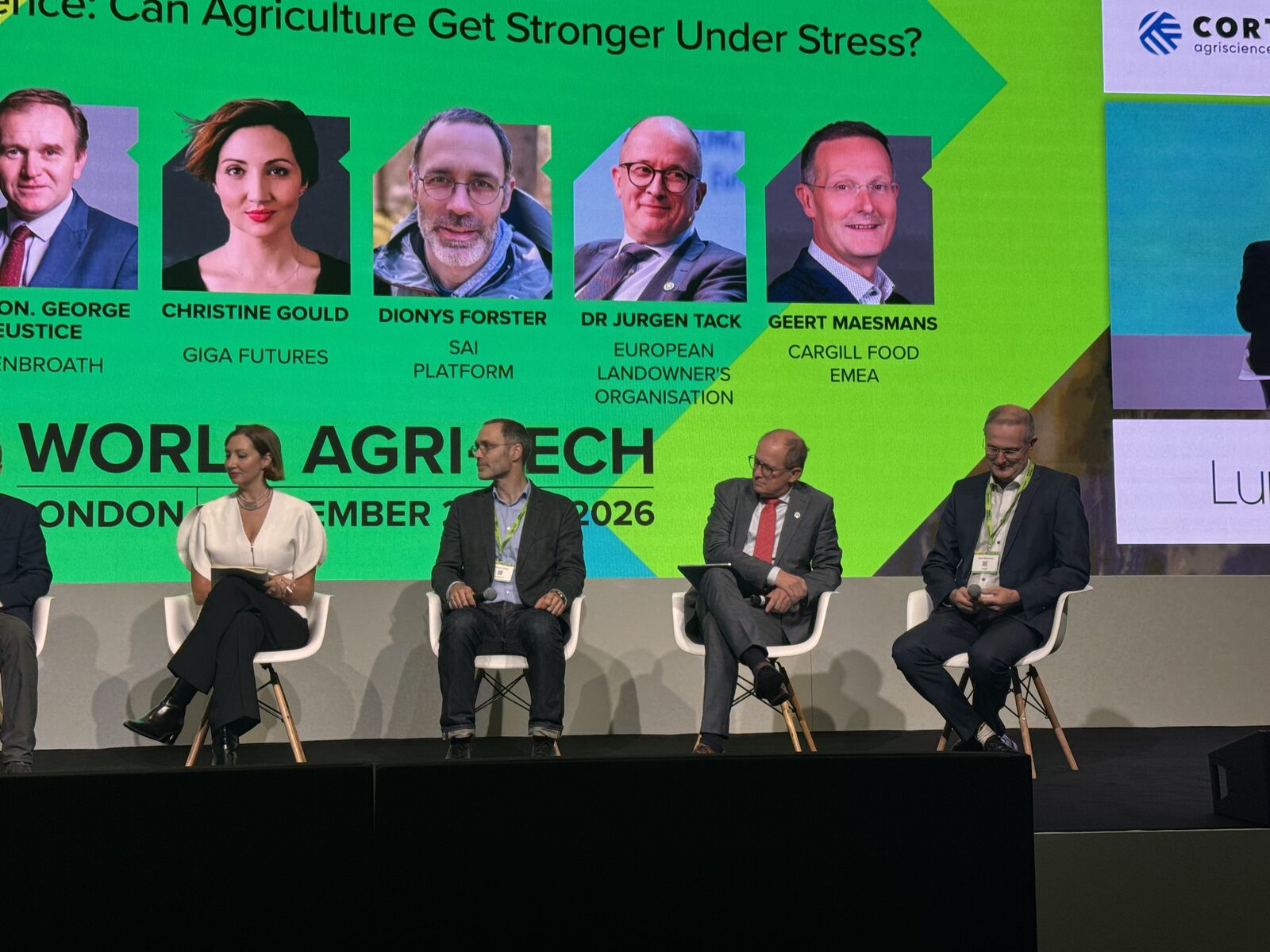
Justin McCarthy, former editor of the Irish Farmers Journal and now CEO of GlasPort Bio, chaired a panel of George Eustice, Christine Gould of GIGA Futures, Dionys Forster of the SAI Platform, Jurgen Tack of the European Landowners’ Organization and Geert Maesmans, who heads R&D for Cargill in Europe, the Middle East and Africa.
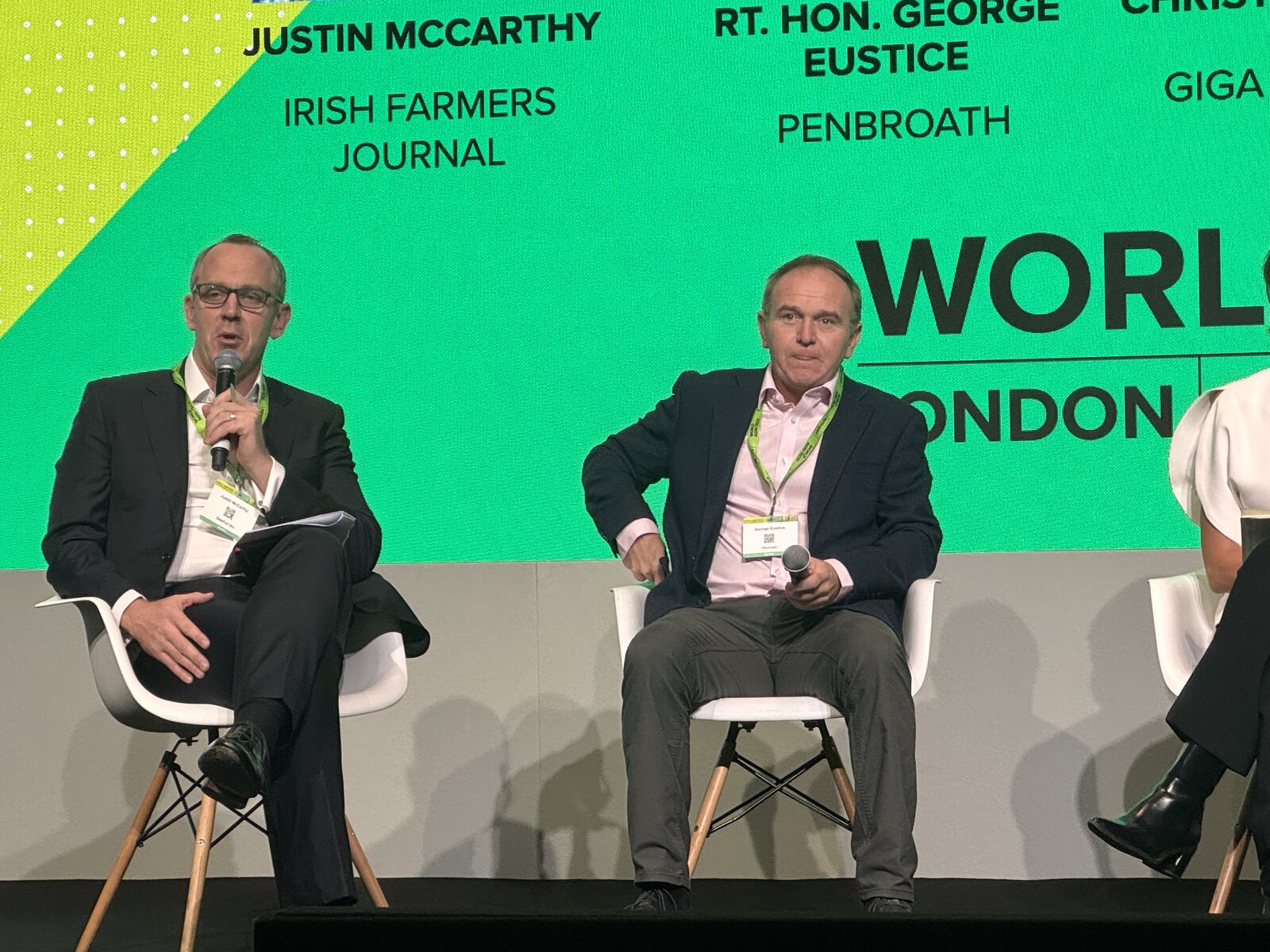
Efficiency isn’t enough
The word doing the rounds was “antifragile”, meaning a system that gets better because of the shocks it takes, not just one that bounces back. Christine Gould’s research through GIGA Futures was the most interesting part of this for me. Her point, as I took it, was that efficiency and optimisation on their own are not enough. A system squeezed for every last per cent has nothing spare when the weather, a war or the markets turn. Sustainability and quality have to be built in as well.
That chimes with a lot of what direct drillers have been saying for years. A field with better structure, more organic matter and some cover on it copes with a wet autumn or a dry spring better than one that’s been run on a knife edge. The question the panel kept coming back to was what we learn from surviving stress, and how we make sure the next one doesn’t hit as hard.
There was talk of landscape-scale working too, with Landscape Enterprise Networks (LENs) held up as something that needs scaling up. That’s the model where water companies and food firms club together to pay farmers across a catchment for specific outcomes. It’s a decent idea, and it at least puts the people who want the outcome in charge of paying for it.
Top-down R&D and a question of trust
One thing that struck me was how much of the innovation talk was top-down. The R&D is done by the big players, Cargill included, and the farmer is then expected to pick up what they’ve developed. Geert Maesmans was honest that a business like Cargill moves cautiously because of risk and cost.
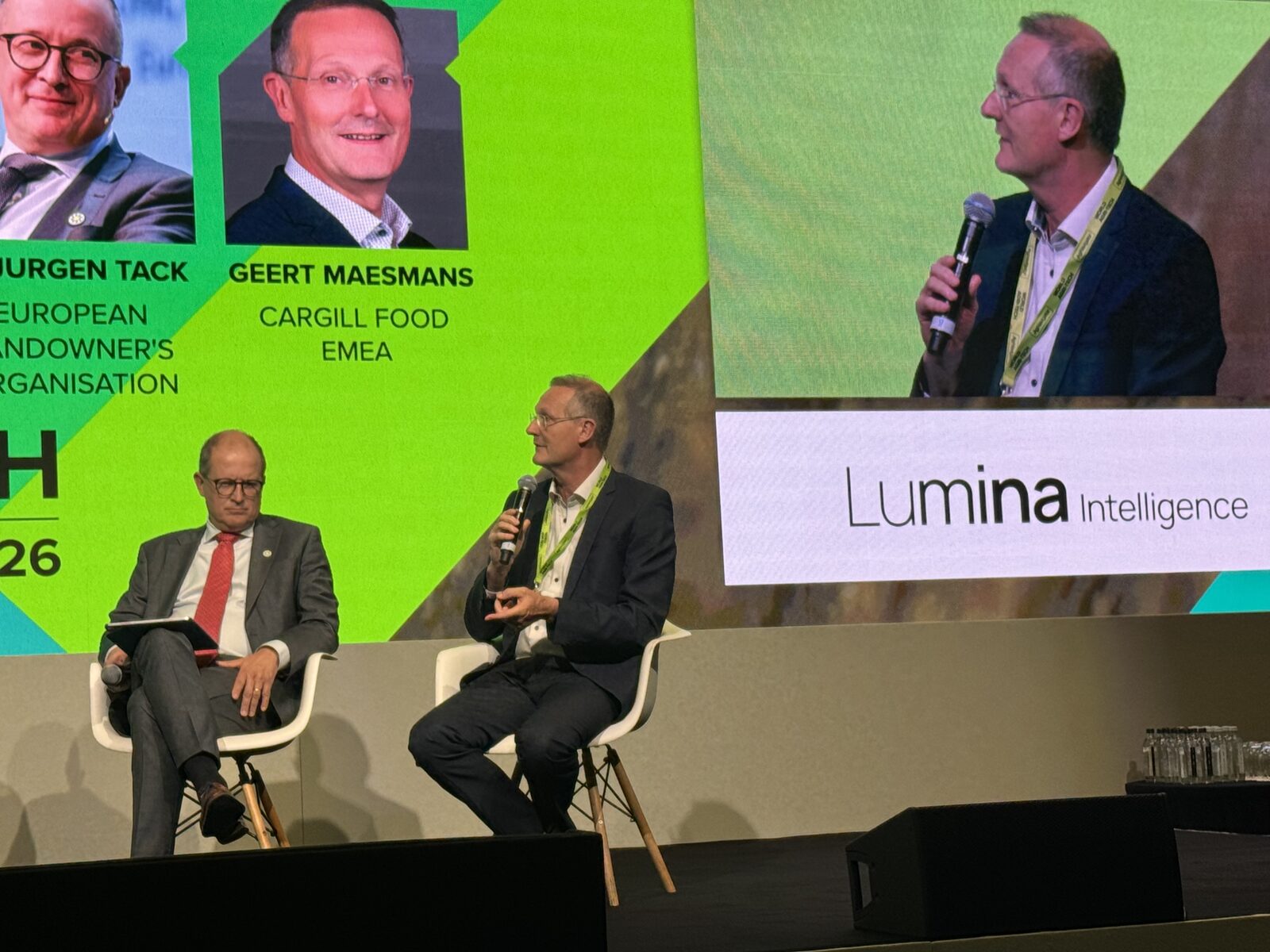
Fair enough. But if farmers don’t trust where the product or the data has come from, it won’t scale, however good it is. And trust isn’t helped when farmers are told yet again they need to change. McCarthy told a good story from his days as a young adviser. An older adviser told him, “If you think change is easy, go home and try and get into the other side of the bed tonight.” The sector keeps telling farmers they’re doing it wrong, he said, and people forget how that lands.
That came through strongly on data. Liz Bowles of the Farm Carbon Toolkit, and a farmer herself, asked from the floor why it’s always the customers asking farmers for carbon data, rather than farmers coming together to collect it for their own use. The panel’s answer was blunt: farm data is being hoovered up from satellites to tractors, and one panellist claimed some machinery companies now make more money selling data than selling machinery. A big company can guess your harvest three weeks after drilling, six months before the market knows. “I do think not enough of that is coming back to the farmer.”
There was a sensible point on net zero too. If we’re going to be measured, let’s have a proper benchmark way of collecting what farms are actually doing, and judge on carbon per tonne of output, not per hectare. That’s a far fairer test for a productive farm than some of the calculators doing the rounds.
Europe the museum?
McCarthy’s sharpest question was whether Europe is becoming “the museum of modern agriculture”. Eustice said that was putting it too strongly, but Europe is “definitely a place that’s got at a severe disadvantage.”
His examples were biopesticides and gene editing. “We shouldn’t be regulating them like we do synthetic chemistry,” he said about the compounds the environment has dealt with for thousands of years. He wants something closer to what the UK did on precision breeding and thinks the EU should copy it. Jurgen Tack made the same point on speed. Other countries get products to market faster, and they get the benefit.
One panellist went further. “At the moment, the environmental legislation in Europe is the biggest threat to environmental conservation.” McCarthy called it “very well said”, and plenty of farmers dealing with derogations and approvals would nod along. Not everyone agreed. Another argued Europe has one of the most resilient food systems in the world and should be proud of it.
Asked for the one thing needed to get technology onto farms, the answers varied. Stop thinking there’s one thing, said one, because it’s a whole system that needs scaling. Build an environment where innovation can thrive again, with landscape projects to show it working, said another. Eustice wanted these rules handed back to national governments, so countries could compete on getting the regulation right.
Who pays?
Which brings it to the bit that matters. McCarthy asked Eustice whether consumers will accept paying more for a secure food supply. His answer was that it’s “not their decision. It will be a decision of the market.”
Governments face both ways, he said. They want farming profitable and food cheap at the same time. Failing to deal with climate change has a cost, and if people won’t pay it on their energy bills, it will turn up somewhere else. McCarthy wasn’t going to let that sit. UK farmers won’t carry that cost, he said. “They’ll be out of business. Or a lower-grade imported product is brought into the market to compete against.” That’s the bit plenty of us would have said from the floor.
The session ended with a yes or no. Can agriculture get stronger under stress if food prices don’t rise? Four of the panel said yes. Eustice said no, “because I think risk has a cost.”
On that one, I think he’s right. You can build a farm that copes better with shocks, and plenty of readers are doing just that with healthier soils and lower input bills. But somebody has to carry the risk, and for too long it’s been the farmer alone. If the supply chain wants antifragile farming, it’ll have to pay for some of it.
So, is your system getting stronger under stress, or just getting used to it?