
Well, with another challenging year for farming, our focus now turns to the year to come! The threat of a super El Niño is on everyone’s lips, so what do we do to cope?
Give up farming? Maybe the easy option, but we farmers don’t normally do that naturally, so we need to put plans in place to be able to survive these testing times. Staying in business must be the number one priority. On smaller farms this may mean simplifying things, to free up time to work off farm! Shock, horror, the looks that will be on some people’s faces reading this, but needs must. We are in such uncertain times that hard decisions must be made to keep the wolf from the door. In a changing, technology-driven, political world, nothing is certain and it’s foolish to doggedly keep going, believing things will get better one day. It certainly won’t tackle the problems we are currently facing. I do believe that things will turn around, but we are far from that at this present time, so we need to put plans in place for a successful future.
Carbon and soil health will obviously be top of my list; look after your soil and in return it will look after you. The key factors remain the same: getting carbon back from cover crops, while roots and root exudates feed carbon directly into the soil; compost brings with it stabilised organic matter and microbial biodiversity; biochar gives you a long-term carbon structure that holds water and microbes but always needs charging with nutrients before use; rock dust remineralises soils while feeding biology and building humus.
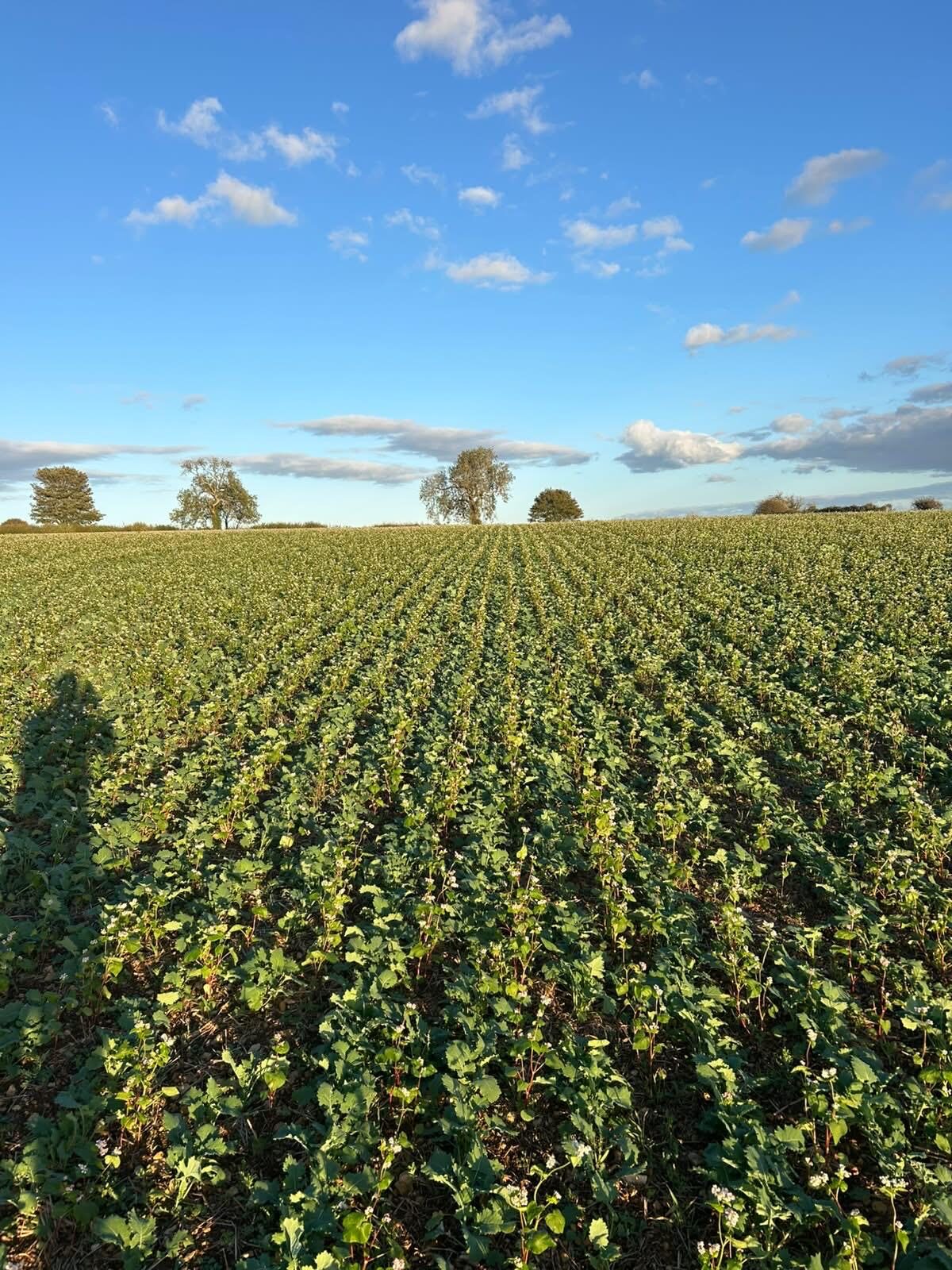
The most important way of ensuring soil carbon is photosynthesis, which nature has been using to store carbon ever since she invented the enzyme rubisco. So why not use the most efficient system available to us to get carbon back into our soils, and to help store more water for these difficult times? It’s another reason for keeping soil covered and soil disturbance to a minimum. Having the right microbial community really increases carbon fixation on the front end of the system and reduces respiration losses on the back end – “simples!”
A lot of wheat has been drilled early, in fear of the weather changing and conditions becoming undrillable. Due to the dry conditions, much of the nitrogen has been carried over from the last crop. This will cause problems in many of the following crops, since they will take in all that nitrate and not have the balanced nutrition needed to convert excess nitrate and sugar into amino acids and on into proteins. Without the correct nutrition, this food source is perfect for the praying aphid. When the plant is not converting nitrogen fully, the “food” sits in the phloem, accumulating free amino acids, which aphids detect from a distance. Ever wondered why one field gets attacked and a neighbouring field doesn’t?
Weather can also affect the whole process (such as photosynthesis and a lack of sunshine), but nutrition is always my first go-to, as I have proved many times. As a society, we are always so eager to treat the symptom, rather than looking at the cause. At the time of writing, most of the country is still in a drought situation, with a lot of crops struggling with stress, causing problems that we can do little about without water! The perfect storm against farming continues.
On a brighter note, The Green Farm Collective, along with Eurostar Commodities, had a fantastic few days at our first British Regenerative Farming Week, something that we should all be celebrating and be proud of. The event brought farmers, bakers and consumers together to celebrate the achievements of regenerative farming, from improving soil health to putting nutrient-rich food on the plate of the consumer, along with all the other benefits it can bring for our wonderful planet. We had a great open day at Michael Kavanagh’s farm, where we hosted many London bakers who were interested to see the benefits that regenerative farming can bring; they were very impressed with how good our RISE flour is! The flour will be used at the National Pizza Awards in London during November, and I look forward to tasting the winning pizza with pride. This is the real joy: following that wheat crop from seeding to the dinner plate, while being able to supply the whole story of production and why and how that flour was produced.