
Written by Pippa Howard – Chief Nature Strategist, NatureMetrics
The UK government’s Land Use Framework (LUF), published in 2026, is the most significant reshaping of land management policy in a generation. For the first time, the country has a strategy that explicitly asks land managers, developers and planners to balance multiple outcomes like food production, nature recovery, carbon capture, flood management and public wellbeing as interconnected and co-equal goals. For organisations that are working at the interface, the opportunity is significant, but a gap remains between the ambition of the LUF and the quality of ecological intelligence being used in practice.
What is the Land Use Framework
The principle at the heart of the LUF is multifunctionality; in other words, land must serve more than one purpose. How land is used depends on a deep understanding of local contexts, including ecological, social and economic factors. The framework is also explicit that land use choices must remain adaptable under uncertain futures, accounting for rising sea levels, shifting rainfall patterns, and overlapping pressures on floodplain management and food production. Designs should enable transitions like seasonal or rotational land uses, dynamic zoning, and nature-based solutions that can scale with risk.

The LUF recognises that ecological health is very important, whether in the context of farming, rural and urban development, nature recovery or other land uses. You can’t plan for multiple outcomes on the same piece of land without first understanding what’s already there. For example, a floodplain that also supports nature recovery and low-intensity farming is only possible if we know what lives there, how habitats are connected and what the ecosystem can sustain.
This is a big shift from how nature has historically been treated in land use decisions, often looked at as a constraint to be managed or a box to be ticked. The UK’s Nature Security Assessment, released in January 2026, provides an economic edge. It states that ecosystem degradation poses macroeconomic risks comparable to major financial crises, and the country’s food, supply chain and infrastructure security all depend on nature remaining functional. The LUF and the Nature Security Assessment together make a very clear point: understanding and investing in ecological health is no longer optional.

The data gap
Acknowledging this challenge is necessary, but resolving it ultimately requires robust data. The LUF explicitly acknowledges the need for better data generation, management and access strategies. It calls for integrated data platforms, standardised metrics and improved access for local decision-makers to evaluate trade-offs and monitor outcomes. In this, the LUF recognises that the datasets needed to plan and manage land effectively are currently scattered, often incomplete, and difficult to act on.
For nature specifically, this means moving beyond species lists and broad habitat classifications towards more granular biodiversity data that can actually inform planning decisions. Without this, ecological monitoring remains a nice-to-have rather than the evidence base on which the framework is built.
Closing the ecological data gap
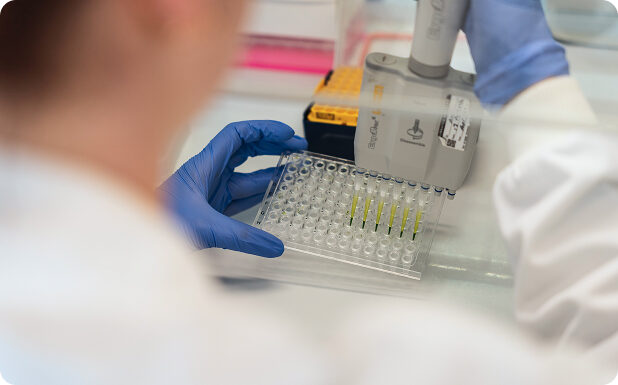
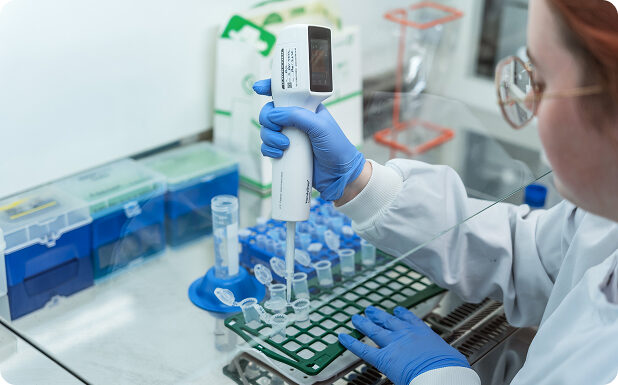
The technology to close this data gap already exists. Technologies like environmental DNA (eDNA), which detects traces of genetic material left by organisms in water, soil and air, as well as geospatial monitoring or acoustic measurement of species, known as bioacoustics, are now capable of generating exactly this kind of insight. This can be done rapidly and in a cost-effective manner without the need for traditional ecological surveys. Companies like AgriSound, which specialises in bioacoustics, or NatureMetrics, which uses eDNA to assess nature-related risk, are working to make these tools readily available. This will enable businesses to assess the impacts of land interventions, habitat restoration and connectivity in a scalable and standardised way, while generating the biodiversity data that the LUF explicitly calls for and informing planning and land management decisions.
This matters not just for compliance, but for the emerging nature markets that the LUF aims to strengthen. Biodiversity Net Gain (BNG), already mandatory at a 10 per cent uplift, will be more strategically targeted as the Framework embeds it within Local Nature Recovery Strategies and national biodiversity priorities. For landowners, this brings clearer signals about where habitat creation is most valuable. For private investors, it reduces the spatial uncertainty that has historically constrained risk pricing and efficient capital allocation. For companies managing risk across multiple sites, portfolio-wide monitoring – combining eDNA-derived species data, geospatial data layers and AI modelling – will enable assessment of nature-related risk exposure, tracking progress against goals and demonstrating compliance. But nature markets are only as strong as the evidence base that underpins them, and that evidence base starts with credible, robust understanding of the state of nature.
Putting the framework into action
The LUF sets a new expectation for how land is understood, planned and managed, and those expectations can only be met with the right data infrastructure behind them. Companies that invest early in tools like eDNA can make smarter, faster decisions to avoid harm, reduce environmental and reputational risk, avoid costly delays and unlock nature-positive outcomes. Whether you are a farmer, a developer, a local authority or a private investor, the framework does not need to feel like a burden. Investing in biodiversity monitoring that can meet these higher expectations can make for cleaner planning, better access to private finance, stronger alignment with regulatory requirements, and a demonstrable contribution to the nature recovery the country urgently needs.