

A major global meta-analysis suggests that combining sulphur, potassium, magnesium and calcium can deliver consistent improvements in crop performance across diverse farming systems.
When a yield response shows up once, it is easy to brush it off: a good season, a good field, the right place at the right time. But when the same numbers keep appearing across different crops, soils and years, it becomes harder to ignore.
That is what growers and agronomists are reporting with POLY4, a naturally occurring granulated polyhalite fertiliser, found 1,800 metres under the North York Moors National Park.

Earlier this year, a large piece of scientific research was published, looking at how POLY4 performs across a wide range of conditions. The global meta-analysis was developed with independent statistical analysis and agronomic scrutiny from ADAS, one of the UK’s leading independent agricultural research organisations.
Researchers brought together results from 921 field trials over 10 years, covering 47 different crops in 33 countries.
Fertiliser programmes including POLY4 improved crop performance compared with standard NPK approaches, with average yield responses in the three to five per cent range.
Across the trials, POLY4 fertiliser programmes outperformed conventional fertilisers, with average yield increases of 6.6 per cent over NP and 3.2 per cent over NPK controls. Where crops were responsive to potassium and sulphur, the response rose to 12.2 per cent over NP and 4.8 per cent over NPK.
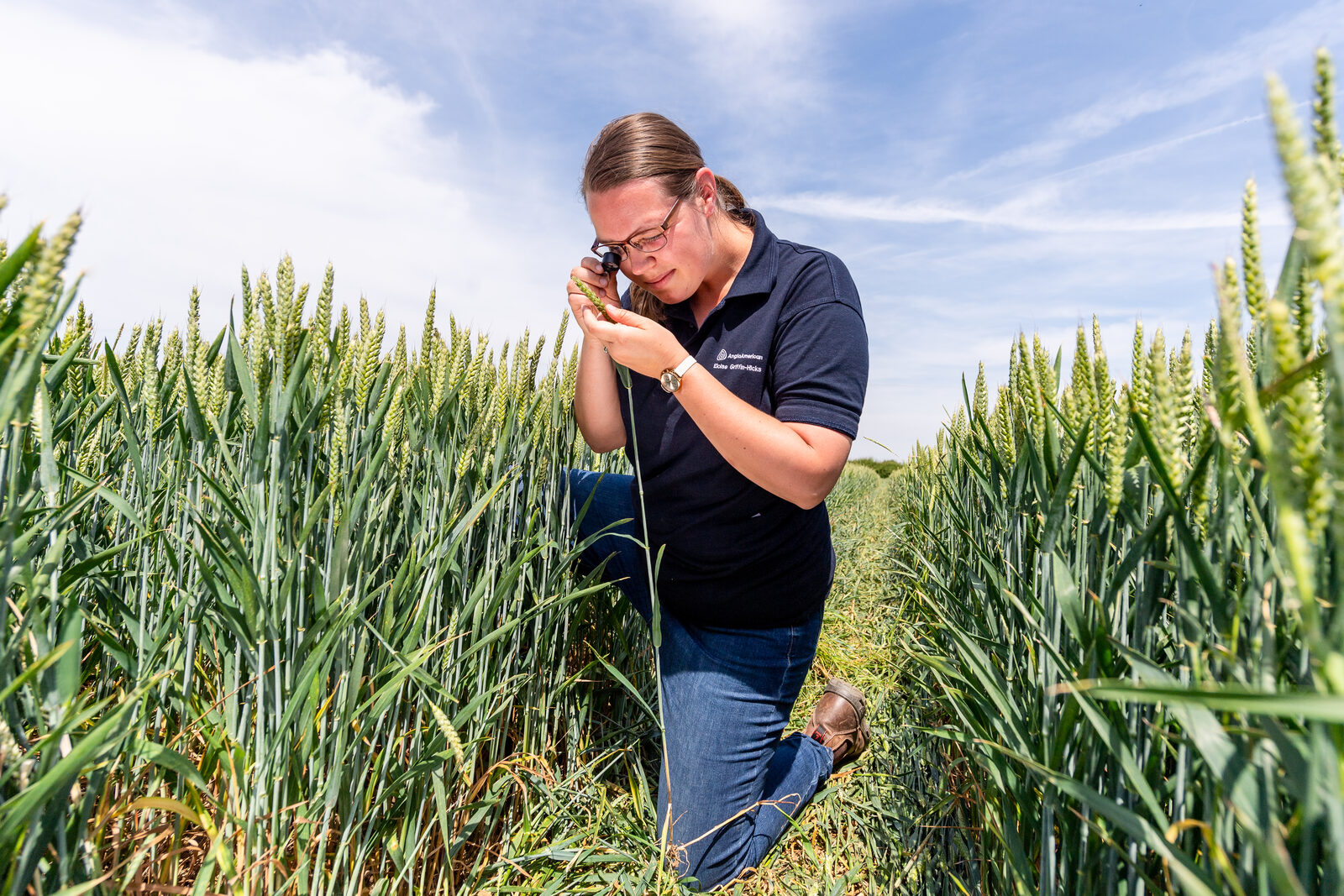
For farmer Clive Bailye, those findings reflect what he has seen in his own fields. He first trialled POLY4 three years ago and says the results quickly influenced his approach: “We’ve run a lot of trials here and tested a lot of products, and most tell you very little in a single season. POLY4 was different. The results in year one were so strong that we adopted it as standard practice across our combinable crop acreage the following season, and we’ve used it every year since.”
He adds: “It suits our soils particularly well and spreads evenly at 36 metres. Most importantly, it has shown a clear margin over its cost. That is the test any input must pass here, and POLY4 passes it comfortably.”
The significance lies not in one standout result, but in the repeated response across different farming systems and growing conditions. Large, long-term datasets are uncommon in crop nutrition, and the findings are prompting discussion well beyond academic circles. Agronomists, advisers and growers are looking more closely at what the results mean for real farming systems, particularly those focused on improving efficiency rather than simply increasing inputs.
Scott Yarwood, UK sales manager for Anglo American Crop Nutrients, says the way growers are responding to POLY4 reflects the amount of evidence now available.
“Growers are under pressure to make every input work harder,” he says. “The conversation is becoming less about pushing yield at any cost and more about understanding what genuinely improves efficiency and resilience within the system.”
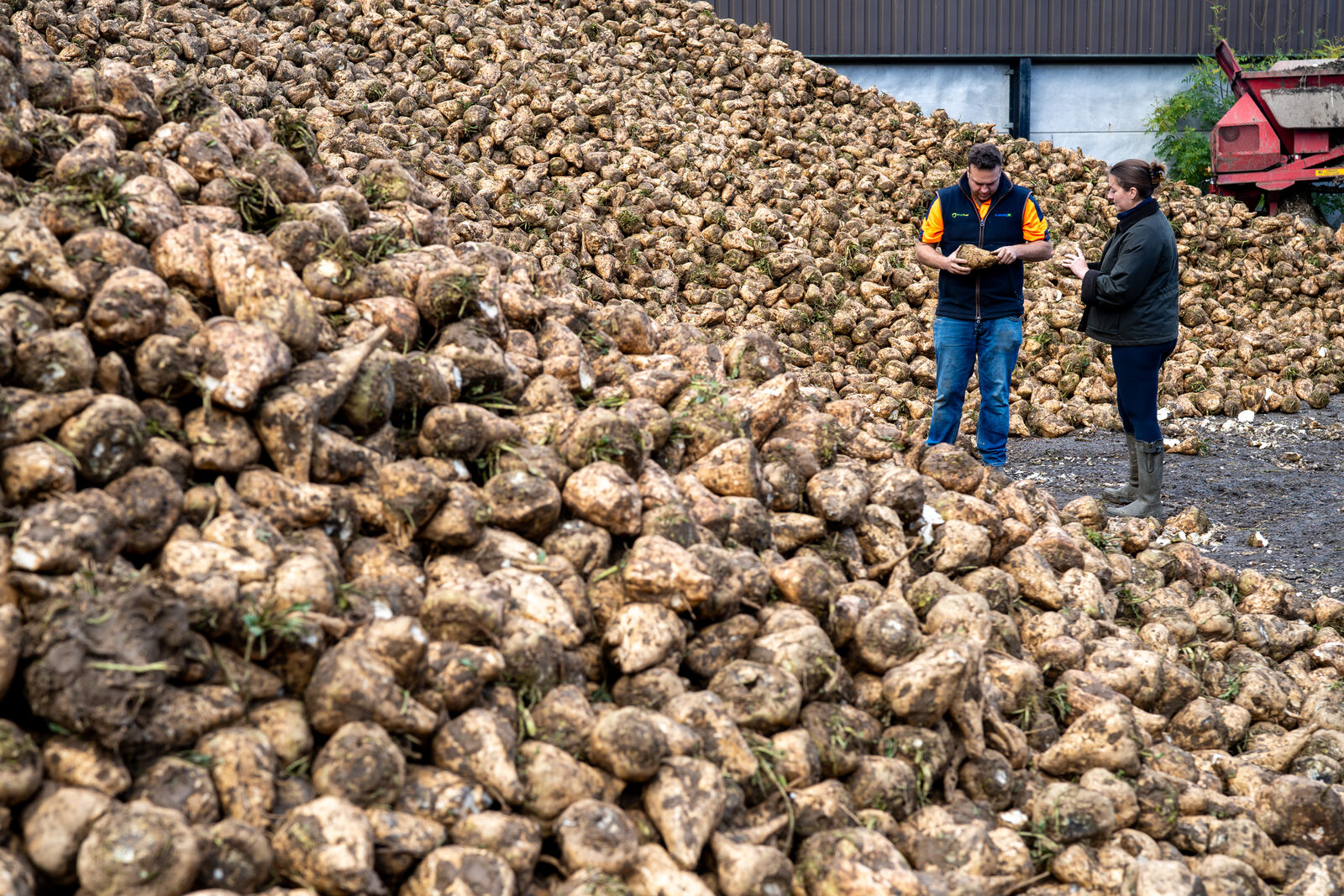
“When evidence comes from hundreds of trials across different soils and cropping systems, it gives people the confidence to weigh it up and decide whether it’s right for their own farm.”
Scott says: “More of the conversations we’re having now are about what is limiting crops, rather than what else can be added. Sulphur keeps emerging as one of the nutrients that quietly limits performance, particularly where systems are relying on lower disturbance systems and tighter nitrogen use.
“Growers are often doing the right things with nitrogen, but the response just isn’t there. When you look closer, sulphur is frequently part of the picture.”
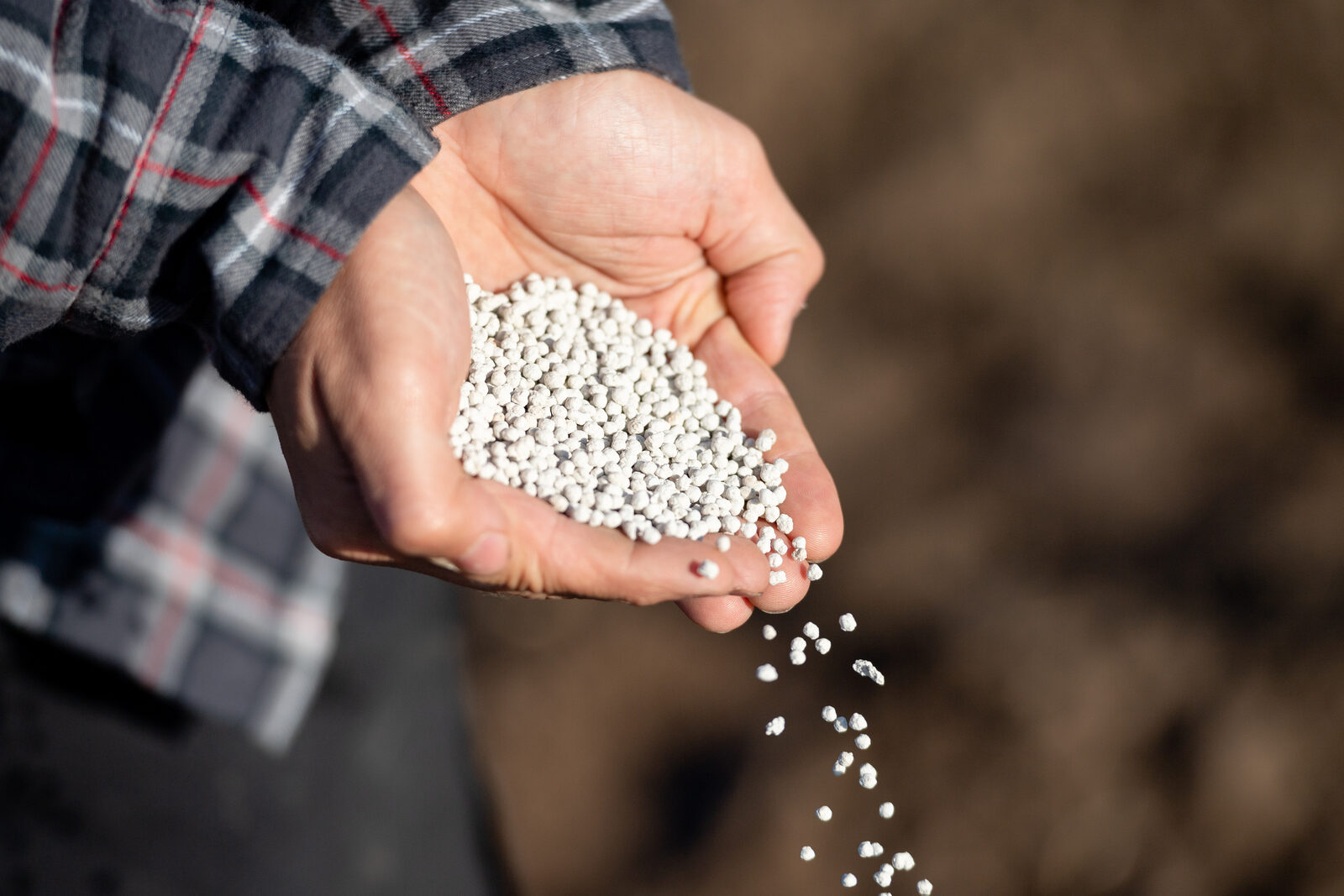
Sulphur is essential for crops and is closely linked to how well nitrogen is utilised, but it is also easy to underestimate. What used to come quietly from the air no longer does. In lower disturbance systems, nutrient cycling and availability can behave very differently from conventional cultivation systems. Sulphur is highly mobile and may have leached over winter, or be present in the soil, but not always in a plant-available form.
For many farmers, nitrogen can look right on paper, but yield is lost quietly because the efficiency isn’t happening.
This theme also runs through the recent Future of Fertiliser report, commissioned by Anglo American and compiled in 2025 from interviews with 74 industry experts. Its clearest message is that future gains are less likely to come from applying more, and more likely to come from improving balance, timing and nutrient use efficiency.
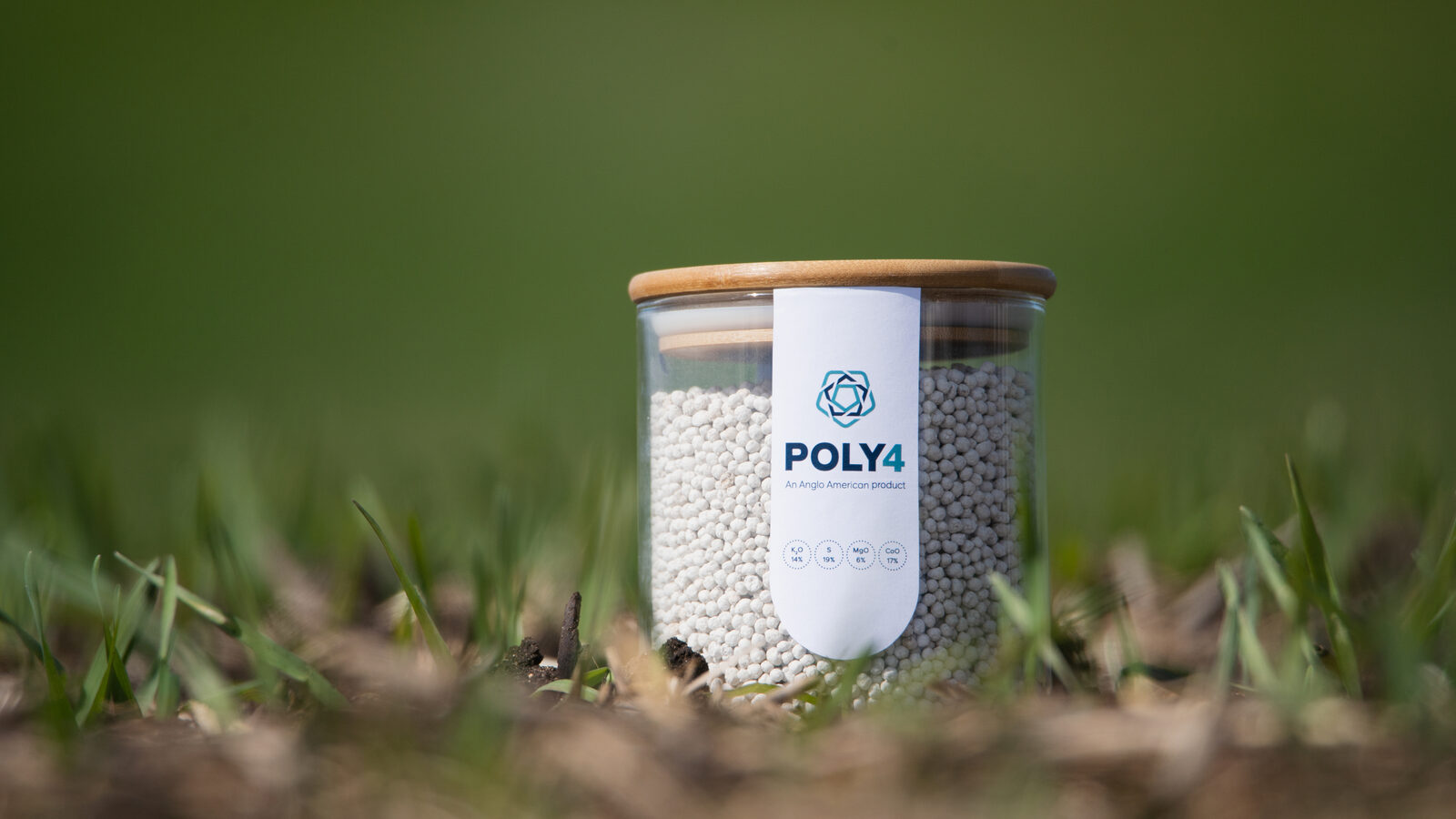
One reason polyhalite is generating interest is that it supplies several nutrients together, including sulphur, potassium, magnesium and calcium. It is not trying to fix one nutrient at a time; it is focused on balance. The large global study suggests that this combination, rather than any single nutrient on its own, helps explain why the same yield response keeps showing up across very different conditions.
More recent research has also looked at polyhalite and nitrogen loss. When polyhalite was used alongside urea and a urease inhibitor, ammonia losses were reduced, particularly in alkaline soils where losses are usually higher. In practical terms, more nitrogen remained available to the crop rather than being lost to the atmosphere.
As interest in the research grows, the focus is increasingly on sharing what it means in practice.
“We continue to be present at key events as growers want to understand how POLY4 fits into their system, not just see the numbers. It’s important that people can talk things through properly and see what it might look like at their farm gate,” adds Scott.

Taken together, the research points to more efficient nutrition programmes: better nutrient balance, stronger sulphur availability and fewer losses.
None of this removes the need for good agronomy; soil, weather and management still matter. But when the same results keep appearing across hundreds of trials and many different growing conditions, it is usually pointing to something fundamental.
For growers who have already addressed many of the larger changes, the next opportunity may lie in turning to the smaller efficiencies that influence resilience and nutrient use over time. This is where POLY4 could play a role, as part of a broader move towards more balanced and efficient fertiliser programmes.