
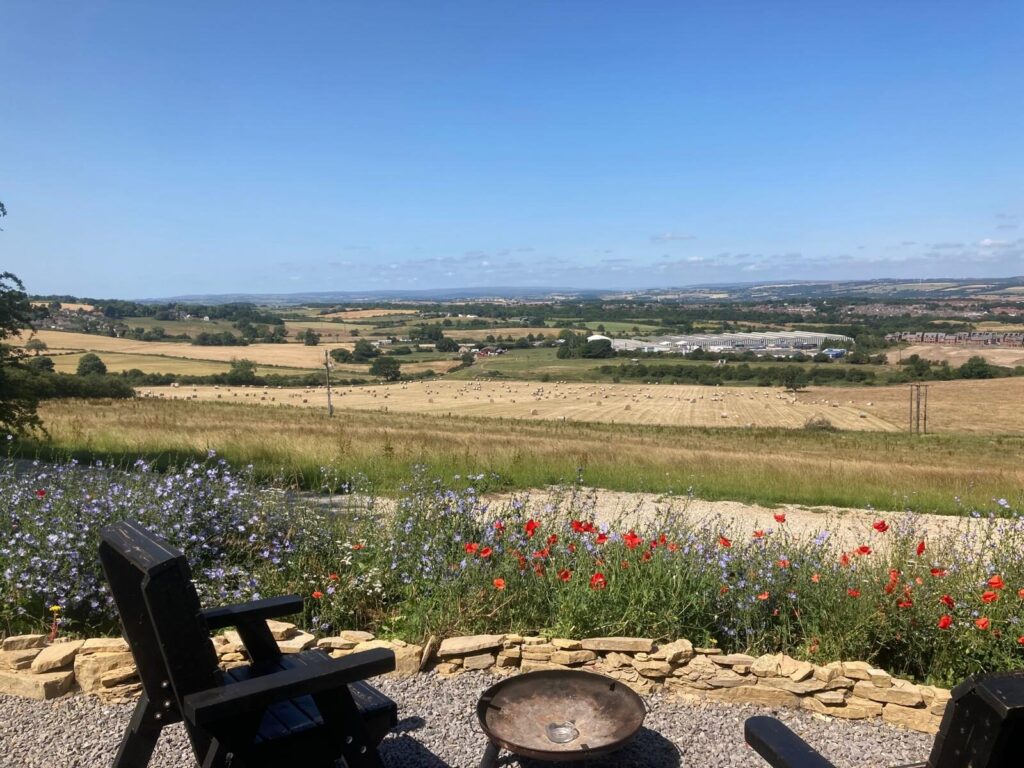
A single application on a 60-acre organic meadow in the North East has turned in some numbers worth a closer look. This case study from High Hill Farm is upfront about what it can’t prove, which is half the reason to read it.
Most of us have read enough product trials to know how they usually go: small plot, good year, big percentage, no control worth the name. So, it’s worth saying straight away that the High Hill Farm trial is one field, one treated strip and one control, with no replication. But it is a field with a long, steady record, and a trial result that sits well outside it.
SoilPoint featured back in issue 32, when it was bringing its Soil Booster to the UK. For the past 18 months they have been putting in the work and running trials around the UK, including some at TWB Farms this autumn that Clive will be telling you more about. This is some of the first solid harvest data to come back from that work.
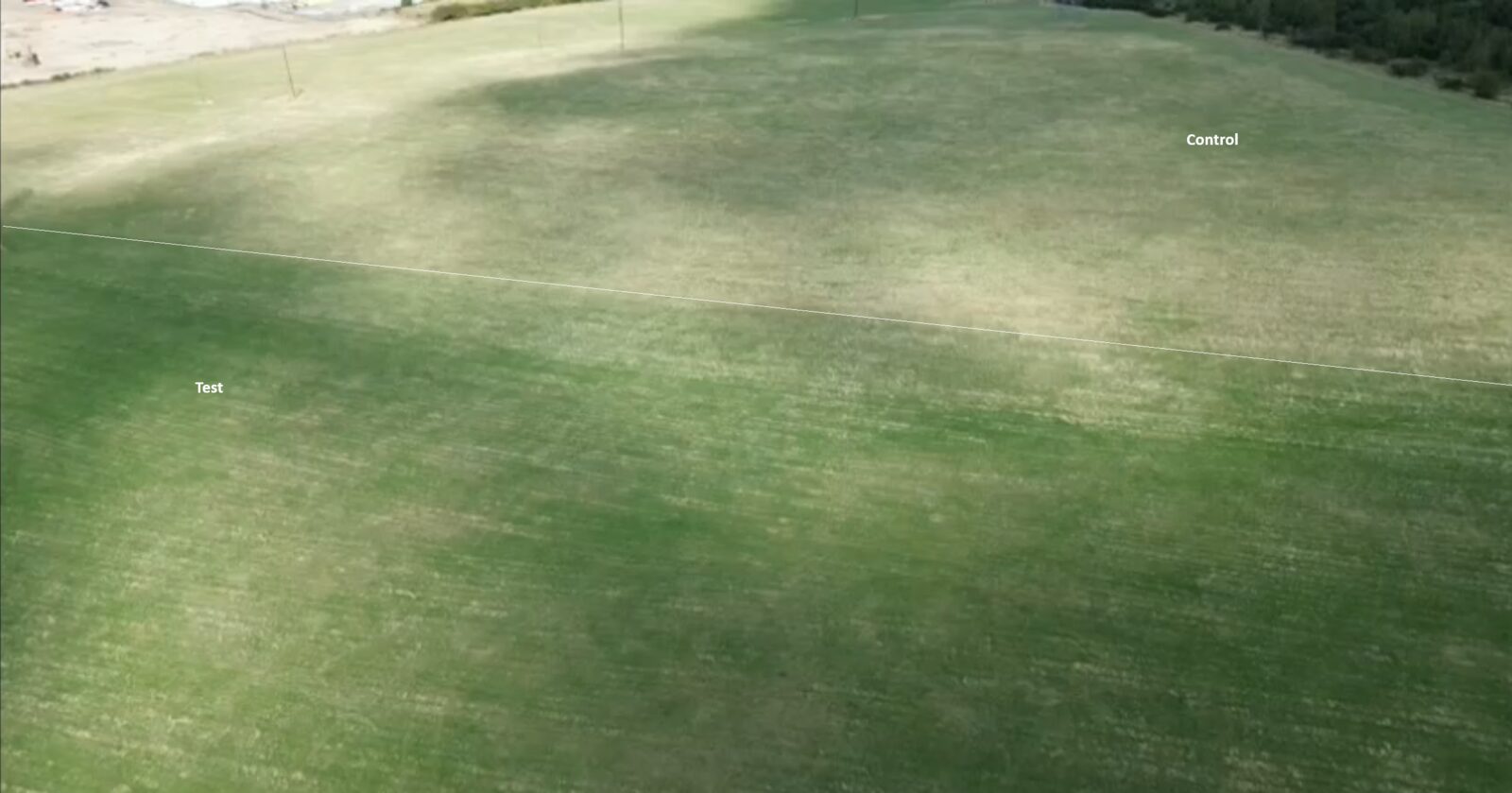
The field
Sixty acres of permanent pasture in the North East, organic, kept for hay and farmed by Callum Jones. No muck, no slurry and no bagged fertiliser at any point in the recorded period. One cut a year, taken at the same point every season.
Over 12 years of records, the whole field has produced between 450 and 510 bales. That’s 7.5 to 8.5 bales an acre, averaging 8.0. For a rain-fed meadow with nothing going on it, that’s a tight range, and it’s what makes the site useful; when something moves, you notice.
In June 2025, the field was split roughly 30 acres each side. The line runs up and down the slope rather than across it, so both halves share the same height, aspect and drainage, and each half picked up one of the field’s two weaker patches. SoilPoint Soil Booster went on once, as a liquid, undiluted, at 5 l/ha ahead of the 2025 cut. The product used analysed at 85 per cent humic and 5 per cent fulvic acid. Nothing has been applied since. Stock came off both halves for the two trial years.
The result
The Met Office recorded England’s driest July since its series began in 1836, just 6.5 mm or about a tenth of normal. The South East was worst hit, at around 1 per cent of average rainfall, and the 9 mm the North East received on average wasn’t far behind. National grass growth was running more than 40 per cent below the recent average right through July.
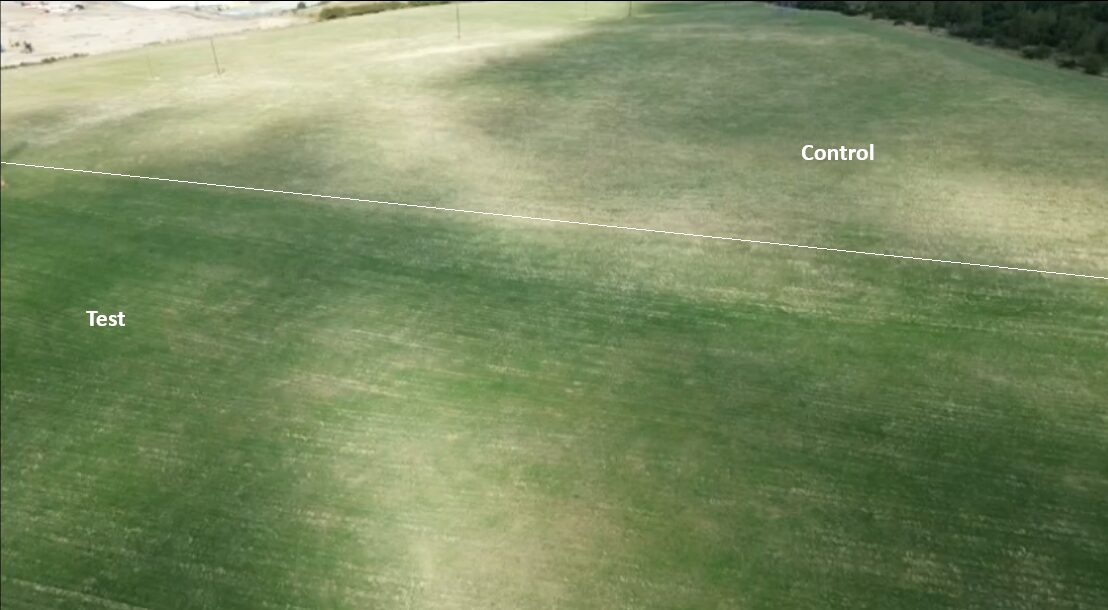
The control half made 7.2 bales an acre; that’s below the worst year in the field’s 12-year record, which is about what you’d expect from a second dry summer with nothing put back. The treated strip made 11.75 bales an acre.
Bale weights were within 3 per cent of each other, 245 kg against 252 kg across 12 bales weighed on each side, so the count is a fair proxy for yield. In fresh weight, that’s 7,317 kg/ha against 4,359 kg/ha, up 68 per cent.
The 63 per cent gain over the control is the headline, but SoilPoint and Callum lean on a more modest number. Against the best year in twelve, 8.5 bales, the treated ground was still 38 per cent ahead. This wasn’t just a good field having a good year.
Water is the story
For arable readers, the figure that matters is infiltration. Using the Beerkan ring method, three replicates per plot, the control took water in at 31.1 mm/hr. The treated ground took it in at 68.3 mm/hr – more than double.
Around 31 mm/hr is what you’d expect from compacted or tired loam. Above about 40 is generally reckoned to be well-structured soil. The treated side sat comfortably in that range, and the control didn’t.
In a dry year, that’s the whole game. On hard-set ground, a light shower or a heavy dew sits on top and goes back where it came from. If it gets in, the roots get it.
Soil biology moved too. Microbial biomass was 3,924 mg/kg on the treated ground against 932 on the control, and soil respiration 177 against 41, both around four times higher. They’re single bulked samples that travelled in hot weather, so don’t lean on the absolute figures, but both lots travelled together, so the gap means something.
The bit that makes you think
After the 2025 haylage cut, regrowth on the treated plot ran at 39 kg/ha/day against 28 on the control. Same cut, same 24 days, same plate meter, same reading date. This year, post-harvest regrowth was 63.4 kg/ha/day against 37.6, a 69 per cent gap.
That’s the wrong way round for a feed. Anything that works by feeding the crop gives its biggest kick in the year it goes on and then fades. This got bigger in year two with nothing applied in between.
Humic substances act as binding agents in soil, and better aggregation means more pore space for water to get in. A physical change to structure would hang about in a way a nutrient wouldn’t, which fits an effect that grew over two seasons. That’s where the evidence points, though nothing in this trial tests it directly.
What humus does in the soil
- Holds the equivalent of 80-90% of its own weight in moisture
- Sticky, gum-like mucilages bind soil particles into crumb structure and let air in
- Raises cation exchange capacity, so nutrients are held against leaching
- Buffers soils that are too acidic or too alkaline
- Feeds soil microbes and helps keep their numbers up
- Its dark colour helps cold soils warm up in spring
Source: SoilPoint, soilpoint.earth/what-is-humus
Try it on your own ground
One field doesn’t prove anything on its own. But a stable field, a fair split, a brutal season and a gap far bigger than 12 years of variation is a decent reason to look harder. For anyone direct drilling heavy or slumped ground and watching it crack open every July, the infiltration result is the one worth following.
SoilPoint is keen to hear from arable and grassland farmers who want to run a split-field trial on their own ground, and will help set it up.
Contact SoilPoint
Sam Worthy
Email: [email protected]
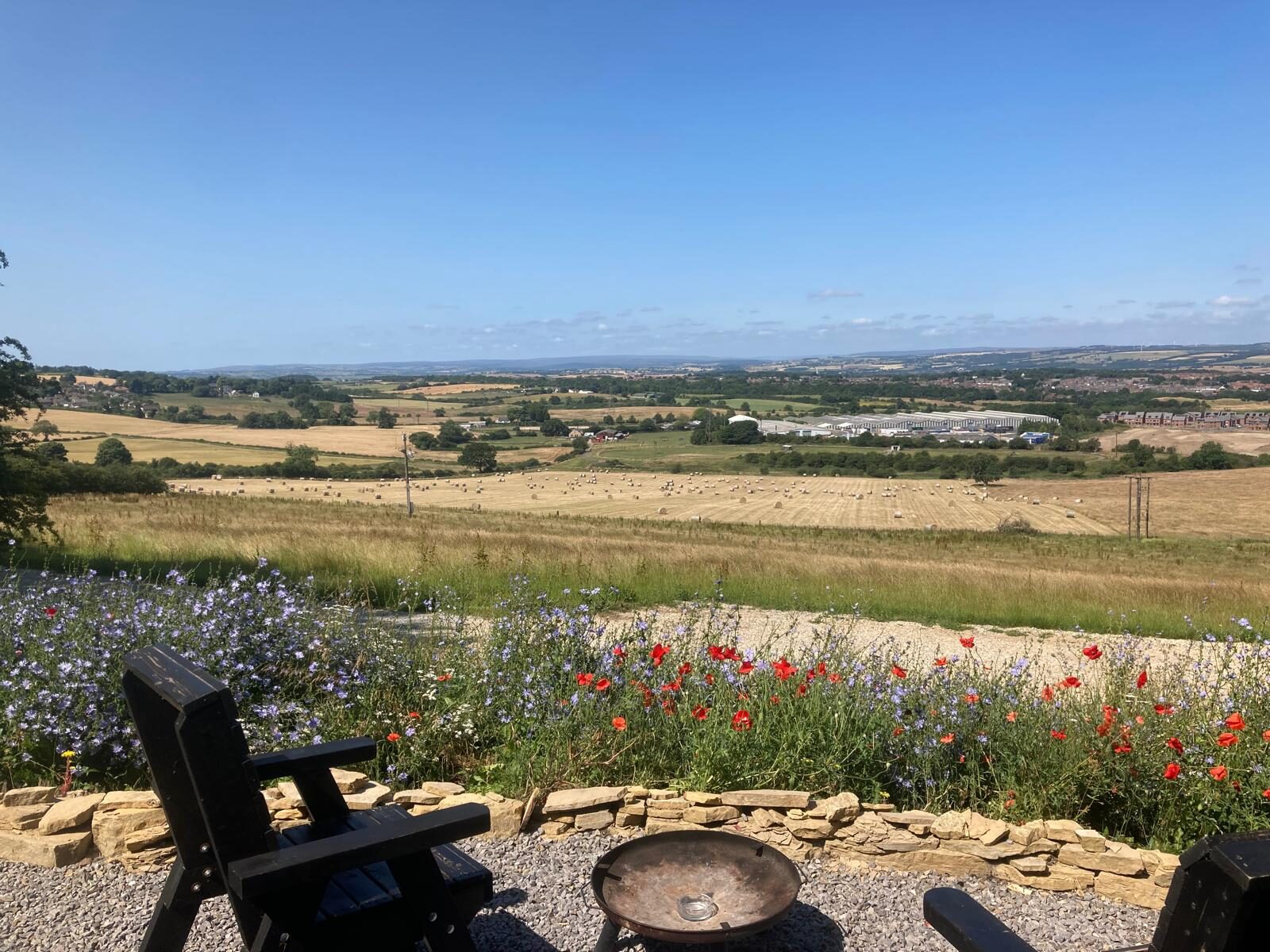
Farm Facts: High Hill Farm
- Location: North-east England
- Farmed by: Callum Jones, the third generation to farm here in 50 years
- Size: 60 ha, organic
- Land: Permanent pasture with mixed herbal leys and clover-rich swards
- Stock: Formerly 160 head of pedigree Aberdeen Angus; now rearing calves under a Gamechanger contract and hosting roaming herds of continental steers and sheep
- Trial field: A 60-acre hay meadow with no muck, slurry or fertiliser, and 12 years of bale records