
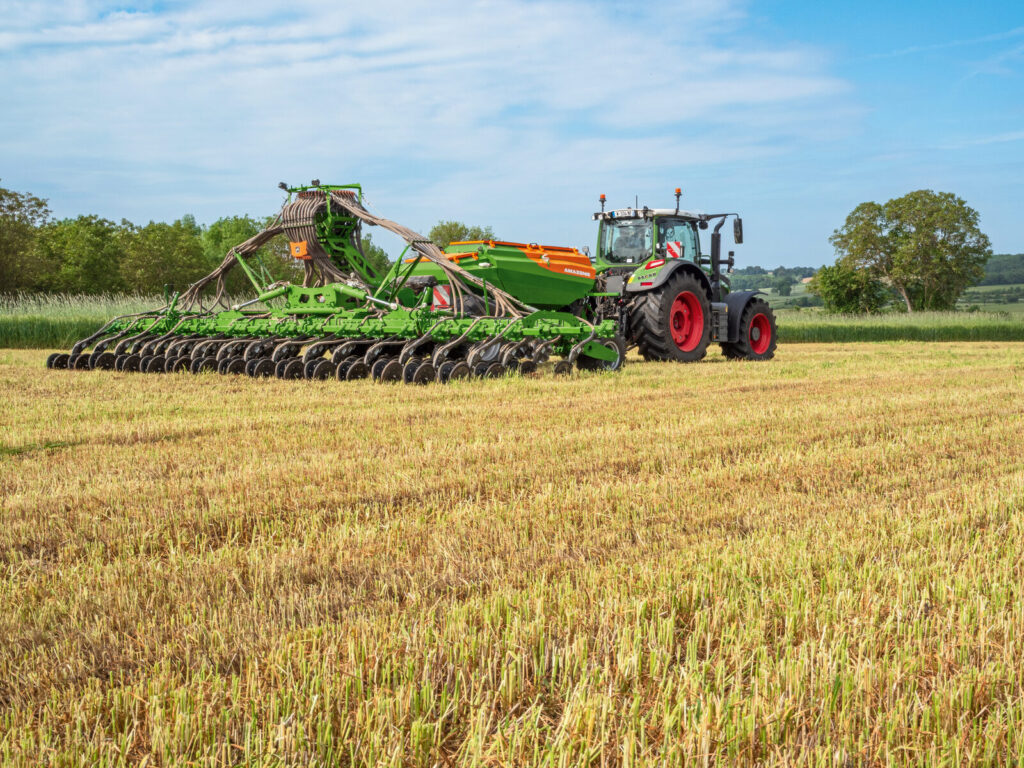
Dry growing seasons put the relationship between soil movement, seed placement and reconsolidation under scrutiny. Choosing a drill that makes good use of available moisture can also help you reduce the work and cost involved in getting crops established.
A field can be fit to travel on and still be too dry to establish a crop well. The Met Office recorded the UK’s driest spring since 1974 in 2025, bringing a reminder of how quickly the seedbed can dry out. In those conditions, a drilling window can close even when there is no rain forecast to interrupt fieldwork.
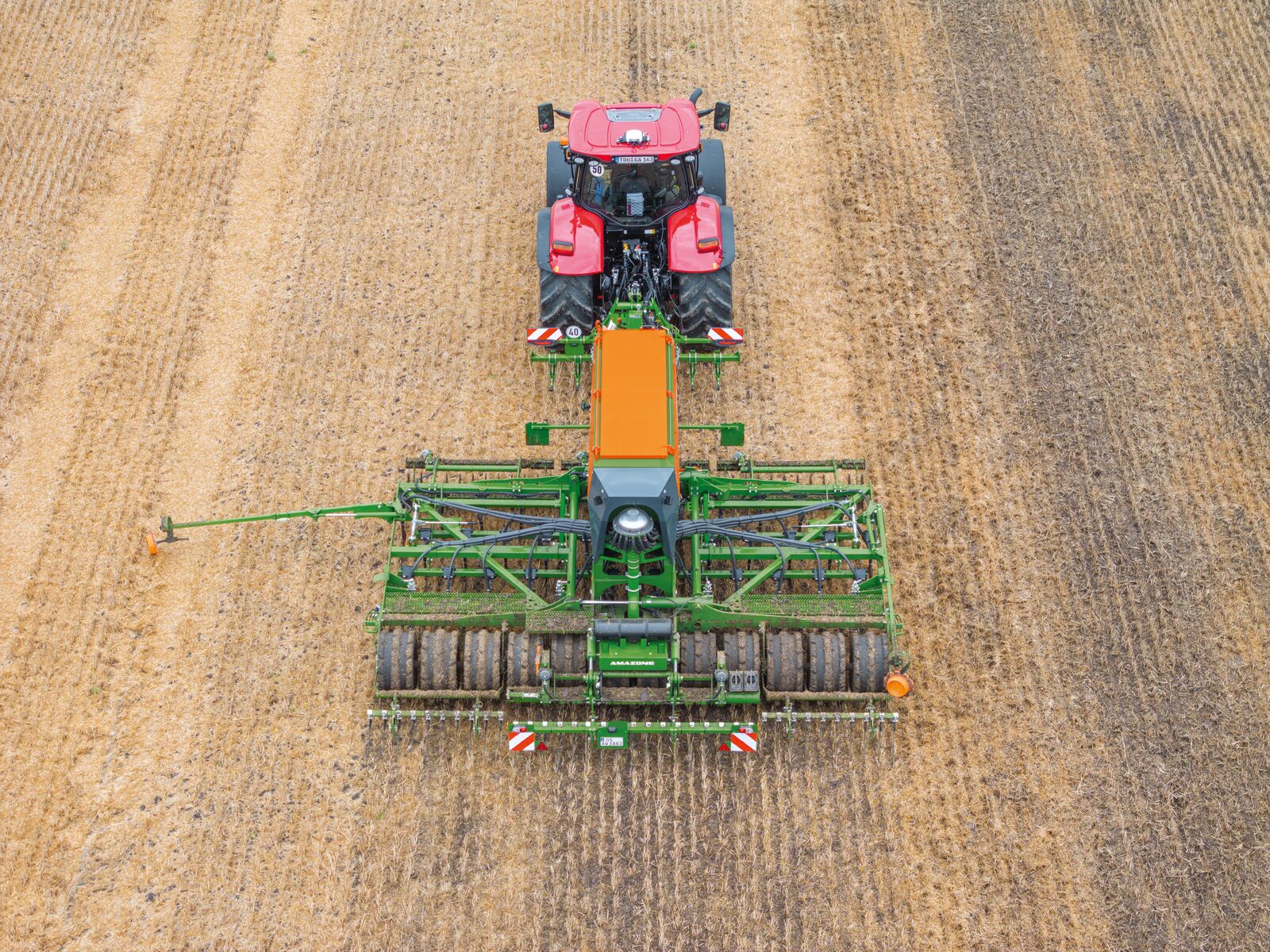
This has a bearing on how you assess a drill. Working width and hopper capacity tell you something about potential output, but the amount of soil moved and the way it is firmed around the seed influence whether that output produces an even crop. An extra cultivation may improve the appearance of the seedbed while exposing more moist soil to drying. It needs to achieve something that justifies the moisture loss as well as the fuel and time involved.
There is plenty of choice in the drill and implement market to address this. Narrow tine openers, cutting discs that work only ahead of the seed row, and separate metering of seed and other materials allow establishment to be tailored more closely to the job. The useful comparison is how these arrangements work in your soils and rotation.
Soil movement and seed placement
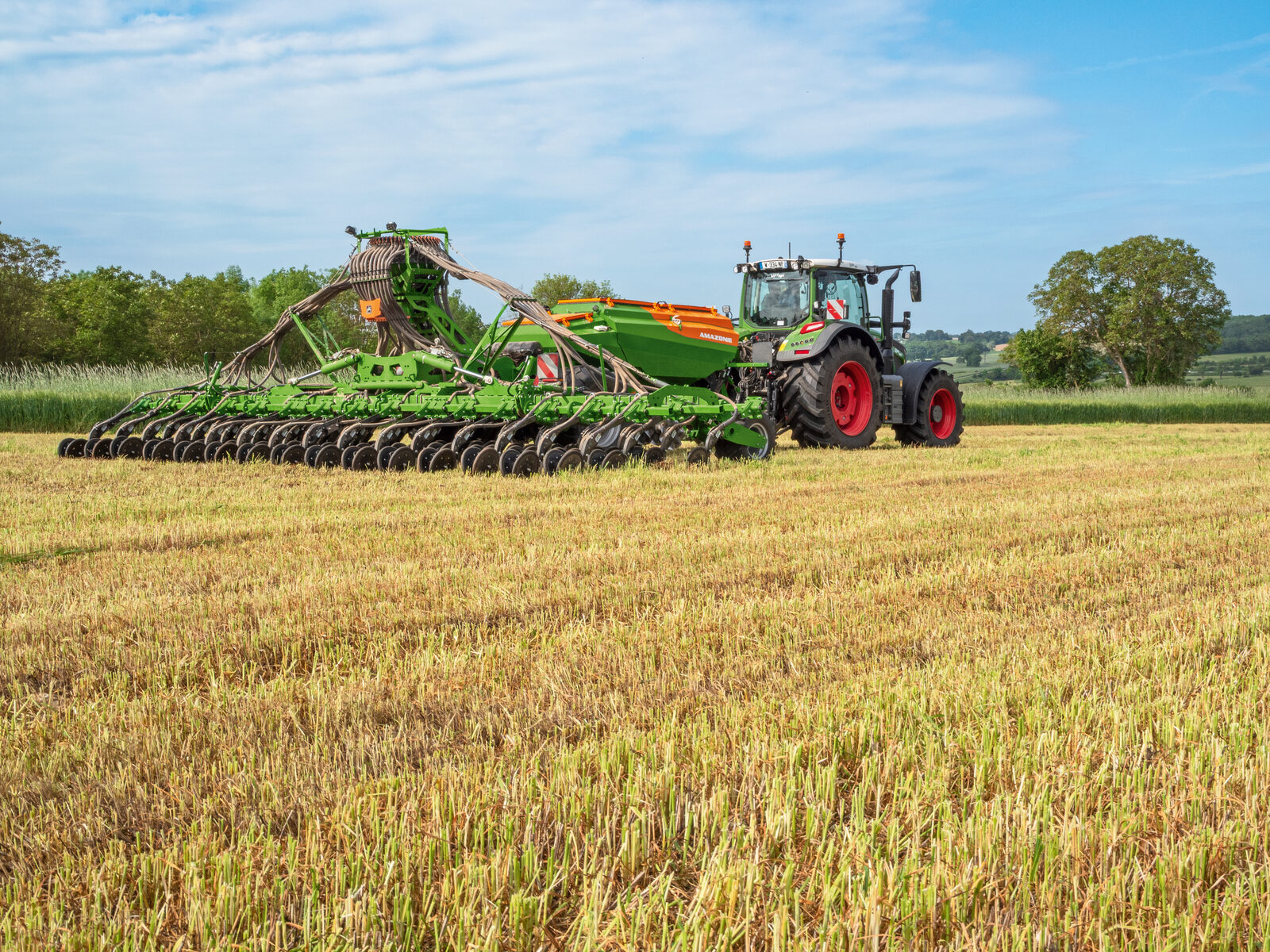
On the 6m Cayena, the narrow TineTeC coulter opens a seed furrow with relatively little soil movement. Its positive penetrating action helps it enter hard ground, while sowing depth is adjusted mechanically using two turnbuckles. This gives you a straightforward arrangement for placing seed into moisture without cultivating the full soil surface.
The coulters are staggered across three rows to provide clearance for soil and crop residues, despite the relatively close 16.6 cm row spacing. Optional front cutting discs cut through residues ahead of the tines. Their purpose is to improve residue throughput and pre-cut the soil, reducing the disturbance needed as the coulter follows through.
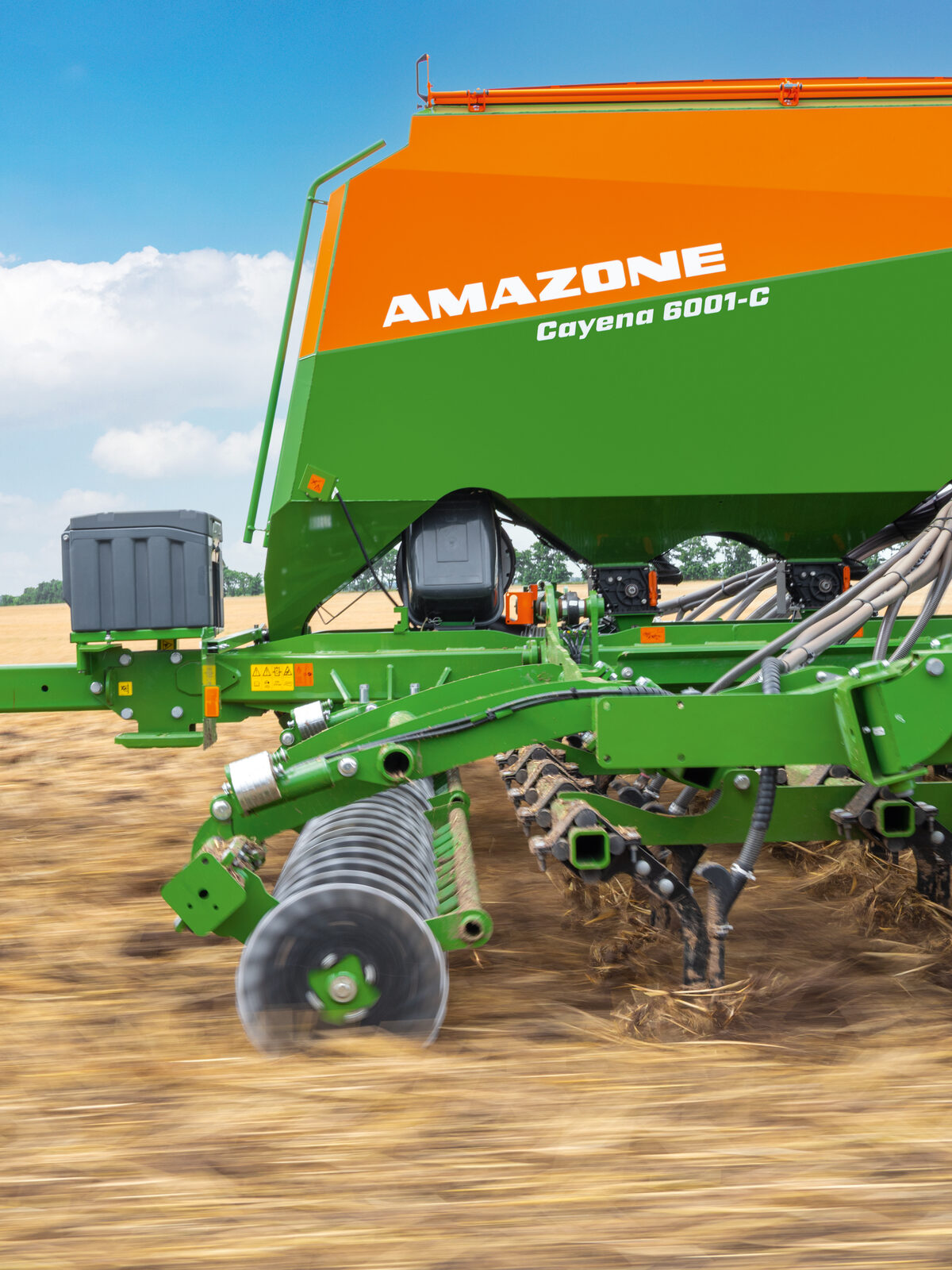
What happens behind the coulter is equally relevant. The Exact harrow covers the seed furrow before the wedge ring roller, with its Matrix tyre profile, firms the soil in line with the seed rows. That targeted reconsolidation brings soil into contact with the seed. A seed sitting among loose clods can struggle to take up water even where moisture is present further down the profile.
Dig across the drill width, including behind the tractor wheels, to check seed depth, coverage and soil contact. Repeat these checks when soil conditions change. Good penetration alone does not tell you whether it is covered and consolidated adequately. Neither can greater drilling depth solve every moisture shortage; the seed still has to emerge successfully, particularly with small-seeded crops.
Residue management also affects the result. Straw and chaff need spreading evenly at harvest so that the drill is not continually moving between clear ground and concentrated bands of material. Where a cover crop precedes spring drilling, the timing of its destruction needs to take account of its continued water use. A growing cover uses water, which can help in a wet spring but leave less for the following crop in a dry one. Its residue can also reduce surface evaporation, so check soil moisture beneath the canopy.
The dry-season assessment should also extend below sowing depth. If roots meet a compacted layer later in the spring, moisture deeper in the profile may be difficult to reach. A drill cannot put that right simply by producing an even surface finish. Any remedial work needs to follow a soil profile inspection and be carried out in suitable conditions.
Flexibility across the rotation
The same farm may need several approaches to establishment. Cayena can work directly into stubble or follow cultivation, giving you scope to vary cultivation across the rotation. Its narrow tines keep the pulling requirement relatively low, although the tractor needed will depend on soil conditions, terrain and the load being carried.
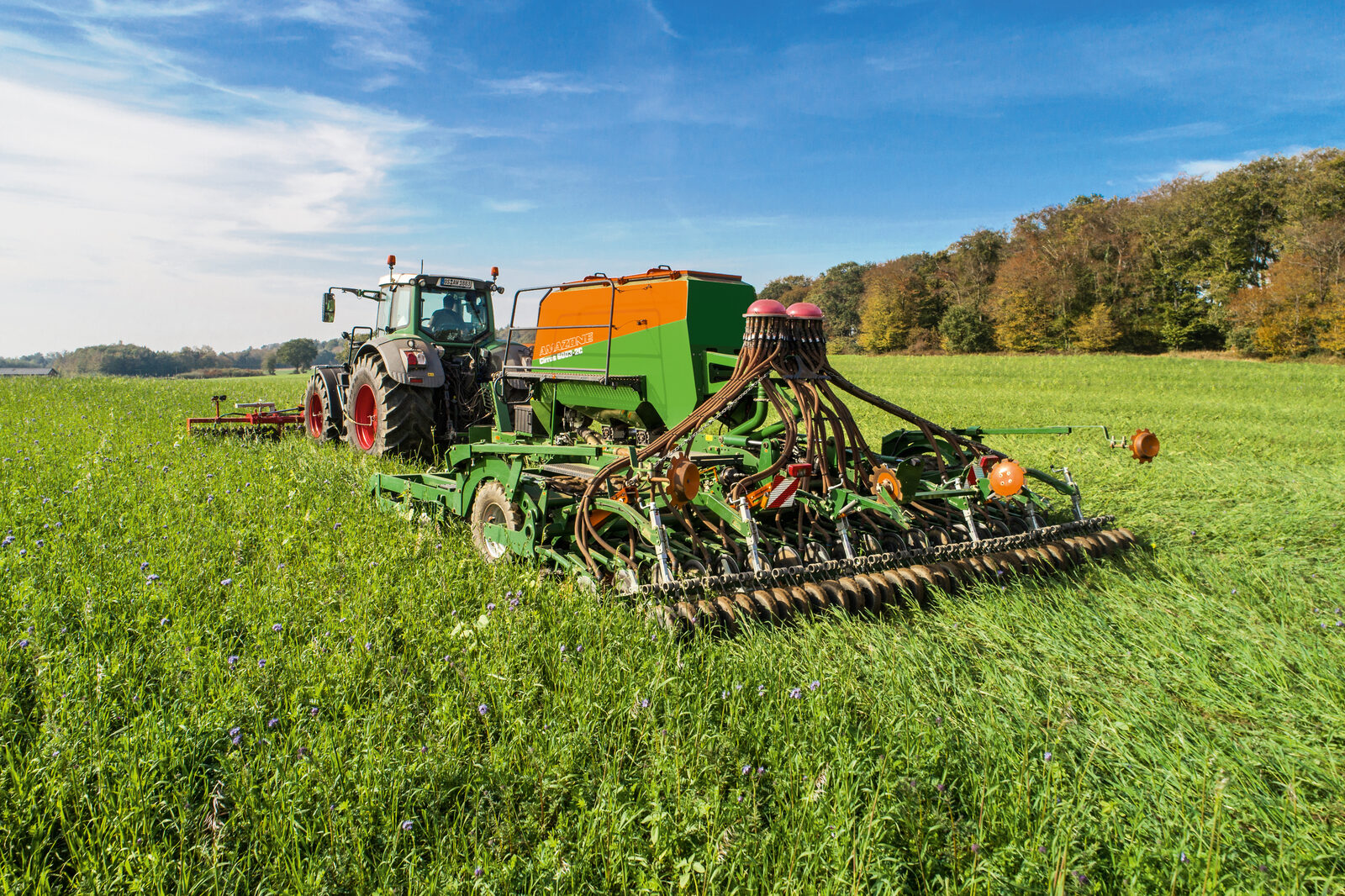
For farms using a cultivator drill, the Cirrus with Minimum TillDisc offers another way of reducing soil movement. The cutting discs work strips ahead of the sowing coulters, replacing the more intensive action of the conventional cultivation disc unit. Where a wider tine drill is required, the Condor 02 combines ConTeC pro coulters with 8m or 9m working widths and a compact chassis.
Flexibility also extends to what goes through the drill. Cayena 6001 has a 3,600-litre hopper, whereas the 6001-C has a 4,000-litre hopper divided 60:40, with separate metering for each chamber. This allows two materials, such as seed and fertiliser or different seeds, to be metered independently and delivered together into the seed furrow. Independent metering gives you control of each rate, but a shared outlet means the materials must be suitable for placement together at the same depth. This is where machines such as the double-shoot Cirrus or Cirrus Grand with either baffle plate seed delivery or secondary FerTeC disc coulters allow two different placement depths.
Keeping the drill working
Easy filling and well-planned seed deliveries help you make the most of a drilling window. A 6m drill at 10km/h has a theoretical output of 6ha/hour. Six hours of uninterrupted full-width drilling gives 36ha; another hour gives 42ha at the same speed. Having seed and loading equipment ready can make that difference without asking the coulters to work faster. With the Cayena 6001-C, the 4,000-litre hopper minimises the number of refills per day.
Changing crops or seed lots also brings calibration into the day’s work. Cayena’s optional TwinTerminal is positioned at the machine, allowing you to carry out calibration without repeated trips to the cab. Accessible metering equipment makes it easier to check the rate properly when seed size or flow characteristics change.
Recent developments in distribution systems address a different source of waste. MultiSwitch on the Condor 02 and Cirrus 04 series controls individual rows. With compatible GPS section control, rows shut off progressively at angled headlands, reducing overlap to below 1 per cent. This makes seed requirements easier to plan; using the field area and chosen seed rate, you can fill the hopper with almost exactly the quantity needed for the job. As well as saving seed, this reduces the amount left to empty out before changing crops or varieties.
When you return after emergence, plant counts and the evenness of the crop will help you judge the result. Keep those observations alongside your drilling conditions, machine settings and establishment costs, including any preceding cultivations. You then have something useful to compare next season: the full cost of establishing the field and the crop that followed.