
Jason Pole explains how Wheat dwarf virus (WDV) spreads in cereals, the main symptoms and management options.
With increasing reports of WDV in UK cereals, there’s a push to understand the true extent of the disease. The virus was first identified and classified in the 1980s, when disease incidence was increasing in several mainland European countries, especially in wheat and barley crops. The virus wasn’t recorded in the UK until the early 2010s
Like many virus diseases, issues are often sporadic, highly localised and associated with a wide range of yield losses. For example, Sweden has been hit particularly hard, with average winter wheat yield losses ranging from 35% to 90%.
Disease vector
The disease is thought to be almost exclusively spread by the Psammotettix alienus leafhopper, which resides in grasslands and croplands. Although P. provincialis can also spread WDV, it has not been recorded in the UK.
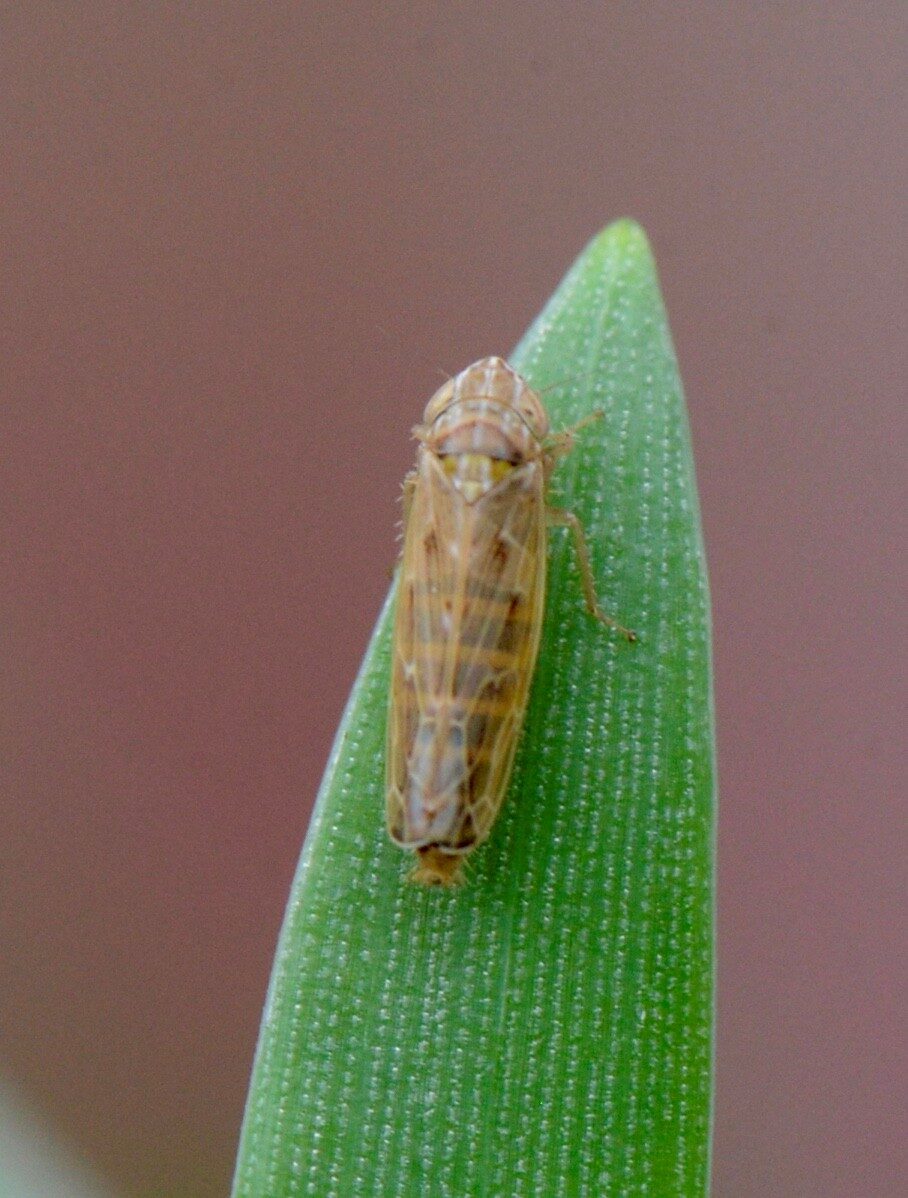
Psammotettix is a large genus of similar species, which makes them difficult to identify (even by entomologists). The species was spotted at sites in Cambridgeshire in 2014. However, it is very likely to have been in the UK for many years before this. Like other leafhoppers, P. alienus adults are small (about 2 to 4 mm long), with adults of this species having elongated brownish-yellowish bodies.
In general, insect-transmitted viruses are benefiting from the warmer temperatures we are seeing more often because of climate change. Certainly, the leafhopper vector is increasing its range and is active for longer during the year.
Although we don’t know the precise UK distribution, coordinated crop sampling and laboratory testing (by members of the Association of Independent Crop Consultants, AICC) confirmed the presence of WDV in 63 winter barley and 19 winter wheat crops suspected of having the virus in spring 2026. These crops were spread from Yorkshire to Berkshire (North to South) and Norfolk to Oxfordshire (East to West). Most infected crops were in East Anglia.
During the 2026/27 cropping season, we are helping to fund further monitoring to understand the significance of this emerging disease threat.
Virus spread
WDV is caused by the virus Mastrevirus hordei. Cereal volunteers and grasses can act as virus reservoirs. The virus is taken up from infected plants by the leafhopper’s salivary glands. It does not replicate inside the insect and can be passed on in a few minutes.
High leafhopper population densities can occur in September. Primary infection occurs when adults migrate into fields with newly emerging cereal plants in the autumn. Although there are WDV strains with strong host preferences for either wheat or barley, they can infect both crops. The virus has also been detected in other cereals (e.g. triticale and rye) and some grasses (e.g. perennial rye-grass). Oat dwarf virus (ODV) is now classified as a distinct species (Mastrevirus avenae). It isn’t clear if oat also hosts WDV.
Cooler temperatures reduce leafhopper activity, even more than aphid activity, and cold temperatures, especially sustained frosts (less than -5°C), kill leafhopper adults, so the species only overwinters as eggs. As a result, primary infection is more significant than secondary infection, which contrasts to BYDV.
When temperatures warm, new nymphs and adults can cause secondary spread in the following year. Cereals are likely to be susceptible to WDV infections until stem elongation. Typically, one to two generations are recorded in the UK, although up to four may occur.
Symptoms
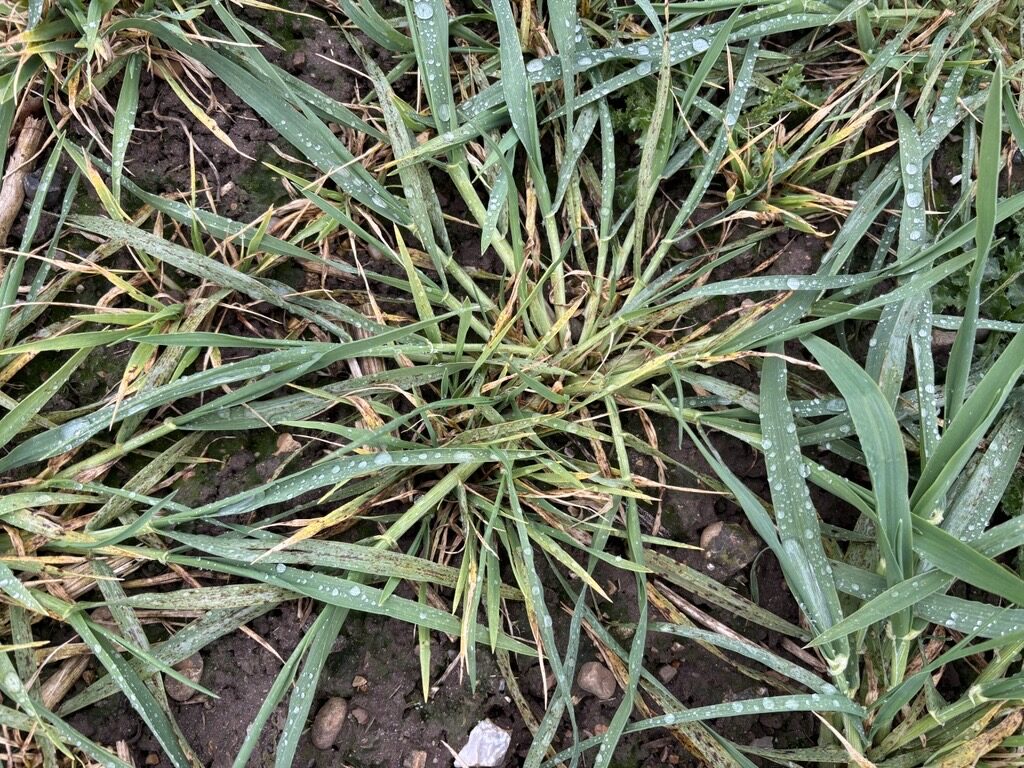
Cereal symptoms include:
- Poor rooting
- Severe dwarfing/stunting
- Tiller death and bushy growth
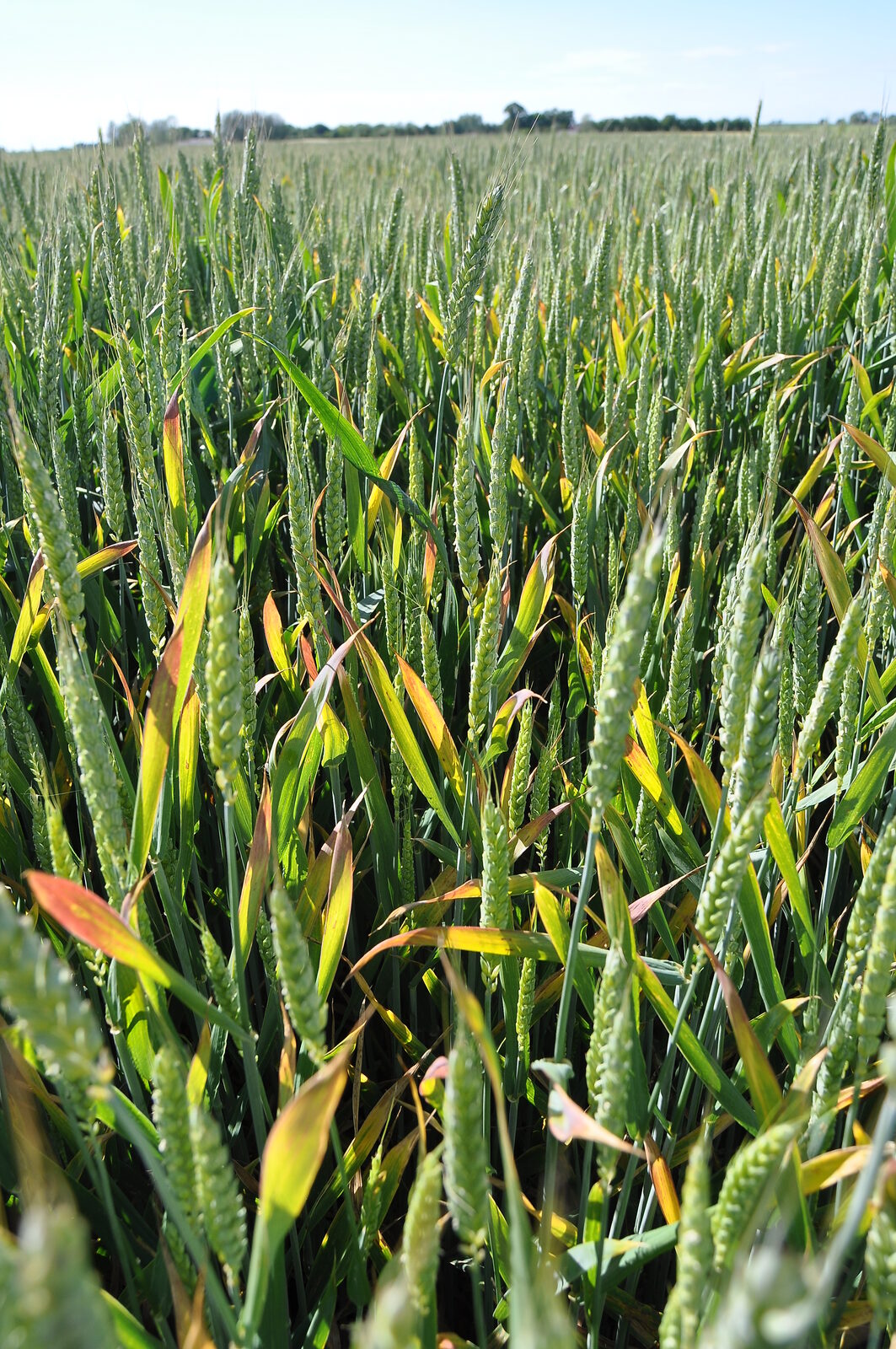
- Leaf streaking and yellowing, but also reddening in winter wheat
- Delayed ear emergence
- Plant death in extreme infections
As leafhoppers readily move between plants, symptoms often spread in small, peppered patches across the field. This sets it apart from other major cereal viral diseases, including BYDV, which often form in relatively large, distinct patches.
At the plant level, cereal viral diseases often look similar and mixed infections may also be common. WDV infections can also be mistaken for symptoms of drought and nutrient deficiency.
High-risk factors
- Cereals sown after hot, dry summers, which favour leafhoppers
- Presence of green bridges and nearby grassland
- Early sown cereals, which exposes vulnerable young plants to leafhoppers for longer
- Warm autumns, which promote longer feeding activity
Management
There are no UK plant protection products authorised to control the leafhopper vector. Highly-mobile leafhoppers are also hard to target. As a result, cultural control is critical, with many techniques similar to those used to manage BYDV:
- Avoid growing susceptible cereals in areas with a recent history of the disease
- Manage green bridges that transfer leafhoppers/virus to new crops
- Drill crops as late as possible
- Grow resistant/tolerant varieties, when available
Varietal tolerance
The identification of WDV-resistant germplasm in wheat and barley accessions has been a focus of plant breeding in mainland Europe for several decades. However, we have only recently started to unravel the genetic basis of reduced sensitivity.
The Recommended Lists for cereals and oilseeds (RL) includes information on resistance/tolerance to some viruses, including WDV. Such characteristics are based on breeders’ claims, which are not verified in RL trials. Accepted claims are associated with clear genetic markers that allow breeders to verify if a variety has inherited the trait.
In RL 2026/27, only one winter barley variety has this specialist trait for WDV: SY Kestrel, which was first listed in 2025. To date, only partial resistance has been identified in some winter wheat varieties in mainland Europe. The next RL edition (2027/28) will be published online on 30 November 2026.
The other virus (BYDV)
We also need to talk about BYDV. There were many reports of the disease in harvest 2026 crops. It has become more problematic for many reasons, such as:
- The withdrawal of neonicotinoid seed treatments in 2018
- Higher temperatures that favour aphid development and flights
- A relatively high number of aphids that carry BYDV, especially last autumn
- Sustainable Farming Incentive (SFI) payments that reward no insecticide use
- Pyrethroids slotted in with herbicides that target weeds, rather than aphids
- Moderate levels of resistance to pyrethroids in many grain aphids
In August, we launched our new BYDV tool, which was covered in the July edition of Direct Driller magazine (page 38). It considers many more risk factors than the T-sum tool, which measures aphid development, rather than BYDV directly.
The BYDV tool considers:
- Local temperatures, including historic, actual and forecast data
- The number of aphids flying
- The proportion that carries virus
- Local risk factors, such as surrounding land use
- The relationship between infection and yield and financial losses in susceptible varieties
The inclusion of aphid data is a major advance over the T-sum tool, which assumes that virus-carrying aphids are present at crop emergence or after a spray.
As it puts crop economics at its heart, you can make informed sowing-date and risk-based spray decisions for BYDV-susceptible varieties.
Our research shows that using it, alongside local knowledge, can reduce the number of insecticide applications and protect more yield than the T-sum tool when BYDV is present.
Access our resources on WDV, BYDV and other viruses of cereals and oilseeds at: ahdb.org.uk/crop-viruses