
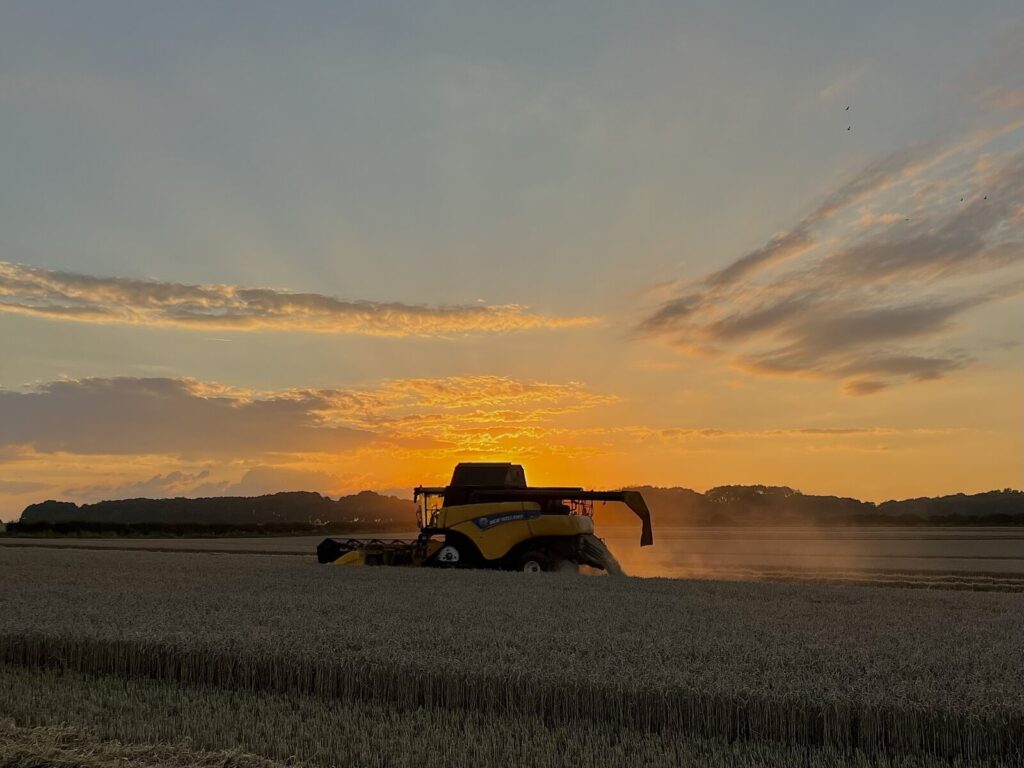
I’ve started this article three times already because I’m at a slight loss for words as to how to summarise the last harvest year. Mainly because it’s been a challenge (to say the least), with a mixture of extreme weather, very messy samples, and me personally expecting my own little lamb in January.
Just as in pregnancy, I thought that trimesters would be the best way to split up the year:
April – June:
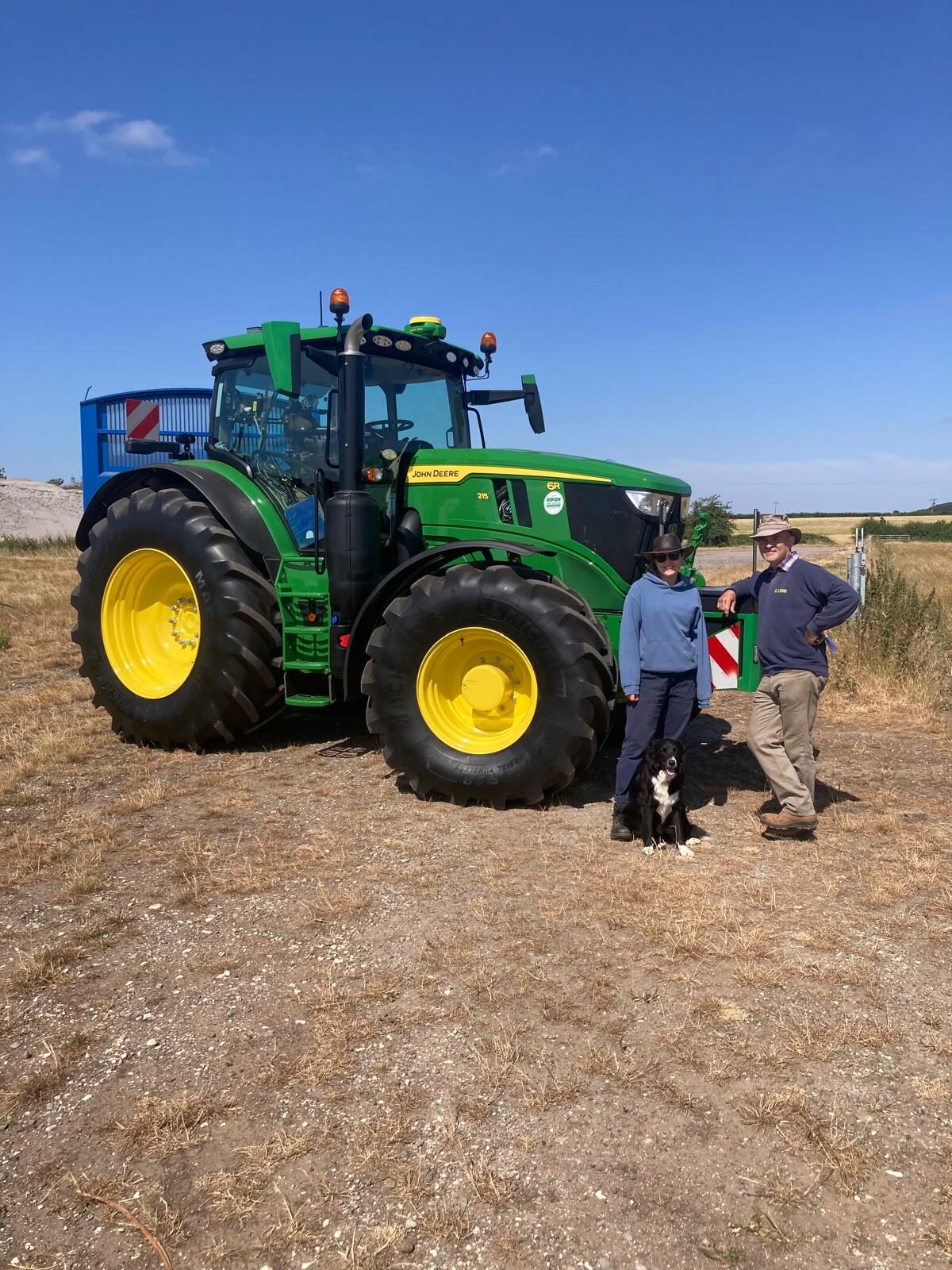
This first trimester was lovely at the start, with great rainfall and plants thriving. We were very lucky to get a big dump of rain when many didn’t. This was the moment when I thought I’d basically completed farming. Obviously, I was in for a shock realisation later on in the year. Last year we had a fair amount of wheat in the ground, grass for seed, a smattering of oats and SFI to mitigate financial risk.
July – Sept:
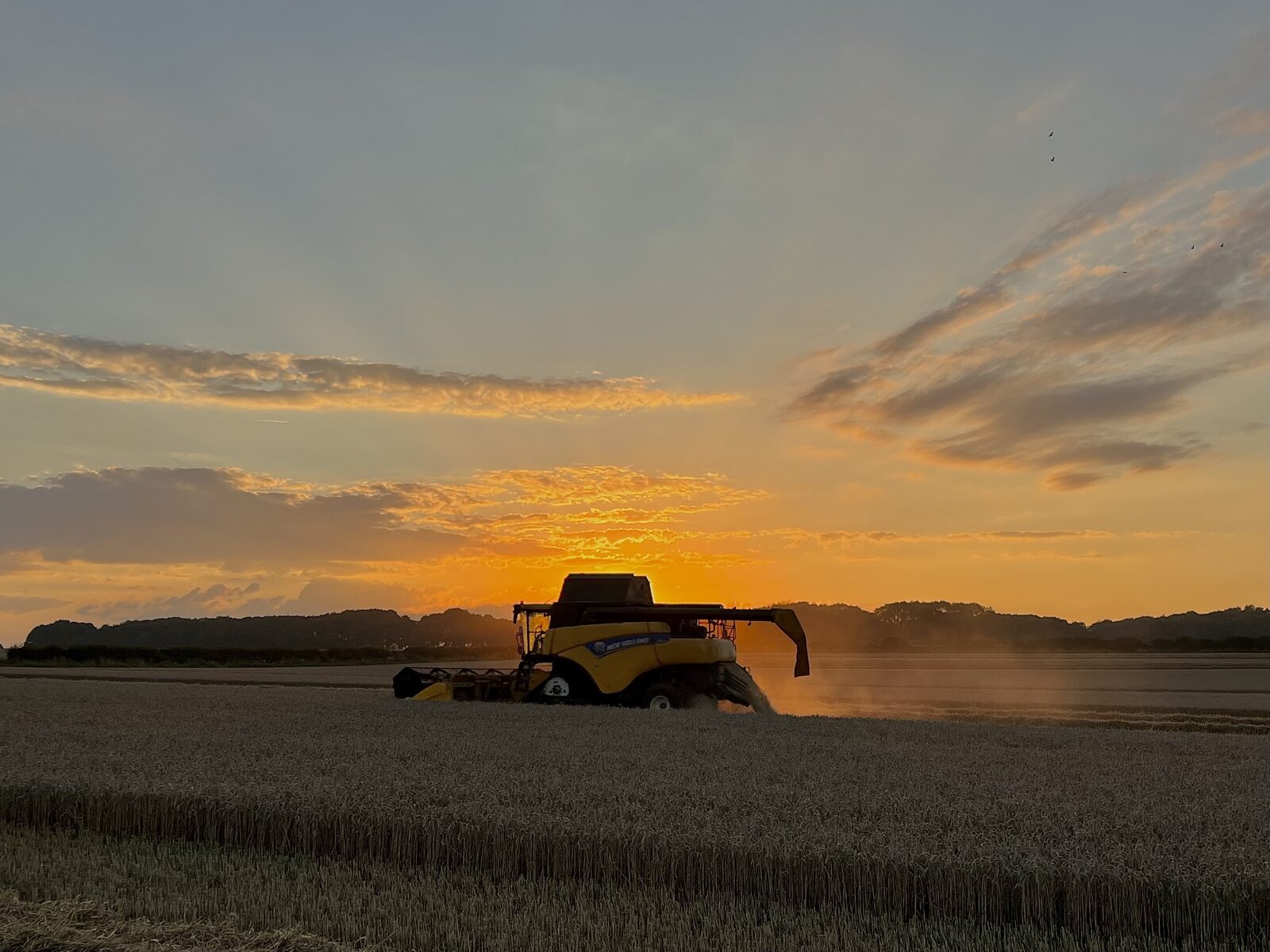
The second trimester was a challenge in many ways, bringing drought and worry. The weirdest moment was harvesting grass when the seed was not registering correct moisture, but the grass itself was falling off the plant. We ended up harvesting anyway and having to dry it in the shed. Normally grass is a pretty simple crop to harvest, but this year has thrown many a curveball. I don’t think we have lost money by drying, but it wasn’t a cost I really wanted to pay.
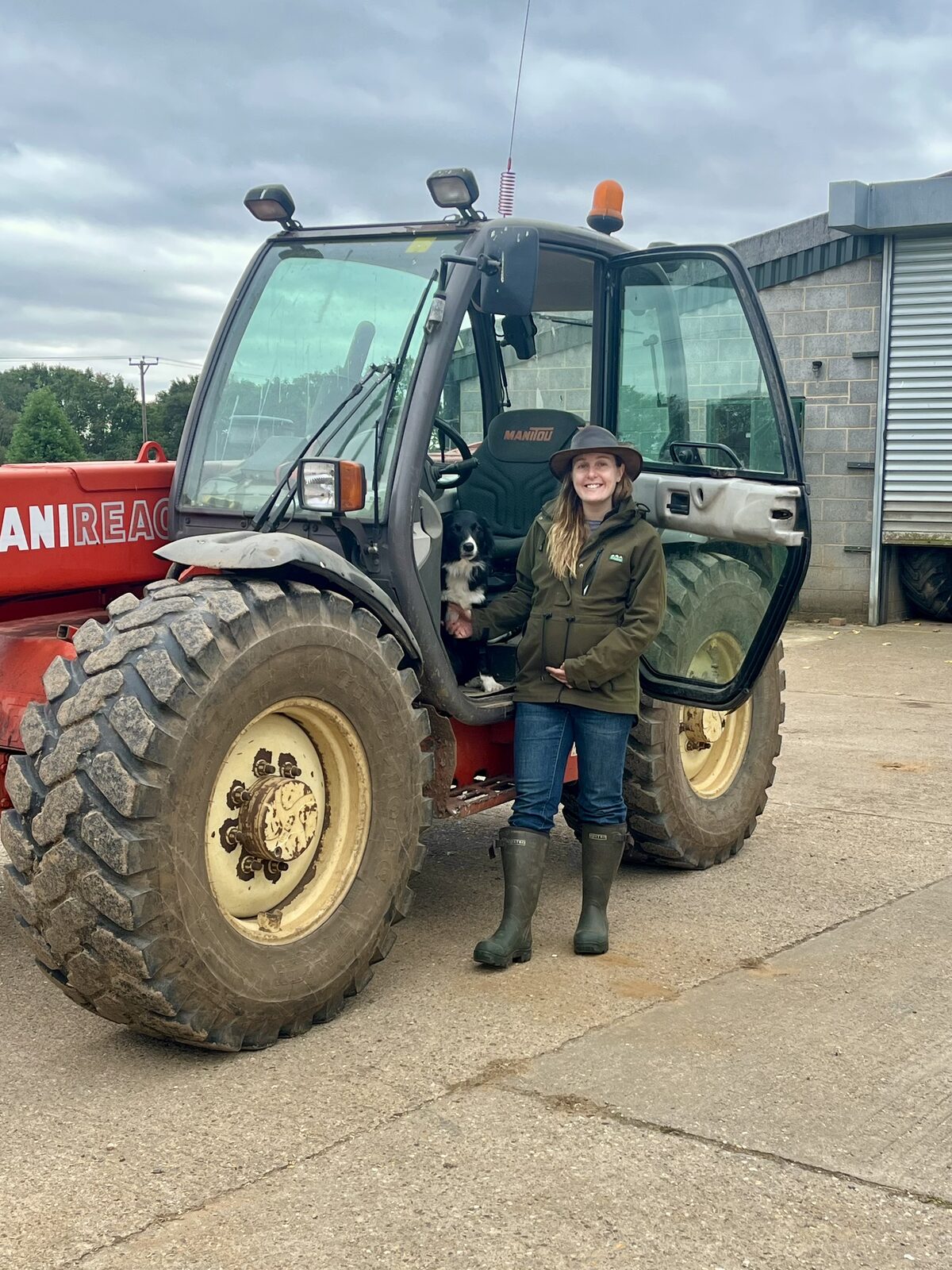
Wheat was also a strange one. We managed to hit protein, which was my main goal for the year, and I’m pretty chuffed about that. However, our protein could potentially be too high. This has befuddled me because you can have a perfect crop all year, but as per usual, the weather dictates the outcome. The margins seem to be becoming smaller for the regen market, and this personally adds a lot of stress. I was so excited to receive the results back that we had achieved protein, and then felt quickly deflated when it was “too high”.
Oct – Dec:
The third trimester was/is proving to be limiting in many ways. I was happy overall with the yield on the wheat and oats, mainly because with the drought I thought it would be a lot worse. I’m also happy with the oat price this year, although it can always be higher. I really wanted to grow bread wheat for the first time on the farm since my grandpa was a farmer. However, it actually makes more financial sense to sell it for feed even though it has hit protein. It seems the infrastructure isn’t there for selling bread wheat locally, and the feed wheat price might be too good to pass up. I need to remind myself there’s always next year, a recurring theme around here.
I am also getting physically larger, which is a limiting factor when working with the flock. For the last six years, I’ve tried to reduce chemicals each year, and so far I’ve been successful. I don’t (touch wood) have foot issues anymore, after years of culling any that have, and my fly strike generally has been reducing, due to mixing in a self-shedding ram. But this year has thrown complications, including bluetongue and more fly cases than we’ve ever had. Usually, I would keep a close eye and not use CLiK where possible, but I cannot flip sheep at the moment, and the safety of the flock will always take precedence. So, treatment it was. We are yet to vaccinate against bluetongue, something that weighs heavily on my mind. I am hoping the weather will get colder and we can avoid it, but you just never know.
I am on the home stretch of pregnancy (the end is in sight!). I know that among the arable farming community, I am part of a small collection of women who actually experience this; something which makes me feel really proud. I like to think that I’ve managed both growing a baby and acres of crops pretty well. The crops ended up in the shed, and the baby is being born at the quietest time in the farming calendar – giving myself a pat on the back for that one.
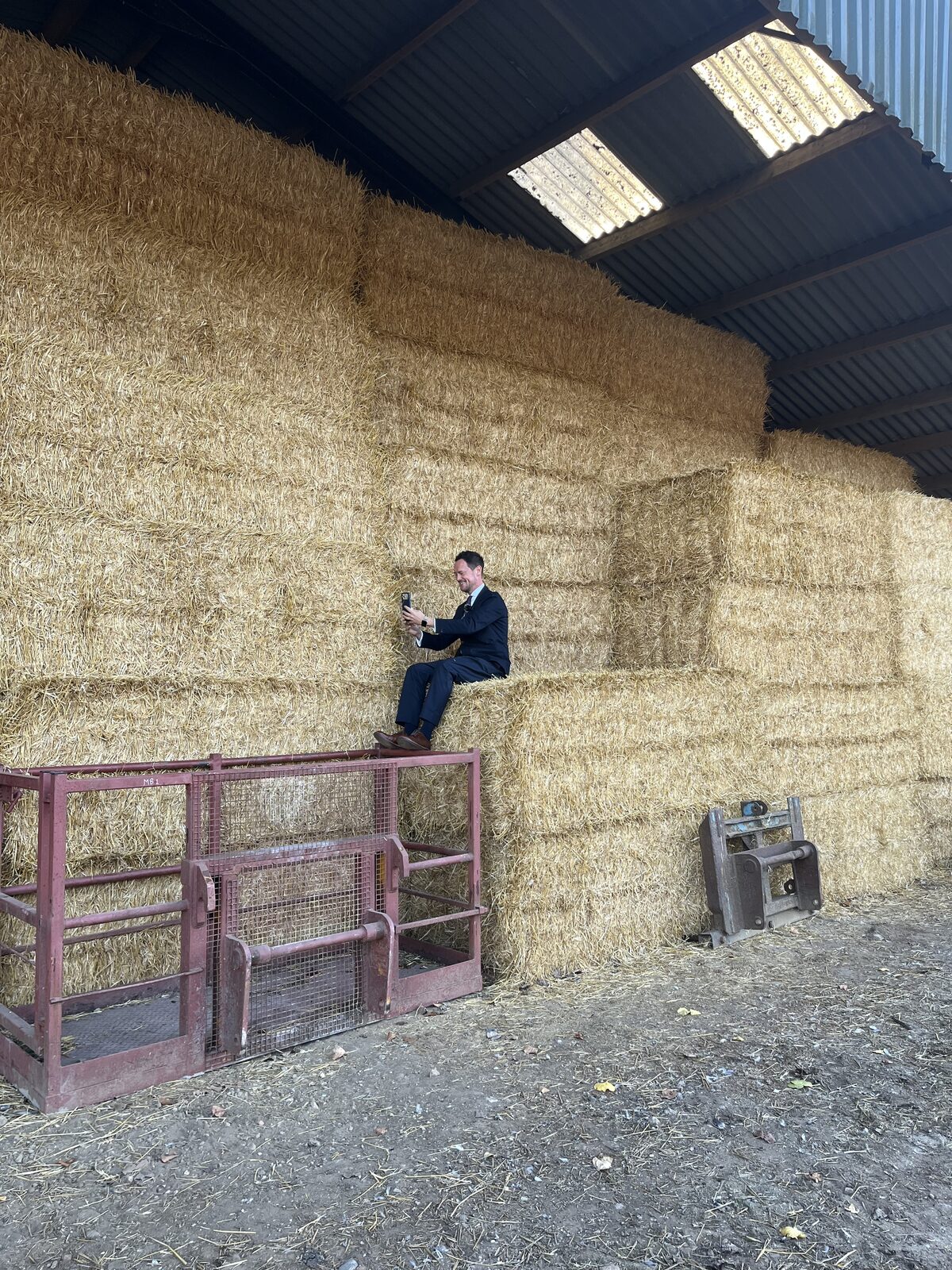
We had an unexpected visitor: Stephen Morgan MP (the parliamentary under-secretary of state at Defra) visited the farm recently. We showed him the outdoor pigs, the herbal ley recently drilled and the self-shedding sheep, plus how the fencing grant has helped us reduce chemicals by grazing with sheep. I told him the pros and cons, but also the massive obstacles I’ve had to overcome. We then held a roundtable with farmers and gave him realistic feedback on the SFI, which has hopefully made a difference; there were lots of unhappy farmers in the room, as you can imagine. A more regular rollout of SFI money and the inheritance tax were mentioned – something I’ll always have on my mind.
Dates tbc:
I think the fourth trimester (which is often not talked about) is going to be my most challenging yet: managing a farm and a baby. If anyone has any tips, it would be appreciated! I plan on two months’ maternity leave (probably coming back earlier to check sheep if possible) and then I’ll give spring drilling a go. It could all go horribly wrong, but you don’t know if you don’t try!