
The question most farming businesses are asking right now is how they can remain viable in an extremely challenging environment. In his latest article for Direct Driller farmer and agricultural engineer Jeff Claydon reflects on the 2026 harvest and outlines the measures he has been taking to set the family arable farm in Suffolk on sound financial and agronomic footings for the future.
14 September 2026
Are we now seeing the green shoots of recovery in the farming sector? I do hope so, because when I drafted my last article for Direct Driller back in May there was nothing for the industry to be positive about.
The poor harvest in 2025 was compounded by a long period when the wheat price remained stagnant at around £170/t. Then the potential of crops that was evident this spring failed to fully materialise due to the extended drought from then on, increasing concerns going into harvest as it remained dry.
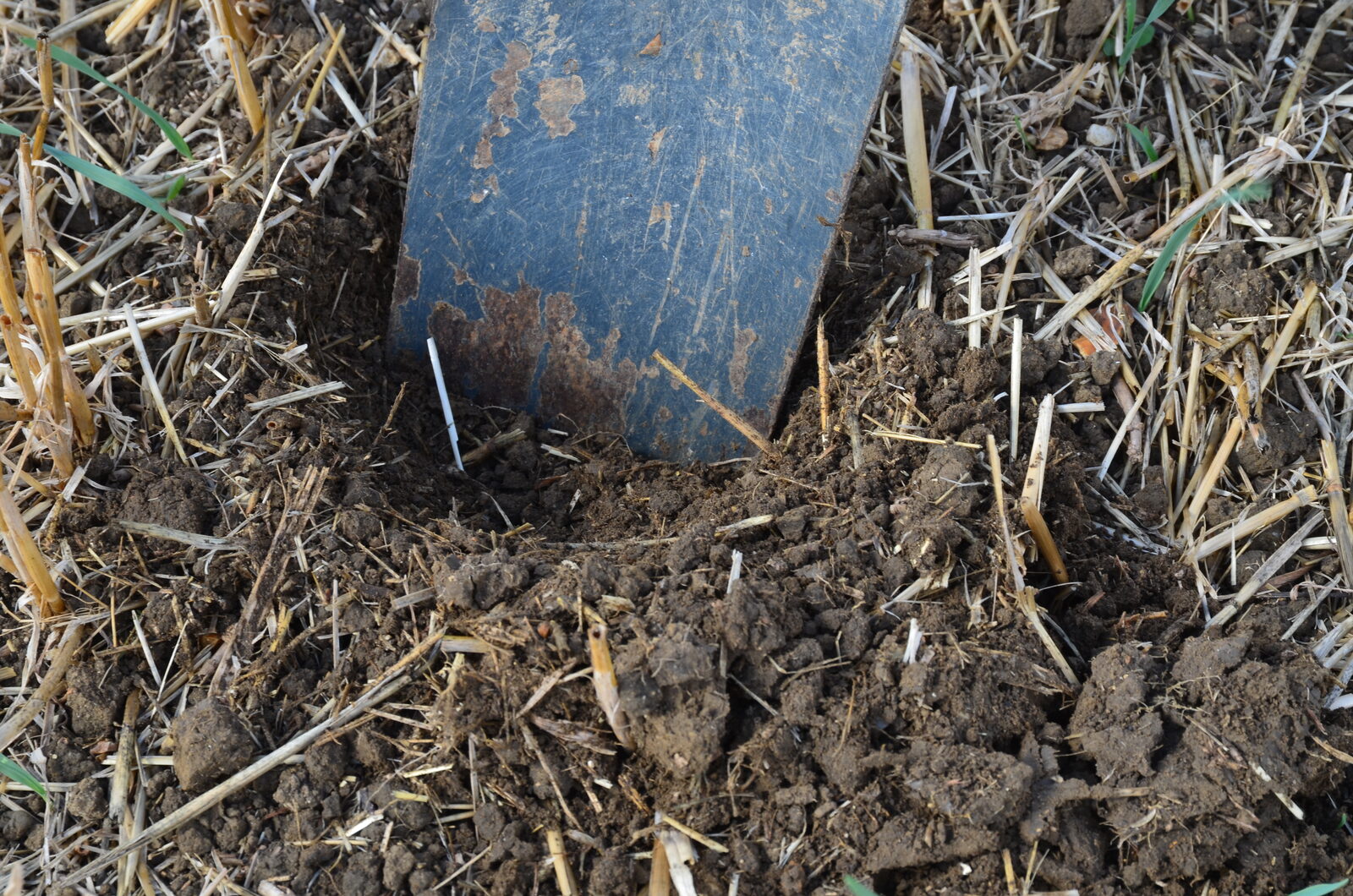
On the Claydon farm we had just 3mm of rain from March until the first week of June when 50mm fell, then nothing through to the end of July. Fortunately, after 23 years’ of using the Opti-Till® System, our clay soils are in excellent condition, with no signs of compaction (even in the absence of a subsoiler) so crops could get their roots down to find moisture at depth. They remained healthy and grew happily to maturity.
Combined with our low-cost method of establishing crops, using Opti-Till® put us in a good position going into harvest, which was early, easy and inexpensive. We could harvest at will, often starting early in the morning when the moisture meter showed 12% and stopping as the grain became too dry to measure.
There wasn’t quite as much to gather in as I’d hoped for back in the spring and ultimately our average wheat yield came in below the farm’s long-term average, at between 7.5-9t/ha. Nevertheless, that was a pleasant surprise given the complete lack of moisture and highlighted the benefits of ongoing work to improve our soils.
Considering that our spring oats had no rain from the time they were drilled in March, then in the first week of June 50mm I was pleased with 5t/ha. Unfortunately, as many experienced, a lot of spring crops drilled into cultivated soil never really got out of the starting blocks and some were a write-off.
Reading and listening to the rubbish that passes for journalism in the mainstream media you would think that food is no longer needed and farming has ended. In a country which is only 60% self-sufficient in food and where consumers have become used to seeing shelves laden with cheap food that’s just crazy. Yet the fear and very real danger of a complete meltdown of the farming industry and countryside is a situation which I have not seen in my 60-plus years in this sector.
In the strange world and strange times that we are all experiencing at present it would be easy to become depressed and demotivated by serious declines in crop yields, massive increases in input costs, low commodity prices, complicated support grants and the removal of IACS payments, compounded by extreme weather.
The risk to survival has become intense and very real for many farmers at all levels. We have even seen very large farm management operations restructuring and many small units which individually are unviable continue by farming collectively or leaving the industry altogether, taking valuable skills with them.
The passion of farmers to farm is unrivalled and so important to the UK’s food security that one wonders why our industry is so undervalued. The challenge we all face is how to remain profitable so that we can continue to operate in the future. Notably, it’s not only farms that are being squeezed financially but also the support industries which work to help us produce food to the high standards that the public expects in today’s world.
Looking Forward
Finishing harvest so early could have presented a wonderful opportunity to establish cover crops during the first week of August to secure SFI payments. But with continuing high temperatures and only 1mm of rain on 1 August our Hanslope Series soil was still bone dry, so we held back.
As farmers it is in our nature to always be ‘doing something’; ‘doing nothing’ after such an early harvest was difficult. Patience is key and the time could be better spent undertaking infrastructure projects around the farm than engaging in unnecessary and expensive ‘recreational tillage’, largely for cosmetic reasons.
Cultivating dry soil will only make it drier. There is the danger that instead of weed seeds/volunteers germinating so that they can then be taken out by mechanical and/or chemical means they will be buried, preserved and emerge in the growing crop, making control more expensive and difficult.
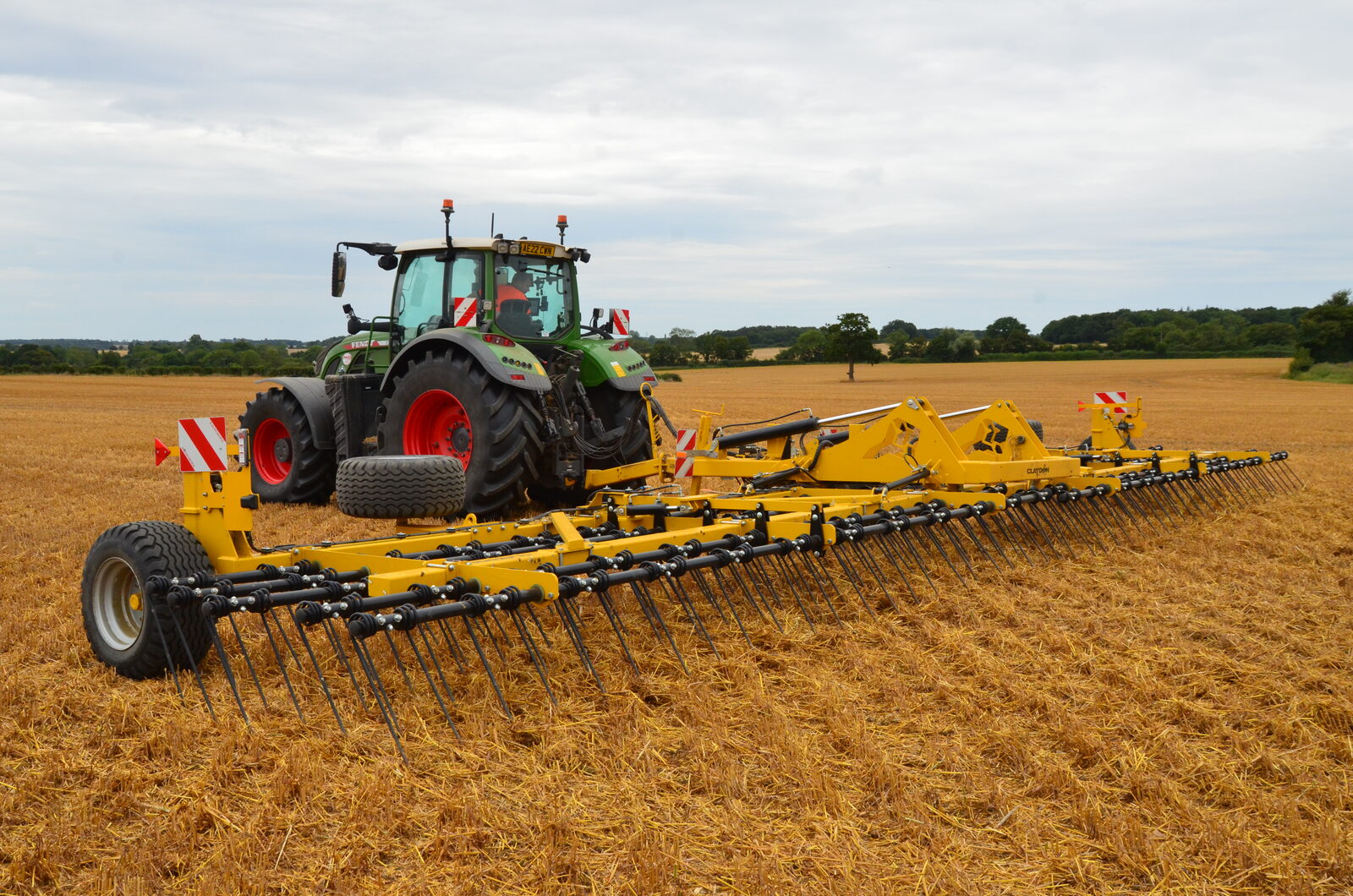
Within a week of finishing harvest, we had covered all the land with our Claydon Straw Harrow, on a diagonal to the direction of combining. The ground was so dry that this often-underestimated implement created what looked like a Sahara Desert dust storm moving across the fields, but it did a wonderful job. The 2cm to 3cm of fine tilth which it created, combined with levelling chopped straw to act as an insulation blanket, helped absorb heat, prevent sunlight baking the soil out and minimise evaporation losses.
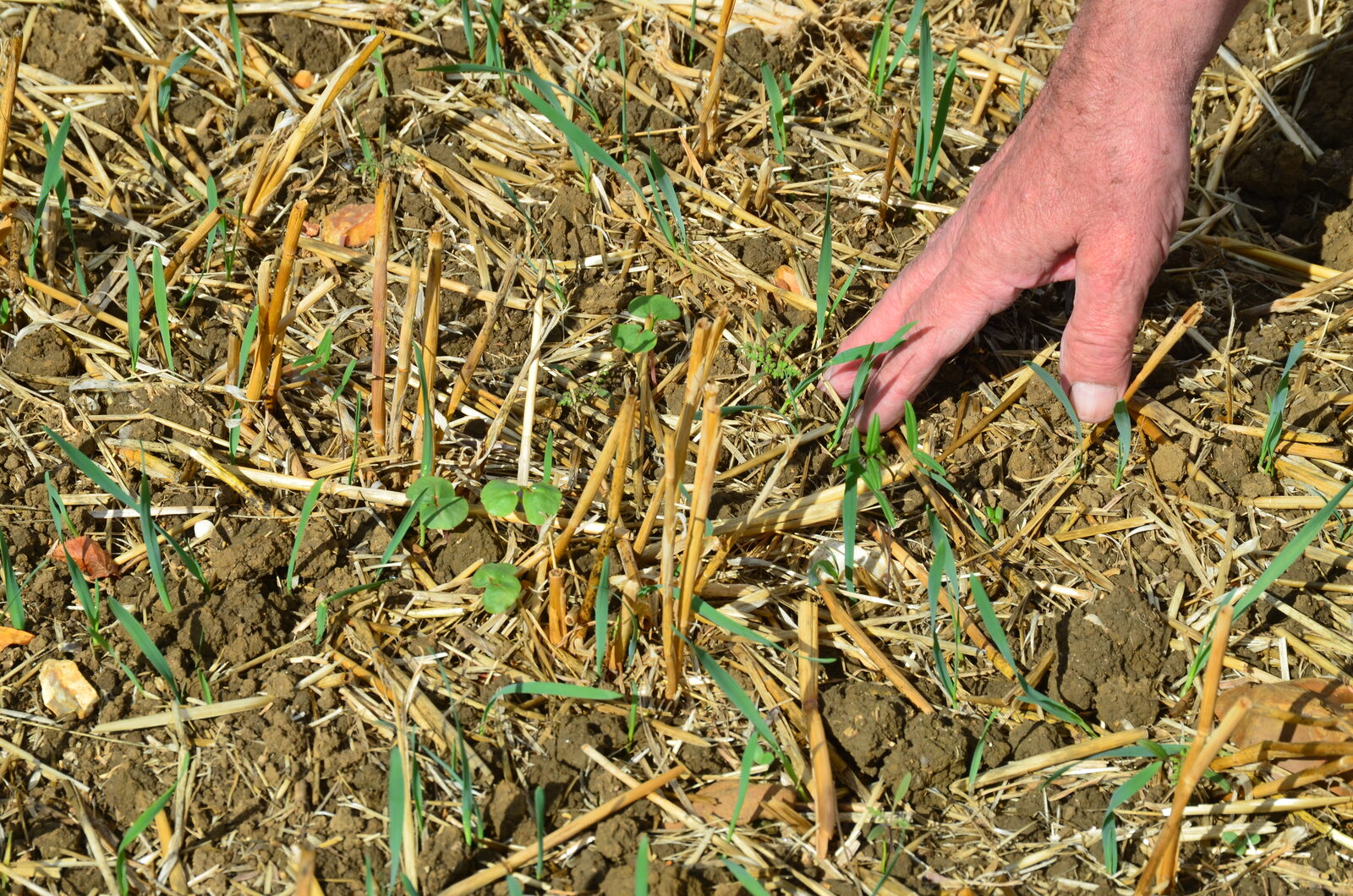
On a small area of contract-farmed land not under SFI we also had the opportunity to carry out a second pass with the Straw Harrow to break off the growing shoots of volunteers / weeds, further reducing their numbers.
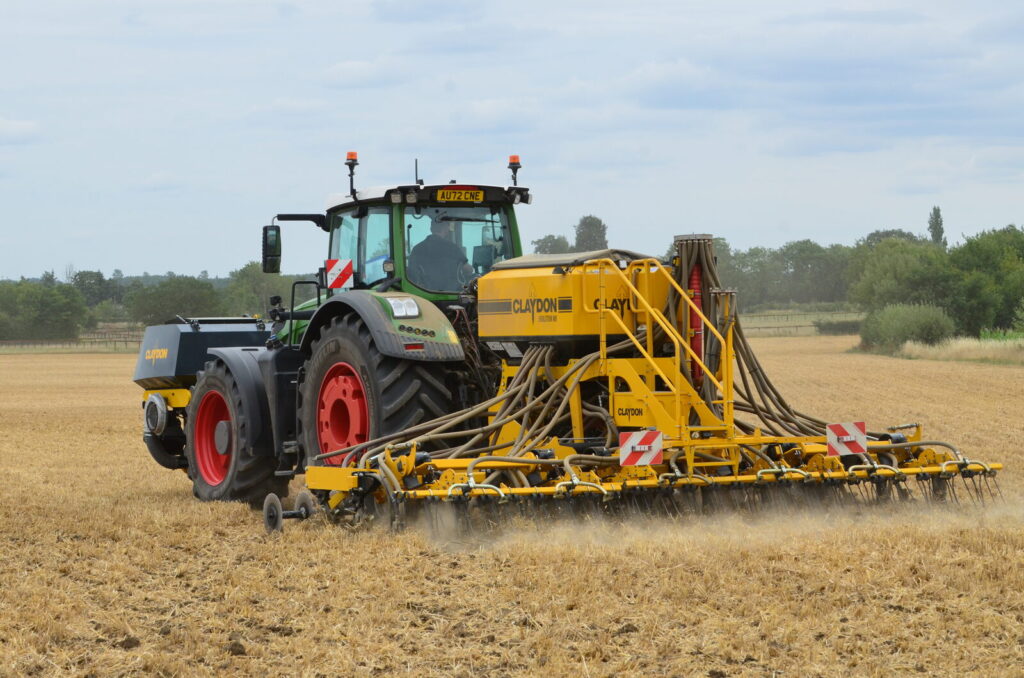
To ensure that cover crops would germinate quickly when rain did arrive, we one-pass drilled half our planned area, running the leading tines on our 6m Claydon Evolution much shallower than normal to avoid bringing up clods. As a trial we broadcast seed on the remaining area with a Kuhn Aero pneumatic spreader.
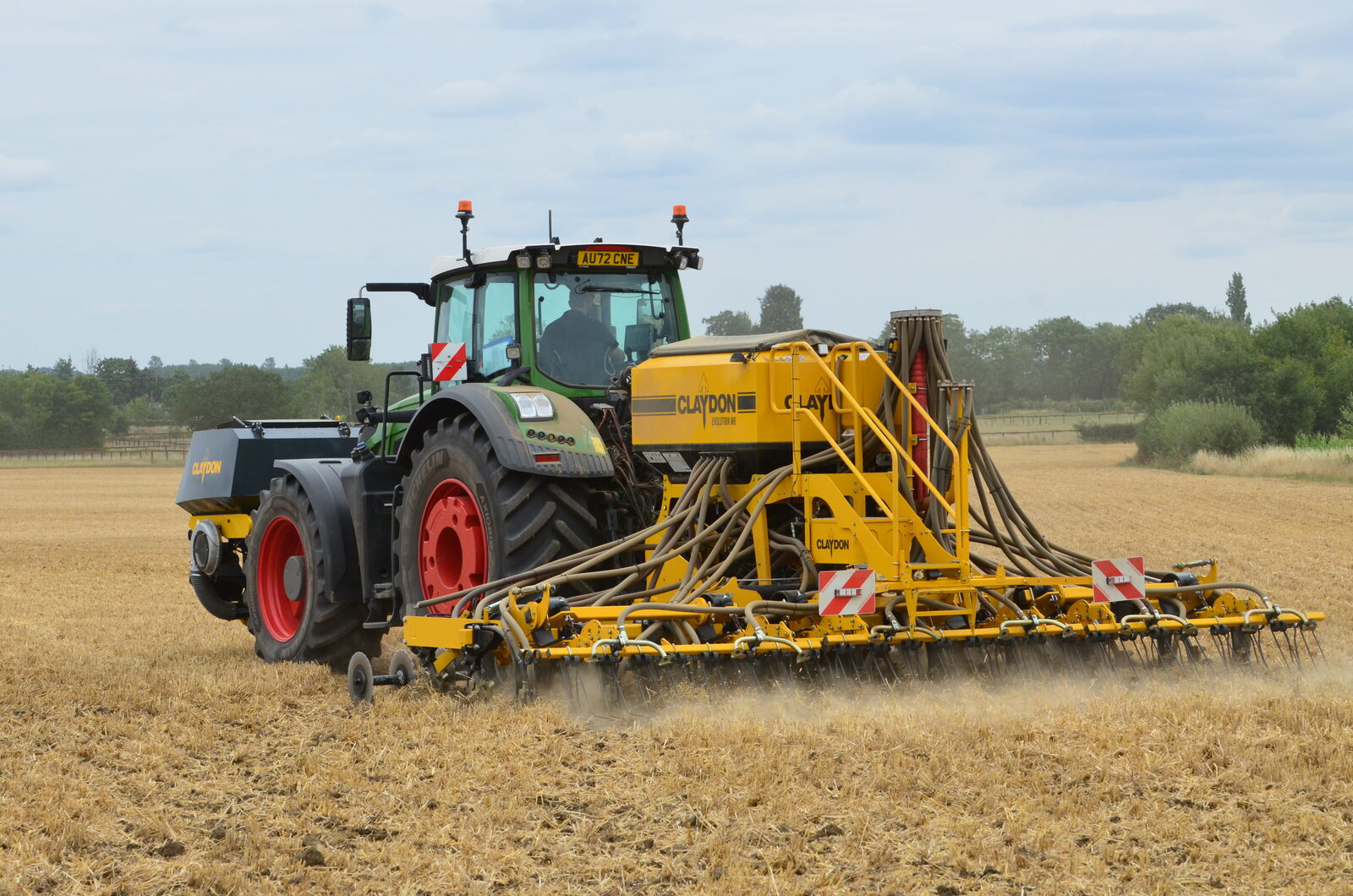
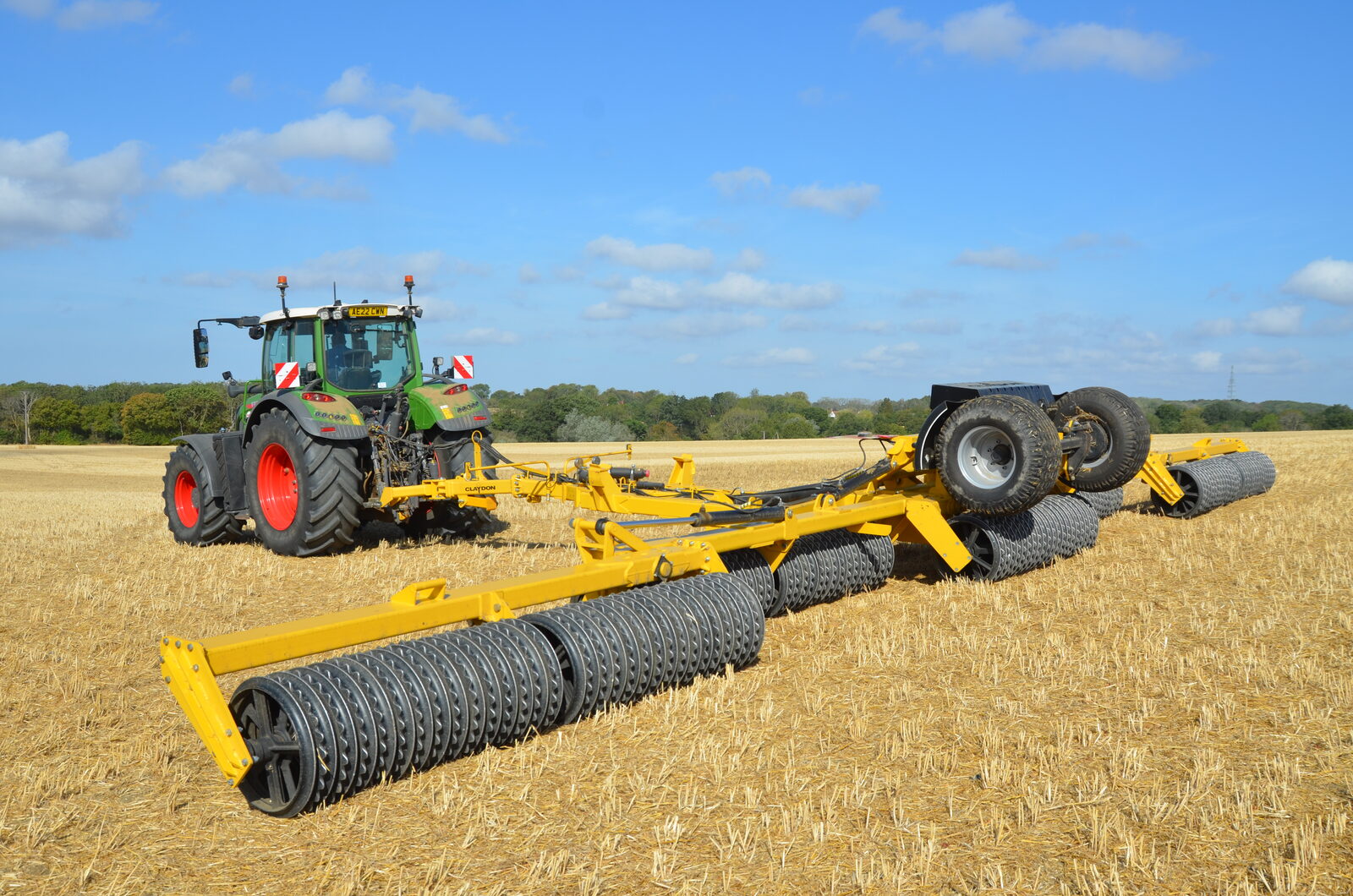
Both areas were Straw Harrowed again to evenly distribute the straw and cover the seed, then we used our 15m Claydon Cambridge Rolls to break down any surface clods and consolidate the soil. The seed sat there for a few days until the first measurable rain in months fell in the last week of August to start the germination process and these cover crops will be sprayed off, providing a clean base point for drilling the winter wheat in mid-October. The spring cropping area will be drilled with winter cover crops which come free of volunteers and weeds and will provide an ideal entry for spring oats.
For Harvest 2027 two thirds of the farm will be winter wheat, mainly Elsoms Bamford which has served us well for several years, with small areas of three new soft wheat varieties as a trial to see how they compare. The remainder will go into spring oats.
I have never seen our soil this dry in September. The 20mm of rain in the last half of August was followed by 8mm at the start of September, much of which evaporated quickly because of the high temperatures. The original plan was to spray off our summer cover crops and volunteers/weeds during the third week of September and direct drill winter wheat before mid-October with the 6m Claydon Evolution.
The hardest thing now is to be patient and leave the dry soil, which suffered no damage from harvest traffic and will be in perfect condition when the time is right to drill it. As I write this in the second week of September our cover crops are at the cotyledon stage and volunteers/weeds are germinating strongly, but with little rain forecast everything could be delayed.
Recently I have seen numerous posts on social media by those who are trying to bully their soils into a seedbed but obviously struggling using conventional methods. I wonder why they are doing so when you can achieve excellent results in much less time, with minimal diesel use, no breakages and very little wear and tear on machinery. Keeping our bank balance intact is much better than being busy!
Rather than ‘chasing clods’ I have been watching the markets and sold half of our wheat for pre-Christmas delivery, at an average of £200/t. This is pleasing after seeing the price stuck at £170/t for so long, but I’m still hoping that prices will increase further post-Christmas and prove that I was wrong to sell at that level!
Reducing Risk
Farming is all about managing risk, making judgements and not over-committing by stretching labour and machinery too thinly. Conditions this year were so dry that given the very high output of our machinery we could have coped with three times our farmed area, but in a wet year taking that approach could be disastrous. Many people remember that 1976 was another exceptionally dry year but most forget that it began raining in October and didn’t stop until the following spring. We don’t want to fall into that trap.
I see numerous farming business who are looking to expand paying high rents in the quest to achieve economies of scale, but one must ask why. Bigger doesn’t always mean better and expansion brings greater risk, be it from increasing geopolitical threats, rising interest rates, unforeseen upward moves in input costs, greater depreciation, adverse weather, or any number of other factors. Ultimately, the best way forward could be to operate more efficiently, at lower cost and reduce risk.
More than ever farming businesses need to look at where money is being spent, what benefits it brings and where they can risk not spending. In my experience unnecessary operations to establish crops are one area to target and I hope that what I have said about the benefits of the Opti-Till® System will resonate. When planning for next season perhaps take a look at our online cost calculator at https://claydondrill.com/calculator/ to research how much time and money you could save by changing your approach to establishing crops, with the bonus of higher yields, improved timeliness, much-reduced risk and far less stress.