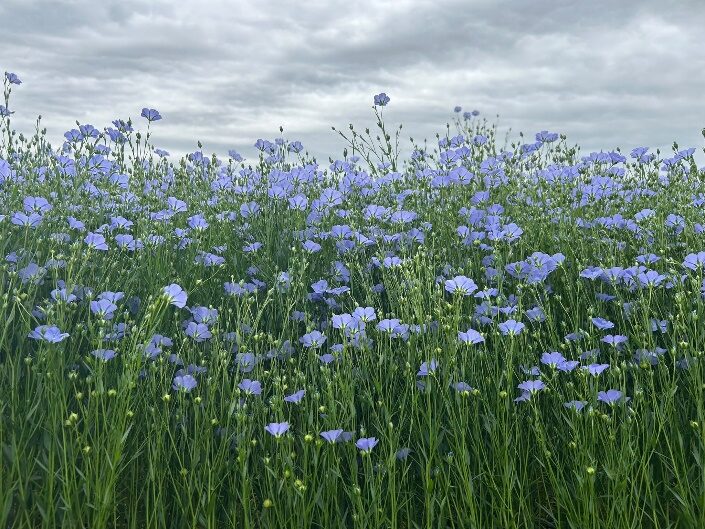
Harvest 2026 has been very mixed.
Winter crops were drilled into ideal conditions, and seedbeds were generally very good. OSR had very little CSFB pressure and got away well, with slugs and pigeons being more of an issue. Rain came later in the season, which made later-applied pesticides more challenging, but due to the favourable establishment, most crops were competitive against weeds, pests and disease. Yields held steady on the winter crops, with winter linseed holding at 2.5t/ha and OSR doing well, which, considering how dry grain setting was, is a pleasant surprise.
A new EAMU for Emerger for use on linseed wasn’t approved until the end of September, which was frustrating, but we are excited to use it for harvest 2027 to provide a valuable addition for pre-emergence broadleaf weed and grass weed control. In addition to Katamaran, we also now have Legion on an EAMU. While they contain the same actives, it does give growers more buying choice.
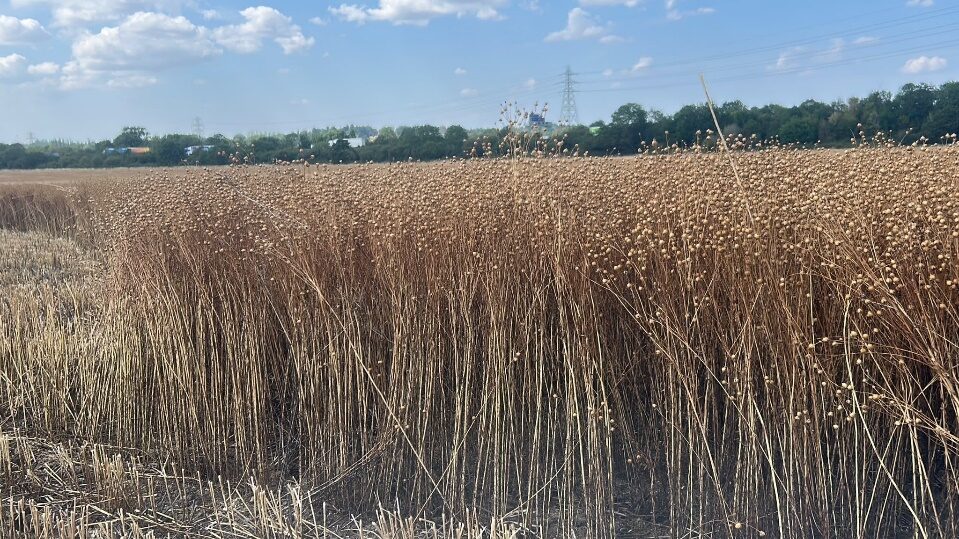
The newer winter linseed variety Atilla has a much greater standing power than its predecessor, Alpaga. Crops raced away in the autumn, using up the high soil nitrogen reserves due to the dry previous season. Early nitrogen applications were removed or reduced, as crops clearly weren’t hungry come the spring, and we were all surprised how early they were growing away. Despite crops growing away fast in spring, most winter linseed was combined with no issues. Of more concern was the temperature of harvested crops (over 30°C) and extremely low moisture content of the seed (<6%).
The nutrient content of linseed straw is often not considered, and I’m not sure I’ve ever been asked about it on farm. According to Linseed Law from the 1980s, straw is 1.2% N, 0.2% P205 & 1.1% K and seed is 3.7% N, 1.4% P205 & 1% K. Linseed Law assumes a linseed crop yields 2.5t/ha of seed and 6.5t/ha straw. This means that the take-off from the field can be 150kg/ha N, 42kg/ha P (as P205) and 86 kg/ha K (as K20). In straw alone, removing it costs you 70kg/ha N, 12kg/ha P & 64kg/ha K. Finding the nutritional content of straw is tricky, and unfortunately these figures may be outdated (straw yields will likely be a lot less than this, for instance), but it is food for thought. Do we all know the monetary value of our straw on farm and cost of replacement (in soil condition and money)?
Spring crops and their performance
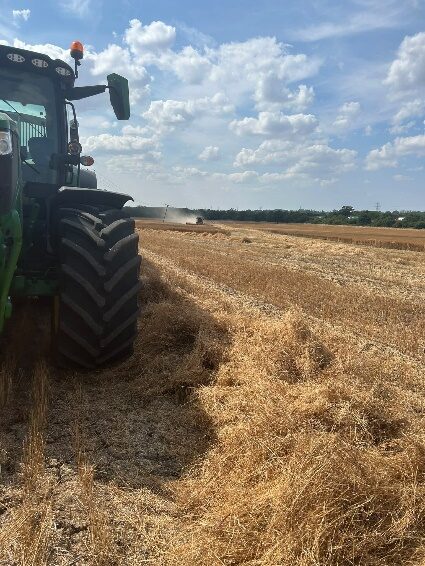
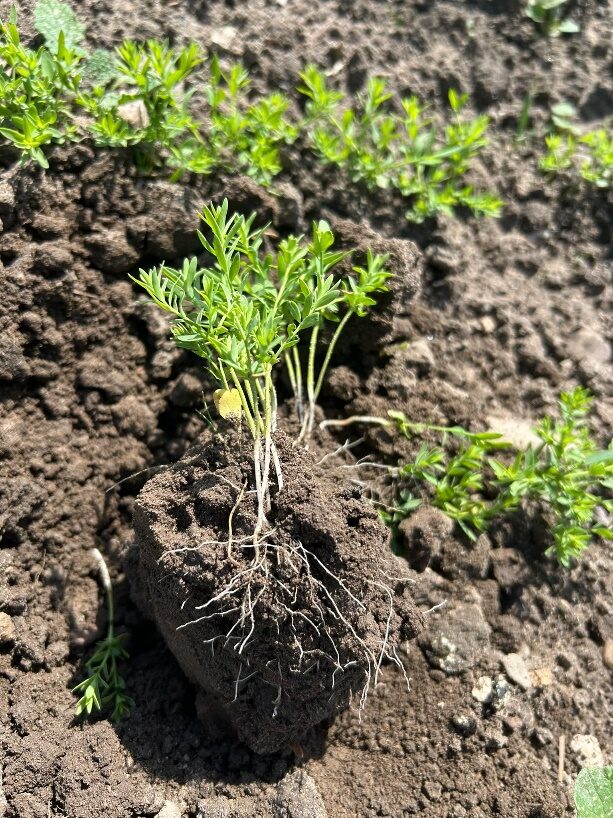
The rain stopped, and it was challenging. Spring linseed drilling has been moved forward to try and account for soil moisture vanishing earlier. Traditionally, spring linseed would be drilled in April, but now, if conditions are right in March, it is encouraged to sow. With spring crops, establishment is everything. Drilling in the right conditions trumps sowing date. Earlier-sown spring linseed tends to escape the flax flea beetle and can take stress better. Seedbeds are often better too, which means the establishment tends to be more even, leaving fewer patches for weeds to escape through, while pre-em herbicides have a better chance of working if there is moisture present. Moisture conservation of the seedbed for spring crops is king! Earlier sown spring linseed crops seemed to cope with the weather better than later sown crops, and establishment was pretty good. The harvest was very early, like all crops, and again all seed came in dry.
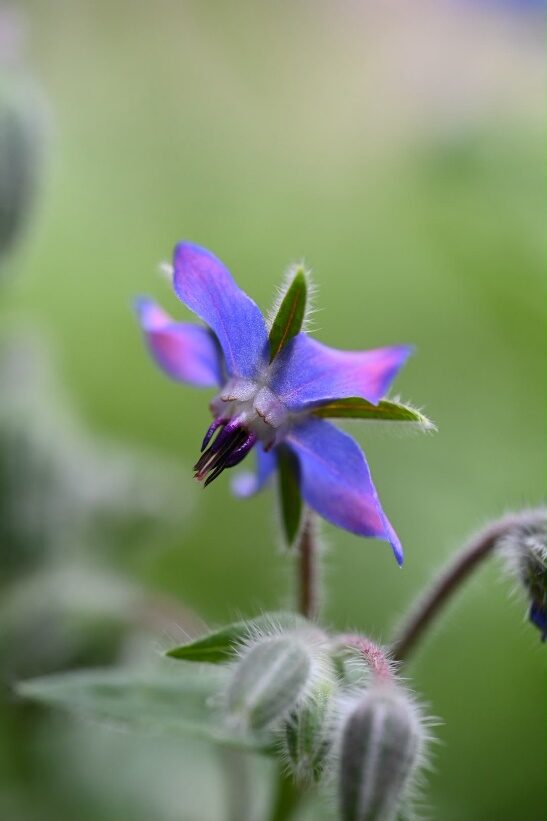
Borage as a crop has grown on me. It is a low-input, tough crop, which appeals to any agronomist. Borage requires insects for pollination, and it is always full of hundreds of honeybees, bumblebees and many other beneficials.
Post-emergence herbicide application was challenging, but on the whole crops were pretty clean. Most spring linseed was not desiccated and was combined straight. Premium Crops have worked with the breeders to produce earlier and shorter linseed varieties to make combining easier, and we continue to run variety trials and look to constantly push performance. Borage was swathed and, due to the heat, dried well in the swath, which meant it could be picked up in good conditions.
Shows
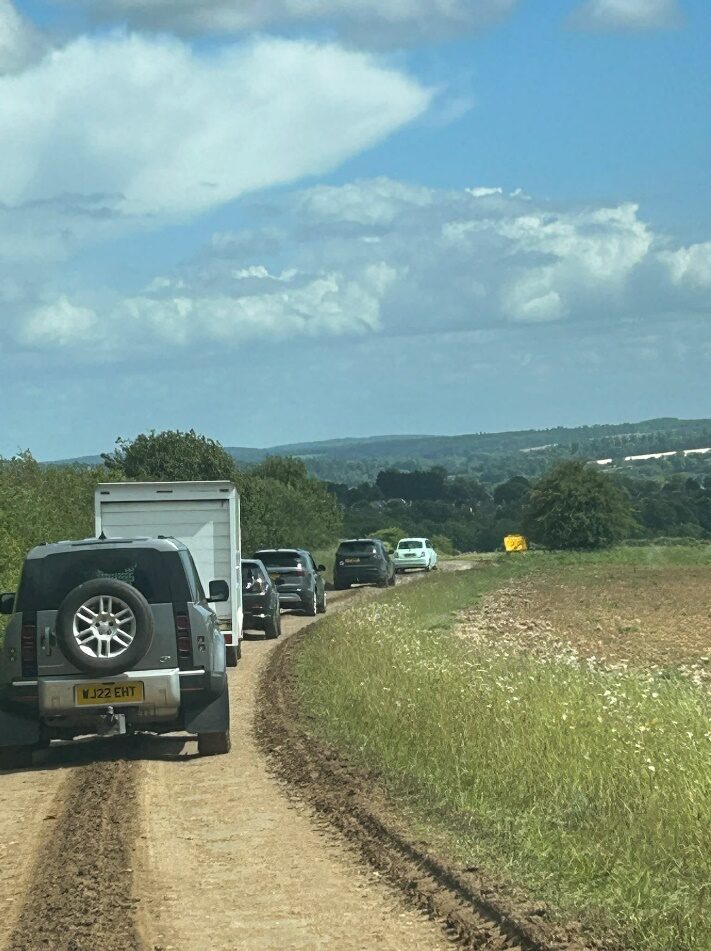
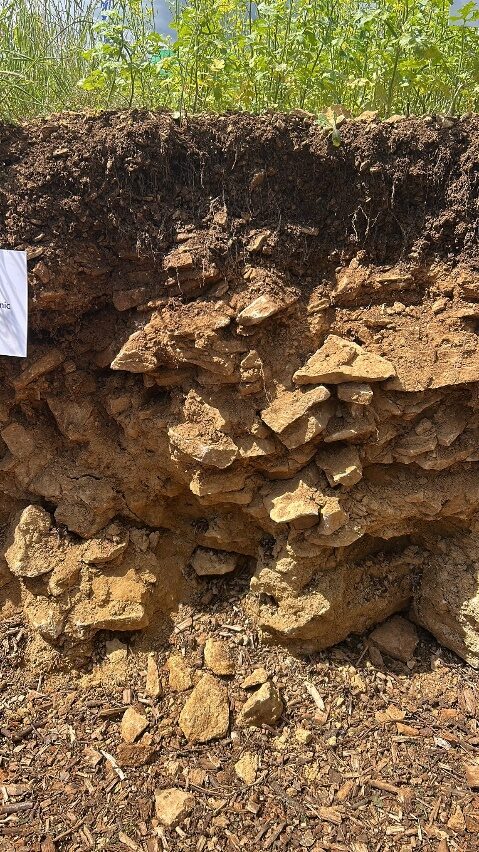
The Cereals site at Diddly Squat Farm this year was challenging due to the soil type. The soil pit showed the profile of the soil to be somewhat stony and not overly moisture retentive. The winter linseed established and got away, while the spring crop plots had a more difficult time, but still looked well on the day (despite the rain on day two). The show was a lot of fun, and a new venue always gives fresh perspectives.
Looking forward
Sustainable farming and environmental practices
The Sustainable Farming Incentives (SFI) 2026 is a thorny issue, and I shall stay well away from it. I know at harvest many were trying to understand the implications on their past agreements that might be ending. It will doubtless influence some farming decisions for the coming season.
Premium Crops are keen to assist farmers in other areas of SFI application, particularly SAM2/CASM2 over-winter cover crops (tailored to increase following spring crop performance), IPM3/CIPM3 companion cropping and IPM4/CIPM4 “no use of insecticide” schemes. Winter linseed and canary seed’s lack of pests are perfect for those applying to IPM4 schemes.
ADOPT funding and trials
ADOPT funding has provided opportunities, and we have an exciting linseed project that will hopefully add value to the supply chain on linseed straw. We are also going to run some agronomy trials looking at winter linseed’s biomass and how the shape of the crop through the season impacts yields.
Measuring plant population and crop height, we have started seeing if, like oilseed rape, canopy management at flowering will lead to better yield. It will take time to build up the database, and early measurements are encouraging. We have invested in dedicated trial plots this season with a range of different sowing rates, varying PGR applications and fertiliser usage. The aim is to identify key factors influencing yield. Premium Crops have also finished two funded PhDs into the linseed crop, and we hope the trial information will feed into this. Minor crops, having smaller markets, are often left out of mainstream funding, and advancements in crop agronomy are few and far between. This means advancements are not as great as for major crops, which means they stay minor crops – it’s a vicious circle. Premium Crops are determined to buck the trend, so we invest significantly in our minor crops to provide our growers with the best, evidence-based agronomy advice we possibly can – watch this space!