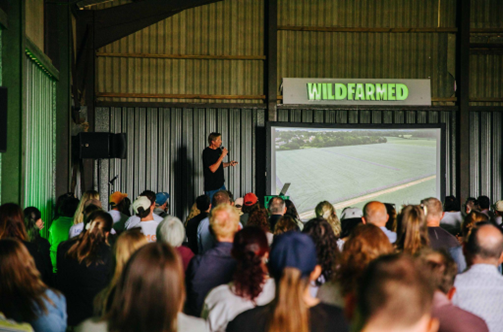
October 2025
Farwiza Farhan, the remarkable conservationist working in the Sumatran rainforest, spoke recently of the superpower of naivety. If she had fully understood the complexity of the problems she was wading into, it would have been impossible to begin. This touched a deep chord with me, remembering how little I knew when I sold the financial security of my song rights to begin farming, and how little Edd, George, Adriana and I knew, the day we set up Wildfarmed to change the UK food system.
Naivety and a sense of mission are incredibly powerful in getting things started. They give you the energy to turn “No” into “Yes”. But then comes phase two, in which Farwiza described increasing knowledge bringing an understanding of the nuance and complexity required to make real, scalable change. It meant building bridges with those you have criticised, sitting down with the people who’ve tried to derail your efforts, and putting aside preconceived ideas in the search for the most effective way to deliver the change you want to see. Hearing this for me was like a replay of the song “Killing Me Softly” in which the singer seems to be singing your personal story.
This second, nuanced phase of ‘meeting the world as it is’, is a tiring, twilight zone, described well by Jude Fredman.
“You already know it’s going to take years. You already know it’s going to be hard…That’s not the problem. The problem is that deep down, part of you is still hoping there’s a shortcut. But there isn’t. There’s just the work.”
In the case of food and farming, it’s increasingly urgent work. In 2024 UK cereal farms posted a loss on farming activities of £26,500. Worldwide, we produce enough calories for 15 billion people, less than half of which end up on people’s plates. Wild weather hitting degraded ecosystems is creating scarcity, on the fringes (so far) of the food system – chocolate, coffee, olive oil, some vegetables – driving inflation such that the European Central Bank said, “food price developments represent a major challenge for the ECB in its pursuit of price stability.” Here in the UK, the health and environmental costs of the food system are significantly greater than the NHS budget.
All of this suggests that future economic and social stability requires supporting farmers to grow good food on land that is resilient thanks to healthy, water-holding soils and abundant nature. This was the message I took to the Labour Party conference again this year.
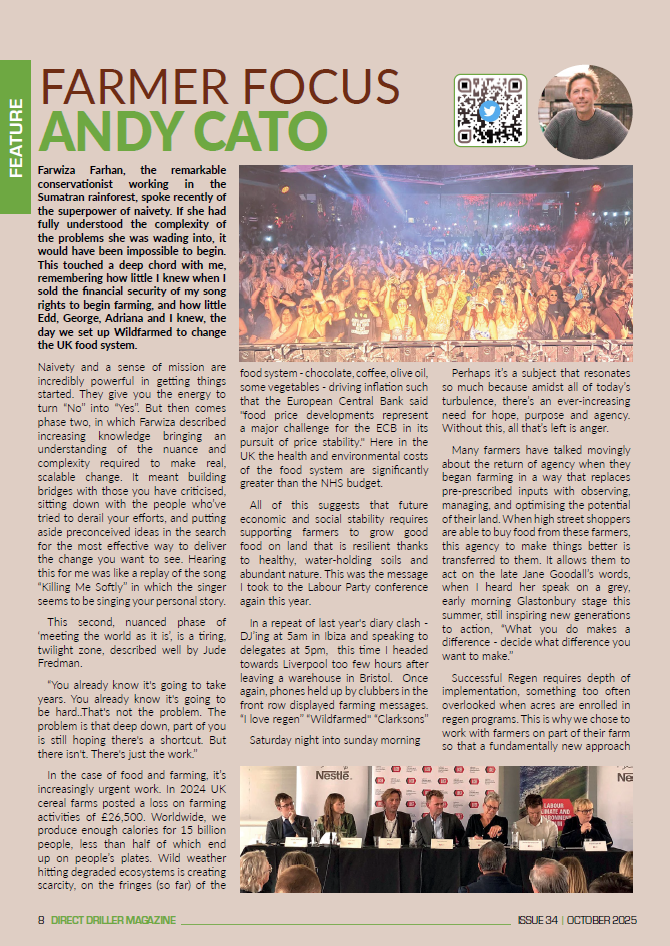
In a repeat of last year’s diary clash — DJ’ing at 5am in Ibiza and speaking to delegates at 5pm — this time I headed towards Liverpool too few hours after leaving a warehouse in Bristol. Once again, phones held up by clubbers in the front row displayed farming messages: “I love regen” “Wildfarmed ❤️” “Clarksons”

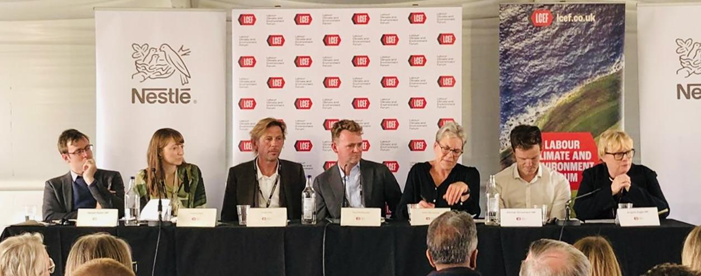
Saturday night into sunday morning
Perhaps it’s a subject that resonates so much because amidst all of today’s turbulence, there’s an ever-increasing need for hope, purpose and agency. Without this, all that’s left is anger.
Many farmers have talked movingly about the return of agency when they began farming in a way that replaces pre-prescribed inputs with observing, managing and optimising the potential of their land. When high street shoppers are able to buy food from these farmers, this agency to make things better is transferred to them. It allows them to act on the late Jane Goodall’s words, when I heard her speak on a grey, early morning Glastonbury stage this summer, still inspiring new generations to action: “What you do makes a difference – decide what difference you want to make.”
Successful Regen requires depth of implementation, something too often overlooked when acres are enrolled in regen programs. This is why we chose to work with farmers on parts of their farms so that a fundamentally new approach could be tried at an acceptable level of perceived risk. Much has been learnt from running different systems side by side, as we collectively search for the sweet spot between food production, good farmer outcomes and nature.
With the help of AI, system science rather than the single-variable science never suited to living farm systems, is advancing fast. With it, monitoring and management tools are getting better all the time. But effectively responding to what this data tells us isn’t always easy. One complication we’ve found, underlined again in another year where plans had to respond to extreme conditions, is that farming decisions can be forced by the financial realities of hugely expensive machinery. Contractors needing to cover thousands of acres to pay the bills, inevitably favour one-size-fits-all operations.
But successful regenerative agriculture requires flexible, timely interventions based on the latest data. It’s not about scale[7] [8] —you can farm a small area badly (I know because I’ve done it), and I’ve seen large areas farmed well — but it does require the mental and operational bandwidth to be reactive.
This approach proved its value during the brutally dry spring that unfolded this year. Where I farm, there was only an inch of rain between Valentine’s Day and Glastonbury, a fourth consecutive year of weather extremes. Up the road at Diddly Squat, it was similar. “In the farming year of 2024-25 I’ve lost about £5,000,” wrote Jeremy Clarkson in The Times, even though “we deployed some proper next-generation technology to maximise the growth potential.”
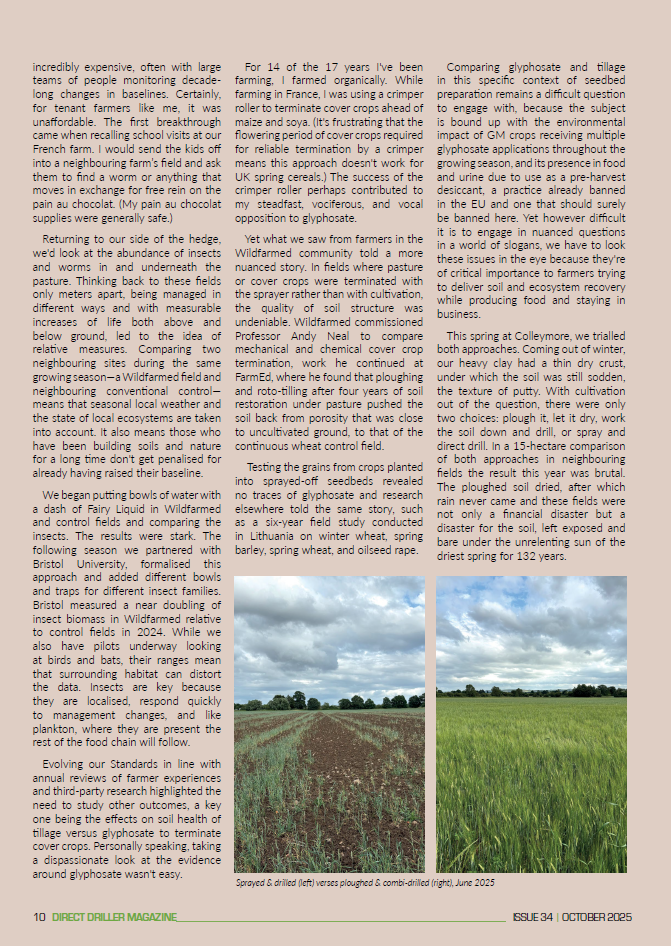
On a couple of Diddly fields, one so stony it could be a crazy paving showroom, technology took a different form: SAP testing to optimise plant health, cover and companion crops. Here Jeremy grew Wildfarmed oats that made a gross margin (output minus variable costs) of just over £20,000. Partly because they were eligible for a low-input cereal SFI option, and a payment for avoided water pollution as part of Wildfarmed partnerships with seven water companies. But mainly because input costs were kept down and it yielded well, hitting 78% of the conventional yield Jeremy hoped for in his durum wheat fields, which the drought reduced by two-thirds.
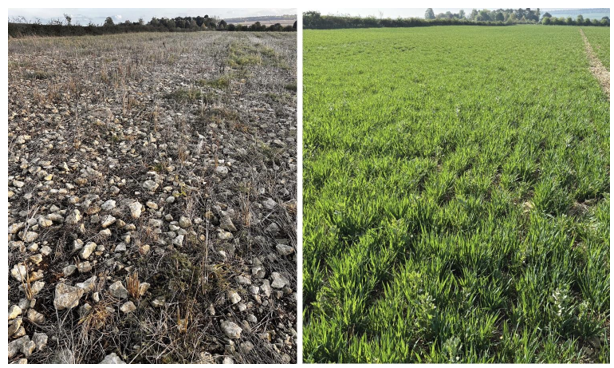
Regen plants moving mountains – before and after drilling at Diddly
The decent yield, despite conditions, came down to a cover-crop improved soil structure retaining a little more moisture, and focusing on the detail. There is no technological or biostimulant silver bullet that comes close to the cumulative impact of attention to detail[9] . In this case, when drilling conditions changed, I borrowed the right seed drill from another Wildfarmed grower. The seed went in with a biological boost, the dose and type of nitrogen was adjusted as the drought set in, and I was like a scratched record insisting on accurate SAP tests and using our seasoned SAP experts to interpret them to keep plants healthy and able to maintain their own farming operations down in the rhizosphere.
As harvest approached, the annual Colleymore Farm days hosted over 800 people for talks, field walks, delicious food and good beer. I spoke about all I had learned in the last 17 years. I didn’t think about it in these terms at the time, but the day I spent pulling down the laboriously erected insect netting around my vegetable patch to embrace integrated pest management and companion planting marked the beginning of attempts to combine nature and food production. Crimper rollers, herbal leys, mob grazing, pastured poultry, poly-cropping, agroforestry and ten years building and refining inter-row mowers, are just some of the things that have followed.
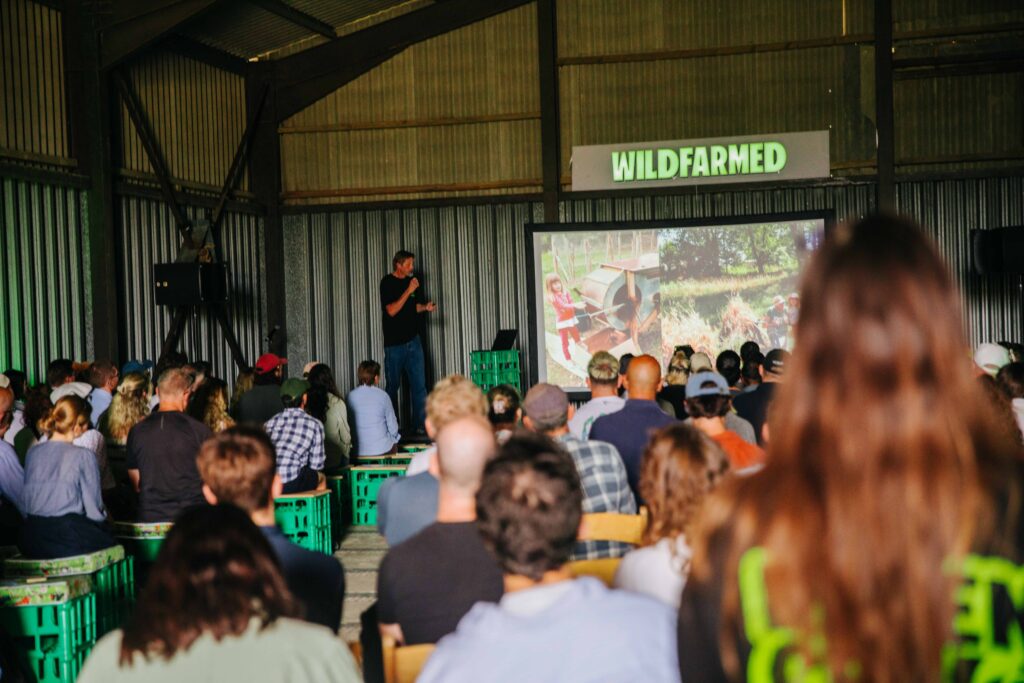
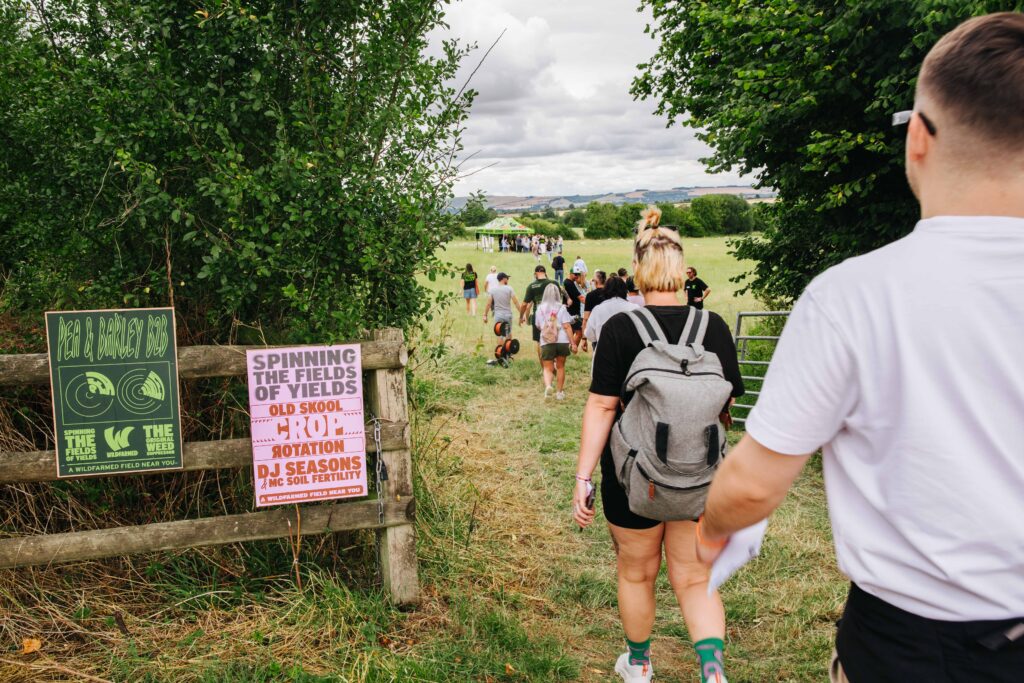
Farm open days 2025
These 17 years of evolution are a familiar story to other farmers finding their way toward a biology-based system over the last couple of decades. As a result, one thing we can be sure of is that the way we farm to combine food and nature (nature in the widest sense to include everything from soil health to water quality and biodiversity) will constantly evolve.
When the Wildfarmed Standards were drawn up, the constant evolution of best practice made it essential to have an annual review during which the experiences of growers and relevant research could inform the following year’s practices. Nevertheless, rather than annually updated practices, the dream from the outset was to have a system built around measured outcomes, moving away from intentions and focusing on what actually happened, and allowing farmers to achieve those outcomes as best suits their land.
At the time, ecological surveys were incredibly expensive, often with large teams of people monitoring decade-long changes in baselines. Certainly, for tenant farmers like me, it was unaffordable. The first breakthrough came when recalling school visits at our French farm. I would send the kids off into a neighbouring farm’s field and ask them to find a worm or anything that moves in exchange for free rein on the pain au chocolat. (My pain au chocolat supplies were generally safe.)
Returning to our side of the hedge, we’d look at the abundance of insects and worms in and underneath the pasture. Thinking back to these fields only metres apart, being managed in different ways and with measurable increases of life both above and below ground, led to the idea of relative measures. Comparing two neighbouring sites during the same growing season — a Wildfarmed field and neighbouring conventional control —means that seasonal local weather and the state of local ecosystems are taken into account. It also means those who have been building soils and nature for a long time don’t get penalised for already having raised their baseline.
We began putting bowls of water with a dash of Fairy Liquid in Wildfarmed and control fields and comparing the insects. The results were stark. The following season we partnered with Bristol University, formalised this approach and added different bowls and traps for different insect families. Bristol measured a near doubling of insect biomass in Wildfarmed relative to control fields in 2024. While we also have pilots underway looking at birds and bats, their ranges mean that surrounding habitat can distort the data. Insects are key because they are localised, respond quickly to management changes, and like plankton, where they are present the rest of the food chain will follow.
Evolving our Standards in line with annual reviews of farmer experiences and third-party research highlighted the need to study other outcomes, a key one being the effects on soil health of tillage versus glyphosate[10] to terminate cover crops. Personally speaking, taking a dispassionate look at the evidence around glyphosate wasn’t easy.
For 14 of the 17 years I’ve been farming, I farmed organically. While farming in France, I was using a crimper roller to terminate cover crops ahead of maize and soya. (It’s frustrating that the flowering period of cover crops required for reliable termination by a crimper means this approach doesn’t work for UK spring cereals.) The success of the crimper roller perhaps contributed to my steadfast, vociferous and vocal opposition to glyphosate.
Yet what we saw from farmers in the Wildfarmed community told a more nuanced story. In fields where pasture or cover crops were terminated with the sprayer rather than with cultivation, the quality of soil structure was undeniable. Wildfarmed commissioned Professor Andy Neal to compare mechanical and chemical cover crop termination, work he continued at FarmEd, where he found that ploughing and roto-tilling after four years of soil restoration under pasture pushed the soil back from porosity that was close to uncultivated ground, to that of the continuous wheat control field.
Testing the grains from crops planted into sprayed-off seedbeds revealed no traces of glyphosate and research elsewhere told the same story, such as a six-year field study conducted in Lithuania on winter wheat, spring barley, spring wheat and oilseed rape.
Comparing glyphosate and tillage in this specific context of seedbed preparation remains a difficult question to engage with, because the subject is bound up with the environmental impact of GM crops receiving multiple glyphosate applications throughout the growing season, and its presence in food and urine due to use as a pre-harvest desiccant, a practice already banned in the EU and one that should surely be banned here. Yet however difficult it is to engage in nuanced questions in a world of slogans, we have to look these issues in the eye because they’re of critical importance to farmers trying to deliver soil and ecosystem recovery while producing food and staying in business.
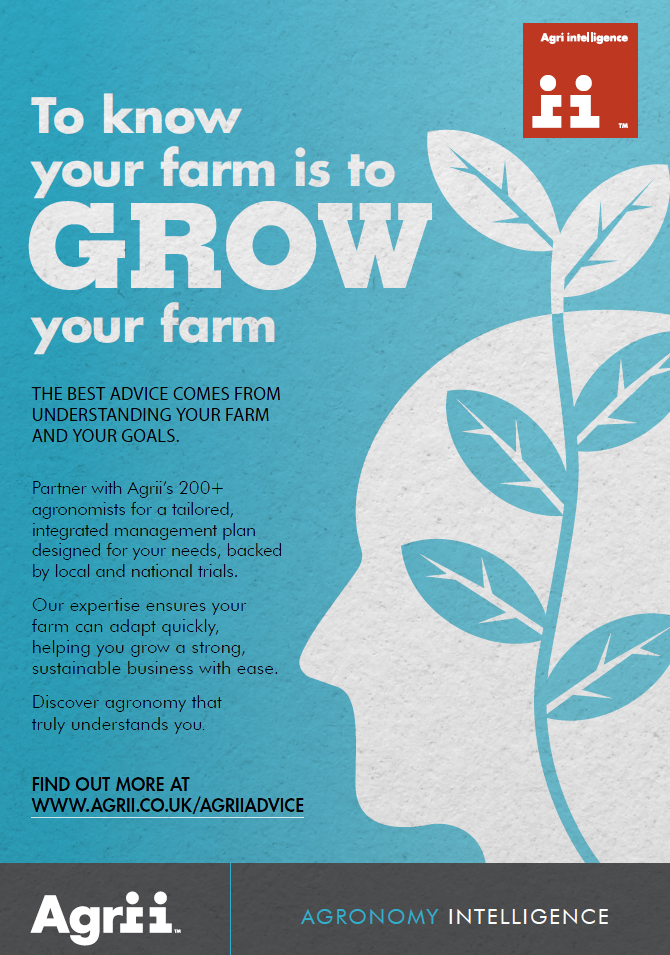
This spring at Colleymore, we trialled both approaches. Coming out of winter, our heavy clay had a thin dry crust, under which the soil was still sodden, the texture of putty. With cultivation out of the question, there were only two choices: plough it, let it dry, work the soil down and drill, or spray and direct drill. In a 15-hectare comparison of both approaches in neighbouring fields the result this year was brutal. The ploughed soil dried, after which rain never came and these fields were not only a financial disaster but a disaster for the soil, left exposed and bare under the unrelenting sun of the driest spring for 132 years.
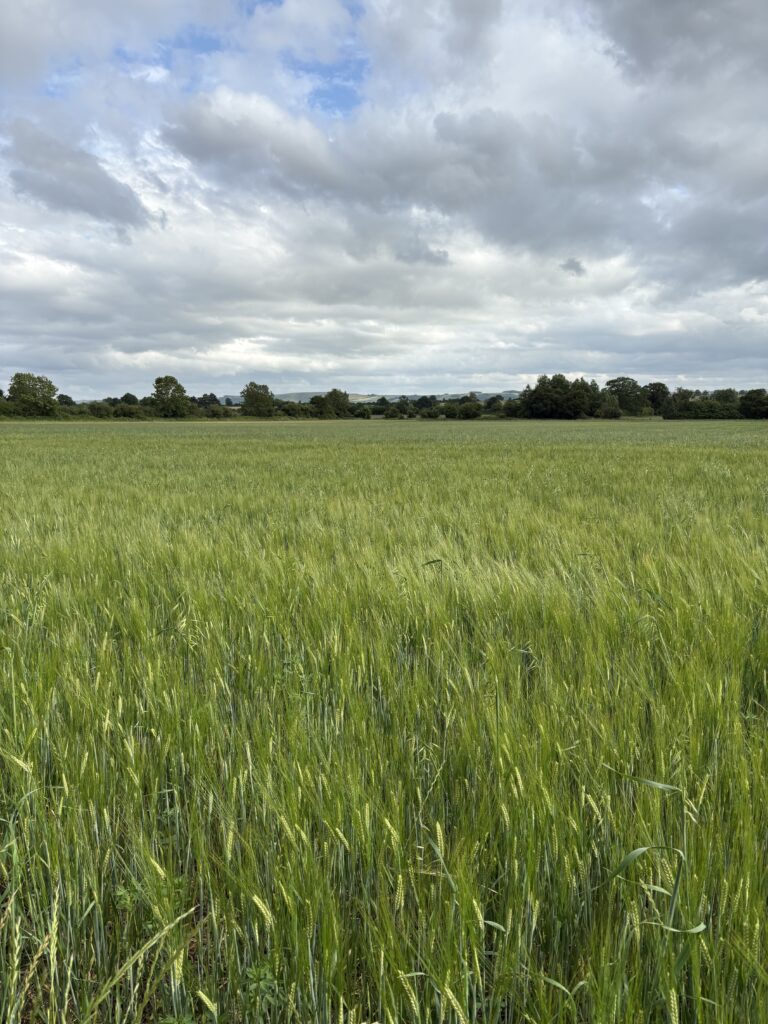
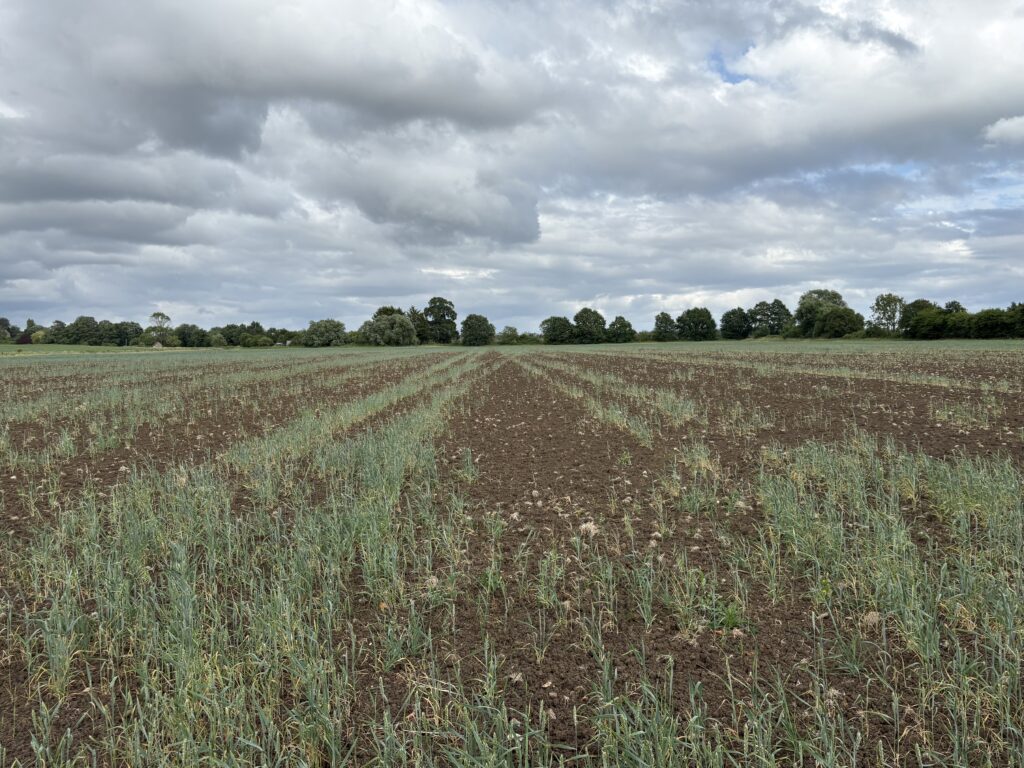
Sprayed & drilled (left) verses ploughed & combi-drilled (right), June 2025
It has been a similar story in the evolving use of nitrogen. The CO₂ emissions associated with fertiliser manufacture and the effect on the environment of the 50% that’s typically lost from the field were a key part of my farm talks for a long time.
But again, the reality across our grower community was again more nuanced. We saw the effect of spring soils either too cold or too wet to release the required nitrogen during the critical biomass-building period of the crop, compromising not only yield and farm finances but, thanks to stunted, thin crops, an entire season of sunshine capture — ultimately the only source of energy to regenerate the soils we are trying to improve.
In line with these observations, research showed split-dose nitrogen applications can not only coexist with improving soil biology but, by increasing plant size and sunlight capture, can increase it. “Natural” alternatives such as digestate came with the caveat that they are often derived from maize grown with large amounts of agrochemicals, and applications are hard to tailor to plant need.
All of which was the basis on which we worked with water companies on an approach to split-dose nitrogen that could help optimise plant growth and good farmer outcomes while maintaining water quality.
Again, on a personal level, this didn’t make the arrival of my first fertiliser lorry an easy experience. But the evidence was unequivocal and the use of split-dose nitrogen marked a move closer toward meaningful, scalable regeneration that can work in the real world of today’s farming systems, as measured in positive net margins, healthy soils, yields, nature uplift and water quality.
In February this year, the Organic Farming Research Foundation cited new research suggesting that it’s not the presence of soluble nitrogen itself that harms soil health, but rather the imbalance between nitrogen and organic carbon inputs, a problem that also applies to other inputs like poultry litter. Farmers have been adding a carbon source to liquid nitrogen for a long time, and carbon-coated granules are now widely available at an affordable price, certainly at the lower end of nitrogen use.
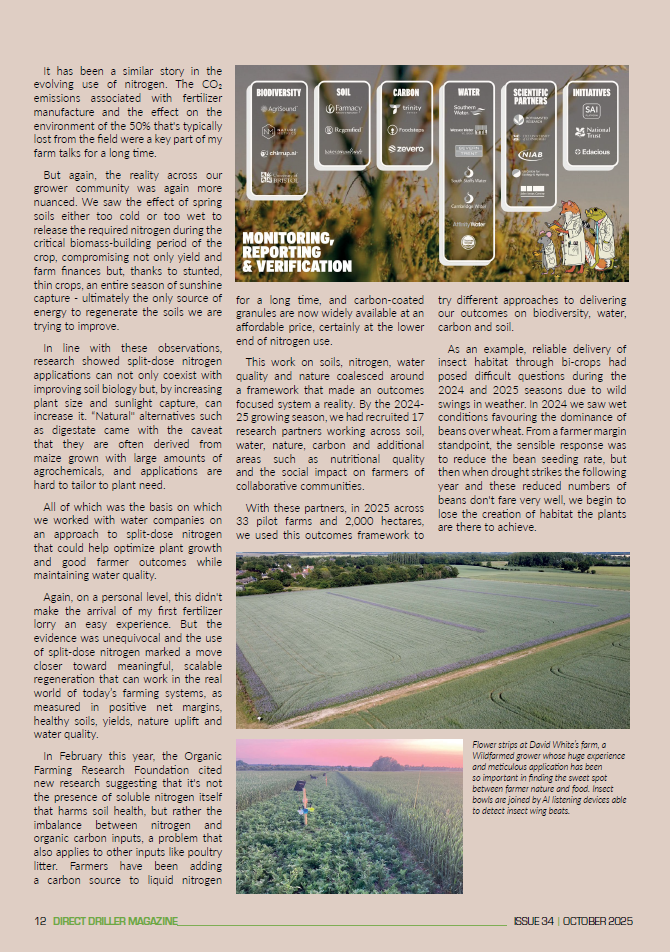
This work on soils, nitrogen, water quality and nature coalesced around a framework that made an outcomes-focused system a reality. By the 2024-25 growing season, we had recruited 17 research partners working across soil, water, nature, carbon and additional areas such as nutritional quality and the social impact on farmers of collaborative communities.
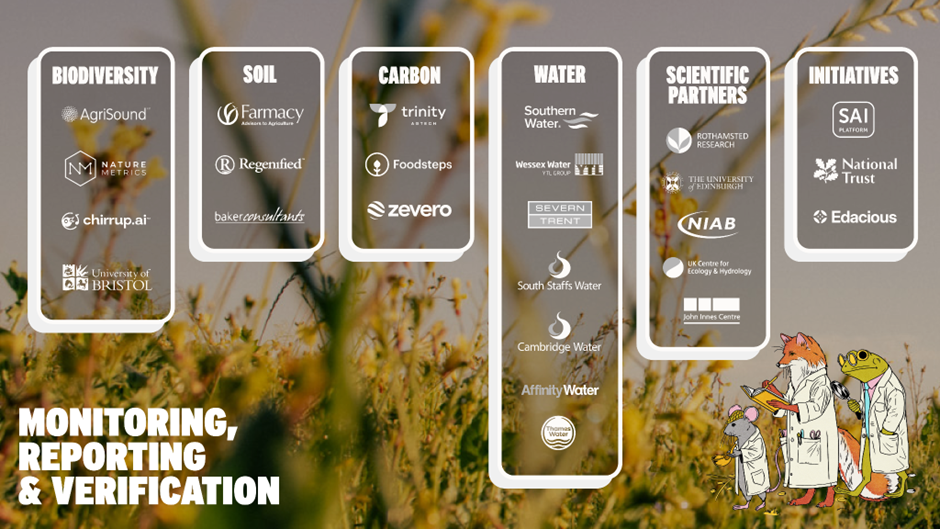
With these partners, in 2025 across 33 pilot farms and 2,000 hectares, we used this outcomes framework to try different approaches to delivering our outcomes on biodiversity, water, carbon and soil.
As an example, reliable delivery of insect habitat through bi-crops had posed difficult questions during the 2024 and 2025 seasons due to wild swings in weather. In 2024, we saw wet conditions favouring the dominance of beans over wheat. From a farmer margin standpoint, the sensible response was to reduce the bean seeding rate, but then when drought strikes the following year and these reduced numbers of beans don’t fare very well, we begin to lose the creation of habitat the plants are there to achieve.
Data from the UK Centre of Ecology and Hydrology suggested we could get the same or better bi-crop insect and bee outcomes using flower strips at a given distance and width. Given that we now have barley and oat contracts, and therefore the potential for these strips to become perennial, this has the upside of over-winter habitat too.
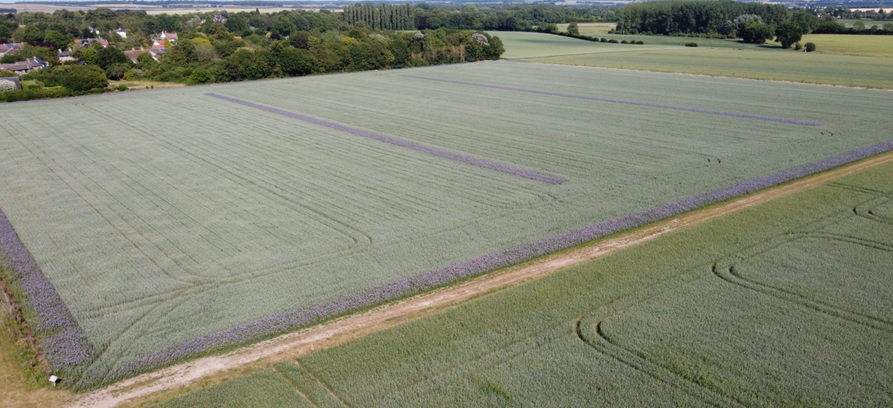
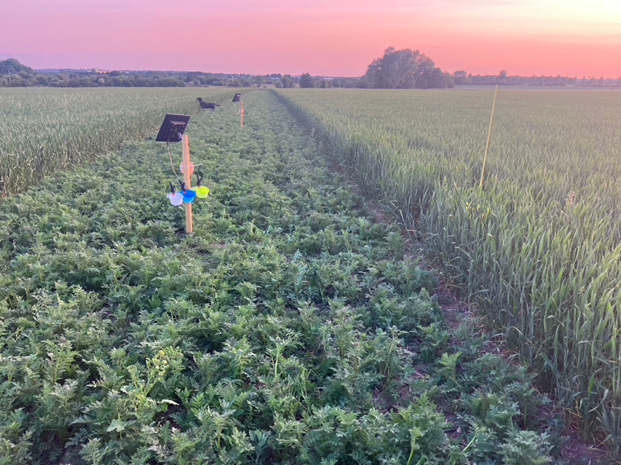
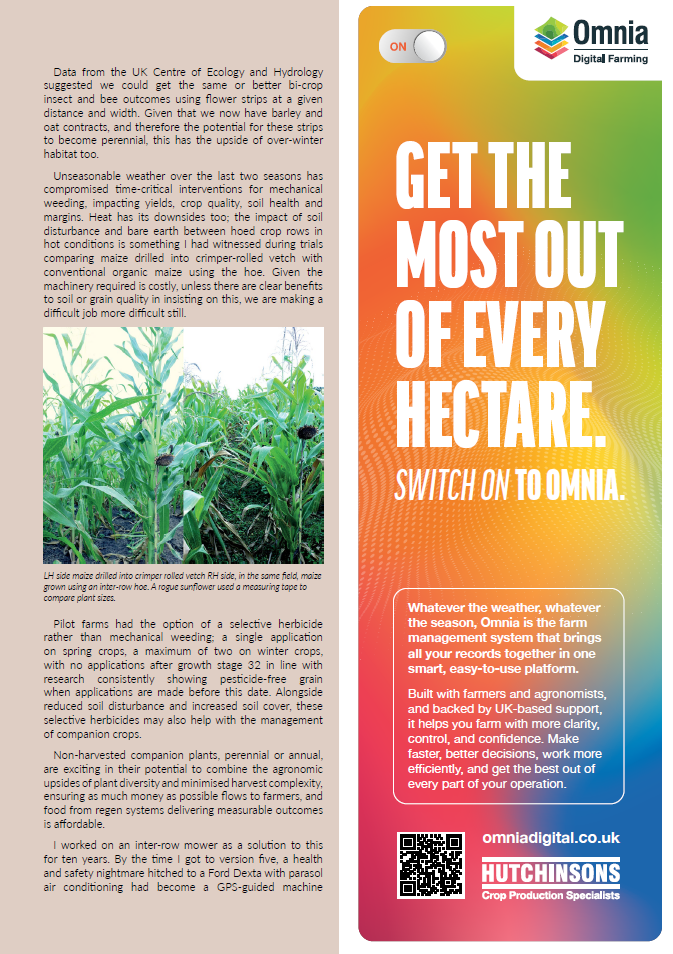
Flower strips at David White’s farm, a Wildfarmed grower whose huge experience and meticulous application has been so important in finding the sweet spot between farmer nature and food. Insect bowls are joined by AI listening devices able to detect insect wing beats.
Unseasonable weather over the last two seasons has compromised time-critical interventions for mechanical weeding, impacting yields, crop quality, soil health and margins. Heat has its downsides too: the impact of soil disturbance and bare earth between hoed crop rows in hot conditions is something I had witnessed during trials comparing maize drilled into crimper-rolled vetch with conventional organic maize using the hoe. Given the required machinery is costly, unless there are clear benefits to soil or grain quality in insisting on this, we are making a difficult job more difficult still.
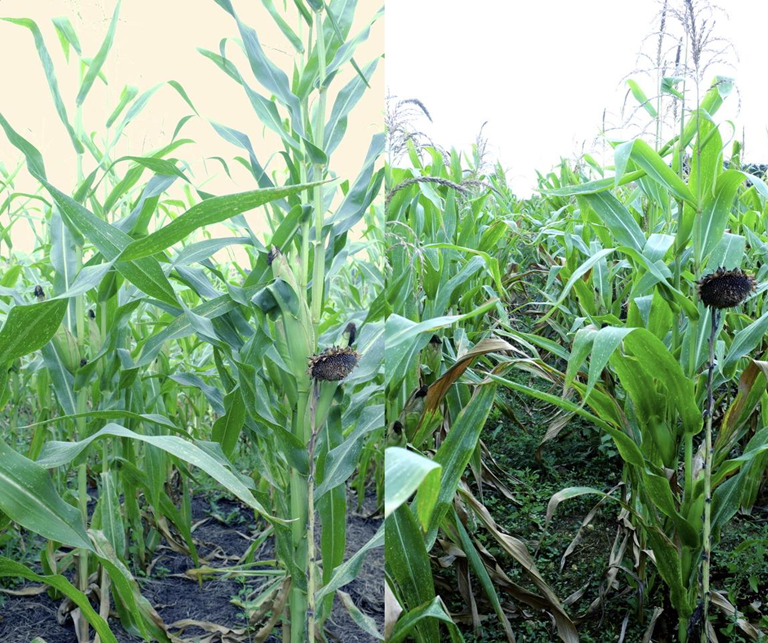
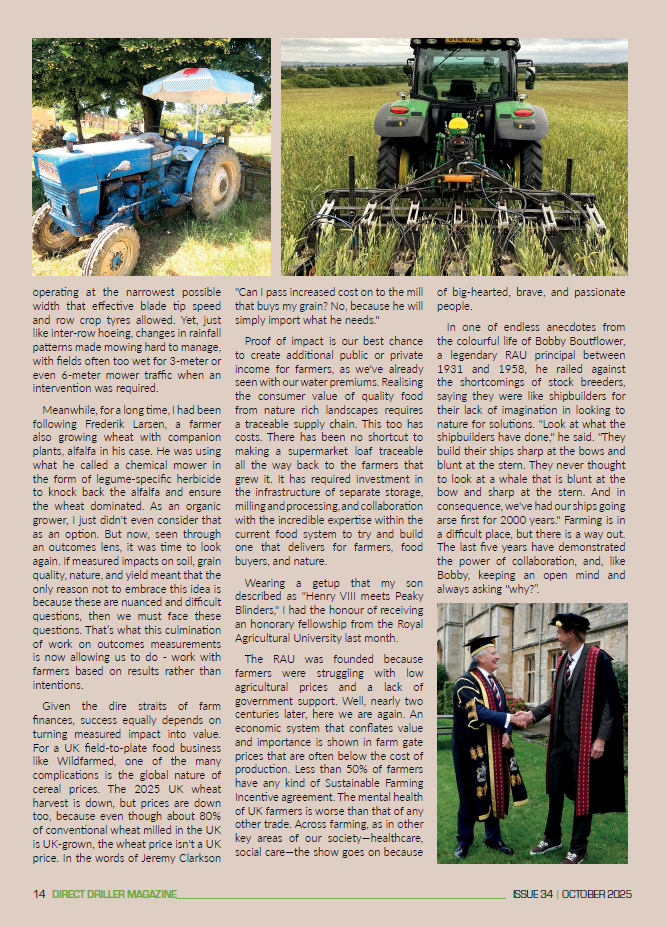
LH side maize drilled into crimper rolled vetch RH side, in the same field, maize grown using an inter-row hoe. A rogue sunflower used a measuring tape to compare plant sizes.
Pilot farms had the option of a selective herbicide rather than mechanical weeding; a single application on spring crops, a maximum of two on winter crops, with no applications after growth stage 32 in line with research consistently showing pesticide-free grain when applications are made before this date. Alongside reduced soil disturbance and increased soil cover, these selective[12] herbicides may also help with the management of companion crops.
Non-harvested companion plants, perennial or annual, are exciting in their potential to combine the agronomic upsides of plant diversity and minimised harvest complexity, ensuring as much money as possible flows to farmers, and food from regen systems delivering measurable outcomes is affordable.
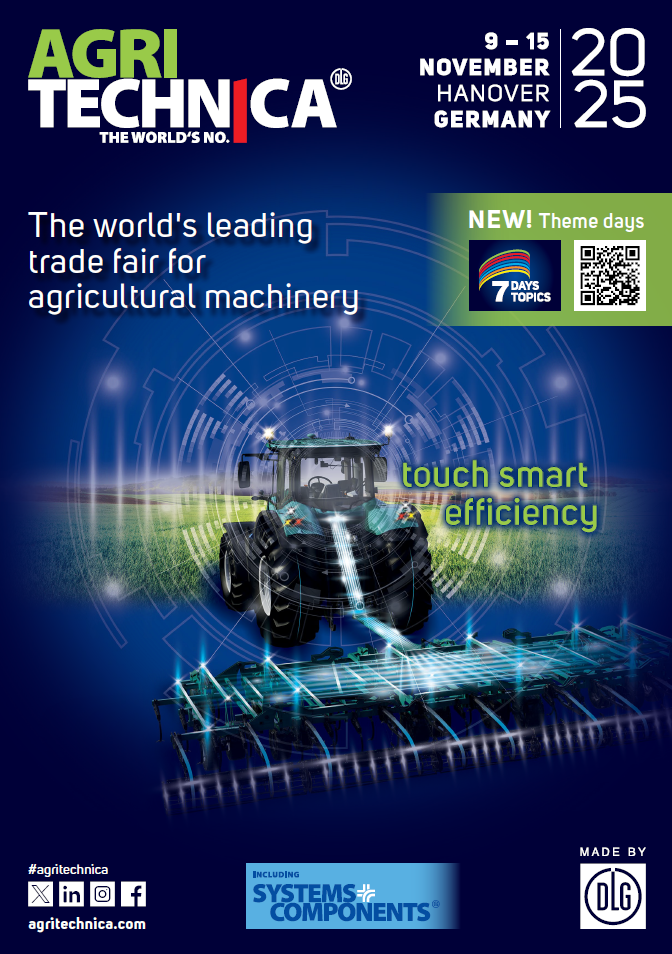
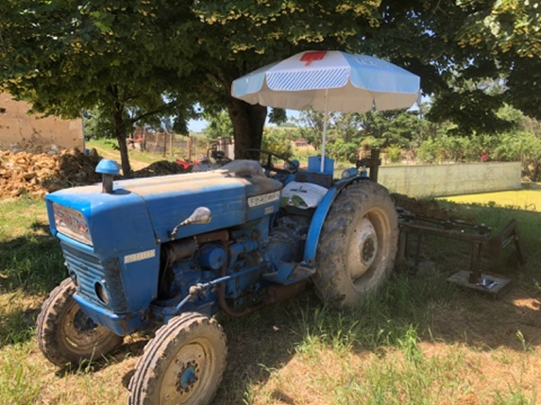
I worked on an inter-row mower as a solution to this for ten years. By the time I got to version five, a health-and-safety nightmare hitched to a Ford Dexta with parasol air conditioning had become a GPS-guided machine operating at the narrowest possible width that effective blade tip speed and row crop tyres allowed. Yet, just like inter-row hoeing, changes in rainfall patterns made mowing hard to manage, with fields often too wet for 3-metre or even 6-metre mower traffic when an intervention was required.
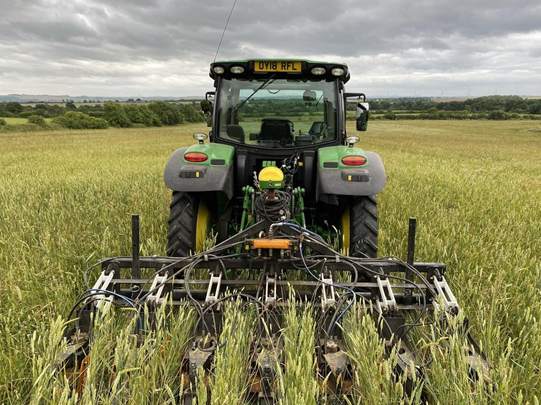
Meanwhile, for a long time, I had been following Frederik Larsen, a farmer also growing wheat with companion plants, alfalfa in his case. He was using what he called a chemical mower in the form of legume-specific herbicide to knock back the alfalfa and ensure the wheat dominated. As an organic grower, I just didn’t even consider that as an option. But now, seen through an outcomes lens, it was time to look again. If measured impacts on soil, grain quality, nature and yield meant that the only reason not to embrace this idea is because these are nuanced and difficult questions, then we must face these questions. That’s what this culmination of work on outcomes measurements is now allowing us to do — work with farmers based on results rather than intentions.
Given the dire straits of farm finances, success equally depends on turning measured impact into value. For a UK field-to-plate food business like Wildfarmed, one of the many complications is the global nature of cereal prices. The 2025 UK wheat harvest is down, but prices are down too, because even though about 80% of conventional wheat milled in the UK is UK-grown, the wheat price isn’t a UK price. In the words of Jeremy Clarkson: “Can I pass this increased cost on to the mill that buys my grain? No, because he will simply import what he needs.”
Proof of impact is our best chance to create additional public or private income for farmers, as we’ve already seen with our water premiums. Realising the consumer value of quality food from nature rich landscapes requires a traceable supply chain. This too has costs. There has been no shortcut to making a supermarket loaf traceable all the way back to the farmers that grew it. It has required investment in the infrastructure of separate storage, milling and processing, and collaboration with the incredible expertise within the current food system to try and build one that delivers for farmers, food buyers and nature.
Wearing a getup that my son described as “Henry VIII meets Peaky Blinders”, I had the honour of receiving an honorary fellowship from the Royal Agricultural University last month.
The RAU was founded because farmers were struggling with low agricultural prices and a lack of government support. Well, nearly two centuries later, here we are again. An economic system that conflates value and importance is shown in farm gate prices that are often below the cost of production. Less than 50% of farmers have any kind of Sustainable Farming Incentive agreement. The mental health of UK farmers is worse than that of any other trade. Across farming, as in other key areas of our society — healthcare, social care — the show goes on because of big-hearted, brave and passionate people.

In one of endless anecdotes from the colourful life of Bobby Boutflour, a legendary RAU principal between 1931 and 1958, it was said he railed against the shortcomings of stock breeders, saying they were like shipbuilders for their lack of imagination in looking to nature for solutions. “Look at what the shipbuilders have done,” he said. “They build their ships sharp at the bows and blunt at the stern. They never thought to look at a whale that is blunt at the bow and sharp at the stern. And in consequence, we’ve had our ships going arse first for 2000 years.” Farming is in a difficult place, but there is a way out. The last five years have demonstrated the power of collaboration, and, like Bobby, keeping an open mind and always asking “why?”