Jason Pole, AHDB Technical Content Manager, explains how knowing what makes the ergot pathogen tick can help target management to reduce disease pressure, limit crop infection and keep clean grain clean.
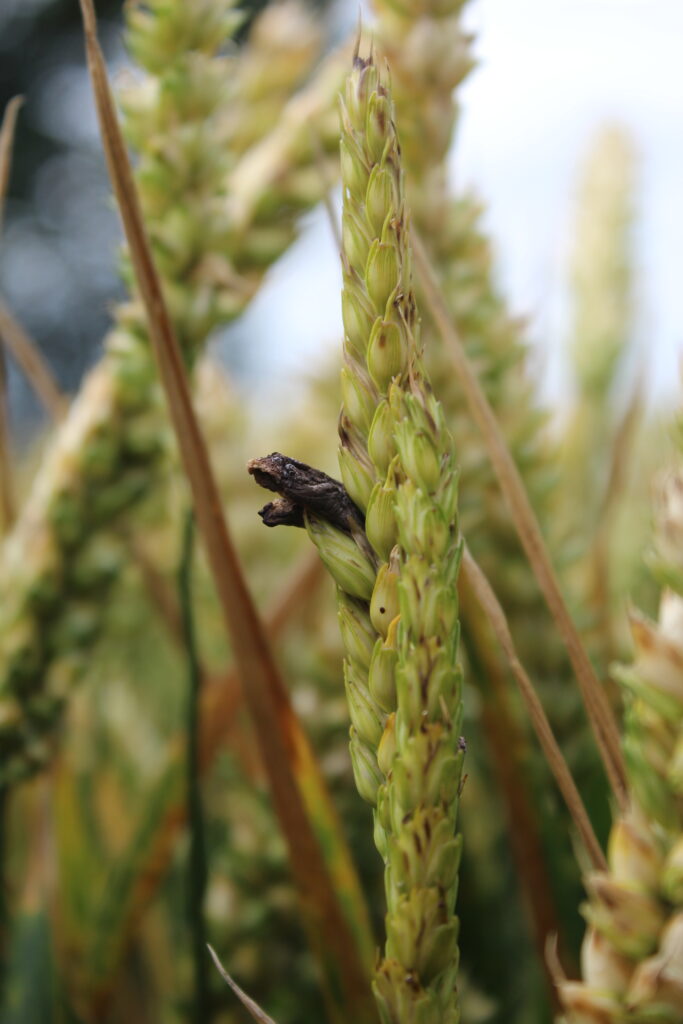
Ergot (Claviceps purpurea) grows in and replaces grain with its own fungal tissues, which eventually form a hard, purple-black sclerotium (with a white interior) known as an ergot. They grow up to 2 cm long and can be easily spotted in infected ears and grain.
Although the disease has little impact on cereal yields, ergots are associated with large amounts of mycotoxins (alkaloids) that are highly toxic when ingested (by humans and livestock). This is why there are contractual limits in place for ergot by weight for feed grain and zero tolerance for all other grain in GB.
In 2022, the EU implemented stricter levels for specific cereals and products traded in the EU (which also covers Northern Ireland). It introduced maximum levels (MLs) for ergot alkaloids for the first time, which can be detected in grain with no visible ergot symptoms and provide a tougher test for grain quality. With potential for further restrictions in GB, we need to keep ahead of the challenge.
As for any crop disease, seasonal pressures ebb and flow. Harvest 2024 crops contended with some very cool and wet periods that promoted spore production and prolonged the flowering period (making infection more likely) with numerous reports of ergot in grain. In contrast, the widespread hot and dry conditions have helped keep ergot infection down this year. Ergot’s impact on harvest 2025 crops will be assessed as part of our long-term project, which has monitored key contaminants in post-intake grain samples (wheat, barley and oats) and co-products (wheatfeed and oatfeed) since the mid-1980s.
Last autumn, we commissioned a rapid review of ergot management evidence (AHDB Research Review 102) to fine-tune our guidance for farmers. The ADAS-led project identified four key management strategies targeted at various points in the ergot life cycle.
Ergot life cycle
- Over the winter, ergots stay dormant in the soil or on crop debris (ergots may also be in drilled seed).
- In the spring and summer (after a period of cool/vernalisation), ergots near the soil surface (<5 cm deep) germinate and produce mushroom-shaped, spore-bearing structures (called stroma).
- The stroma heads feature asci-containing perithecia, which contain (sexual) ascospores.
- The structure ejects the ascospores, which are carried on the wind (most travel less than 20m from the spore source).
- When these primary spores land on open flowers of susceptible cereals and grasses, they germinate and penetrate the stigma hairs.
- Fungal hyphae grow down into the ovary.
- In the ovary, the fungus produces a soft, white hyphal mass and secondary (asexual) spores (conidia) encased in a sweet-smelling, sticky secretion – commonly referred to as honeydew (which can promote the development of moulds).
- Honeydew attracts insects that carry conidia to other open flowers, where further infection can occur (rain-splash and physical contact can also spread spores).
- Infected seed is replaced by a relatively large, protruding ergot (the process takes about two weeks), which may fall to the ground (and become dormant over the winter) or be retained in the ear and harvested with healthy grain.
The four ergot management strategies
1. Reduce initial inoculum
The first step is to monitor fields and margins for ergots to determine the initial risk level. The second step is to reduce the amount of ergot and its viability to limit the production of primary spores.
You may need to be prepared to use metal in high-risk fields to bury ergots to a depth of at least 5 cm. Although ploughing is best, minimum tillage is more effective than direct drilling. Once ergots have been driven down the soil profile, you should avoid cultivation in the following year to avoid them resurfacing. Typically, ergots remain viable in the soil for one to three years.
To avoid introducing new ergots to the field, it is important to clean machinery after working in infected fields and to use high quality, clean seed. Either use certified seed or clean, home-saved seed. Although there are some seed treatments that cite ergot suppression on their labels, they do not provide complete control. Additionally, there are no sprays authorised for ergot management in the UK.
2. Reduce infection risk
With primary spores minimised, the next step is to adapt the rotation to reduce infection events. In the highest-risk situations, consider growing a non-cereal crop or a less susceptible cereal crop. From least to most susceptible: oats (infection is rare), barley, wheat, triticale and rye. As for any crop, the usual techniques to get it off to a strong (and uniform) start and to maximise crop health are essential (eg appropriate crop protection and nutrition programmes).
Compared with some of the potentially yield-reducing foliar diseases, breeding for ergot avoidance or resistance has not been a key target for plant breeders and information on varietal risk is extremely limited. However, selecting varieties that have a short flowering period (note: late tillering and secondary tillering can extend the flowering period), a more closed flowering habit and a high pollen-shedding ability could help contribute to a reduction in ergot infection. Crops become resistant to infection a few days after fertilisation.
3. Reduce secondary spread
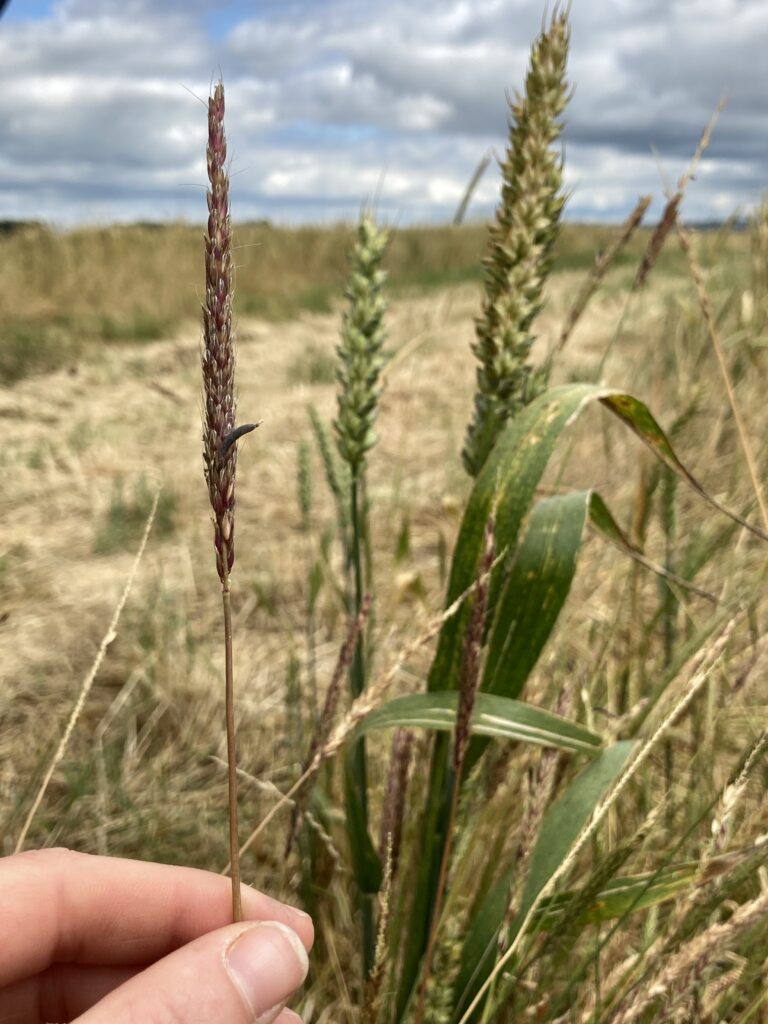
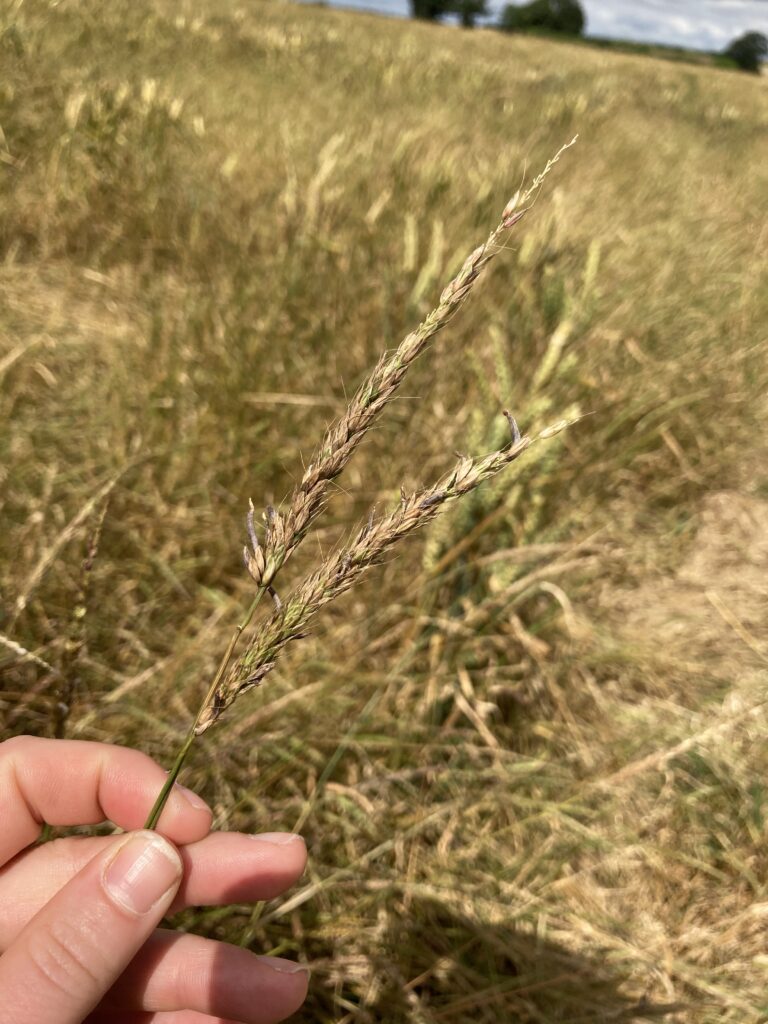
Grasses in your margins or grass weeds in your fields may become a source of secondary spores and spread of ergot. The full review report includes excellent details on the ergot risk associated with various grass species – either as weeds or components of margin seed mixtures. Of course, mowing or topping grasses regularly (if permitted) will also drive down ergot pressures, especially to prevent the infection of late cereal tillers at field edges. As black-grass flowers earlier than cereals, it is a key weed target for ergot management.
4. Reduce contamination
The final step is to know where ergot is in your fields (including margins) and to manage infected grain to keep clean crops clean:
- Harvest infected areas separately
- Segregate infected grain from other grain
- Clean equipment after harvesting infected grain
- Clean contaminated grain
- Update records to track higher-risk fields/areas
Field headlands and tramlines are often higher-risk areas (which tend to have plants with more susceptible late and secondary tillers).

Several methods can clean grain to some degree, including gravity separation (with or without an air screen cleaner) and mechanical sieves that remove foreign bodies. Grain colour sorting systems are also available, which are used mainly by processors and within central stores. As ergot fragments can be relatively small, it means cleaning may be only partially effective.
Further information
The ergot review was funded via a levy-payer-led commissioning process and developed with input from the Ergot Working Group, which is chaired by UK Flour Millers (UKFM). The full ergot guidance includes an assessment of the potential impact of each intervention, highlights areas of uncertainty and cites key research gaps.
Access the management strategies and review at ahdb.org.uk/ergot