I should begin with a declaration: I’m a fan of Groundswell. (I cheered the Cherry family when the event won the Food Innovation Award at the BBC Food & Farming Awards last December.) I’ve attended since it was little more than two blokes and a spaniel (OK, a few hundred people in year one), and over time I’ve graduated from a one-day guest to full-on festival devotee. I roll in on Tuesday evening before the first day to bag a camping spot and stay until breakfast on Friday morning. I pore over the programme; highlighting talks I want to attend and exhibitors I want to meet. I count the event as the annual highlight of my regenerative-farming journey.
Over the years, I’ve picked up a few tricks: showering mid-afternoon; hitting food vans in quiet windows; nibbling, Hobbit-style, four times a day; packing sunscreen (no mistaking the sunburn) and a wind cheater for cold evenings. And yes, I love it.
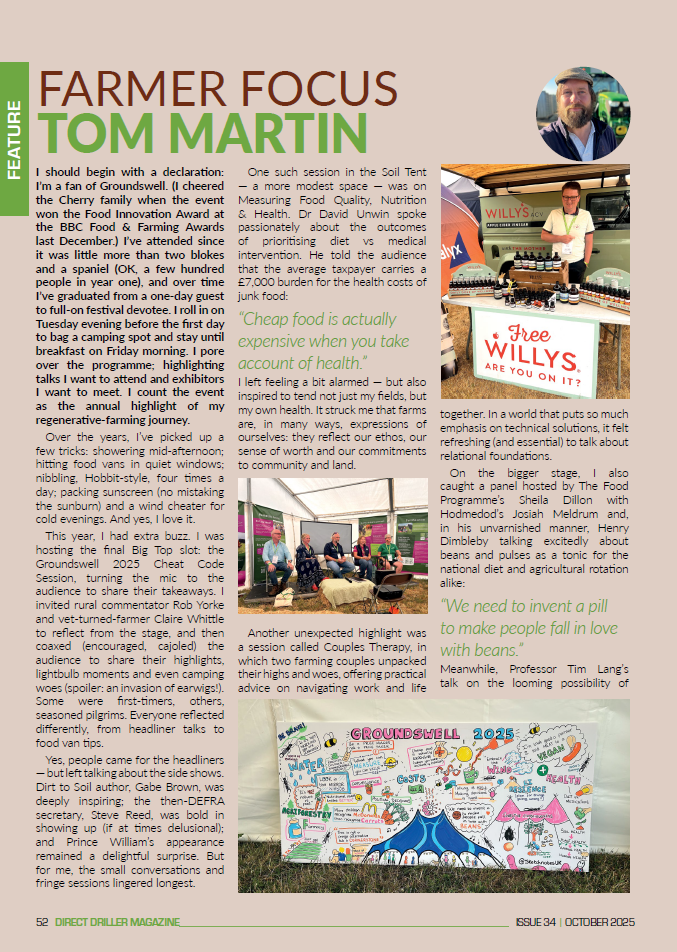
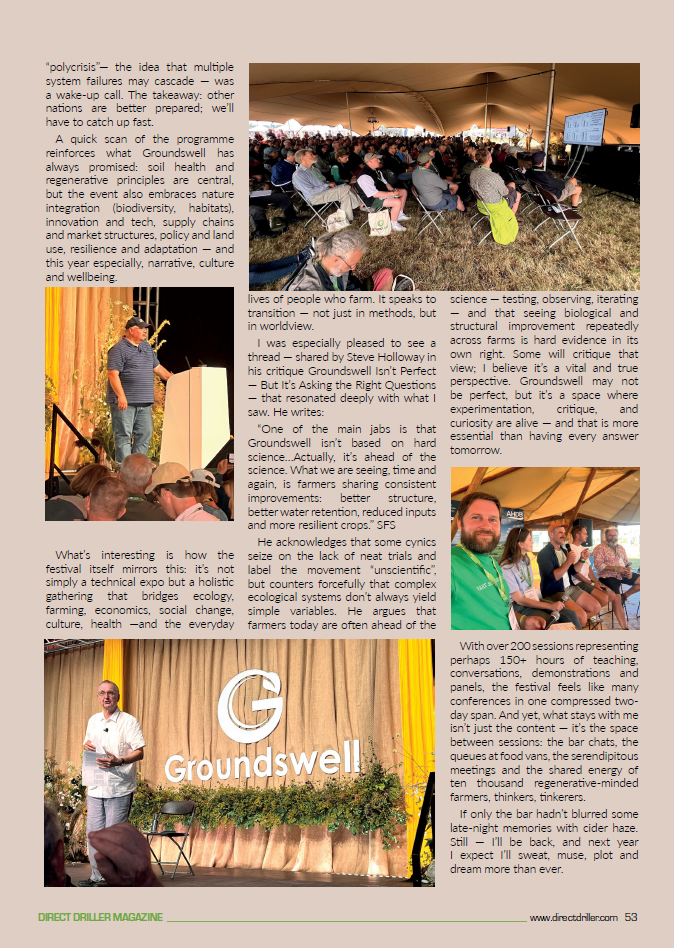
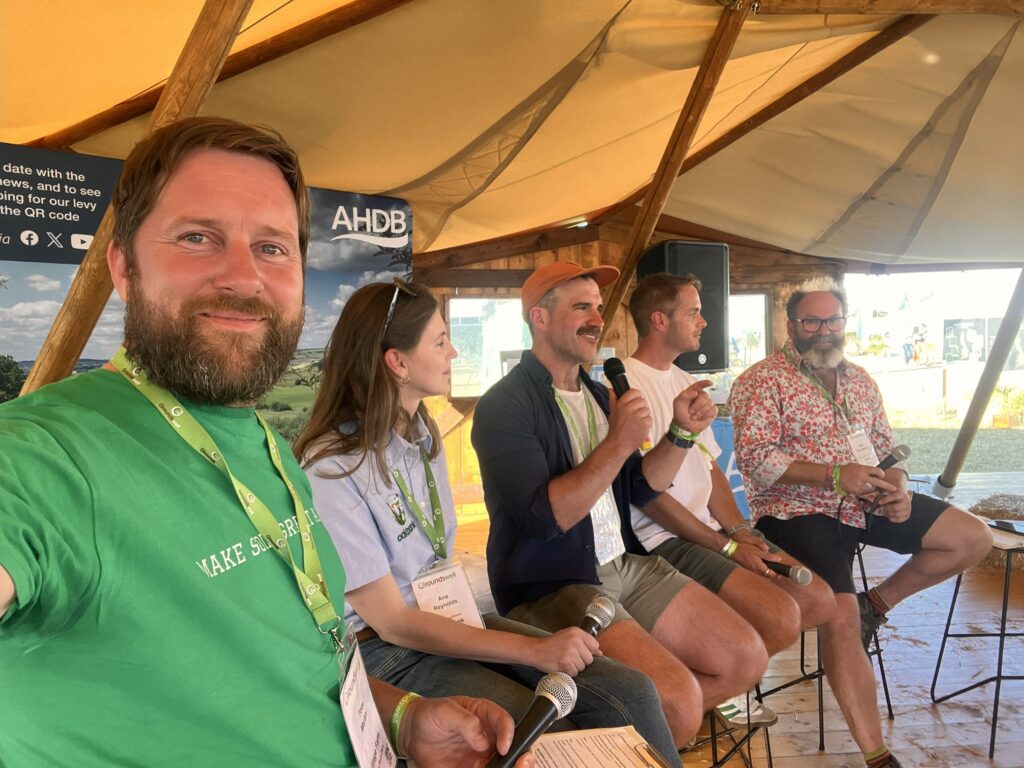
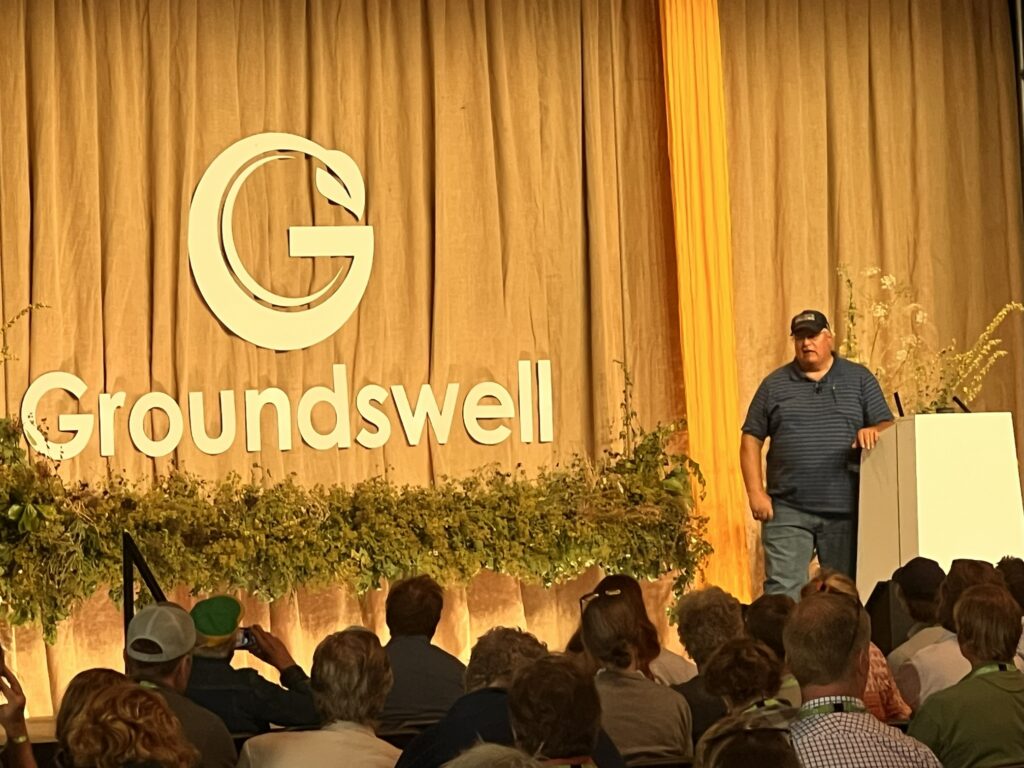
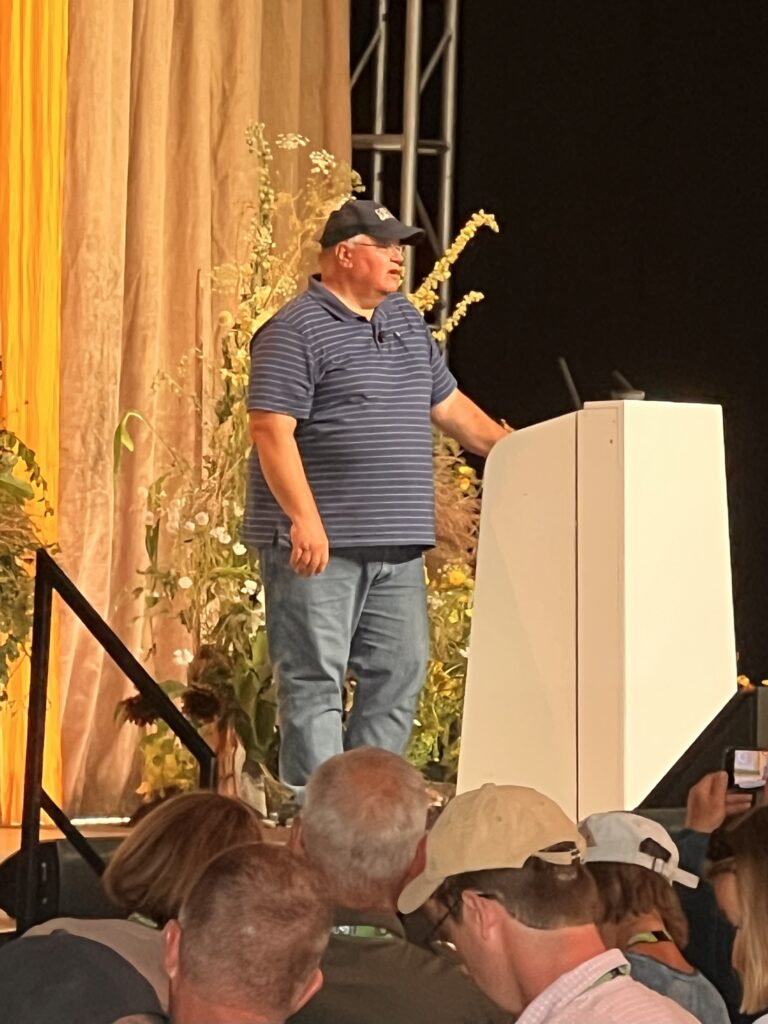
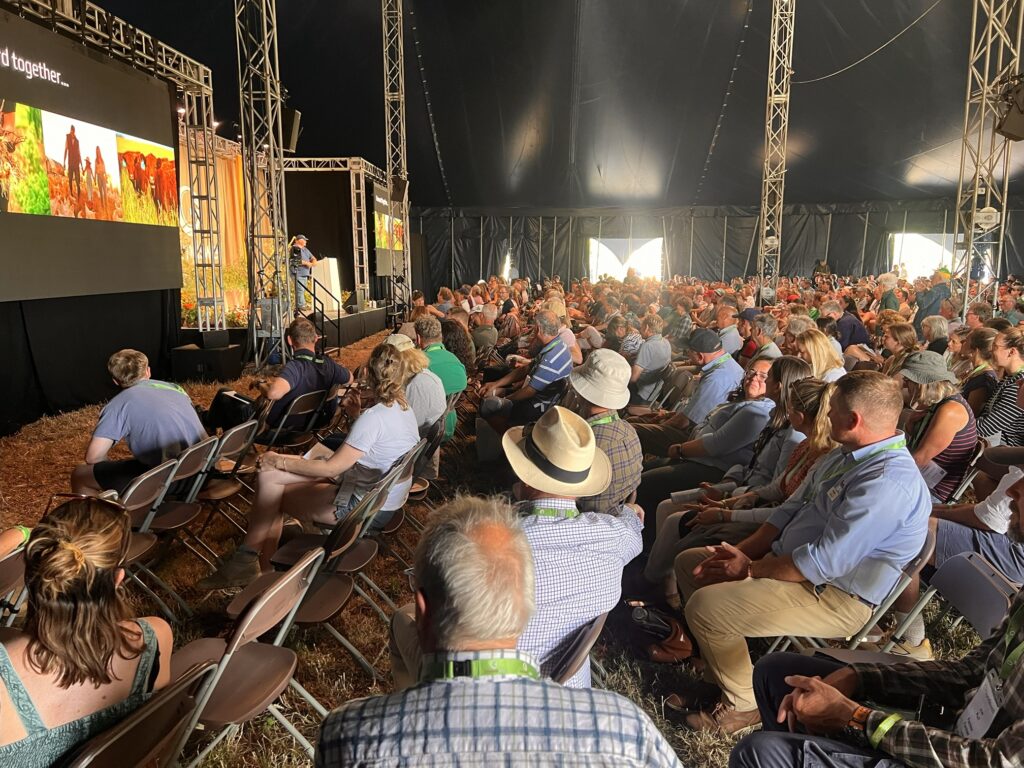
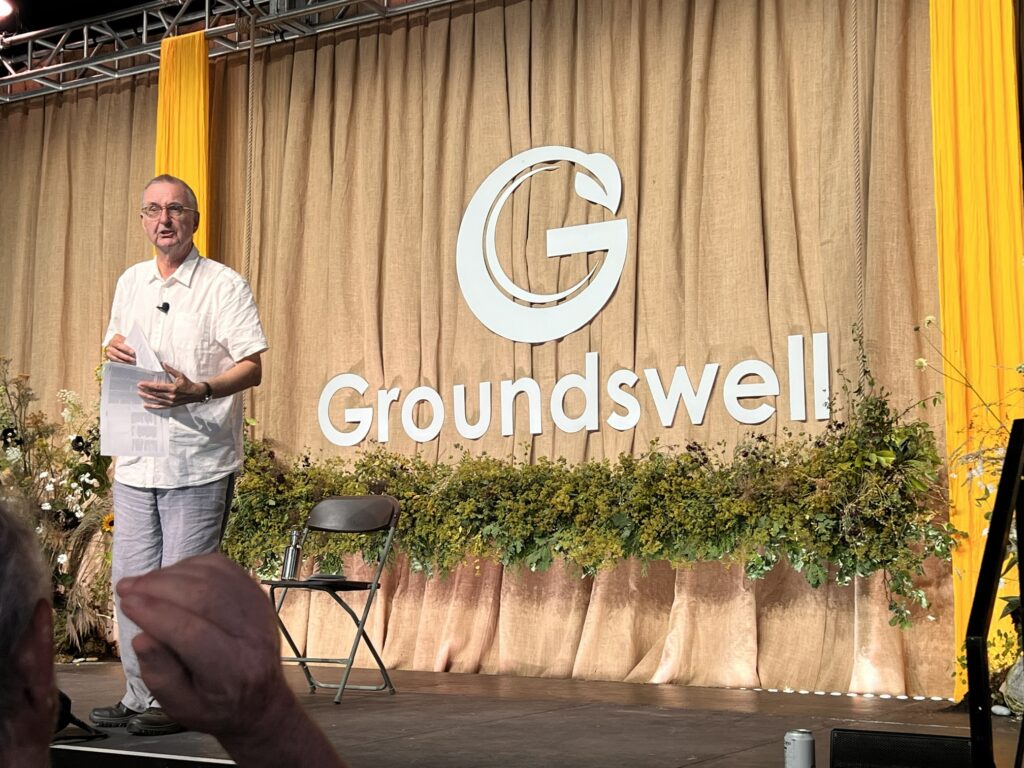
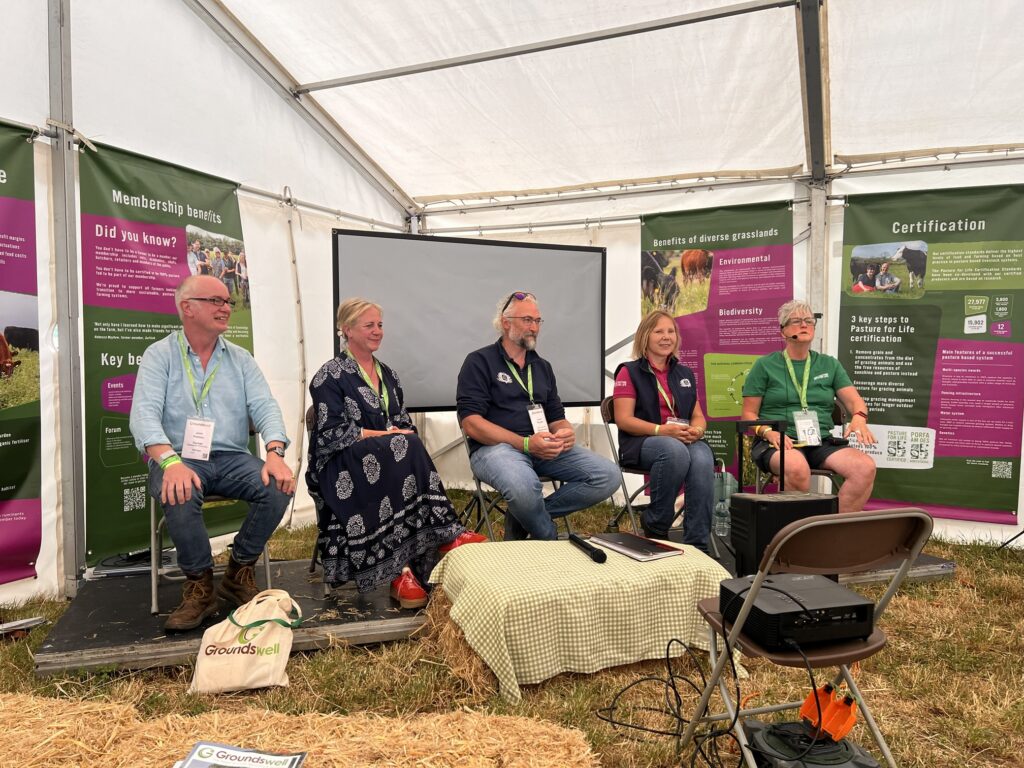
This year, I had extra buzz. I was hosting the final Big Top slot: the Groundswell 2025 Cheat Code Session, turning the mic to the audience to share their takeaways. I invited rural commentator Rob Yorke and vet-turned-farmer Claire Whittle to reflect from the stage, and then coaxed (encouraged, cajoled) the audience to share their highlights, lightbulb moments and even camping woes (spoiler: an invasion of earwigs!). Some were first-timers, others, seasoned pilgrims. Everyone reflected differently, from headliner talks to food van tips.
Yes, people came for the headliners — but left talking about the side shows. Dirt to Soil author, Gabe Brown, was deeply inspiring; the then-DEFRA secretary, Steve Reed, was bold in showing up (if at times delusional); and Prince William’s appearance remained a delightful surprise. But for me, the small conversations and fringe sessions lingered longest.
One such session in the Soil Tent — a more modest space — was on Measuring Food Quality, Nutrition & Health. Dr David Unwin spoke passionately about the outcomes of prioritising diet vs medical intervention. He told the audience that the average taxpayer carries a £7,000 burden for the health costs of junk food:
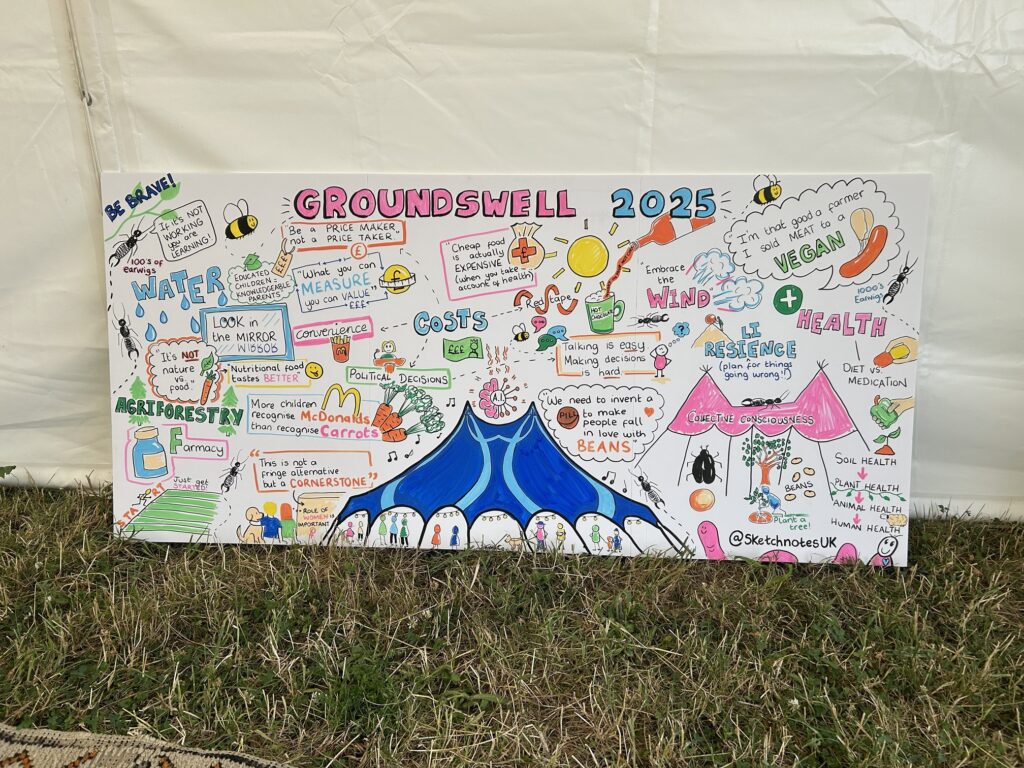
“Cheap food is actually expensive when you take account of health.”
I left feeling a bit alarmed — but also inspired to tend not just my fields, but my own health. It struck me that farms are, in many ways, expressions of ourselves: they reflect our ethos, our sense of worth and our commitments to community and land.
Another unexpected highlight was a session called Couples Therapy, in which two farming couples unpacked their highs and woes, offering practical advice on navigating work and life together. In a world that puts so much emphasis on technical solutions, it felt refreshing (and essential) to talk about relational foundations.
On the bigger stage, I also caught a panel hosted by The Food Programme’s Sheila Dillon with Hodmedod’s Josiah Meldrum and, in his unvarnished manner, Henry Dimbleby talking excitedly about beans and pulses as a tonic for the national diet and agricultural rotation alike:
“We need to invent a pill to make people fall in love with beans.”
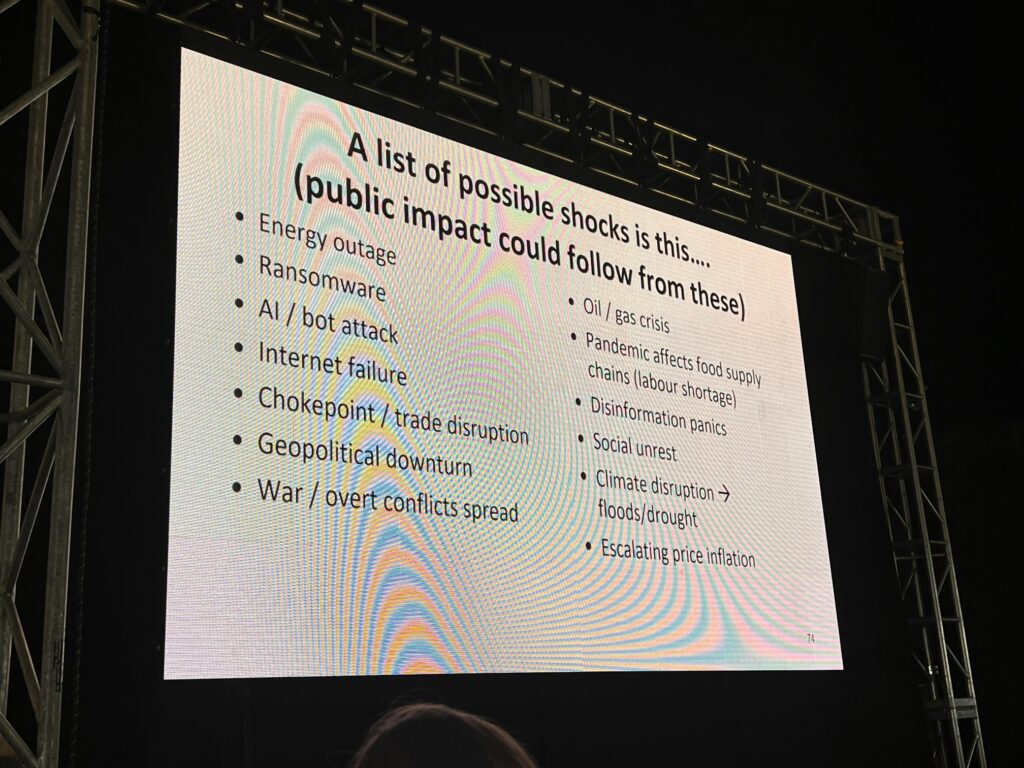
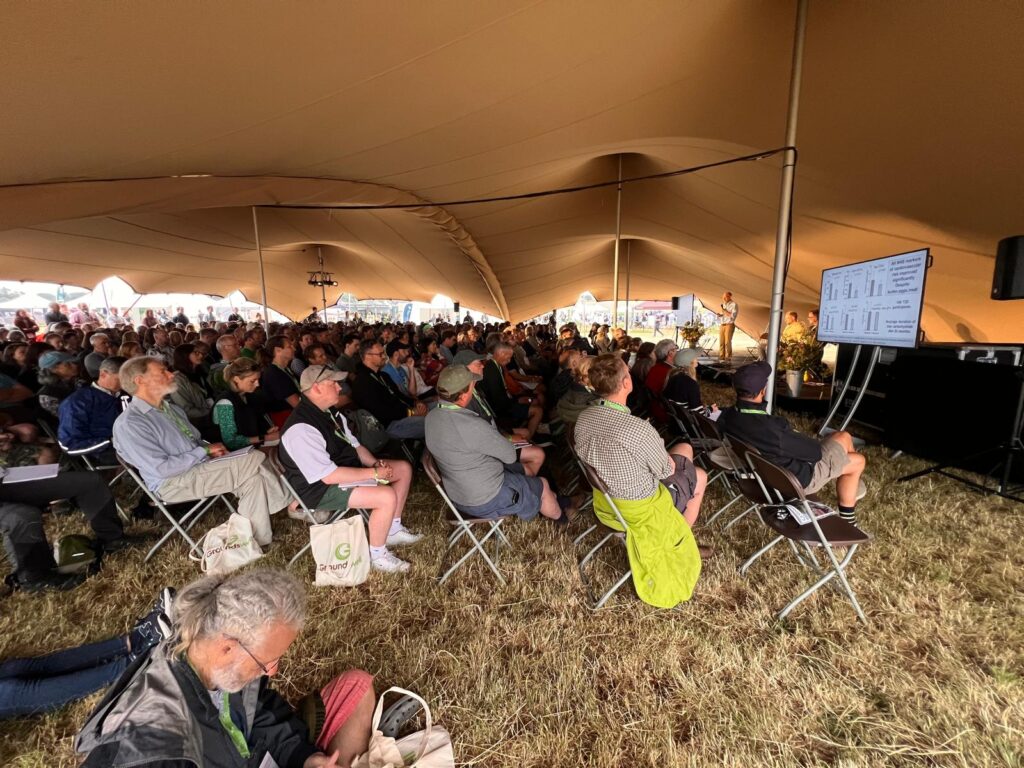
Meanwhile, Professor Tim Lang’s talk on the looming possibility of “polycrisis”— the idea that multiple system failures may cascade — was a wake-up call. The takeaway: other nations are better prepared; we’ll have to catch up fast.
A quick scan of the programme reinforces what Groundswell has always promised: soil health and regenerative principles are central, but the event also embraces nature integration (biodiversity, habitats), innovation and tech, supply chains and market structures, policy and land use, resilience and adaptation — and this year especially, narrative, culture and wellbeing.
What’s interesting is how the festival itself mirrors this: it’s not simply a technical expo but a holistic gathering that bridges ecology, farming, economics, social change, culture, health —and the everyday lives of people who farm. It speaks to transition — not just in methods, but in worldview.
I was especially pleased to see a thread — shared by Steve Holloway in his critique Groundswell Isn’t Perfect — But It’s Asking the Right Questions — that resonated deeply with what I saw. He writes:
“One of the main jabs is that Groundswell isn’t based on hard science…Actually, it’s ahead of the science. What we are seeing, time and again, is farmers sharing consistent improvements: better structure, better water retention, reduced inputs and more resilient crops.” SFS
He acknowledges that some cynics seize on the lack of neat trials and label the movement “unscientific”, but counters forcefully that complex ecological systems don’t always yield simple variables. He argues that farmers today are often ahead of the science — testing, observing, iterating — and that seeing biological and structural improvement repeatedly across farms is hard evidence in its own right. Some will critique that view; I believe it’s a vital and true perspective. Groundswell may not be perfect, but it’s a space where experimentation, critique, and curiosity are alive — and that is more essential than having every answer tomorrow.
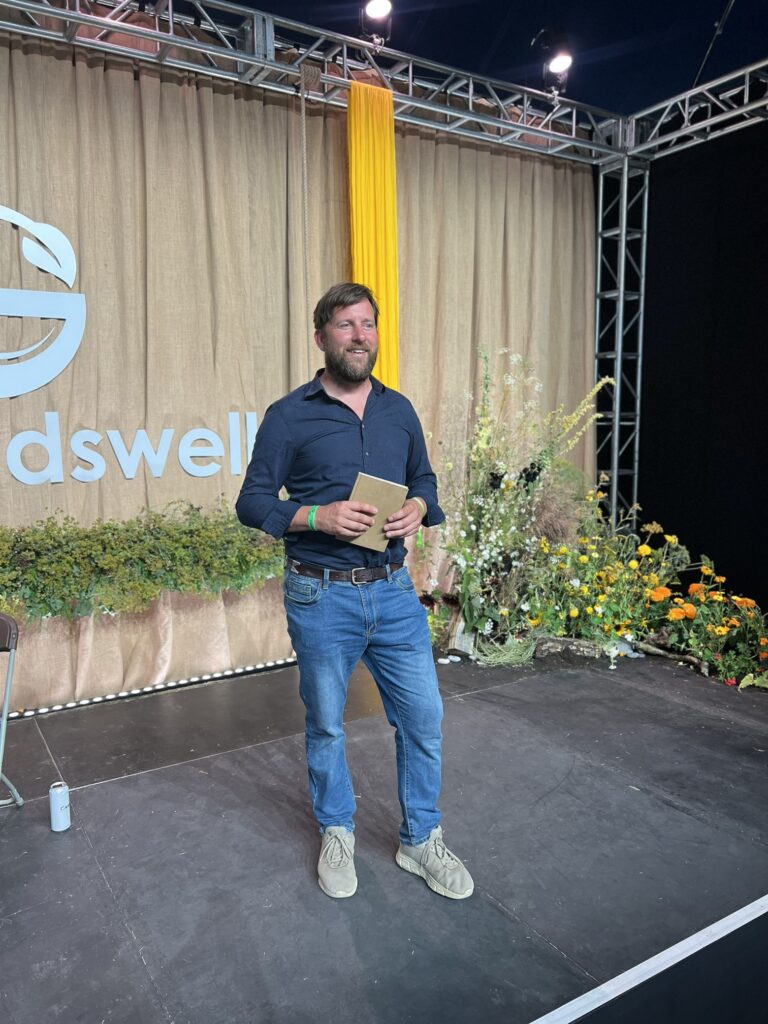
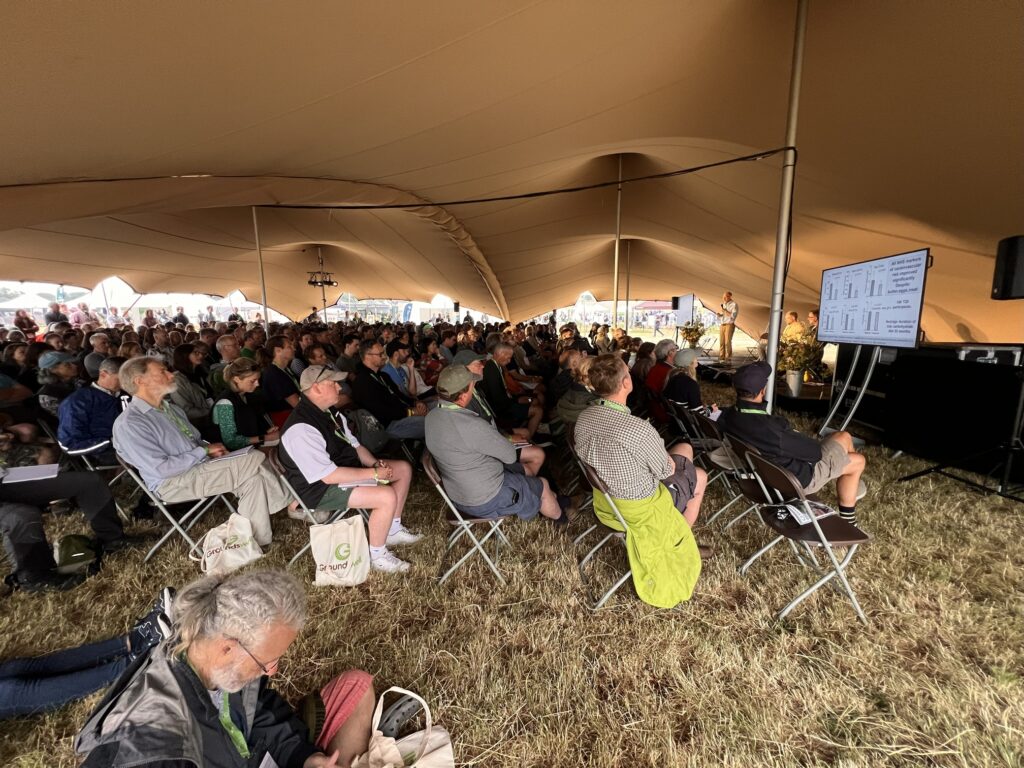
With over 200 sessions representing perhaps 150+ hours of teaching, conversations, demonstrations and panels, the festival feels like many conferences in one compressed two-day span. And yet, what stays with me isn’t just the content — it’s the space between sessions: the bar chats, the queues at food vans, the serendipitous meetings and the shared energy of ten thousand regenerative-minded farmers, thinkers, tinkerers.
If only the bar hadn’t blurred some late-night memories with cider haze. Still — I’ll be back, and next year I expect I’ll sweat, muse, plot and dream more than ever.