By Donna Harvey-Bailye
For as long as I can remember, I’ve been happiest with soil under my nails and a design plan in my head. Gardening has always been my creative outlet; a place where I can paint with plants, sculpt with texture and choreograph the seasons. My large farmhouse garden in Staffordshire has long been both my canvas and my sanctuary, where I’ve hosted open garden days and shared the joy of colour, form and planting design with other gardeners many times.
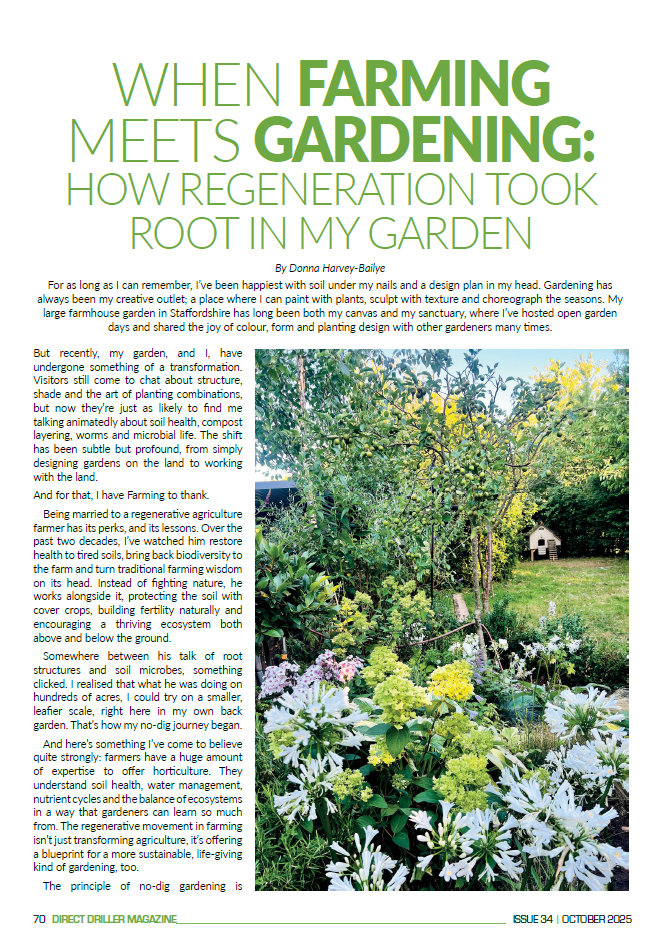
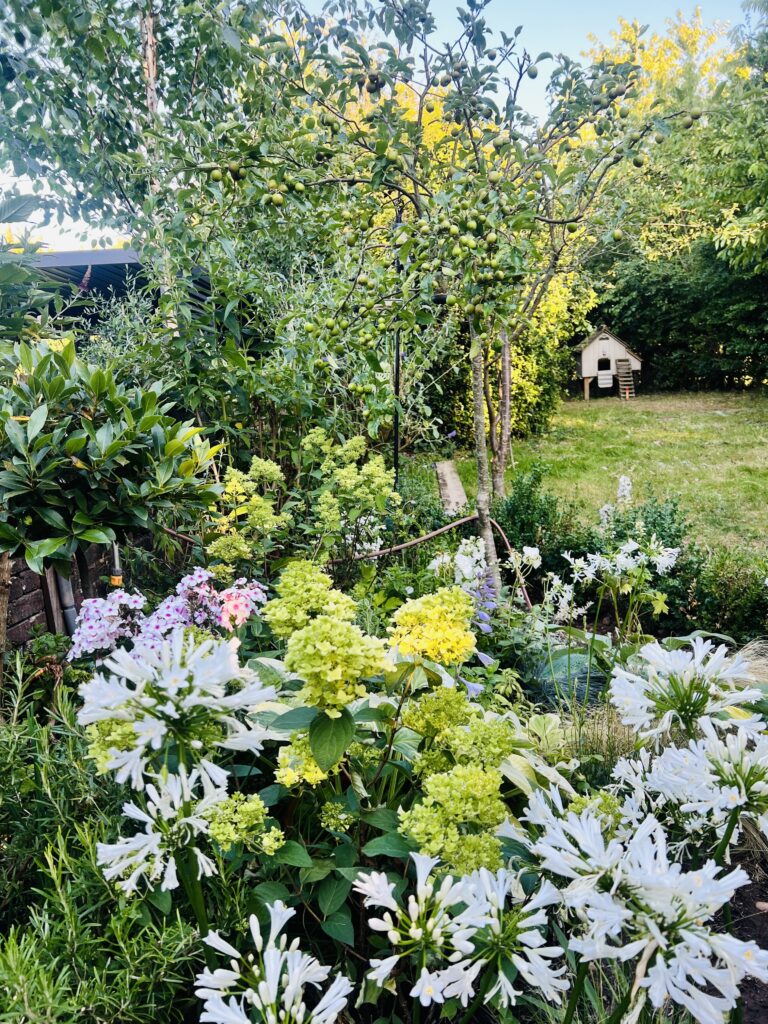
But recently, my garden, and I, have undergone something of a transformation. Visitors still come to chat about structure, shade and the art of planting combinations, but now they’re just as likely to find me talking animatedly about soil health, compost layering, worms and microbial life. The shift has been subtle but profound, from simply designing gardens on the land to working with the land.
And for that, I have Farming to thank.
Being married to a regenerative agriculture farmer has its perks, and its lessons. Over the past two decades, I’ve watched him restore health to tired soils, bring back biodiversity to the farm and turn traditional farming wisdom on its head. Instead of fighting nature, he works alongside it, protecting the soil with cover crops, building fertility naturally and encouraging a thriving ecosystem both above and below the ground.
Somewhere between his talk of root structures and soil microbes, something clicked. I realised that what he was doing on hundreds of acres, I could try on a smaller, leafier scale, right here in my own back garden. That’s how my no-dig journey began.
And here’s something I’ve come to believe quite strongly: farmers have a huge amount of expertise to offer horticulture. They understand soil health, water management, nutrient cycles and the balance of ecosystems in a way that gardeners can learn so much from. The regenerative movement in farming isn’t just transforming agriculture, it’s offering a blueprint for a more sustainable, life-giving kind of gardening, too.
The principle of no-dig gardening is disarmingly simple: stop disturbing the soil. Instead of turning it over each season, you build on top, layering compost, mulch and organic matter, allowing the worms and microorganisms to do the work for you.
The science behind it is fascinating. Beneath our feet lies a vast underground community; bacteria, fungi and other organisms forming delicate networks that help plants access nutrients, retain water and resist disease. Every time we dig, we disrupt those networks. When we leave them intact, soil life flourishes, and so, too, does everything that grows above it.
The results have been nothing short of extraordinary. My vegetables are thriving, my flower borders have more vigour and the garden seems to hum with new energy.
The Beauty of Imperfection
Of course, the no-dig approach requires a little change in mindset. I used to pride myself on immaculate borders and well-defined edges; the kind of garden that looks like it’s had its hair done before company arrives. Now, I find beauty in the slightly wilder look: a bit of mulch here, a fallen leaf there, and yes, even a fine selection of weeds.
In fact, I’ve learned to see weeds differently. The odd nettle or dandelion isn’t a failure of tidiness but a sign of balance. They support pollinators, signal healthy soil and contribute to the garden’s ecological diversity. When visitors at my open garden days point out a stray weed I might once have pulled out in embarrassment, I now smile and say, “That one’s here on purpose.”
And nature has rewarded me for loosening my grip. The increase in wildlife has been astonishing. Birds, bees, butterflies and beetles have returned in abundance, drawn by this symbiotic system where everything supports everything else. The garden has become not just a designed space, but a living, breathing ecosystem.
Growing with the Garden
No-dig gardening has changed more than just my soil; it’s changed the way I think. It’s less about imposing order and more about fostering relationships: between plants and soil, between gardener and nature. I used to garden for the flowers; now I garden for the fungi. (Don’t tell the roses.)
The regenerative movement that began in the paddock has crept into my heart, and my compost heap. What started as an experiment has become a philosophy. Every time I spread a new layer of mulch or spot a happy earthworm wriggling by, I feel a little more connected to the land, and to the lessons it’s teaching me.
So yes, I’ve caught the bug, and now I can happily proclaim that I am a regenerative horticulture gardener married to a regenerative agriculture farmer. I am proud of that.