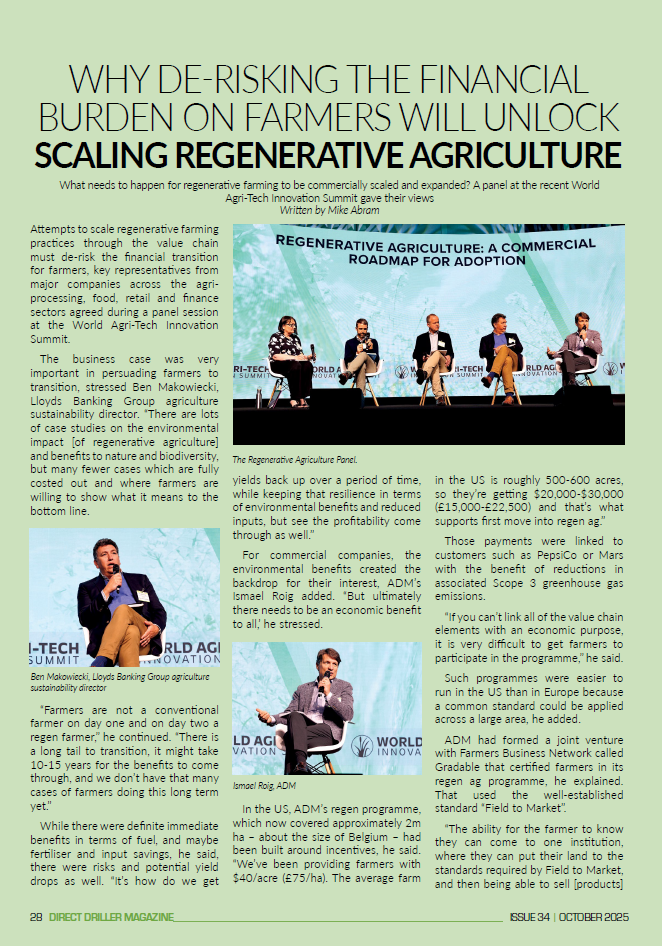
What needs to happen for regenerative farming to be commercially scaled and expanded? A panel at the recent World Agri-Tech Innovation Summit gave their views
Written by Mike Abram
Attempts to scale regenerative farming practices through the value chain must de-risk the financial transition for farmers, key representatives from major companies across the agri-processing, food, retail and finance sectors agreed during a panel session at the World Agri-Tech Innovation Summit.
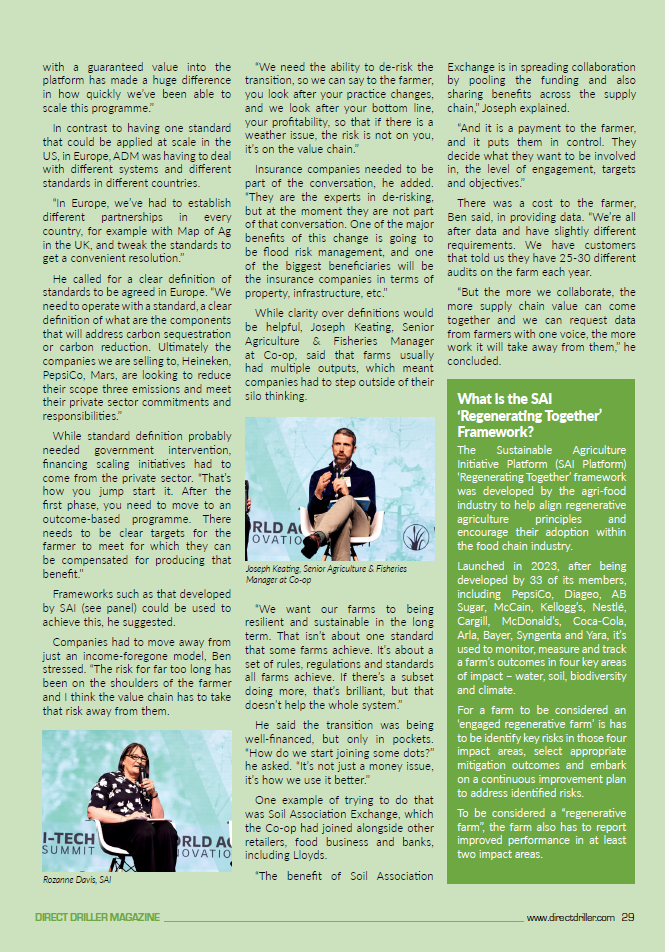
The business case was very important in persuading farmers to transition, stressed Ben Makowiecki, Lloyds Banking Group agriculture sustainability director. “There are lots of case studies on the environmental impact [of regenerative agriculture] and benefits to nature and biodiversity, but many fewer cases which are fully costed out and where farmers are willing to show what it means to the bottom line.
“Farmers are not a conventional farmer on day one and on day two a regen farmer,” he continued. “There is a long tail to transition, it might take 10-15 years for the benefits to come through, and we don’t have that many cases of farmers doing this long term yet.”
While there were definite immediate benefits in terms of fuel, and maybe fertiliser and input savings, he said, there were also risks and potential yield drops. “It’s how do we get yields back up over a period of time, while keeping that resilience in terms of environmental benefits and reduced inputs, but see the profitability come through as well.”
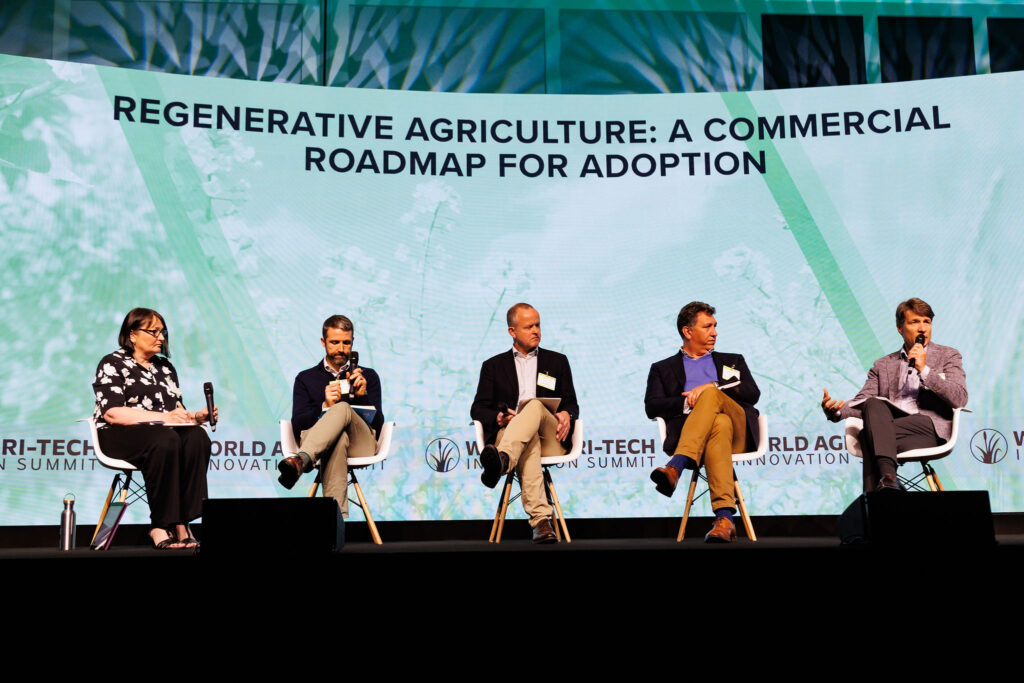
For commercial companies, the environmental benefits created the backdrop for their interest, ADM’s Ismael Roig added. “But ultimately there needs to be an economic benefit to all,’ he stressed.
In the US, ADM’s regen programme, which now covered approximately 2m ha – about the size of Belgium – had been built around incentives, he said. “We’ve been providing farmers with $40/acre (£75/ha). The average farm in the US is roughly 500-600 acres, so they’re getting $20,000-$30,000 (£15,000-£22,500) and that’s what supports first move into regen ag.”
Those payments were linked to customers such as PepsiCo or Mars with the benefit of reductions in associated Scope 3 greenhouse gas emissions.
“If you can’t link all of the value chain elements with an economic purpose, it is very difficult to get farmers to participate in the programme,” he said.
Such programmes were easier to run in the US than in Europe because a common standard could be applied across a large area, he added.
ADM had formed a joint venture with Farmers Business Network called Gradable that certified farmers in its regen ag programme, he explained. That used the well-established standard “Field to Market”.
“The ability for the farmer to know they can come to one institution, where they can put their land to the standards required by Field to Market, and then being able to sell


In contrast to having one standard that could be applied at scale in the US, in Europe, ADM was having to deal with different systems and different standards in different countries.
“In Europe, we’ve had to establish different partnerships in every country, for example with Map of Ag in the UK, and tweak the standards to get a convenient resolution.”
He called for a clear definition of standards to be agreed in Europe. “We need to operate with a standard, a clear definition of what are the components that will address carbon sequestration or carbon reduction. Ultimately the companies we are selling to, Heineken, PepsiCo, Mars, are looking to reduce their Scope 3 emissions and meet their private sector commitments and responsibilities.”
While standard definition probably needed government intervention, financing scaling initiatives had to come from the private sector. “That’s how you jump start it. After the first phase, you need to move to an outcome-based programme. There needs to be clear targets for the farmer to meet for which they can be compensated for producing that benefit.”
Frameworks such as that developed by SAI (see panel) could be used to achieve this, he suggested.
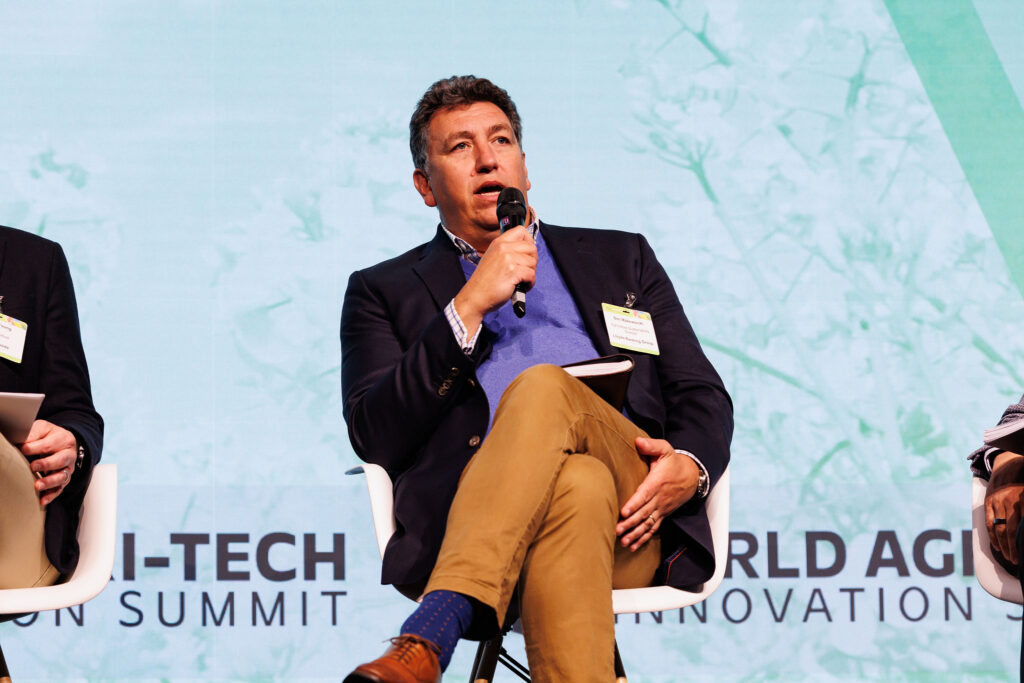
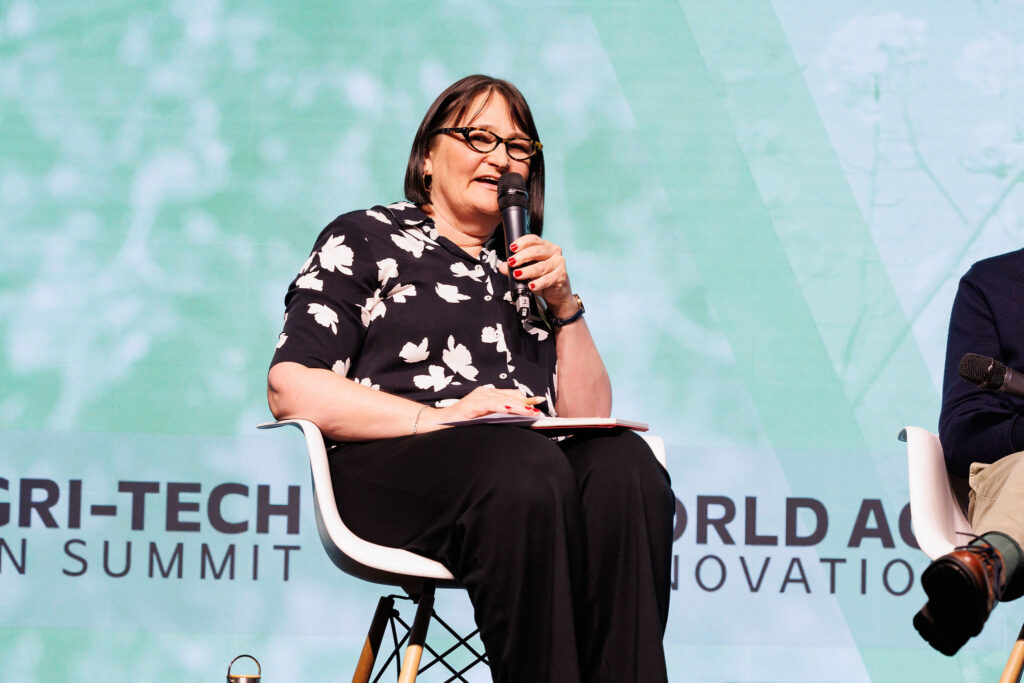
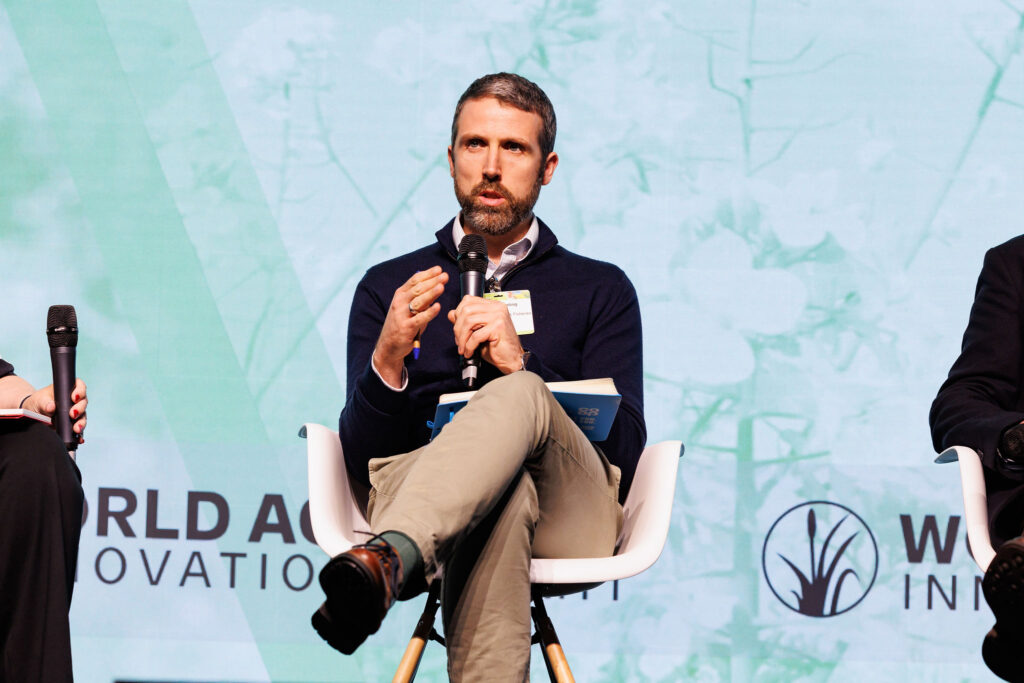
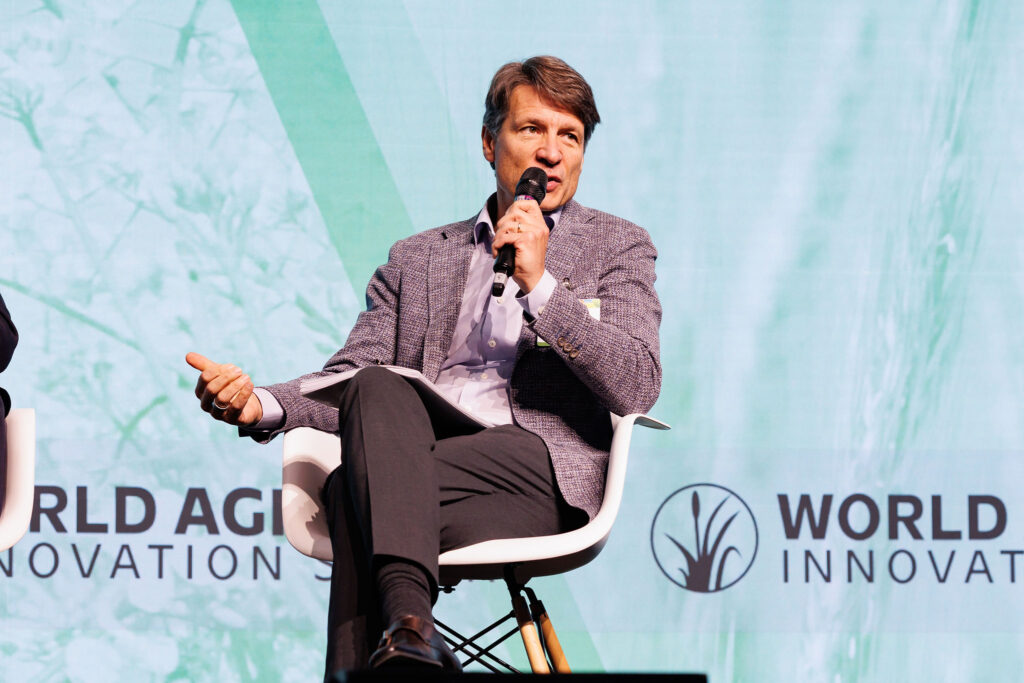
Companies had to move away from just an income-foregone model, Ben Makowiecki stressed. “The risk for far too long has been on the shoulders of the farmer and I think the value chain has to take that risk away from them.
“We need the ability to de-risk the transition, so we can say to the farmer, you look after your practice changes, and we look after your bottom line, your profitability, so that if there is a weather issue, the risk is not on you, it’s on the value chain.”
Insurance companies needed to be part of the conversation, he added. “They are the experts in de-risking, but at the moment they are not part of that conversation. One of the major benefits of this change is going to be flood risk management, and one of the biggest beneficiaries will be the insurance companies in terms of property, infrastructure, etc.”
While clarity over definitions would be helpful, Joseph Keating, Senior Agriculture & Fisheries Manager at Co-op, said that farms usually had multiple outputs, which meant companies had to step outside of their silo thinking.
“We want our farms to being resilient and sustainable in the long term. That isn’t about one standard that some farms achieve. It’s about a set of rules, regulations and standards all farms achieve. If there’s a subset doing more, that’s brilliant, but that doesn’t help the whole system.”
He said the transition was being well-financed, but only in pockets. “How do we start joining some dots?” he asked. “It’s not just a money issue, it’s how we use it better.”
One example of trying to do that was Soil Association Exchange, which the Co-op had joined alongside other retailers, food business and banks, including Lloyds.
“The benefit of Soil Association Exchange is in spreading collaboration by pooling the funding and also sharing benefits across the supply chain,” Joseph explained.
“And it is a payment to the farmer, and it puts them in control. They decide what they want to be involved in, the level of engagement, targets and objectives.”
There was a cost to the farmer, Ben said, in providing data. “We’re all after data and have slightly different requirements. We have customers that told us they have 25-30 different audits on the farm each year.
“But the more we collaborate, the more supply chain value can come together and we can request data from farmers with one voice, the more work it will take away from them,” he concluded.
What is the SAI ‘Regenerating Together’ Framework?
The Sustainable Agriculture Initiative Platform (SAI Platform) ‘Regenerating Together’ framework was developed by the agri-food industry to help align regenerative agriculture principles and encourage their adoption within the food chain industry.
Launched in 2023, after being developed by 33 of its members, including PepsiCo, Diageo, AB Sugar, McCain, Kellogg’s, Nestlé, Cargill, McDonald’s, Coca-Cola, Arla, Bayer, Syngenta and Yara, it’s used to monitor, measure and track a farm’s outcomes in four key areas of impact – water, soil, biodiversity and climate.
For a farm to be considered an “engaged regenerative farm” it must identify key risks in those four impact areas, select appropriate mitigation outcomes and embark on a continuous improvement plan to address identified risks.
To be considered a “regenerative farm”, the farm also has to report improved performance in at least two impact areas.