Based on a paper by Dr Gareth Thomas et al., Rothamsted Research, University of Exeter and University of Warwick — adapted for Direct Driller readers
Across the UK, farmers are dealing with one of the most stubborn and costly fungal problems in modern agriculture: Sclerotinia sclerotiorum. This soilborne disease causes white mould and stem rot in more than 800 plant species, including oilseed rape, potatoes, lettuce, beans, sunflowers and carrots. Once it gets into the soil, it can sit there quietly for years before striking again, often when conditions turn warm and damp.
Traditionally, fungicides have been the main line of defence. But as everyone in the industry knows, chemical options are becoming fewer and resistance is becoming more common. Farmers are being pushed to find new solutions that are both effective and sustainable. A new study from Rothamsted Research and its partners suggests that help may already be living right beneath our feet.
Meet Trichoderma – the farmer’s microscopic ally
Healthy soil is teeming with life, much of it invisible. Some of these organisms work in our favour, helping crops to take up nutrients, improve structure or fight off disease. Among the most useful are fungi from the genus Trichoderma, which have been studied for decades for their ability to suppress harmful fungi and stimulate root growth.
One particular strain, called Trichoderma hamatum GD12, originally isolated from a potato field in Devon, has shown a natural ability to stop Sclerotinia from growing. It doesn’t just compete for space or food; it actively shuts the pathogen down. Researchers wanted to find out how it does this and what makes it so effective. The answer, as it turns out, lies in chemistry — or more precisely, in smell.
How fungi talk — and fight
When soil fungi encounter each other underground, they do not just physically touch or compete for resources. They communicate using chemical signals. Some of those signals are volatile organic compounds, or VOCs, which can move through air spaces in the soil. These are the same kinds of compounds that give mushrooms their earthy smell or fresh grass its green scent.
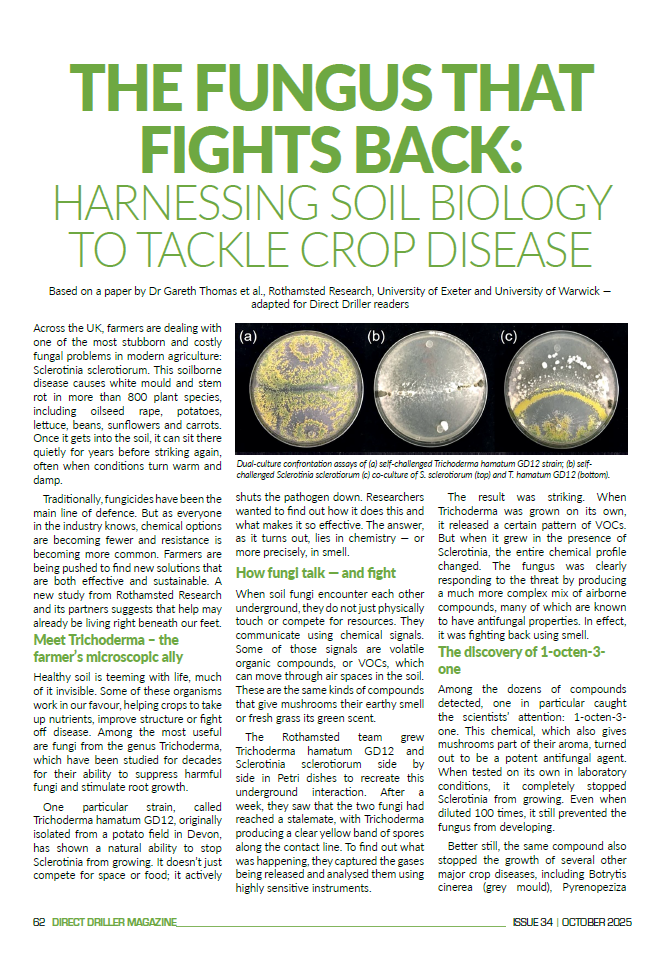
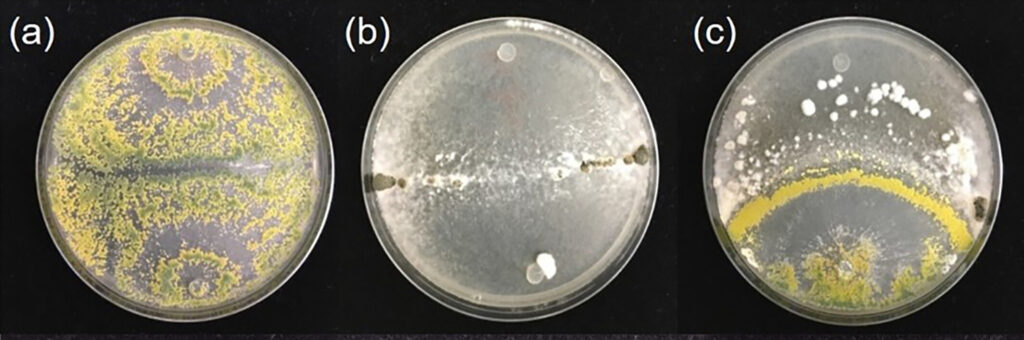
The Rothamsted team grew Trichoderma hamatum GD12 and Sclerotinia sclerotiorum side by side in Petri dishes to recreate this underground interaction. After a week, they saw that the two fungi had reached a stalemate, with Trichoderma producing a clear yellow band of spores along the contact line. To find out what was happening, they captured the gases being released and analysed them using highly sensitive instruments.
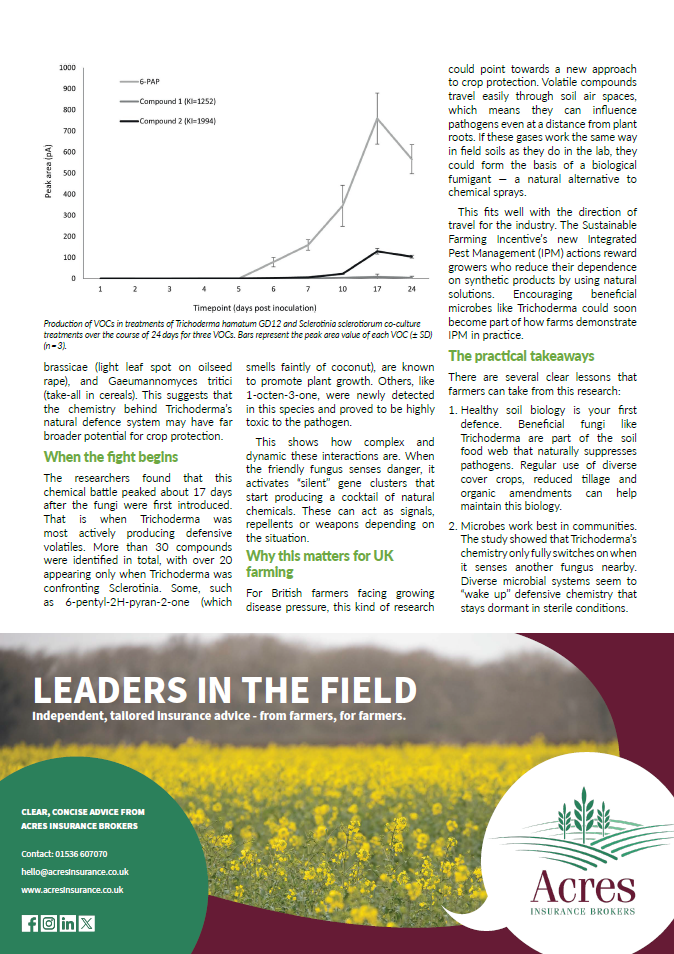
The result was striking. When Trichoderma was grown on its own, it released a certain pattern of VOCs. But when it grew in the presence of Sclerotinia, the entire chemical profile changed. The fungus was clearly responding to the threat by producing a much more complex mix of airborne compounds, many of which are known to have antifungal properties. In effect, it was fighting back using smell.
The discovery of 1-octen-3-one
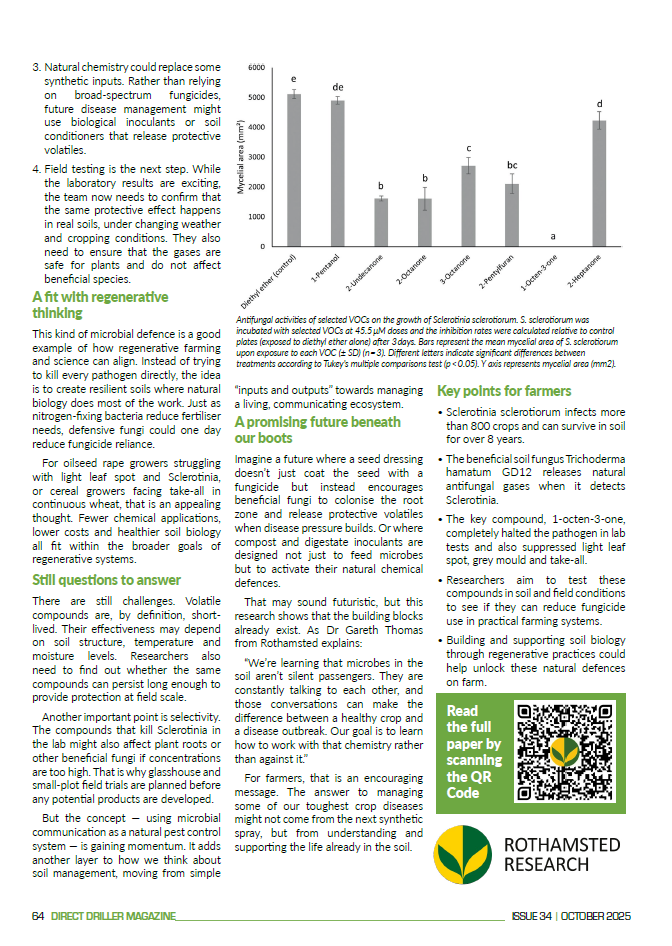
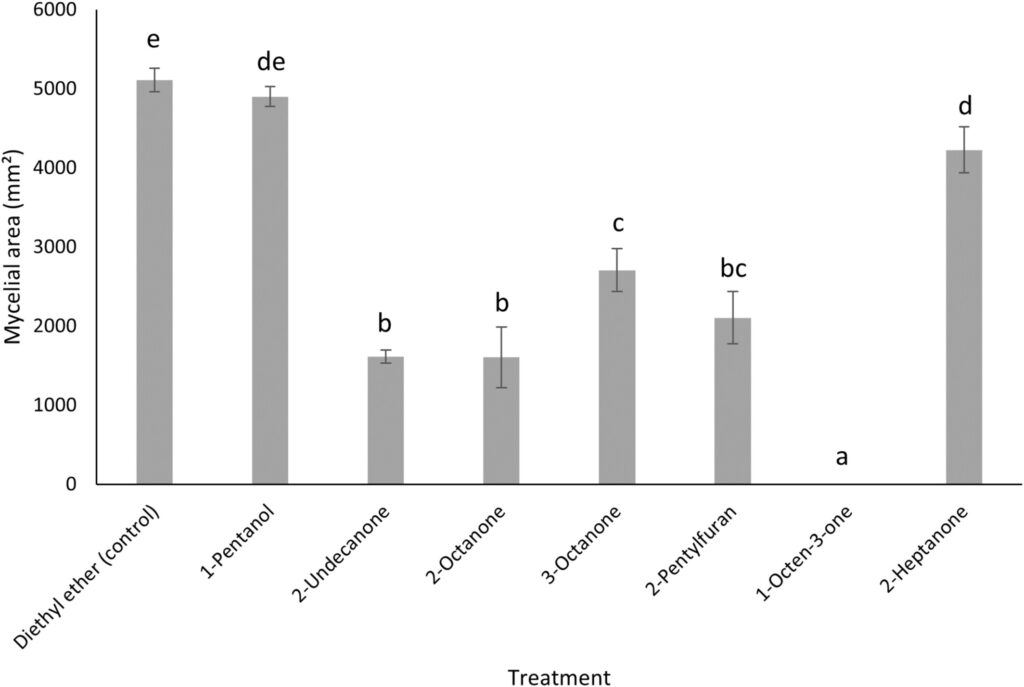
Among the dozens of compounds detected, one in particular caught the scientists’ attention: 1-octen-3-one. This chemical, which also gives mushrooms part of their aroma, turned out to be a potent antifungal agent. When tested on its own in laboratory conditions, it completely stopped Sclerotinia from growing. Even when diluted 100 times, it still prevented the fungus from developing.
Better still, the same compound also stopped the growth of several other major crop diseases, including Botrytis cinerea (grey mould), Pyrenopeziza brassicae (light leaf spot on oilseed rape), and Gaeumannomyces tritici (take-all in cereals). This suggests that the chemistry behind Trichoderma’s natural defence system may have far broader potential for crop protection.
When the fight begins
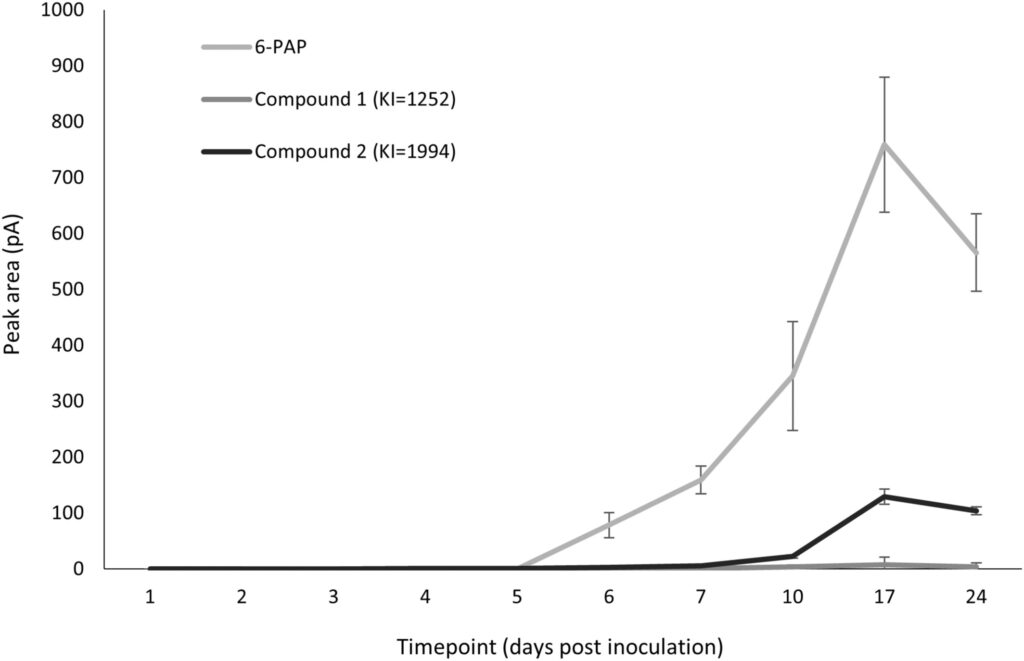
The researchers found that this chemical battle peaked about 17 days after the fungi were first introduced. That is when Trichoderma was most actively producing defensive volatiles. More than 30 compounds were identified in total, with over 20 appearing only when Trichoderma was confronting Sclerotinia. Some, such as 6-pentyl-2H-pyran-2-one (which smells faintly of coconut), are known to promote plant growth. Others, like 1-octen-3-one, were newly detected in this species and proved to be highly toxic to the pathogen.
This shows how complex and dynamic these interactions are. When the friendly fungus senses danger, it activates “silent” gene clusters that start producing a cocktail of natural chemicals. These can act as signals, repellents or weapons depending on the situation.
Why this matters for UK farming
For British farmers facing growing disease pressure, this kind of research could point towards a new approach to crop protection. Volatile compounds travel easily through soil air spaces, which means they can influence pathogens even at a distance from plant roots. If these gases work the same way in field soils as they do in the lab, they could form the basis of a biological fumigant — a natural alternative to chemical sprays.
This fits well with the direction of travel for the industry. The Sustainable Farming Incentive’s new Integrated Pest Management (IPM) actions reward growers who reduce their dependence on synthetic products by using natural solutions. Encouraging beneficial microbes like Trichoderma could soon become part of how farms demonstrate IPM in practice.
The practical takeaways
There are several clear lessons that farmers can take from this research:
- Healthy soil biology is your first defence. Beneficial fungi like Trichoderma are part of the soil food web that naturally suppresses pathogens. Regular use of diverse cover crops, reduced tillage and organic amendments can help maintain this biology.
- Microbes work best in communities. The study showed that Trichoderma’s chemistry only fully switches on when it senses another fungus nearby. Diverse microbial systems seem to “wake up” defensive chemistry that stays dormant in sterile conditions.
- Natural chemistry could replace some synthetic inputs. Rather than relying on broad-spectrum fungicides, future disease management might use biological inoculants or soil conditioners that release protective volatiles.
- Field testing is the next step. While the laboratory results are exciting, the team now needs to confirm that the same protective effect happens in real soils, under changing weather and cropping conditions. They also need to ensure that the gases are safe for plants and do not affect beneficial species.
A fit with regenerative thinking
This kind of microbial defence is a good example of how regenerative farming and science can align. Instead of trying to kill every pathogen directly, the idea is to create resilient soils where natural biology does most of the work. Just as nitrogen-fixing bacteria reduce fertiliser needs, defensive fungi could one day reduce fungicide reliance.
For oilseed rape growers struggling with light leaf spot and Sclerotinia, or cereal growers facing take-all in continuous wheat, that is an appealing thought. Fewer chemical applications, lower costs and healthier soil biology all fit within the broader goals of regenerative systems.
Still questions to answer
There are still challenges. Volatile compounds are, by definition, short-lived. Their effectiveness may depend on soil structure, temperature and moisture levels. Researchers also need to find out whether the same compounds can persist long enough to provide protection at field scale.
Another important point is selectivity. The compounds that kill Sclerotinia in the lab might also affect plant roots or other beneficial fungi if concentrations are too high. That is why glasshouse and small-plot field trials are planned before any potential products are developed.
But the concept — using microbial communication as a natural pest control system — is gaining momentum. It adds another layer to how we think about soil management, moving from simple “inputs and outputs” towards managing a living, communicating ecosystem.
A promising future beneath our boots
Imagine a future where a seed dressing doesn’t just coat the seed with a fungicide but instead encourages beneficial fungi to colonise the root zone and release protective volatiles when disease pressure builds. Or where compost and digestate inoculants are designed not just to feed microbes but to activate their natural chemical defences.
That may sound futuristic, but this research shows that the building blocks already exist. As Dr Gareth Thomas from Rothamsted explains:
“We’re learning that microbes in the soil aren’t silent passengers. They are constantly talking to each other, and those conversations can make the difference between a healthy crop and a disease outbreak. Our goal is to learn how to work with that chemistry rather than against it.”
For farmers, that is an encouraging message. The answer to managing some of our toughest crop diseases might not come from the next synthetic spray, but from understanding and supporting the life already in the soil.
Key points for farmers
- Sclerotinia sclerotiorum infects more than 800 crops and can survive in soil for over 8 years.
- The beneficial soil fungus Trichoderma hamatum GD12 releases natural antifungal gases when it detects Sclerotinia.
- The key compound, 1-octen-3-one, completely halted the pathogen in lab tests and also suppressed light leaf spot, grey mould and take-all.
- Researchers aim to test these compounds in soil and field conditions to see if they can reduce fungicide use in practical farming systems.
- Building and supporting soil biology through regenerative practices could help unlock these natural defences on farm.
Read the full paper here.