By Ben Foster, RHIZA Product Manager
Rotations are changing, and farm management systems need to change with them to help farmers manage their data effectively. According to the latest DEFRA figures on the Sustainable Farming Incentive (SFI) actions uptake, there are 32,200 active SFI agreements, taking 3.4% of England’s utilised agricultural area out of food production. That is a lot of flower-rich margins, grassy field corners and winter bird food.
Additionally, an unprecedented 3,270,000 Ha of agricultural land is signed up to the ‘Assess soil, produce a soil management plan and test soil organic matter’ (SAM1 and CSAM1) actions. This covers 38% of England’s agricultural area. Combined with the most popular action from the expanded SFI offer, which is ‘Variable rate application of nutrients’, there is a much greater emphasis on farm management systems to adapt to the increasing complexity farmers are facing.
That is why Agrii’s RHIZA team is developing two new additions to its Contour digital platform: flexible cropping and the land use mapping tool.
Flexible cropping
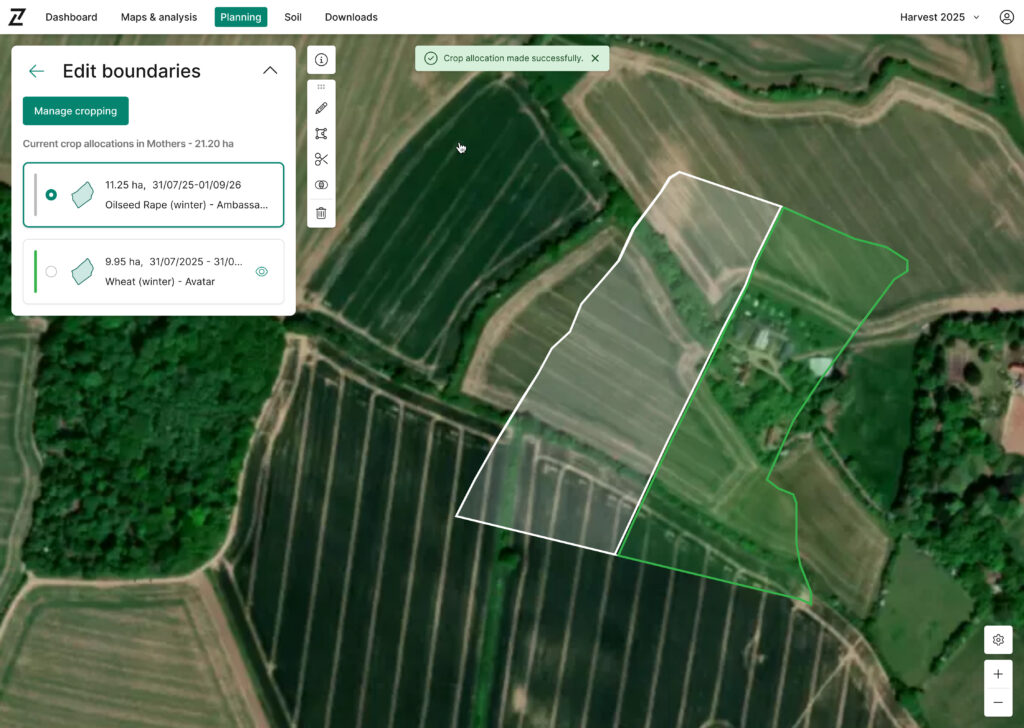
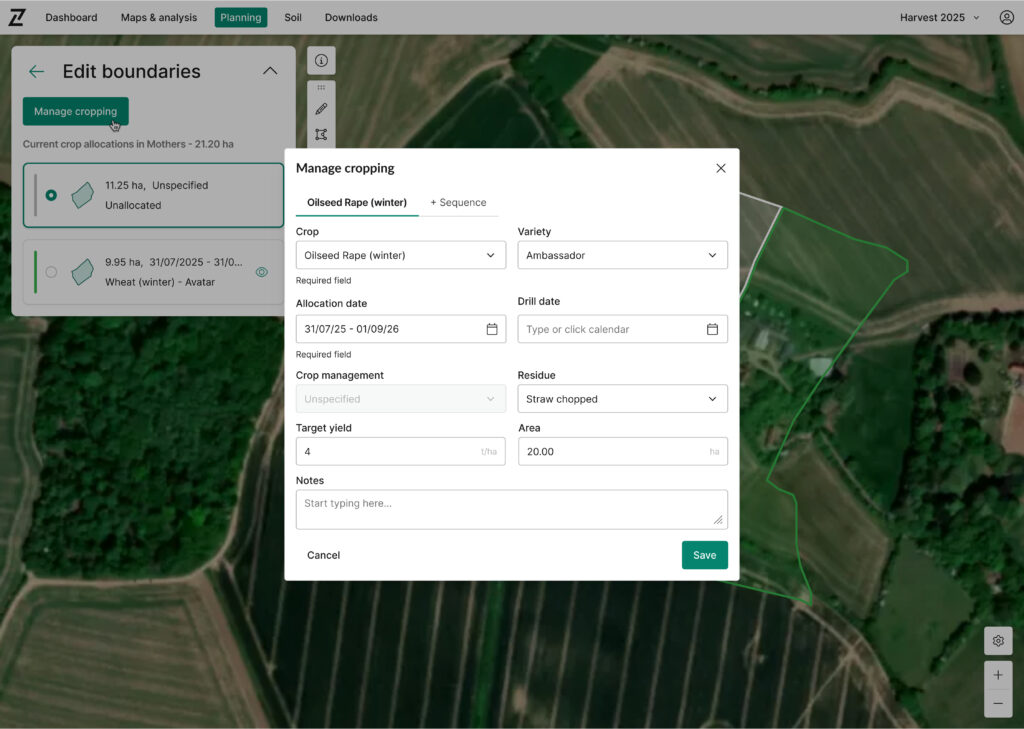
Flexible cropping has just been released. It allows users to split fields, merge areas and edit boundaries. The process of entering cropping into fields is also much quicker, and it will enable crop sequencing — for example, a cover crop into a spring cereal.
Further developments to the crop sequencing functionality will also make Contour the most usable digital system for grassland management. Farmers will be able to log each cut of silage or hay for a field and manage the nutrient requirements after each.
For SFI to deliver the maximum value for a farm’s bottom line, it needs to be as easy to manage as possible, and the Contour platform allows that. These changes will allow farmers to proactively manage the integration of SFI actions alongside their farm production and have the data all in the same space.
Flexible crop management forms one of the key pillars that support the ongoing integration project with the new TELUS Crop Management (TCM) platform. Once Contour and TCM are synchronised, changes made in either platform to fields or cropping can be passed between the two platforms, meaning no double data entries, which is a huge frustration for many farmers.
Land use mapping
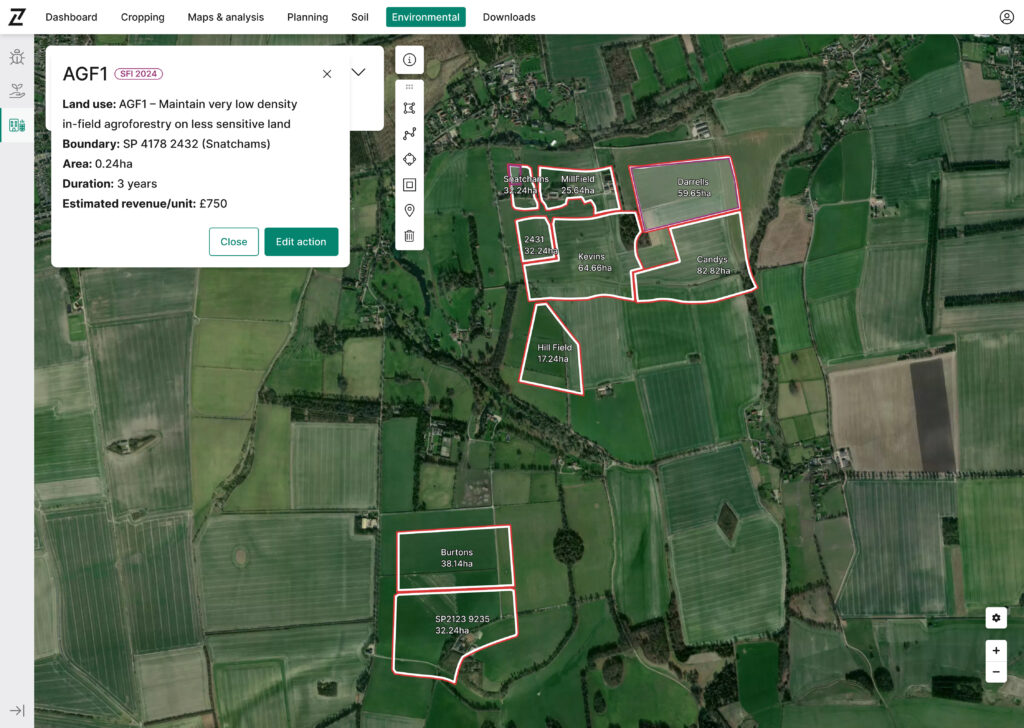
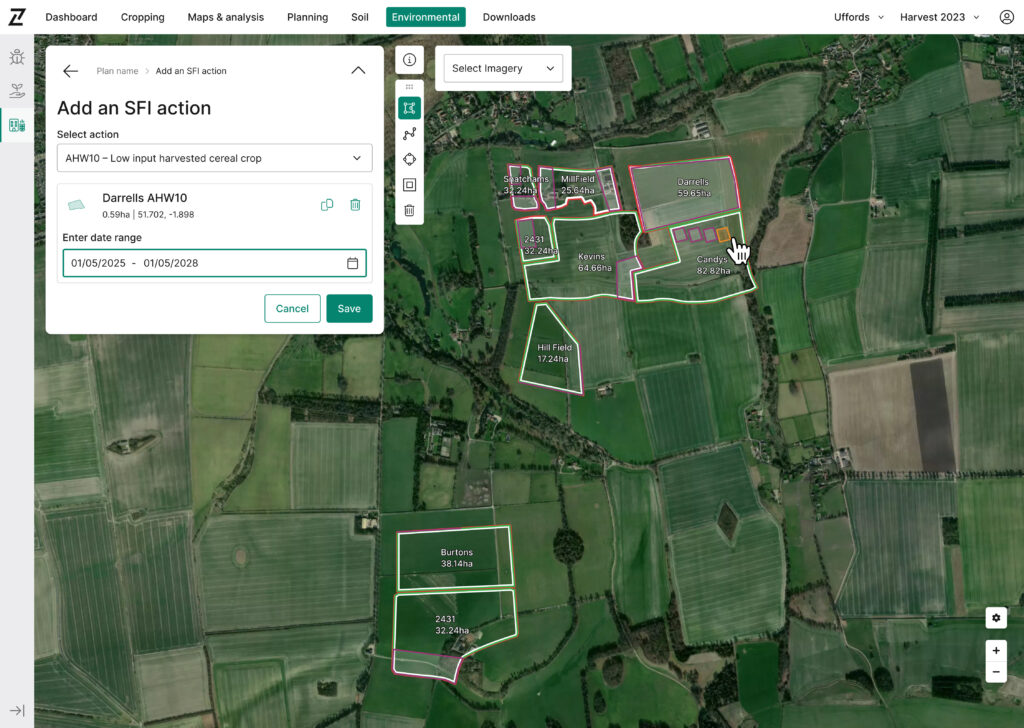
An ongoing development within Contour, the land use mapping tool can be used to manage any land on a farm or estate that is not in production. That could be hedgerows, ponds, woodland, wetlands or field corners in environmental stewardship. It is designed to go hand-in-hand with the crop management functions already in Contour, and, when launched, farmers will be able to easily manage the SFI actions involving land not in food production.
For example, the CHRW3 ‘Maintain or establish hedgerow trees’ action is worth £10 per 100m of an eligible hedgerow, which can add up to a decent amount for many farms. However, it requires detailed mapping to ensure compliance. Contour’s land use mapping tool will enable this without requiring farmers to adopt yet another digital platform.
It is aimed at not just being an SFI tool, but also for estate management. We want farmers to use it for overall land management, capital grant schemes and health and safety, such as mapping pipelines, pylons and other hazards on the farm.
Existing environmental tools
There is an environmental module already available within Contour. This allows farmers to complete an integrated pest management plan or a soil management plan, which are compliant with SFI. Alongside these tools is the Nutrient Management module, where nutrient management plans and variable-rate nutrition plans can be created.
Telus Crop Management integration with Contour
Earlier this year, TELUS Agriculture, the global telecoms business that acquired Gatekeeper and Muddy Boots, announced the development of TELUS Crop Management, which will eventually succeed its existing platforms. Ben Hatton, TELUS Agriculture sales manager, explains the move.
“We view farm management software as a specific function. It’s all about workflow: keeping farm records, traceability, compliance, assurance records, connecting with agronomy advice and tools for agronomists, and providing insight into gross margin and costs. It also needs to deliver this down to the farm, field, crop and variety level.
“Our partnership with Agrii and RHIZA is fantastic because we aren’t specialists in agronomy advice. There are numerous firms that deliver exceptional levels of insight and advice, such as RHIZA, but there’s also a need to do the audit trail, compliance and cost analysis, which is what we take great pleasure in doing.”
“It’s about making better use of the tools available. We want them to be more connected and easier to use, while still doing what they should be doing, which is farm management.”