A low input, grass-based approach to sheep and dairy farming is producing delicious food and benefitting the soil and wildlife on two Pasture for Life farms. Former Pasture for Life director Sara Gregson paid them a visit
Sheep farming in Kent
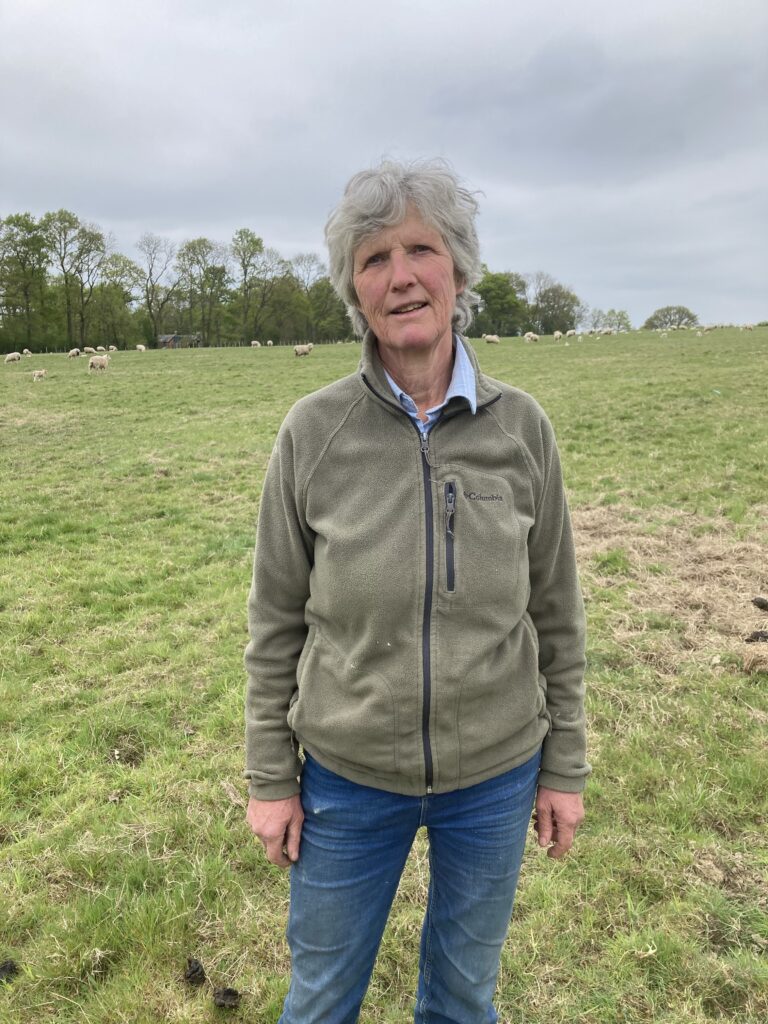
Fidelity Weston has run her family’s 82-hectare mixed farm near Sevenoaks since the early 1980s. As new entrants then to farming, they took on a derelict holding, which had no fences or gates.
The advice she was given was to buy 450 Mule and Masham ewes, lamb them and sell them as store lambs for other farmers to finish.
In 1998 she gave another local farmer 12 hectares of the land for set aside and stopped applying fertiliser or spraying against weeds in these fields.
“We were amazed when leaving these set aside fields alone, much of the original wildlife bounced back,” says Fidelity. “After that, we converted to organic in the year 2000.”
To start, four traditional Hereford cattle were bought in, along with a couple of sows and pastured chickens producing eggs and meat. Over the years the herd has grown to 30 cows and the sheep breed changed to Lleyn.
Fidelity then became involved with Pasture for Life, which champions the rearing and finishing of cattle and sheep solely on pasture.
Flock changes
Fidelity found it relatively easy to produce beef cattle just on grazed grass in the summer and supplemented with high quality, species-rich hay in winter. Changing the sheep enterprise did not prove so easy.
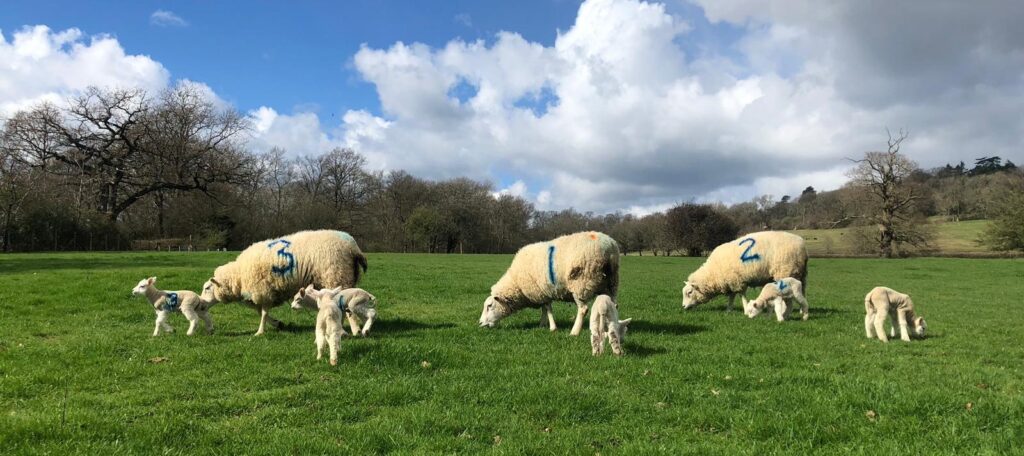
“First, we had to change the lambing date,” she says. “We used to lamb 180 ewes indoors in two batches in February and mid-March, outside, if possible, but weather dependent. Now we lamb at the start of April so we can be sure that the grass is growing well for the ewes to produce milk.
“Next, and the hardest thing to do, was to stop feeding ewes that had scanned with twins or triplets in the six weeks before lambing. The Pasture for Life standards allowed us to transition to zero concentrates over three years – but lambing percentage did drop from 1.8 down to 1.4.
“However, our hardy outdoor ewes are very good mothers and our post-birth lamb losses are extremely low, well below 5%, compared to the industry average of 20%.
“It works out that the total number of live lambs for both systems is almost equal. But in our system now, this comes with no cost of feed or labour to feed them and less cost of dead lamb disposal.”

Grazing
The ewes and lambs move between the fields based on grass growth and animal needs. Most of the fields are between two and four hectares and sometimes these are split into two by an electric fence. The fields are rested for as long as possible before being grazed again and where possible, rotated with the cattle.
The lambs are finished off grass and any not reaching their target liveweight by the end of the autumn are taken through the winter on neighbouring farmers’ fields and sold the following year as hogget at 20 to 25kg deadweight.
Fifty lambs are sold from the farm each year and the remainder are sold for good prices as lamb or hogget through Kent-based Abraham’s Meats.
“The move to 100% pasture-fed lamb has had its ups and downs,” Fidelity admits.
“But the system is working now and we will not go back to feeding the sheep. I think it comes down to getting the right breed of ewe to cope with the conditions and making the most of lower lambing percentages.
“I feel we are there now and reaping the rewards, producing high-quality meat at a very low cost, whilst also boosting soil health, biodiversity and wildlife across the farm.”
Dairying in Norfolk
Stuart Mayhew and his family have farmed in Woodton, 12 miles southeast of Norwich since the mid-1940s — mainly arable and pig farming on 204 hectares (504 acres) across two farms. However, increasing health problems with the pigs led to a complete re-think of enterprises in an attempt to escape the never-ending boom-and-bust pig cycle.
“We were on a family holiday in Scotland in 2016 when I fell in love with the idea of having Jersey cows, producing the highest possible quality of milk and selling this direct to consumers,” recalls Stuart’s wife Rebecca. “We came back home already having bought one in-calf cow and three heifers.”
The Mayhews were complete dairy novices and started out with a portable mini milker and learning how to milk from YouTube. Moving the dairy to the current site at Old Hall Farm in 2020, they refurbished some of the farm buildings. The herd now has 55 cows, predominantly Jerseys.
“Our core objective has always been to produce high quality, nutrient-dense food at a sustainable price.
“The second important element is that the animals have an almost 100% grass and pasture diet, because this is what ruminants are designed to eat and is what produces the most nutrient-rich milk. We do not believe in importing protein from around the world or feeding human-grade ingredients to ruminants.
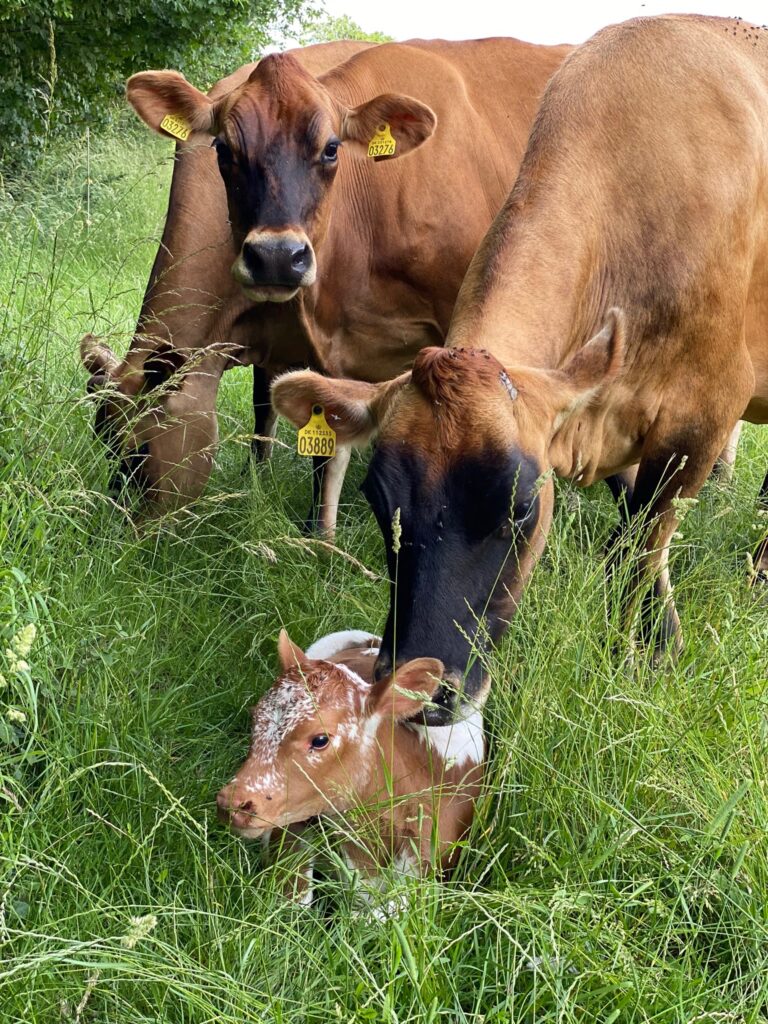
“Finally, and most importantly, is that the calves are kept at foot with their mothers for the first six to nine months of their lives. This is non-negotiable for me. The herd lives together, whatever stage of lactation, even the dry cows.”
Grazing pasture
Old Hall Farm is on heavy clay ground and continuous arable crops were grown for many years, which degraded the soil. When the cows arrived, there was no water and no stockproof fencing. In 2019 the fields were sown to herbal leys with seven grass species, several legumes, including clovers, lucerne and sainfoin, and other herbs under a Countryside Stewardship Scheme. The fields are now in the second year of a second five-year scheme.
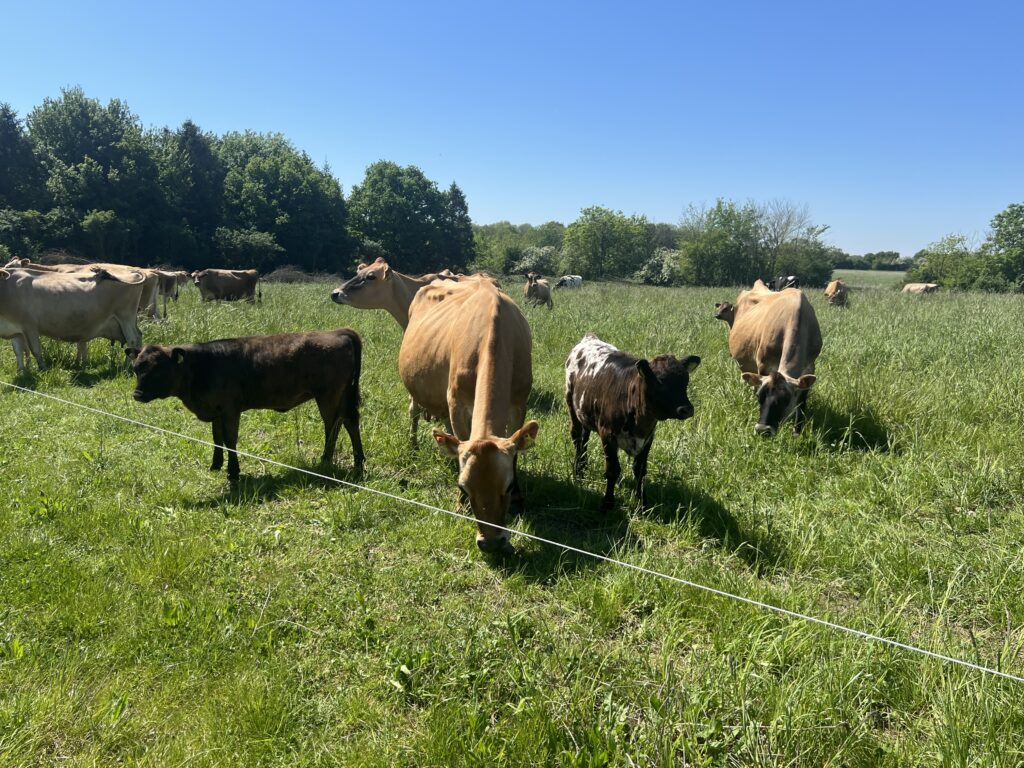
Each field is divided into small day paddocks with electric fencing and grazed, then rested for as long as weather conditions allow from 30 when it rains, to more than 70 in drought. No artificial fertiliser is applied.
“We use adaptive multi-paddock (AMP or mob) grazing as this gives us flexibility to ‘adapt’ to the current soil, grass and weather conditions,” Rebecca explains.
“We take a holistic approach to managing our land and our animals and it seems to be working: our soil is improving – organic matter has gone up from 2% to 6% in just six years. And there is a noticeable increase in biodiversity including birds, invertebrates, dung beetles and other insects.
“We have been members of Pasture for Life for many years and I work as a regional facilitator for them. We are working towards Pasture for Life certification for all our beef and lamb and the dairy will follow in due course.”
Rebecca estimates the calves drink around seven to ten litres of milk each day, leaving another ten litres to be taken into the dairy to be bottled or made into a wide variety of added value raw milk products, including milkshakes and ice-cream. People can buy online or come to the shop to purchase.
“The long-term plan is to farm without taking any subsidy, so we are not beholden to people who do not understand what we are trying to do. Our cows are at the very heart of our business, and in return for producing delicious, high-quality milk, they have long, healthy, well-lived lives.”