How variable rate nitrogen applications can help offset upcoming fertiliser taxation

The new carbon border adjustment mechanism (CBAM) tax, which is expected to add £50-£75 per tonne to nitrogen prices, is less than a year away. But it is likely to be felt this year, since the EU implemented its CBAM tax, which accounts for most of the UK’s nitrogen fertiliser imports.
“We could see £40/t added to fertiliser prices this spring because of CBAM’s implementation in the EU, which isn’t ideal considering the current grain prices and that nitrogen is already at a high price,” says Ben Foster, product manager for RHIZA.
He believes adopting variable rate nitrogen can readily generate the savings needed to offset any rise, and data from last year back this up. “Variable rate nitrogen has been available for a long time. Some farmers have tried it and decided it wasn’t for them, while others have the machinery capable of applying variable rate but have never tried it.
“There are now new tools available to farmers that make variable rate nitrogen cheaper, easier and more accurate. I’d encourage all farmers with the capability of variable rate spreading to look at the technology this season, at least in a trial area, to examine its results on their bottom line,” urges Ben.
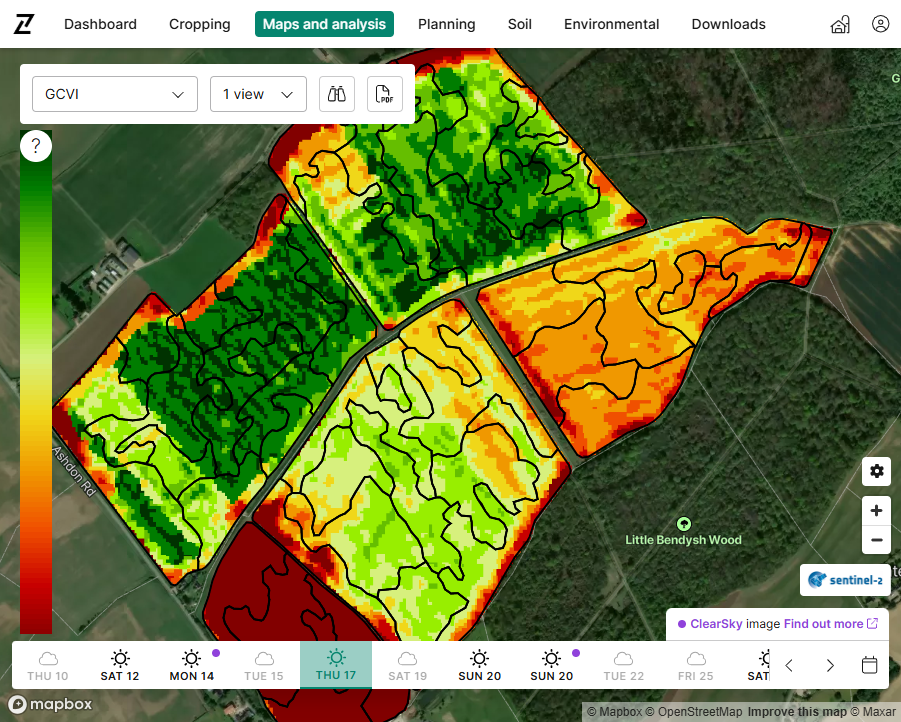
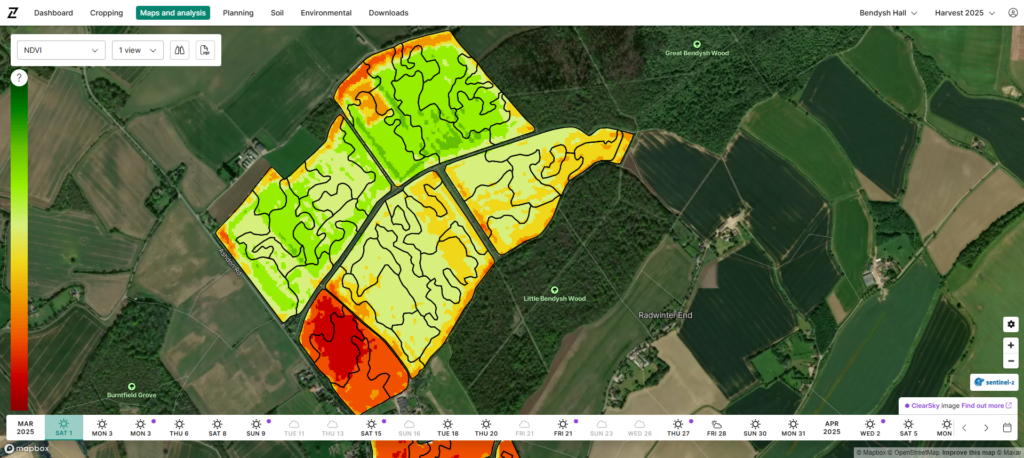
Examining data from combine yield mapping is a great starting point for justifying the need to customise nitrogen rates across a field, according to Ben. An increasing number of farmers now have access to yield maps, especially as older combines with this capability become available on the second-hand market.
“I’d recommend looking at the variation in satellite imagery from a platform like Contour in March or April, and overlaying it with historical yield maps. In my experience, the variation in spring satellite images will likely correlate very closely with yield data from the summer. This should give farmers the confidence to tweak late spring nitrogen applications to match field potential,” says Ben.
Peter Cartwright, farms manager at Revesby Estate in Lincolnshire, made the move to variable rate nitrogen on his wheat crops last year after seeing its benefits during an Agrii digital technology farm trial. They had used variable rate nitrogen some years before, but gave it up because they lacked confidence in how to adjust the rates.
“In oilseed rape, it’s straightforward because it’s linked to the green area index,” says Peter. “With wheat, we didn’t know whether to push a backwards crop or hold back on it. We are still asking similar questions, but we have a better grasp of it with the information available to us.
“We have signed up for the variable rate SFI action and we are using it across the whole estate now.”
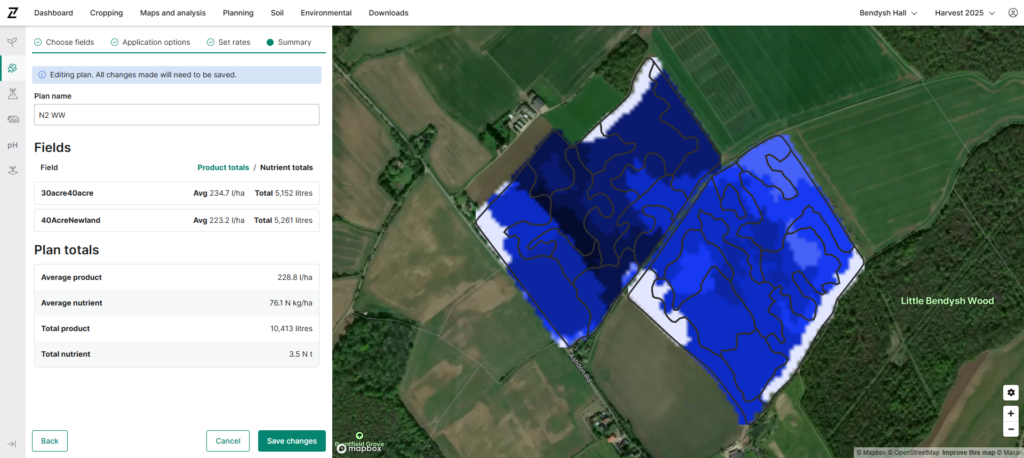
The new CBAM tax, on top of high prices relative to grain values, has flipped the nitrogen equation, thinks Peter. Not long ago, the benefits of adding more nitrogen to maximise yields outweighed the risks of potentially spending too much. The financial cost for applying too much is far higher now, he adds.
Last season, they did not see a reduction in nitrogen use overall, but Peter says they used it more appropriately, pushing the more promising field areas and holding back on others. Looking ahead to this spring, with grain prices lower than a year before and nitrogen higher, he is looking for savings. “The economic viability of that last 10% of yield has changed,” explains Peter.
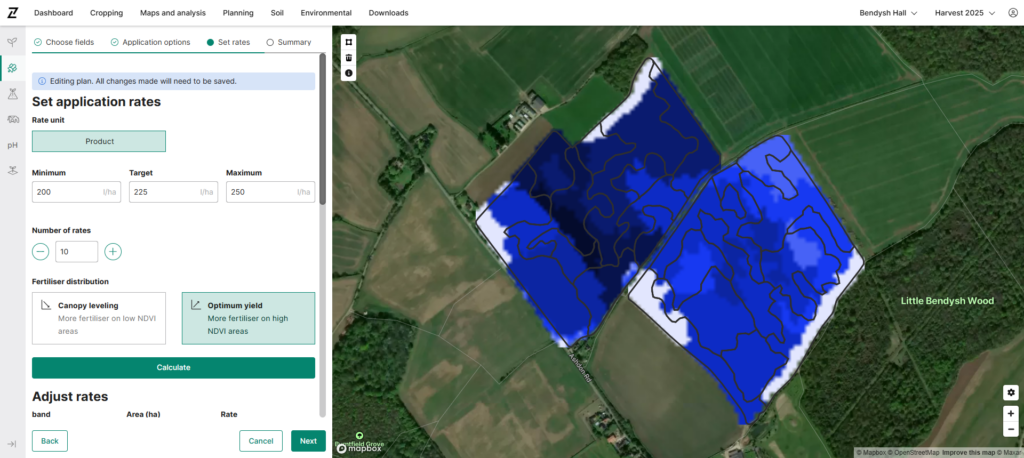
The functionality for farmers to make this choice is available in Contour, says Ben. When choosing variable rate plans, farmers can choose between optimum yield and canopy levelling. Selecting optimum yield means the tool will favour better areas of the field with more nitrogen to maximise the yield potential there. Conversely, canopy levelling will increase nitrogen levels in areas with lower vegetative indices.
“There is no definitive answer to this,” says Ben. “It is dependent on the season and the farmer’s knowledge of the field. We are trying to build our understanding of this through the digital technology trials at Revesby Estate. Last season, they showed promising results from withholding nitrogen on the sandier areas of the trial field due to the dry weather.
With the increasing number of long, dry spells in recent springs, understanding variation in soil texture and underlying geology can be just as important for nitrogen applications, believes Ben. Soils with higher clay content or over chalk often show much better drought tolerance and therefore better yields, which supports higher nitrogen applications in drier seasons.
If farmers want to try variable-rate nitrogen this season, Ben says the Contour tool charges only for the areas where it is used.
“If you want to use it, we will unlock the tool for your whole farm. RHIZA recognises not every field will require variable rate nitrogen and as such offers a pay-as-you-go approach to planning, meaning whilst the tool is accessible across the whole farm, you’ll only be charged for the hectares that the system produces a plan for,” he concludes.