Building soil health is one of the best ways to improve the resilience, profitability and sustainability of farming systems.
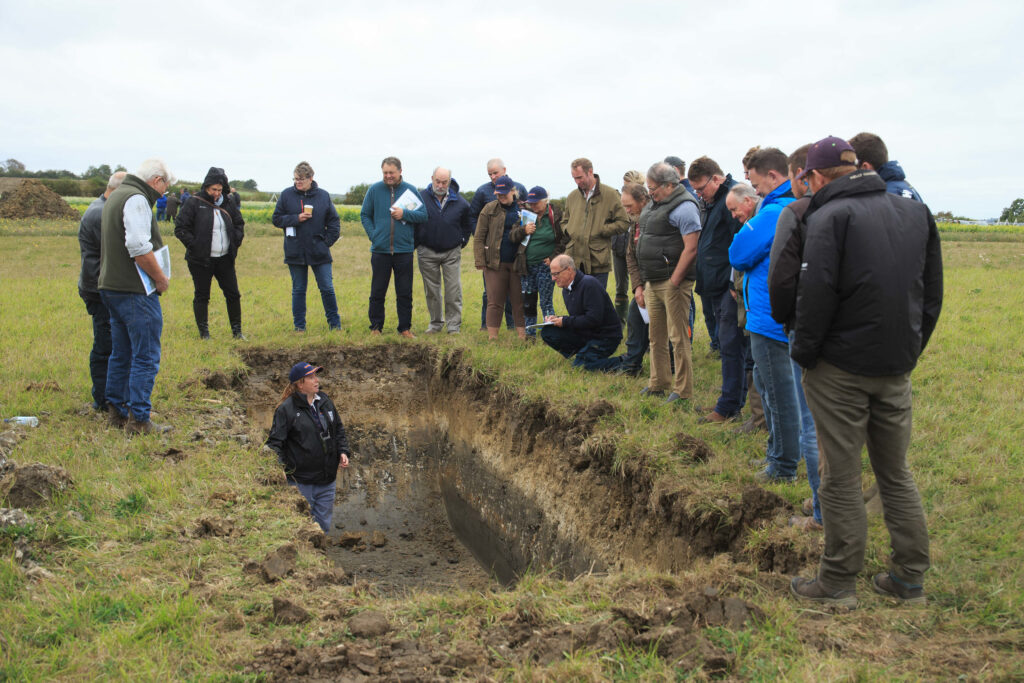
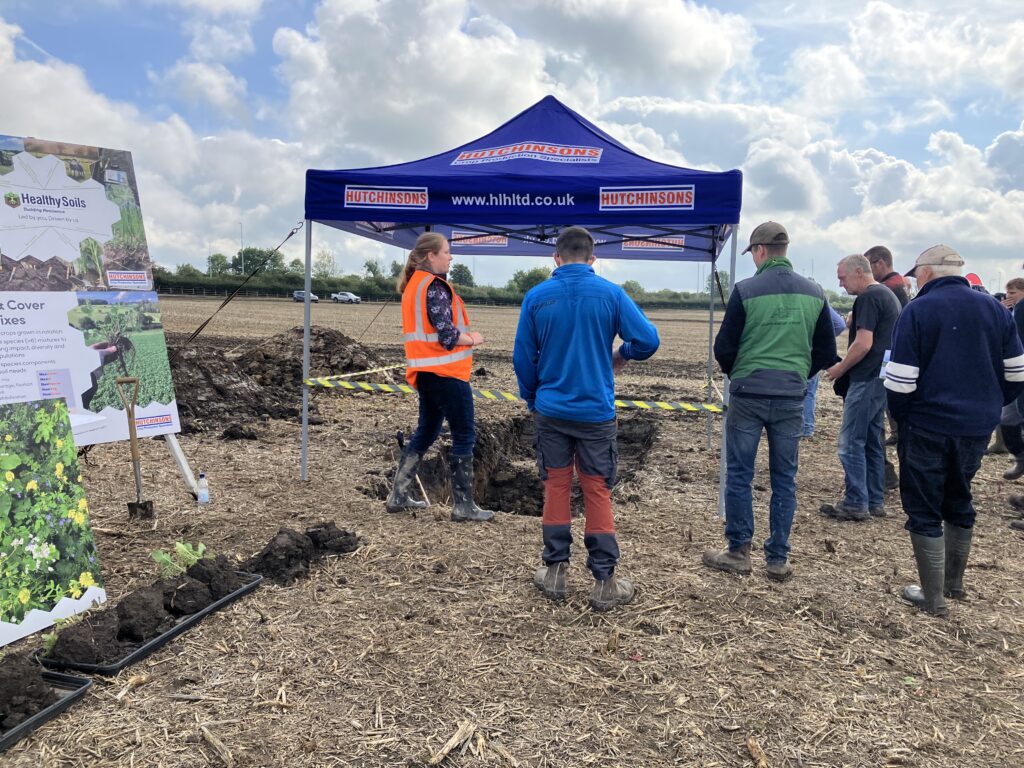
The Soil & Water Health Day, organised in collaboration by Hutchinsons, the Ribble Rivers Trust and Mersey Rivers Trust, explored the practical steps farmers can take to improve soil health and protect watercourses, featuring in-field demonstrations and expert presentations.
Among the speakers was Hutchinsons head of soils, Jade Prince, who highlighted analysis of one field at the host farm, F A Ollerton & Sons near Wigan, which showed the value of just five key nutrients (nitrogen, phosphorus, potassium, magnesium and sulphur) in the top 15cm of soil alone, was worth the equivalent of £13,000/ha.
“That field, which was a silty loam over clay subsoil, wasn’t particularly unusual or high in nutrients, so it illustrates just some of the value that’s in our soils. Protecting that by ensuring nutrients are retained, not lost to the environment, is a win-win situation for farmers and water quality.”
Cover crop benefits
Maintaining living roots in the soil throughout the year was one of the best ways to protect soils and avoid leaching of key nutrients, such as nitrogen and phosphorus, over the wettest winter months, Ms Prince continued.
That could be done with either a commercial crop, or an overwinter multi-species cover, funding for which was available through some water companies, as well as existing Sustainable Farming Incentive (SFI) agreements.
Matt Powell, Hutchinsons northern environmental services specialist encouraged any farmers growing cover crops to complete a biomass evaluation to better understand exactly what nutrients had been captured within it, and help plan nutrition programmes for the following crop.
Assessment of one multi-species cover crop showed it contained around £80/ha worth of nutrients alone, before accounting for the value of any other benefits to soil structure, organic matter, and reduced leaching losses. Estimating what proportion of those captured nutrients would be available to the following crop depended on individual situations and termination method, whether that be with glyphosate or grazing, he noted.
“For example, if cover is put through an animal, we can estimate about 30% of nitrogen is likely to be removed within the animal, and around 30% of the nitrogen returned through faeces or urine is typically lost through volatilisation. From this, we can predict how much nitrogen might actually be available to the following crop after grazing, compared with terminating using glyphosate.”
Interestingly, although total nutrient return from glyphosate termination was generally higher over three years, those crop residues would take time to break down and release nutrients, whereas for year one, nutrients were more plant-available when material had first passed through an animal, he noted.
“The key is to think carefully about what you’re doing and your main objectives, then decide what management practices can best achieve those.”
Other tips to help improve soil health and protect water include:
- Dig holes to assess soils and identify any potential compaction or other structural issues that may limit infiltration, drainage, and water holding capacity, potentially increasing runoff risk – a simple slake test can be used to assess aggregate stability
- Consider a more detailed analysis of soil chemistry, physics and biology, such as a Healthy Soils Gold test, to make more informed management decisions – all three are interlinked and should not be considered in isolation
- Review cultivations and only do what is required – moving less soil helps build organic matter, natural structuring, and aggregate stability. It also helps reduce machinery overhead costs
- If soils are hard to work, consider potential causes e.g. poor drainage, or a high calcium:magnesium ratio (high magnesium content can make soils dense and sticky). Applying gypsum can help improve workability and water infiltration in high mag soils
- Avoid leaving ground bare by growing catch and cover crops where possible to reduce the risk of nutrient leaching and soil erosion. Think carefully about what you want a cover crop to do and how best to achieve that
- Explore potential funding options for adopting measures that improve soils and protect water (e.g. from water companies, SFI).
Work together
Farm advisors from the Ribble Rivers Trust and Mersey Rivers Trust encouraged farmers to work together to help tackle the farming-related challenges around water quality, by forming cluster groups that could work with experts and share best practice.
Covering an area of 752 square miles, the Ribble and Douglas catchment contains more than 3,479 miles (5,600 km) of watercourses and a diverse range of habitats, so a collaborative approach was essential, speakers said.
Heather Whalley and Beth Wood from the Ribble Rivers Trust explained how the Trust works with farmers to not only benefit the environment, but fundamentally help farm businesses. With a diverse range of farm businesses across the Ribble and Douglas catchments, facing many challenges, Trust farm advisors offer free and confidential advice about farmyard infrastructure, soil and nutrient management, watercourse fencing, hedgerow restoration, riparian woodlands, and more. As well as identifying opportunities, RRT farm advisors would also look for funding to deliver these interventions, they said.
“I can’t wait to work with Douglas farmers, and I am keen to visit as many farms as possible to work with them and help secure funding for their business,” said RRT farm advisor, Beth Wood. “So please get in touch for a farm report and also join our Douglas Farm group.”
The Mersey Rivers Trust’s Paul Moseley and Ryan Teare presented on two ongoing projects; Water Net Gain, and the Lowland Agricultural Peat Pilot, being delivered across the Alt and Crossens catchments.
The Water Net Gain project is investigating how on-land water storage can enhance both agricultural resilience and river health. As part of this proposed scheme, currently at the farm-survey stage, farmers and landowners may receive payments for installing new ponds, refurbishing existing infrastructure, and managing these features on their land.
The Lowland Agricultural Peat Pilot focuses on making unproductive peat viable again by exploring “wetter farming” options across the Alt–Crossens peat deposits. This involves monitoring peat conditions and conducting paludiculture (farming on wet peatlands) trials to assess sustainable, profitable land-use alternatives.