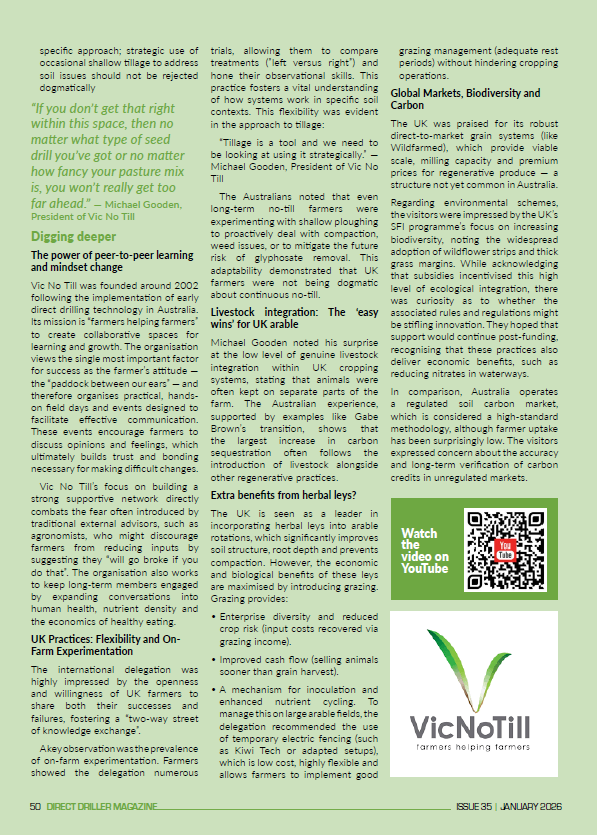
Another two examples of ‘What you might have missed at Groundswell’ from Mike Abram’s Groundswell Sessions series on his Regenerative Farmer Substack newsletter.
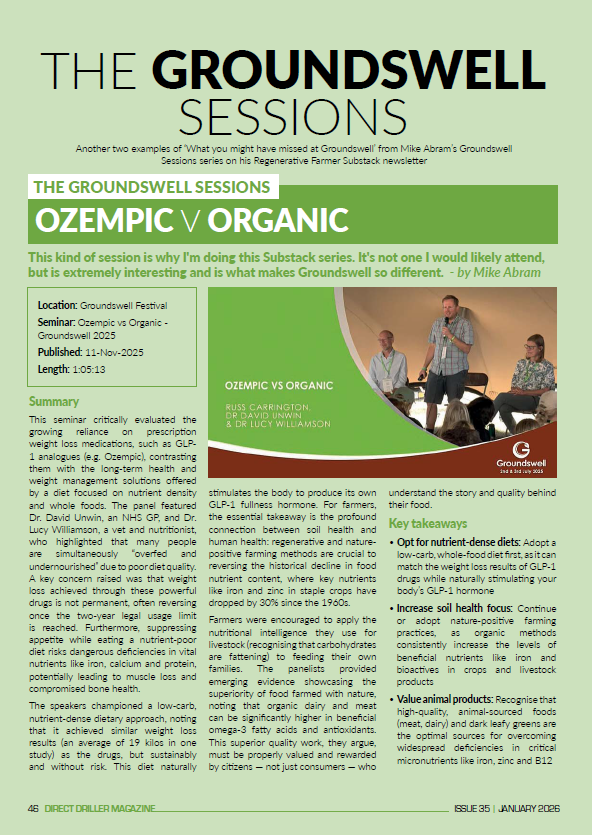
The Groundswell Sessions: Ozempic v Organic
This kind of session is why I’m doing this Substack series. It’s not one I would likely attend, but is extremely interesting and is what makes Groundswell so different.
Location: Groundswell Festival
Seminar: Ozempic vs Organic – Groundswell 2025
Published: 11-Nov-2025
Length: 1:05:13
Summary
This seminar critically evaluated the growing reliance on prescription weight loss medications, such as GLP-1 analogues (e.g., Ozempic), contrasting them with the long-term health and weight management solutions offered by a diet focused on nutrient density and whole foods. The panel featured Dr. David Unwin, an NHS GP, and Dr. Lucy Williamson, a vet and nutritionist, who highlighted that many people are simultaneously “overfed and undernourished” due to poor diet quality. A key concern raised was that weight loss achieved through these powerful drugs is not permanent, often reversing once the two-year legal usage limit is reached. Furthermore, suppressing appetite while eating a nutrient-poor diet risks dangerous deficiencies in vital nutrients like iron, calcium, and protein, potentially leading to muscle loss and compromised bone health.
The speakers championed a low-carb, nutrient-dense dietary approach, noting that it achieved similar weight loss results (an average of 19 kilos in one study) as the drugs, but sustainably and without risk. This diet naturally stimulates the body to produce its own GLP-1 fullness hormone. For farmers, the essential takeaway is the profound connection between soil health and human health: regenerative and nature-positive farming methods are crucial to reversing the historical decline in food nutrient content, where key nutrients like iron and zinc in staple crops have dropped by 30% since the 1960s.
Farmers were encouraged to apply the nutritional intelligence they use for livestock (recognising that carbohydrates are fattening) to feeding their own families. The panelists provided emerging evidence showcasing the superiority of food farmed with nature, noting that organic dairy and meat can be significantly higher in beneficial omega-3 fatty acids and antioxidants. This superior quality work, they argue, must be properly valued and rewarded by citizens—not just consumers—who understand the story and quality behind their food.
Key takeaways
• Opt for Nutrient-Dense Diets: Adopt a low-carb, whole-food diet first, as it can match the weight loss results of GLP-1 drugs while naturally stimulating your body’s GLP-1 hormone.
• Increase Soil Health Focus: Continue or adopt nature-positive farming practices, as organic methods consistently increase the levels of beneficial nutrients like iron and bioactives in crops and livestock products.
• Value Animal Products: Recognise that high-quality, animal-sourced foods (meat, dairy) and dark leafy greens are the optimal sources for overcoming widespread deficiencies in critical micronutrients like iron, zinc, and B12.
• Apply Farming Logic to Family: Use the same nutritional knowledge applied to livestock management—understanding that refined carbohydrates are fattening—to make informed, healthy choices for your own family.
• Support Policy Change: Advocate for food policies that restrict junk food advertising to children and subsidise whole, unprocessed foods to improve societal health environments.
Key quote
“My patients eat about a third less food than the general public. They need less food because they’re getting nutrient density.” — Dr. David Unwin, NHS GP
Digging deeper
The Dangers of GLP-1 Dependence
The discussion highlighted that GLP-1 analogues, derived historically from the long-acting venom of the Gila monster lizard, are powerful drugs that mimic the body’s natural fullness hormone. While effective for temporary weight loss, they are only legally licensed for two years, after which weight rapidly returns. A major ethical concern is the casual way people are accessing these injections via online pharmacies without medical supervision, meaning they lack informed consent regarding potential serious side effects, which have been associated with 82 deaths reported in the British Medical Journal. When people use these appetite suppressants while eating a poor diet, they face intensified nutritional deficiency, risking muscle loss (as the body melts its own muscles for protein) and depleted calcium stores, which can weaken bones.
“You’re not losing weight permanently. It’s only while you’re on the medication.” — Dr. David Unwin, NHS GP
Nutrient Density Crisis and the Regenerative Doctor
The seminar established that the low nutrient density of modern food makes it “just about impossible” for older people to meet requirements for certain minerals like magnesium due to current growing methods. This is demonstrated by studies showing a 30% drop in iron and zinc levels in rice and wheat since the 1960s. Dr. Unwin advocates for a “regenerative doctor” approach, working with human physiology by prescribing a low-carb, nutrient-dense diet. This lifestyle change led to significant results for patients, including one case where a patient lost 32 years of weight in one year after learning what spiked her blood sugar, despite five years of failed GLP-1 injections. In a formal study, the low-carb diet group lost an average of 19 kilos over a year, matching the performance of GLP-1 drugs.
“My patients eat about a third less food than the general public. They need less food because they’re getting nutrient density.” — Dr. David Unwin, NHS GP
The “Golden Thread” Connecting Soil and Health
Dr. Lucy Williamson emphasised that microbes form the “golden thread” linking the health of the soil, grazing animals, and humans. A diverse, healthy gut microbiome is crucial for weight control, as it produces the “building blocks” for the natural GLP-1 hormone. Research on food quality confirms that ultra-processed food, even when fortified with nutrients, upsets human biology and leads to greater weight gain compared to whole, wholesome food. Certified organic beef and lamb, compared to non-organic or grain-fed varieties, can be up to 300 times higher in vital anti-inflammatory omega-3 fatty acids. Furthermore, the science on dairy is changing: whole dairy fats are now understood to be protective against heart health issues and Type 2 diabetes. The speakers stressed that the public should shift from being passive “consumers” to active “citizens” who value the quality and origin of the food they buy.
Original link here
https://www.youtube.com/watch?v=aswLic–B-I
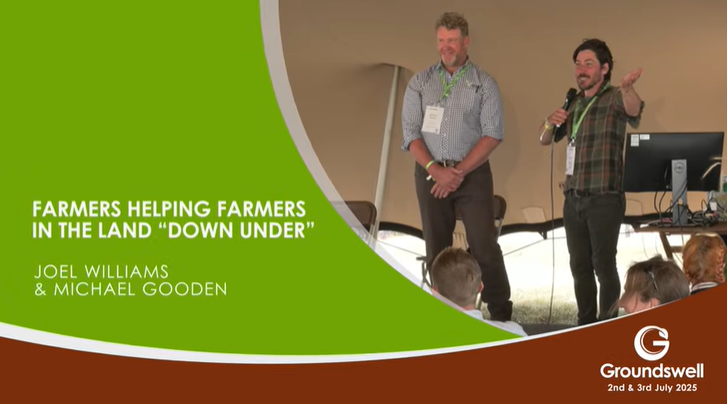
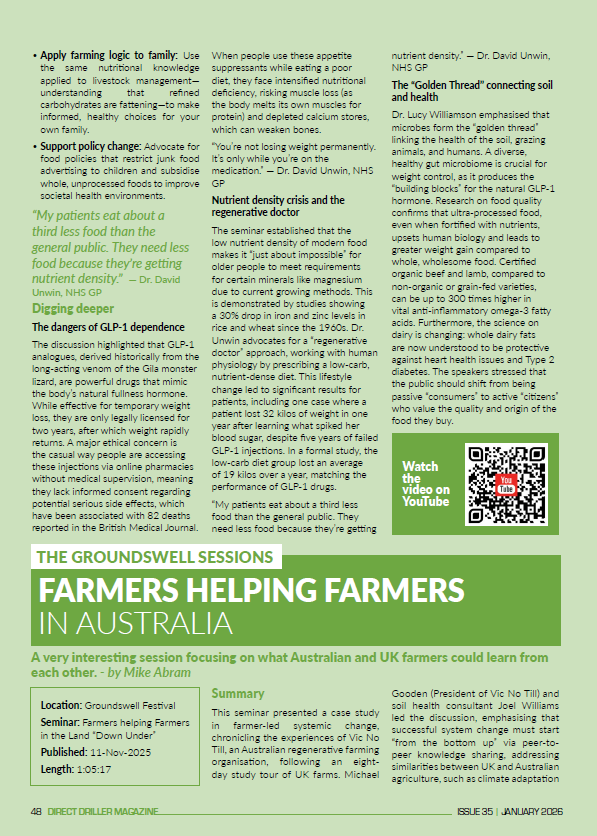
The Groundswell Sessions: Farmers helping farmers in Australia
A very interesting session focusing on what Australian and UK farmers could learn from each other.
Location: Groundswell Festival
Seminar: Farmers helping Farmers in the Land “Down Under”
Published: 11-Nov-2025
Length: 1:05:17
Summary
This seminar presented a case study in farmer-led systemic change, chronicling the experiences of Vic No Till, an Australian regenerative farming organisation, following an eight-day study tour of UK farms. Michael Gooden (President of Vic No Till) and soil health consultant Joel Williams led the discussion, emphasising that successful system change must start “from the bottom up” via peer-to-peer knowledge sharing, addressing similarities between UK and Australian agriculture, such as climate adaptation challenges and the ongoing cost-price squeeze.
A core finding for farmers was the necessity of a fundamental mindset shift, referred to as “the paddock between our ears,” which must precede investment in new technologies like disc drills. The delegation praised UK farmers for their high degree of on-farm experimentation and non-dogmatic adherence to principles; they observed long-term no-till practitioners strategically using shallow tillage to manage specific issues like compaction or potential future weed pressures, treating tillage as a tool.
The Australian team identified significant opportunities for UK farmers, particularly in increasing genuine livestock integration into arable rotations. While impressed by the widespread adoption of perennial fertility lays and crop variety blends (areas where the UK is seen as leading), the visitors stressed that maximising the economic and soil health benefits of these lays requires effective grazing management, citing evidence that the largest ‘kick-up’ in carbon sequestration often occurs only when animals are introduced.
Key takeaways
• Focus internal resources on the mindset shift (”the paddock between our ears”) before making major machinery investments.
• Integrate livestock into arable rotations to generate early cash flow and recover input costs, thereby mitigating crop risk.
• Utilise flexible, low-cost temporary electric fencing to implement holistic grazing management principles, ensuring adequate rest periods for plants.
• Establish peer-to-peer networks focused on building trust, encouraging open discussion of failures, and sharing economic benchmarks (e.g., machinery overhead costs).
• Maintain a flexible, context-specific approach; strategic use of occasional shallow tillage to address soil issues should not be rejected dogmatically.
Key quote
“If you don’t get that right within this space, then no matter what type of seed drill you’ve got or no matter how fancy your pasture mix is, you won’t really get too far ahead.” — Michael Gooden, President of Vic No Till
Digging deeper
The Power of Peer-to-Peer Learning and Mindset Change
Vic No Till was founded around 2002 following the implementation of early direct drilling technology in Australia. Its mission is “farmers helping farmers” to create collaborative spaces for learning and growth. The organisation views the single most important factor for success as the farmer’s attitude—the “paddock between our ears”—and therefore organises practical, hands-on field days and events designed to facilitate effective communication. These events encourage farmers to discuss opinions and feelings, which ultimately builds trust and bonding necessary for making difficult changes.
Vic No Till’s focus on building a strong supportive network directly combats the fear often introduced by traditional external advisors, such as agronomists, who might discourage farmers from reducing inputs by suggesting they “will go broke if you do that”. The organisation also works to keep long-term members engaged by expanding conversations into human health, nutrient density, and the economics of healthy eating.
UK Practices: Flexibility and On-Farm Experimentation
The international delegation was highly impressed by the openness and willingness of UK farmers to share both their successes and failures, fostering a “two-way street of knowledge exchange”.
A key observation was the prevalence of on-farm experimentation. Farmers showed the delegation numerous trials, allowing them to compare treatments (”left versus right”) and hone their observational skills. This practice fosters a vital understanding of how systems work in specific soil contexts. This flexibility was evident in the approach to tillage:
“Tillage is a tool and we need to be looking at using it strategically.” — Michael Gooden, President of Vic No Till
The Australians noted that even long-term no-till farmers were experimenting with shallow ploughing to proactively deal with compaction, weed issues, or to mitigate the future risk of glyphosate removal. This adaptability demonstrated that UK farmers were not being dogmatic about continuous no-till.
Livestock Integration: The ‘Easy Wins’ for UK Arable
Michael Gooden noted his surprise at the low level of genuine livestock integration within UK cropping systems, stating that animals were often kept on separate parts of the farm. The Australian experience, supported by examples like Gabe Brown’s transition, shows that the largest increase in carbon sequestration often follows the introduction of livestock alongside other regenerative practices.
Extra benefits from herbal leys?
The UK is seen as a leader in incorporating herbal leys into arable rotations, which significantly improves soil structure, root depth, and prevents compaction. However, the economic and biological benefits of these leys are maximised by introducing grazing. Grazing provides:
• Enterprise diversity and reduced crop risk (input costs recovered via grazing income).
• Improved cash flow (selling animals sooner than grain harvest).
• A mechanism for inoculation and enhanced nutrient cycling. To manage this on large arable fields, the delegation recommended the use of temporary electric fencing (such as Kiwi Tech or adapted setups), which is low cost, highly flexible, and allows farmers to implement good grazing management (adequate rest periods) without hindering cropping operations.
Global Markets, Biodiversity, and Carbon
The UK was praised for its robust direct-to-market grain systems (like Wildfarmed), which provide viable scale, milling capacity, and premium prices for regenerative produce—a structure not yet common in Australia.
Regarding environmental schemes, the visitors were impressed by the UK’s SFI programme’s focus on increasing biodiversity, noting the widespread adoption of wildflower strips and thick grass margins. While acknowledging that subsidies incentivised this high level of ecological integration, there was curiosity as to whether the associated rules and regulations might be stifling innovation. They hoped that support would continue post-funding, recognising that these practices also deliver economic benefits, such as reducing nitrates in waterways.
In comparison, Australia operates a regulated soil carbon market, which is considered a high-standard methodology, although farmer uptake has been surprisingly low. The visitors expressed concern about the accuracy and long-term verification of carbon credits in unregulated markets.
Original link
Watch the session on YouTube.
Disclaimer: These summaries are produced using AI tools. They may not be 100 percent accurate and should not be taken as fact. Feedback welcome.