January 2026. Time for a review and plan for the future
So, a new year! Time to reflect, take stock and plan for the future?!
Well, when Chris asks for an article I always say yes then think “What on earth have I done that’s remotely interesting?” Having just reread my last article, it does seem as though the last year has been a bit of a Groundhog Day!
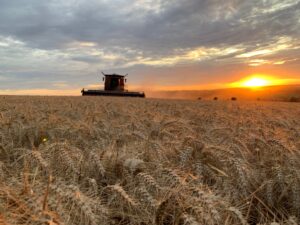
The 2026 harvest for us was poor with yields at probably 70% of “average”. However, quality was excellent and probably the only time we have consistently got 13%+ protein on our milling wheats. Had this happened 12 months previous then my premiums would have been significant and the base price reasonable too! However, for some strange reason the poor harvest has led to falling base prices and milling premiums so poor that we’re barely getting £180/t for full-spec group 1 milling wheat, that’s if you can sell it! That’s probably down £100/t on two-to-three years ago. The combination of poor yields, falling commodity prices, increasing machinery and labour costs, plus a government that continually move not only the goalposts but change the size of them, the shape of the ball and every rule of the game, has led to a farming environment where navigating the future seems like pinning the tail on the donkey when you’ve had your hands chopped off!
So, seeing as I have very little optimism or enthusiasm on this cold dark January evening, I thought I would look back at the past, take stock of the present and look to the future as to how we navigate the current climate.
Past
Looking back at memories, photos and achievements is sometimes good to see just how far we have come and how so much has changed over the years. I have a photo somewhere of my father’s farming system in the late 80s/early 90s. There were three tractors in a field in October establishing a crop: one subsoiling with a 7-leg shakearator, one power-harrow drilling with a 3m combi unit with a tractor on front-and-rear dual wheels, followed by another dualled-up tractor pulling a set of 6m rolls. Then there was probably a seed trailer on the headland with a JCB to load one half-ton bag at a time. So, three tractors, three men, lots of diesel and wearing metal and 30 acres a day was a good day!
I also look back with fond memories of places I worked to gain experience before coming home to join the family business. After A-levels I took a gap year and, once autumn drilling and spraying was finished at home, headed to Methven in New Zealand for a four-month harvest job on the Canterbury Plains. Working for Alec, David and John Wright, I learned about harvesting grass seed, clover, fescue and cereals as well as seed cleaning. Returning to the UK in the spring, I went to Sussex to work for my dairy farmer uncle, John Ford, who was installing a 40-point rotary parlour, making silage and planting maize.
After my gap year I started a degree course at Harper Adams University. I managed two years before I went to work for someone who probably taught me the most about farming and contracting: Harry Wilson. Harry and his wife Lynn had single-handedly built up the biggest fleet of foragers in Europe (36) when I worked with them. They ran up to five silaging gangs and had just bought a farm in Shropshire which they were developing. The rest of the choppers were hired out all over the country. They did everything superbly well and with a smile on their faces. They worked incredibly hard but never worked Sundays. A year working with Harry and his sons Keith and Ian was invaluable.
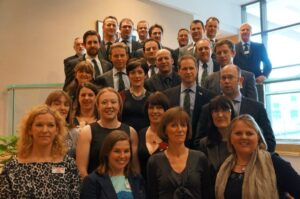
I also wanted to mention three different farming courses that I’ve completed over the past 20 years as they’ve had such a positive impact on me. The first is the Worshipful Company of Farmers’ Advanced Course in Agricultural Business Management that I attended at Wye College in January 2008. This was an intensive three-week course where a group of 20 of us lived, worked, ate and drank together! We formed an incredibly close bond, and our yearly reunions are still attended by the majority of the delegates. I would not be exaggerating if I said that I trust some of these friends more than some family members!
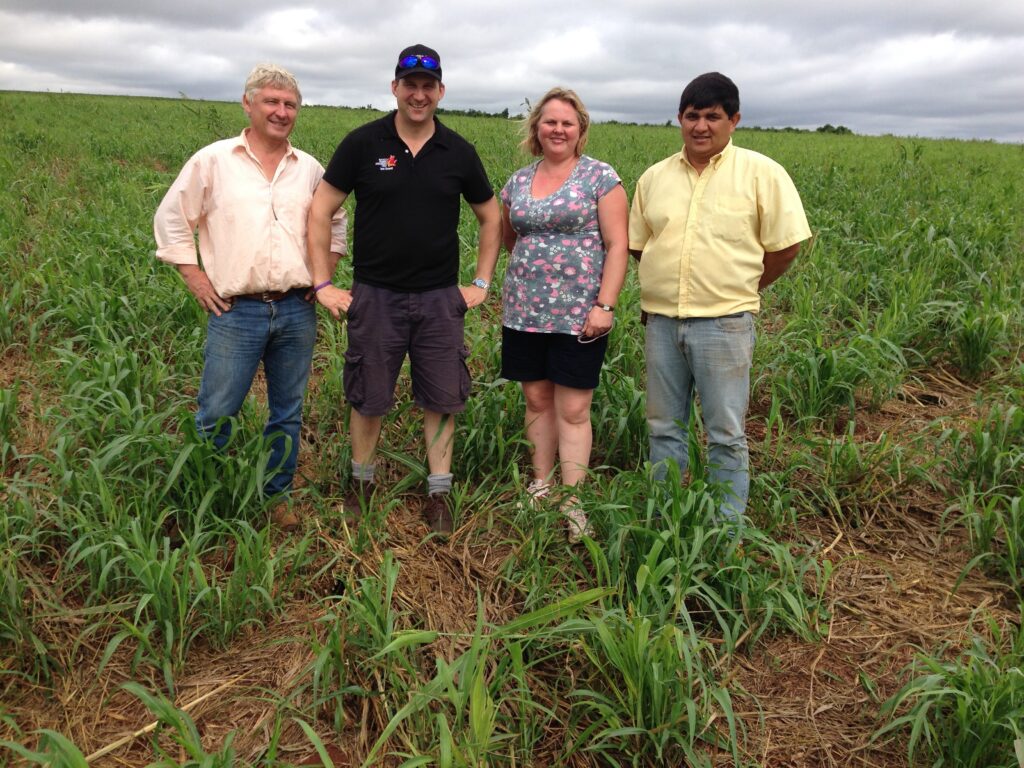
The second was being fortunate enough to be selected for a Nuffield Scholarship in 2013. My year group were particularly gifted and influential, and travelling to countries such as Canada, USA, Brazil, Argentina, Paraguay, New Zealand and Australia, looking at long-term no-till farmers as well as making friends and experiencing different cultures was a huge confidence boost. On the back of this we built our cross-slot drill on farm and my Nuffield report being published led to many conversations and speaking opportunities and I hope has been a help to many others who have read it.
The third and most recent course I’ve attended was the Institute of Agricultural Management (now the Society of Agriculture) Leadership course. This was again a three-week course with one week held at RAU Cirencester, one week at the Farmers Club in London and the third week in Brussels. The first week was held in Cirencester in February 2020. At the end of the week, someone mentioned COVID19 and how it might come to the UK! Well, the second and third weeks were held over a year later! The course directors, Rob Shepherd and Wynn Jones (who was my Principal at Harper!), were excellent at encouraging us to step out of our comfort zones.
The reason for mentioning these courses is that they have continued to build me up, and the friends made and relationships built have been such a blessing. Being able to pick someone’s brains in Suffolk, Scotland or Tasmania is pretty handy sometimes!
When you farm on your own or in a close family business, being able to access personal development opportunities can be hard but the benefits are huge and long-lasting. They have helped shape me and given me the confidence to take on challenges.
Looking back on a cold January day can give some hope and enthusiasm for the future.
So now moving on to the present!
The recent easy and relatively dry autumn has led to many crops establishing very well. Some crops, dare I say, look possibly too good with some crops of oilseed rape and wheat locally looking like a dose of half-rate pigeon and full-rate sheep could be required?!
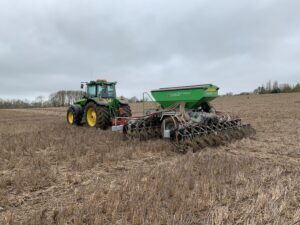
This past year I decided to part exchange a 12m set of rolls for another Sumo LDS subsoiler. Now we have the Horsch Avatar, I found that the rolls were hardly ever getting used and I felt that running a low disturbance subsoiler in front of the drill, particularly before planting beans would be a sensible approach, even if it does put my fuel use up!
As I farm on my own, with a few self-employed drivers (and because subsoiling is boring!), we put a 3m and 4m LDS to work and covered 300 acres in a few days. The beans have emerged more consistently and with far less root damage given the deeper sowing depth.
The recent rise in the IHT allowance for family farms has been a relief for many. This still isn’t an ideal solution but probably gives a lot of family farms significantly more wiggle room.
Having said all that, growing commodities such as wheat, barley and oats at the current prices is hardly an exciting prospect! Looking at new combines at £500k+, sprayers at £300k+ and tractors at £200k+ with wheat at £160/t is not for the fainthearted! Then factoring in labour costs, NI rises, uncertain government support programmes and increasing fertiliser and spray costs has led me to seriously look at the future. We currently have a farming system that works and is very cost-effective; running a 12m drill on a 20-year-old tractor using 4 litres of diesel per hectare is a pretty cheap establishment. It’s all bought and paid for and I’m the one on the seat! But look to growth, adding land, employing staff and changing mainline equipment in the current climate and I quickly lose interest!


Future
This year I turn 50. It only seems like last week that I was driving up to Harper in my old Peugeot at 4am on a Monday morning in time for lectures! I have four children aged between 12 and 20 but none are chomping at the bit to go farming – yet! In some ways I don’t blame them. My current thought pattern seems to sporadically go from “I need to be farming 3500 acres” to “Let’s sell up and do something else” – sometimes within the same day!
The increasingly overcrowded South-East where we farm is not particularly conducive to easy arable farming growth. The value of land, particularly with soft fruit or solar farms, is making rents rise, not to mention the many farmers who have benefitted from selling land for building. I’m starting to think we need to be farming people and their requirements. There will undoubtedly be more people locally, and looking after their leisure and business needs may be what the future looks like. With very little government support and a willingness to import food and commodities from any country other than ours means a good future in arable production is hard in the current climate.
I’m currently having a quiet winter without any courses, travelling or projects. Having read an excellent book called The Ruthless Elimination of Hurry by John Mark Comer, I have a new slogan on my office whiteboard: R.E.O.S. That’s the ruthless elimination of stuff (or other words beginning with S!).
Marketplace has become my new friend as I clear out all unwanted or unused stuff from the farm to free up some cash and space; it’s amazing how little you actually need when you farm on your own. That’s about as exciting as things get at the moment. One of my favourite sayings, “Need or want?” will come into play this year, particularly given lack of cash flow.
Getting through the spring and summer will be a challenge for many, so as I always ask, please check in on those friends and neighbours who you think could do with a chat. Take a minute to stop for a cuppa, a pint at the pub or meet up for breakfast.
Let’s hope for some spring sunshine, grass growth and a rise in commodity prices for 2026?!
Happy New Year!