Jason Pole, AHDB Technical Content Manager, explains how innovative trials aim to pinpoint elusive crop characteristics to help farmers reduce input use.
Every year, efforts are renewed in the quest to grow profitable crops. The fundamental ways to achieve this are well-understood but there is always scope for improvement, which includes turning towards genetics even more for a helping hand.
The Recommended Lists for cereals and oilseeds (RL) already presents data for many key traits associated with input use, including disease resistance. According to results from successive five-yearly reviews of the variety-trialling project, there is a consistent appetite for more agronomic data. Over the years, common themes have emerged, including a demand for more crop physiology data to identify varieties that perform better under lower-input scenarios.

Valued vigour
Although responses to our RL reviews are broad, there are keywords that crop up repeatedly, including vigour. Good crop vigour is clearly valued, but the question of what it is and how it is assessed is complex and has defied clear definition, which is why it has not been included on the RL to date.
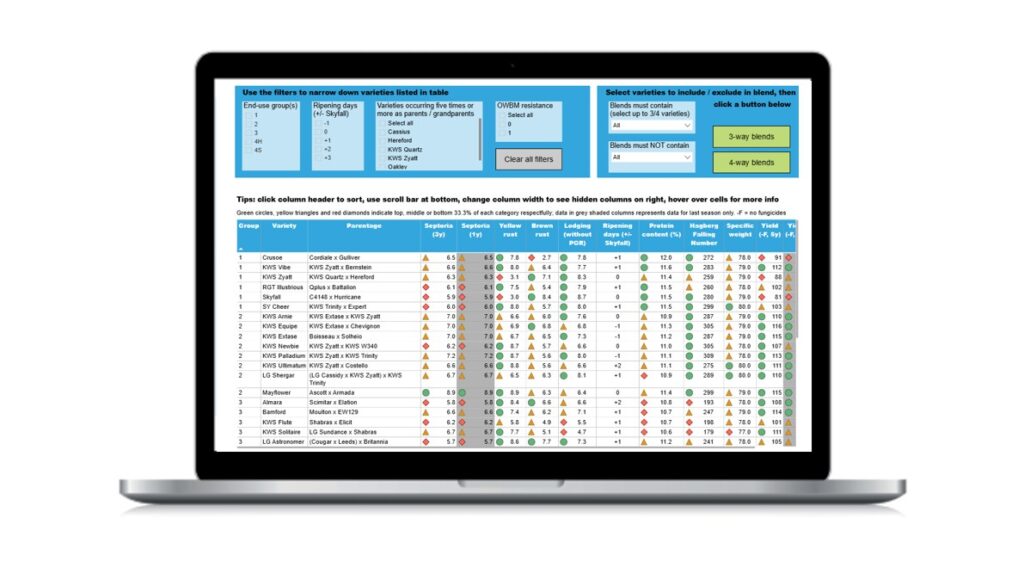
Certainly, it is not through a lack of trying. For instance, we have run trials and worked with breeders to develop ways to measure vigour in oilseed rape. We even detected statistically significant differences between varieties in individual trials. However, when trial results were combined, the differences in vigour were lost. Frustratingly, varieties with high levels of vigour in one trial can show low levels of vigour in another. Although we do not know the specific reasons for the inconsistency, it is highly likely to be due to numerous (often interacting) environmental variables, such as temperature, soil moisture, nutrient availability and daylength, that outweigh genetic differences in vigour.
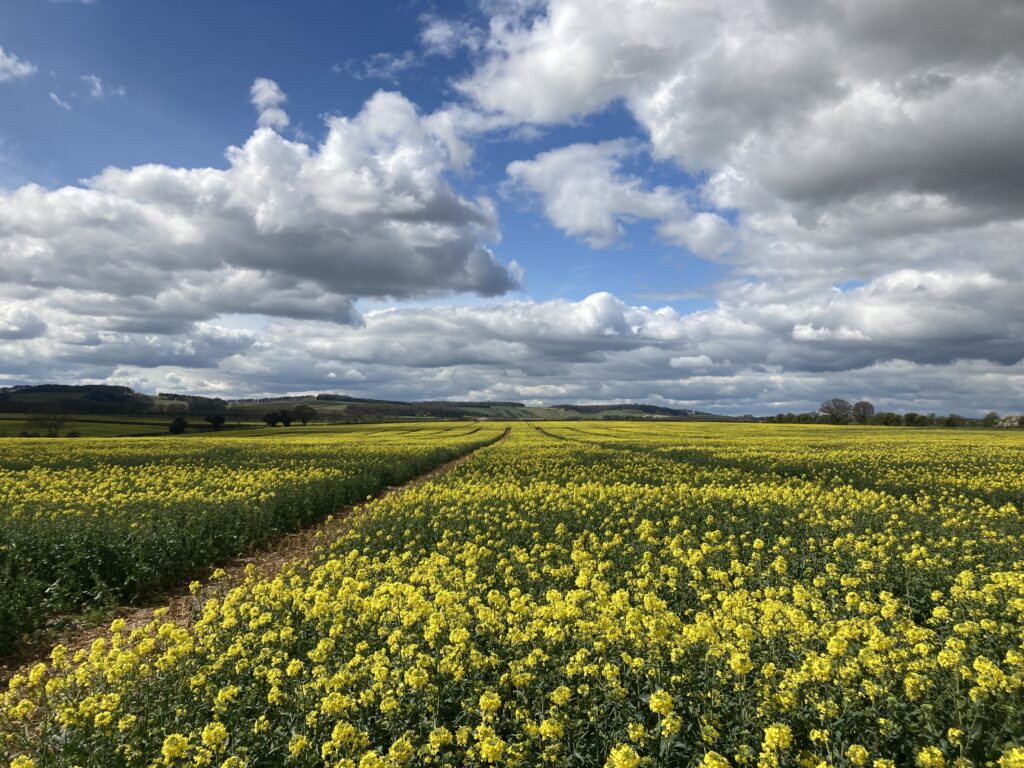
To produce reliable vigour data, we need to know much more about these factors, so we can account for them in variety evaluation. At present, we are focused on assessing potential vigour traits in winter wheat. So far, the results in the small subset of RL winter wheat trials have been more encouraging than those for oilseed rape. The first-year trials (2024/25 season) detected differences between varieties at RL trial sites in England, Scotland and Wales. The differences were small but, importantly, consistent. Measurements will continue for the 2025/26 season. If robust and reliable information on crop vigour can be generated, then the RL Board will consider the potential to measure vigour traits routinely and include them on the RL.
Of course, not all variety research has to be done within the confines of the RL trial system. In autumn 2025, two further projects (at non-RL trial sites) got underway to investigate potentially useful variation.
Withholding weeds
The first project studies how cereal varieties compete with weeds in lower-input situations. It is a topic that has been visited many times by researchers, which includes investigations of key traits associated with early growth habit, tillering and height.
Despite these efforts, there is still relatively little practical information that can be trusted and used by farmers, especially as many aspects of competition remain poorly understood. Additionally, management choices influence a crop’s ability to compete with weeds (e.g. seed rates, row spacing and seedbed quality), which add further complexity to the variety-assessment process.
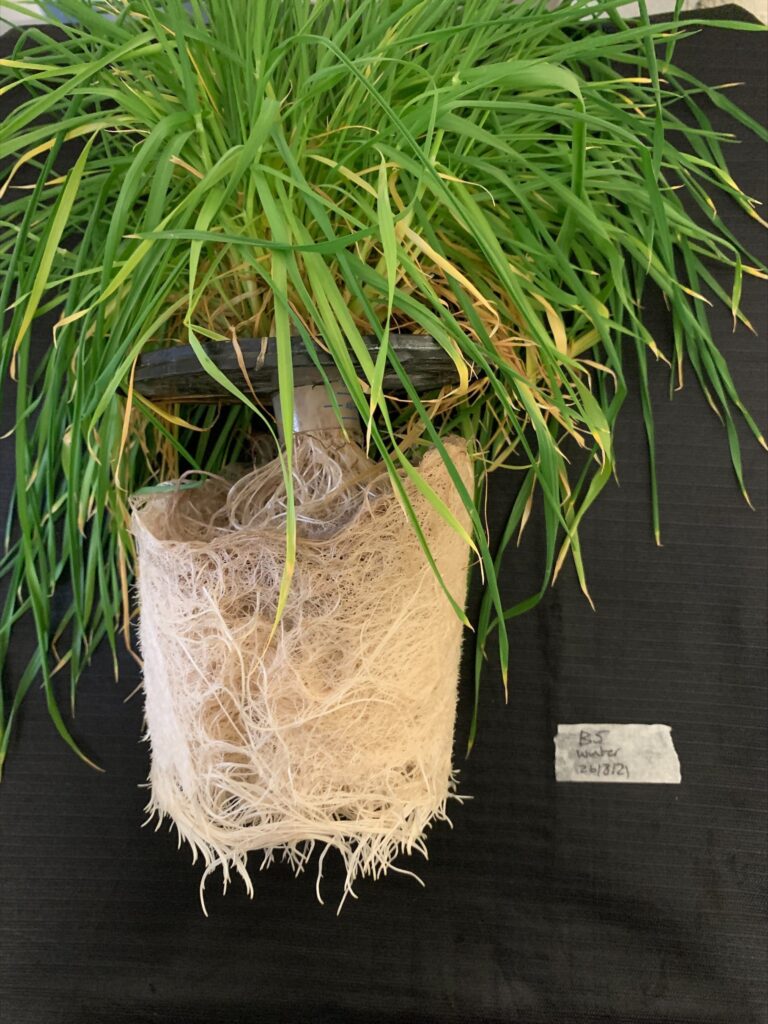
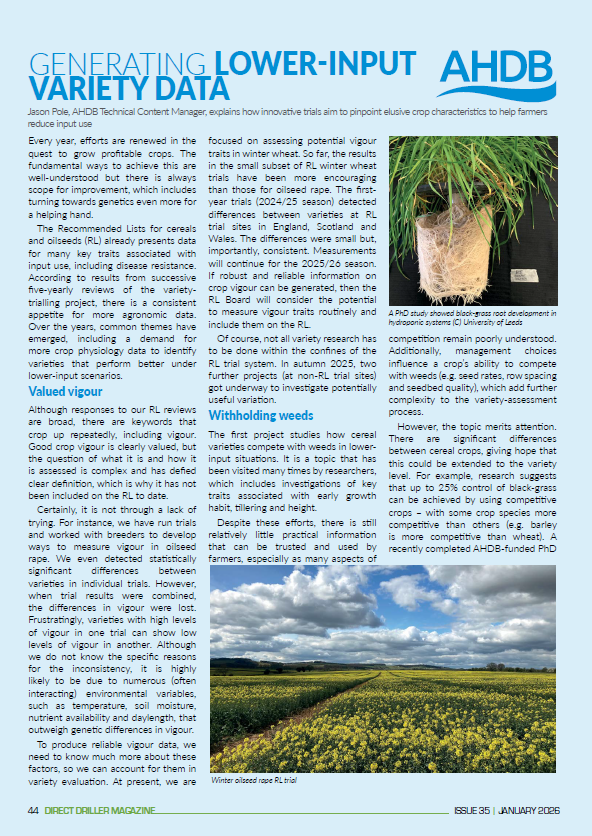
However, the topic merits attention. There are significant differences between cereal crops, giving hope that this could be extended to the variety level. For example, research suggests that up to 25% control of black-grass can be achieved by using competitive crops – with some crop species more competitive than others (e.g. barley is more competitive than wheat). A recently completed AHDB-funded PhD studentship (at the University of Leeds) also revealed how the strong rooting habits of some winter wheat varieties improve competition against black-grass during the autumn.
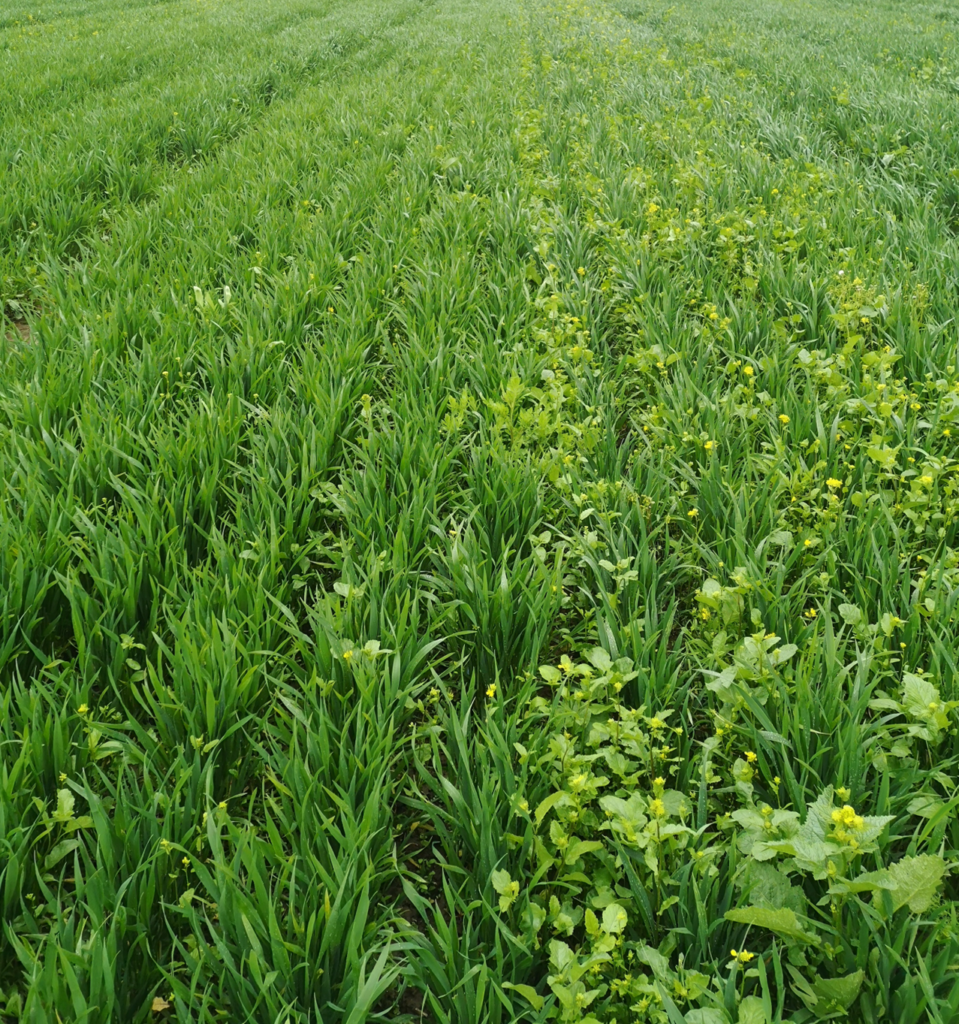
In 2017, the Organic Research Centre developed an on-farm research network that established field-scale winter wheat variety trials. It provided a proof of concept for variety evaluation in a wide range of farming systems, including organic, reduced-tillage and lower-input systems. It also identified the three main traits responsible for weed competitiveness:
1. Early crop vigour
2. Early crop ground cover
3. Good crop canopy cover at flowering
The speed of growth, rate of development and overall biomass production (ground cover and height) all influence the battle with weeds. The new AHDB project will build upon the initial lessons, run additional trials and develop recommendations for measurable crop physiology traits associated with weed competition. The research will continue until the end of 2027.
Building blends
The second new initiative examines whether growing a mixture of varieties can deliver more sustainable wheat crops. In addition to potentially delivering stronger yield and quality, cereal blends could produce other benefits, such as better yield stability and reduced disease severity (which could help reduce fungicide spray intensity, contribute to fungicide-resistance-risk management and prolong the durability of disease resistance genes).
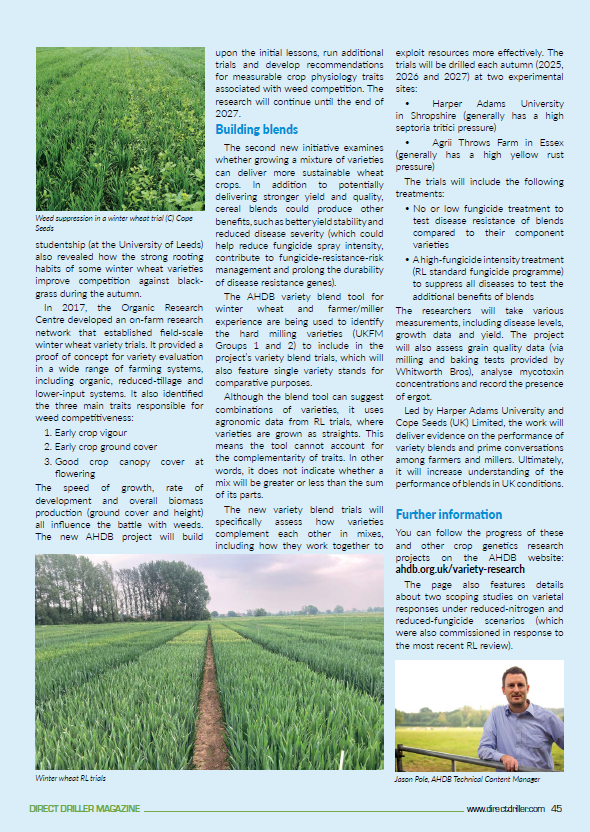
The AHDB variety blend tool for winter wheat and farmer/miller experience are being used to identify the hard milling varieties (UKFM Groups 1 and 2) to include in the project’s variety blend trials, which will also feature single variety stands for comparative purposes.
Although the blend tool can suggest combinations of varieties, it uses agronomic data from RL trials, where varieties are grown as straights. This means the tool cannot account for the complementarity of traits. In other words, it does not indicate whether a mix will be greater or less than the sum of its parts.
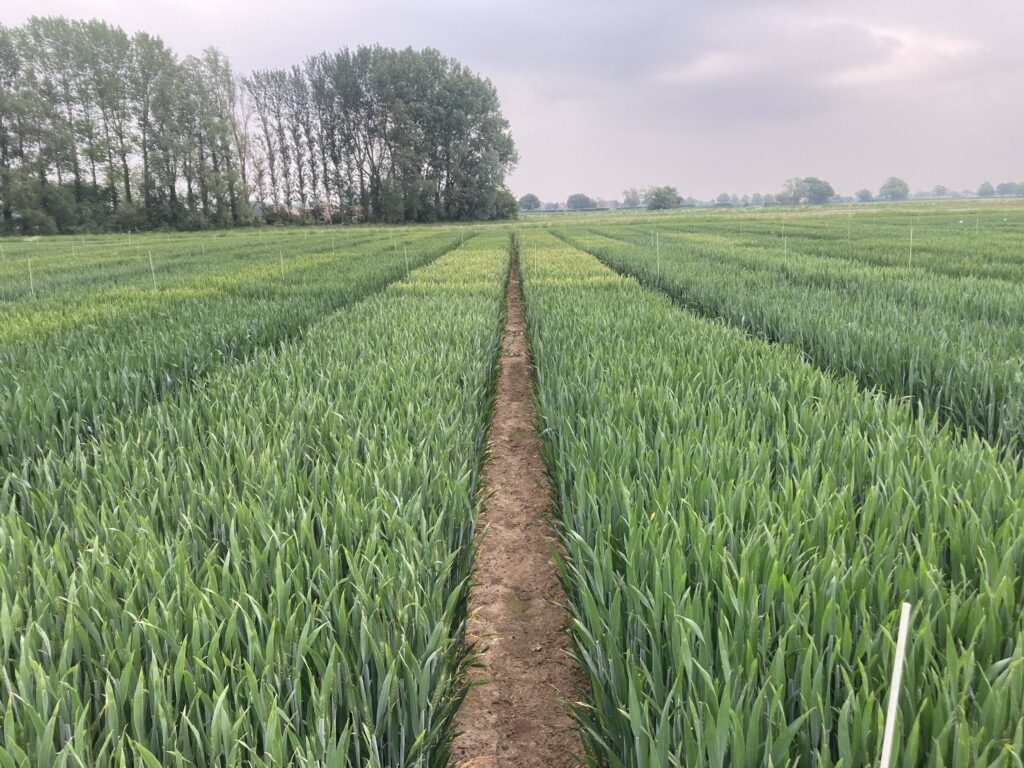
The new variety blend trials will specifically assess how varieties complement each other in mixes, including how they work together to exploit resources more effectively. The trials will be drilled each autumn (2025, 2026 and 2027) at two experimental sites:
- Harper Adams University in Shropshire (generally has a high septoria tritici pressure)
- Agrii Throws Farm in Essex (generally has a high yellow rust pressure)
The trials will include the following treatments:
- No or low fungicide treatment to test disease resistance of blends compared to their component varieties
- A high-fungicide intensity treatment (RL standard fungicide programme) to suppress all diseases to test the additional benefits of blends
The researchers will take various measurements, including disease levels, growth data and yield. The project will also assess grain quality data (via milling and baking tests provided by Whitworth Bros), analyse mycotoxin concentrations and record the presence of ergot.
Led by Harper Adams University and Cope Seeds (UK) Limited, the work will deliver evidence on the performance of variety blends and prime conversations among farmers and millers. Ultimately, it will increase understanding of the performance of blends in UK conditions.
Further information
You can follow the progress of these and other crop genetics research projects on the AHDB website: ahdb.org.uk/variety-research
The page also features details about two scoping studies on varietal responses under reduced-nitrogen and reduced-fungicide scenarios (which were also commissioned in response to the most recent RL review).