Jan 2026
Late winter is a natural pause point on our farm which grows predominantly combinable crops. Most of the decisions that mattered were made months ago, the crops are either in or they aren’t, and the consequences are starting to show themselves. It’s also when the background pressures feel loudest, because the work rate drops just enough to notice them.
The last three months on farm
The past quarter has been largely shaped by how well autumn behaved. After the challenges of the 2024–25 growing season, September and October 2025 were, frankly, a gift here in East Anglia: good soil conditions, timely drilling and very little compromise. We’re farming heavy clay, so we didn’t delay too long, and we still managed to use three drills (ours and two from a neighbour) to establish our last field of beans, but it was a reminder that when autumn does what it’s supposed to do, a lot of stress simply evaporates.
Crops went in cleanly and evenly. Establishment has been strong, roots are down where they should be, and fields look settled going into winter. Blackgrass is there in some places, of course, but largely absent. Covers are doing their job: protecting soil, holding structure and providing something useful to look at rather than bare ground, and the brassicas within the cover crop mix have been outstanding. This year I’ve included 0.5kg/ha of oil radish, stubble turnip, hybrid kale and OSR. Livestock have been able to graze without damage, and the abundance of forage means we’ve been able to move them on before a chance of overgrazing.
We also benefitted – I feel – from finally putting our stubble rake into service in perfect conditions. Our flint-free, deep clay soils meant that we could take advantage of deep, deep cracks and move a little residue into them, hopefully driving silty organic matter to depths that typically are exclusively heavy clay with the expectation that this season’s roots can follow.
That stubble rake flashback to last summer is perhaps a small highlight of an extremely challenging year. The 2024–25 season was difficult, not because things didn’t germinate but because the dry weather either stalled growth or sent crops bolting to an early death, even on our no-till heavy soils where we typically expect a week’s extra greenery on light land nearby. Buckwheat is a neat illustration of that pattern. It emerged, then sat there, stunted and unimpressive, until a bit of rain finally arrived in late August. By then, the clock had won. We harvested before it was properly fit (I’ll tell the buckwheat story another time, but in this climate it’s never 100% ready), and germination suffered as a result, which fed straight through into price. It wasn’t the worst crop, just a very clear example of how weather now compresses risk into short, unforgiving windows.
The wider load farmers are carrying
Running alongside the agronomy is a set of pressures that have nothing to do with soil or rainfall.
Even with a Christmas present from the Labour government, inheritance tax hangs over farm businesses in a way that’s hard to overstate. Even before anything changes in April, and before the Christmas climb-down, the uncertainty alone shaped decisions, often defensively. We’ve spent time with accountants – costing money our accounts tell me we don’t have –trying to mitigate a policy that at best will be the subject of a U-turn or a reversal from the next government and at worst would still tear our business apart in the sad event of an untimely death, or two. It happens.
Layer onto that the usual churn of schemes, inspections and shifting priorities, and it starts to feel like farming is expected to carry more and more complexity without any corresponding simplification elsewhere. World grain markets remain depressed, which limits margin for error, but even without getting into prices, the sense is that resilience is being asked for faster than it can realistically be built.
There’s also a nagging feeling that political focus is drifting. When attention is given to issues like trail hunting or shotgun licensing while bigger questions around food production, land use and rural economics remain unresolved, it’s hard not to feel that the centre of gravity is off. It creates the impression of a system busy with detail while missing the direction of travel. Pick your favourite analogy here – Starmer’s fiddling whilst Reeves is rearranging deck chairs…
What still works
Against that backdrop, one of the most consistently positive things I do is run farm walks.
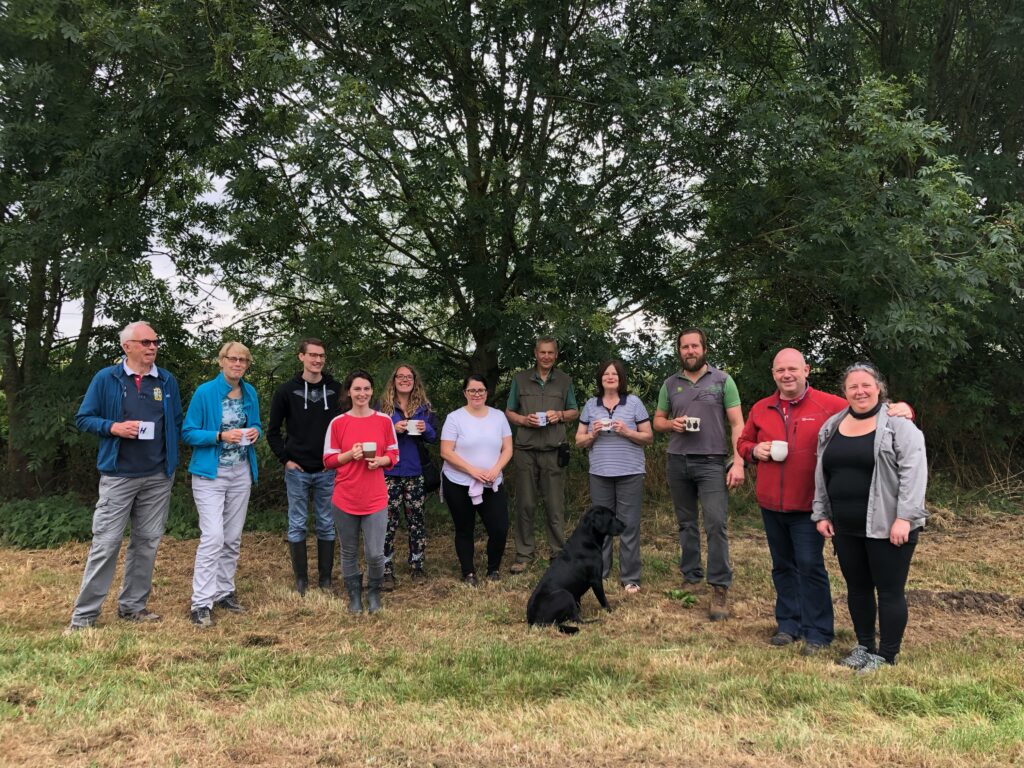
I charge £70 per person for a series of eight walks, spaced roughly six weeks apart, running from mid-autumn through to early July. We meet at 8am on a Saturday morning for a chat and a coffee before we head off on a circular walk, often directed by the topics we discuss over coffee. We pick up on topical issues, seasonal changes, national and local challenges, and we all learn, me too. The structure matters. People don’t just see a snapshot, they see the whole year unfolding. Fields change, decisions play out, mistakes become visible and successes make sense in context.
They see covers growing, being grazed and disappearing. They see why something is left alone. They see soil behaving differently under their feet as the season moves on. At harvest, they get an invite onto the combine, which never fails to reconnect people with the reality of food production.
When I talk about cover cropping and grazing in that setting, it does sometimes feel like alchemy – not because it’s mystical, but because people are surprised that farming can be deliberate, adaptive and quietly complex rather than purely extractive.
Holding perspective
So yes, there are plenty of reasons to feel uneasy heading into the new year. Costs, policy, weather and economics are all pulling in different directions, and none of them feel especially stable.
But there’s another truth running alongside that. Farmers are held in high regard, often more than we realise. When people are invited in and shown what’s actually happening on the land, the response is overwhelmingly positive – curious, respectful and supportive.
That doesn’t solve inheritance tax or fix the weather. But it does remind me that what we’re doing still matters, and that people want us to succeed. Clearly it would be great to have both government and people onside, but I remind myself that governments don’t