Farmer Focus: Resilience, Roots and Regeneration in North Yorkshire
By James Pick, H. Sutton and Son
Standing on the clifftops a few miles south of Filey, looking out over the North Sea, you quickly realise that farming here is as much about managing the elements as it is about managing the soil.
I’m James Pick from H. Sutton and Son, a three-generation family farm. Like many of you reading Direct Driller, our journey over the last few years has been one of constant evolution, trial, error and a fair bit of soul-searching about what it means to farm “conventionally” in a changing world.
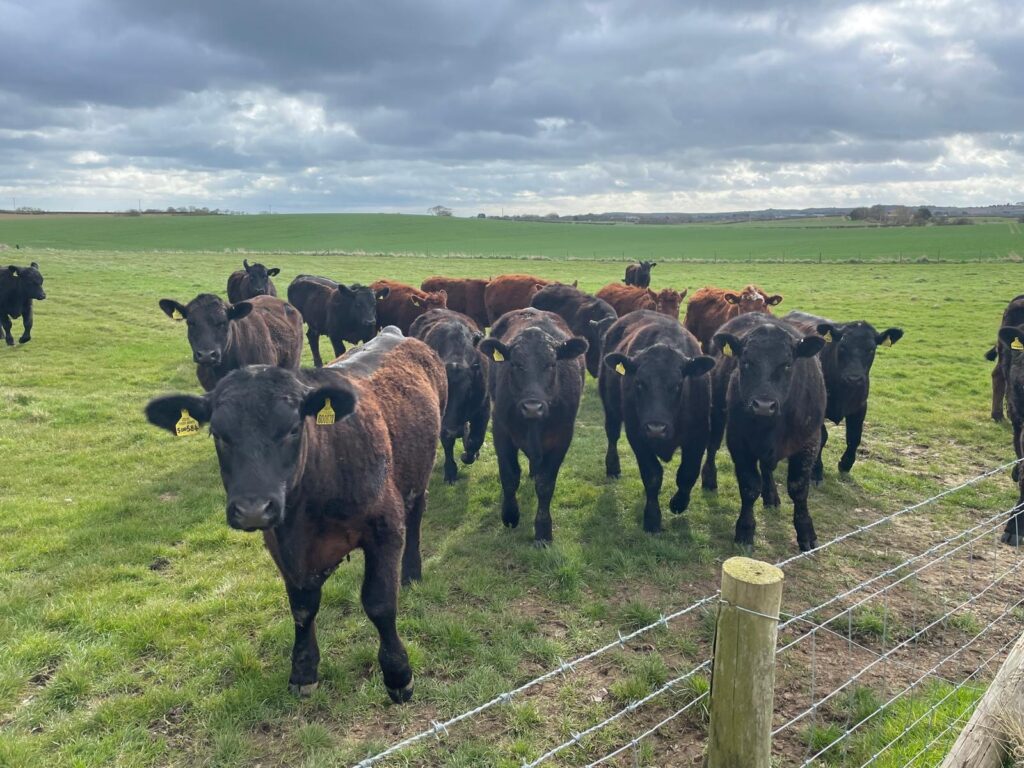
Our operation is built on a foundation of diversity. We manage approximately 240 hectares of arable land alongside a significant potato enterprise – ranging from 155 to 180 hectares – and a finishing unit for about 60 Aberdeen Angus cattle. Our soils are a real mixed bag: predominantly silty clay loams but with pockets of everything from sandy loam to high organic matter peat. It’s glacial deposit land, which means we’re often dealing with everything from golf-ball-sized stones to rocks that require a pallet tine to shift. This variability is one of our biggest hurdles – what works on the clifftops might be a disaster just a few miles inland.
The potato conundrum
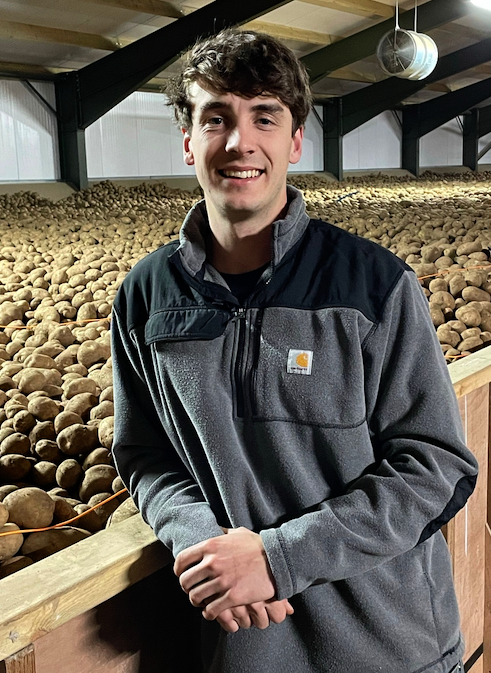
Potatoes have transformed this business over the last 20 years, but they also present our biggest challenge when it comes to soil health. For a long time, we were a major supplier for McCain – sending some of the first spuds into their factory back in 1969 – and we have recently started supplying PepsiCo and Aldi.
We wanted to push further into the environmental and regenerative space with the potato enterprise, but let’s be honest: potatoes and no-till aren’t natural bedfellows. We’ve been part of the Potato-LITE (Low-Intensity Tillage Enhancement) project, testing everything from conventional setups to direct planters. While we’ve found that a full direct-planting system isn’t yet viable on the bulk of our stony land, due to quality and storage concerns, it has fundamentally changed our mindset. We’re constantly looking for that middle ground where we can maintain the quality required for long-term storage while minimising the mechanical impact on our soil structure.
Moving away from the plough
We haven’t pulled a plough through our soil in probably three years. It’s still there, sat at the back of the shed like a museum piece, but I don’t see us going back. We used to work land at 14 inches. Now, the thought of the fuel consumption and the structural damage that causes makes me wince. The transition wasn’t just about saving diesel. It was about recognising that our soils were becoming increasingly fragile.
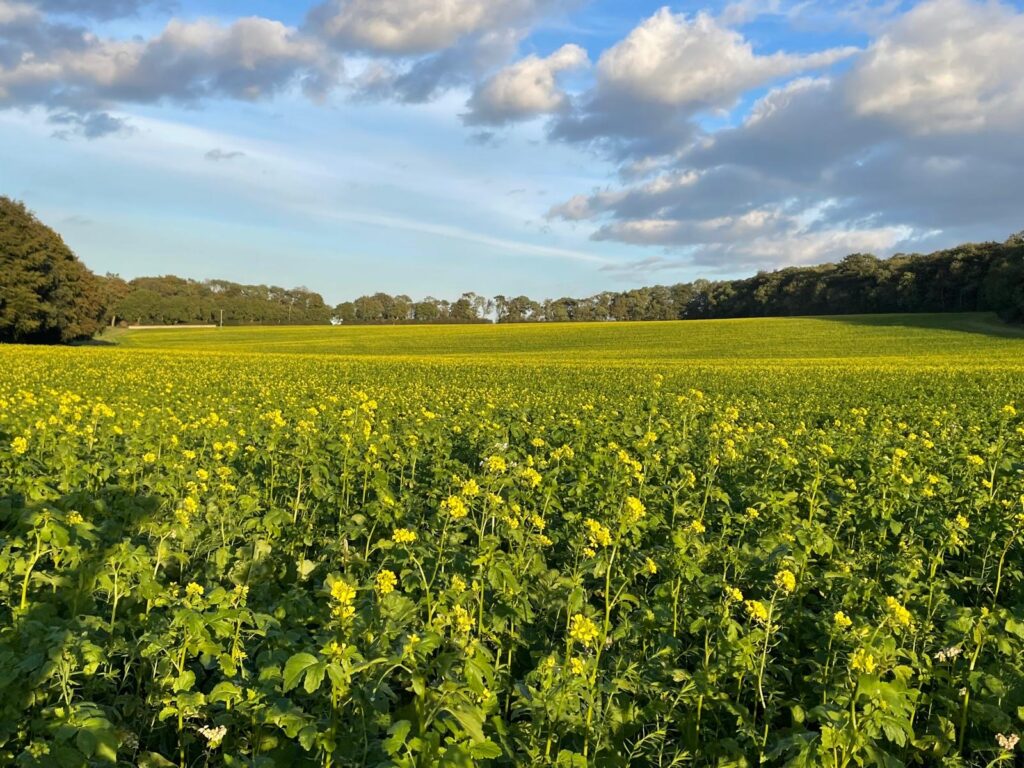
Instead, we’ve leaned heavily into cover crops. For the last five years, every single acre destined for a spring crop has been put into an overwinter cover. It’s not just about “doing the right thing” for the environment; it’s about resilience. This year was a perfect example. While the yields weren’t record-breaking, they were steady and better than expected. Why? Because our well-managed land – the stuff that’s had regular manure and cover crops – now has the water-holding capacity to cope with the dry spells. We spread 8,000 to 9,000 tonnes of manure a year, and the difference in organic matter is where the real dividends are paid. When the sun is beating down and the potatoes are threatening to “shut down” at 25°C, that extra moisture in the soil profile is the difference between a crop that survives and one that thrives.
Tech, tines and timing
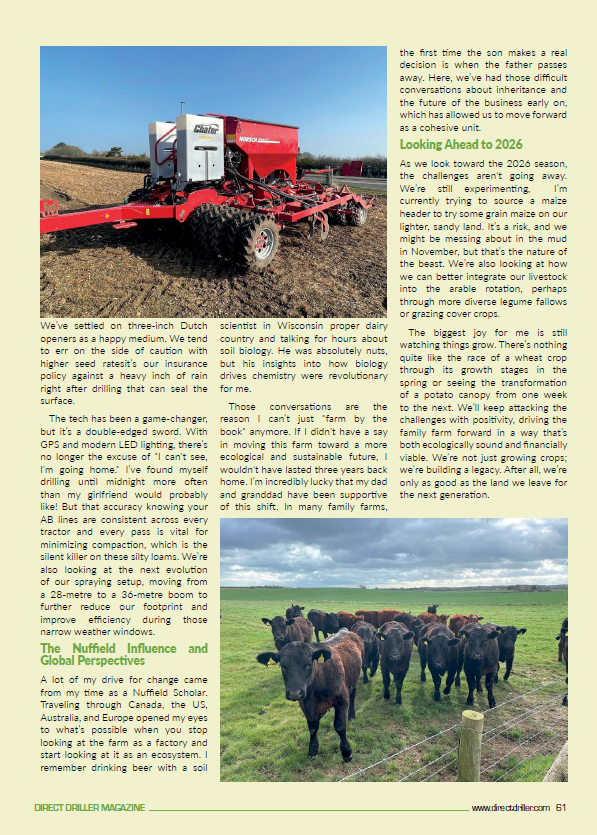
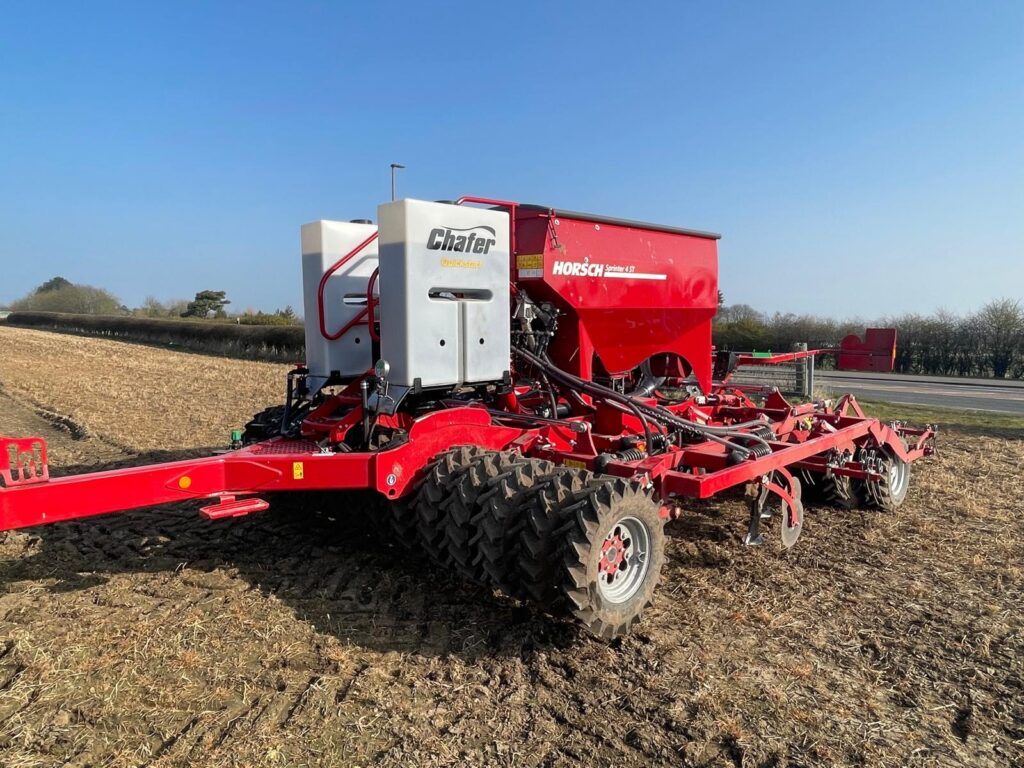
On the cereal side, we’ve been running a four-metre Horsch Sprinter for about five years. I’m a bit of a machinery geek at heart, and finding the right setup for our high-mag soils that like to cap has been a process. We’ve settled on three-inch Dutch openers as a happy medium. We tend to err on the side of caution with higher seed rates: it’s our insurance policy against a heavy inch of rain right after drilling that can seal the surface.
The tech has been a game-changer, but it’s a double-edged sword. With GPS and modern LED lighting, there’s no longer the excuse of “I can’t see, I’m going home.” I’ve found myself drilling until midnight more often than my girlfriend would probably like! But that accuracy – knowing your AB lines are consistent across every tractor and every pass – is vital for minimising compaction, which is the silent killer on these silty loams. We’re also looking at the next evolution of our spraying setup, moving from a 28-metre to a 36-metre boom to further reduce our footprint and improve efficiency during those narrow weather windows.
The Nuffield influence and global perspectives
A lot of my drive for change came from my time as a Nuffield Scholar. Traveling through Canada, the US, Australia and Europe opened my eyes to what’s possible when you stop looking at the farm as a factory and start looking at it as an ecosystem. I remember drinking beer with a soil scientist in Wisconsin – proper dairy country – and talking for hours about soil biology. He was absolutely nuts, but his insights into how biology drives chemistry were revolutionary for me.
Those conversations are the reason I can’t just farm by the book anymore. If I didn’t have a say in moving this farm toward a more ecological and sustainable future, I wouldn’t have lasted three years back home. I’m incredibly lucky that my parents and granddad have been supportive of this shift. In many family farms, the first time the son makes a real decision is when the father passes away. Here, we’ve had those difficult conversations about inheritance and the future of the business early on, which has allowed us to move forward as a cohesive unit.
Looking ahead to 2026
As we look toward the 2026 season, the challenges aren’t going away. We’re still experimenting – I’m currently trying to source a maize header to try some grain maize on our lighter, sandy land. It’s a risk, and we might be messing about in the mud in November, but that’s the nature of the beast. We’re also looking at how we can better integrate our livestock into the arable rotation, perhaps through more diverse legume fallows or grazing cover crops.
The biggest joy for me is still watching things grow. There’s nothing quite like the race of a wheat crop through its growth stages in the spring or seeing the transformation of a potato canopy from one week to the next. We’ll keep attacking the challenges with positivity, driving the family farm forward in a way that’s both ecologically sound and financially viable. We’re not just growing crops; we’re building a legacy. After all, we’re only as good as the land we leave for the next generation.