Written by Mark Hatton
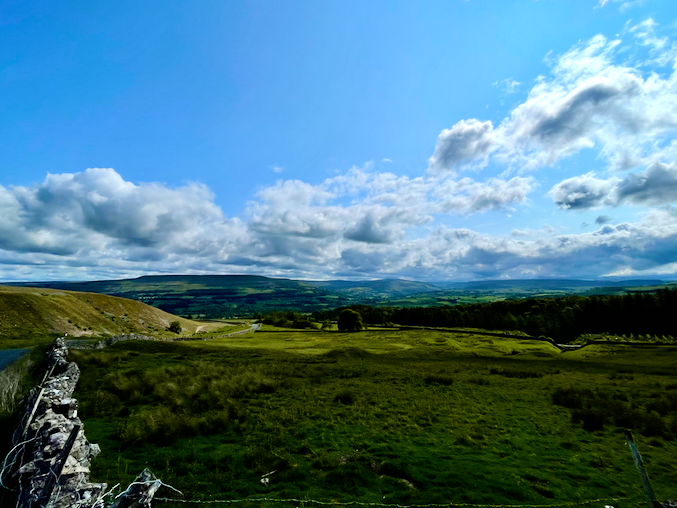
For the last 19 years, I’ve been very fortunate to have been able to call Yorkshire home.
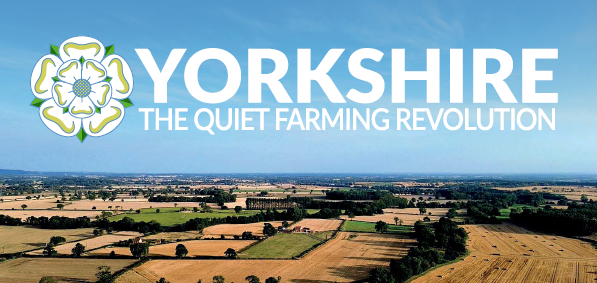
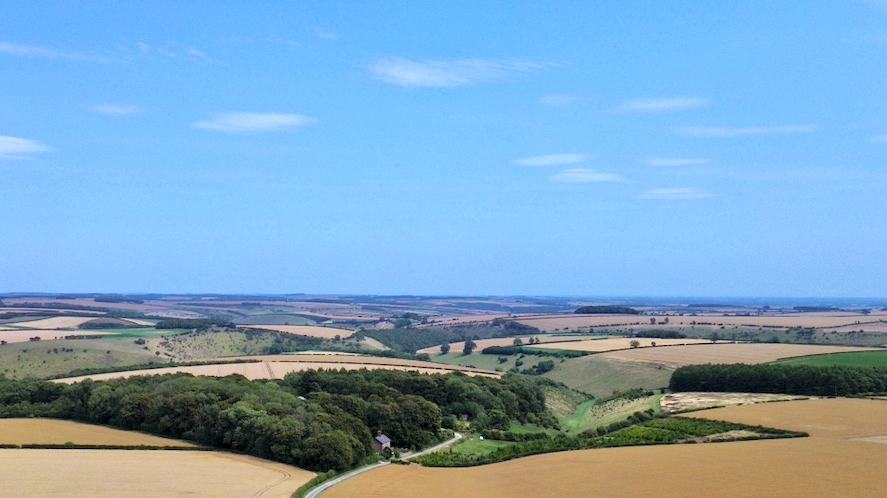
Across the broad sweep of the Yorkshire Wolds, the upland fringes of the Pennines and the deep, fertile soils of the Vale of York, farming has always been shaped by both landscape and necessity. Today, however, Yorkshire agriculture finds itself in the midst of a quieter but far more profound transformation. Driven by economic pressure, environmental responsibility and a renewed understanding of soil and biology, farmers across the county are embracing regenerative practices that challenge long-held assumptions about how land should be worked and how food should be produced. Nowhere is this more evident than in the rapid uptake of direct drilling and low-disturbance systems in arable rotations, alongside the reimagining of livestock management through grazing strategies that restore, rather than deplete, the land.
In Yorkshire’s arable heartlands, regenerative thinking has moved well beyond being a niche interest. Direct drilling, once viewed with suspicion, is now widely recognised as a practical tool for rebuilding soil structure, retaining moisture and reducing both labour and input costs. From heavy clay to lighter chalk and sand, growers are discovering that by disturbing less and keeping the soil covered, they are encouraging fungal networks, improving infiltration and unlocking nutrients that had been tied up by years of intensive cultivation. Multi-species cover crops, once trialled on small areas, are now being woven into whole rotations, providing living roots in the ground for longer, capturing carbon and feeding soil biology between cash crops. The result is not just healthier soils, but crops that show greater resilience to drought, waterlogging and disease.
Yet regenerative agriculture in Yorkshire is not confined to arable fields. Across the county’s mixed and livestock farms, a parallel revolution is under way. Grazing management is being transformed through the use of rotational and mob-grazing systems that mimic natural grazing patterns. By allowing grass and herbal leys adequate rest periods, farmers are building deeper root systems, improving soil organic matter and increasing forage production without relying on ever-higher fertiliser applications. Cattle and sheep are becoming tools for soil regeneration, trampling organic matter back into the sward and cycling nutrients through dung and urine. For many producers, the benefits are tangible: healthier animals, reduced feed bills and grass that keeps growing when conventional systems would be running short.
What unites these approaches, whether on arable or livestock farms, is a shift in mindset. Regenerative farming asks producers to work with natural processes rather than against them. It prioritises soil as a living ecosystem, values diversity above uniformity and measures success not only in yield, but in resilience and long-term viability. In a region as large and varied as Yorkshire, this flexibility is crucial. There is no single regenerative blueprint, but there is a growing willingness among farmers to experiment, observe and adapt.
That spirit of innovation is not limited to what happens in the field. Yorkshire is also home to some of the UK’s most progressive agricultural machinery manufacturers, many of whom are playing a key role in the shift towards lower-disturbance and regenerative systems. Companies such as Agriweld, Grange Machinery, Ryetec and Sumo are all based in the region, designing and building equipment that reflects the real-world needs of modern farmers. From strip-till and direct drills to low-disturbance cultivation tools and precision application technology, Yorkshire-built machinery is helping farmers reduce passes, protect soil structure and cut fuel and labour costs. The close relationship between these manufacturers and local farming businesses creates a powerful feedback loop, where practical experience on Yorkshire farms directly influences the next generation of equipment.
At the heart of this momentum sits the Yorkshire Agricultural Society (YAS), an institution that has long been a cornerstone of the county’s farming community. Best known for delivering the Great Yorkshire Show, the Society’s influence reaches far beyond a few days in Harrogate each summer. Through its year-round programme of events, education and industry engagement, it plays a vital role in connecting farmers with new ideas, technologies and one another. In an era when agriculture faces unprecedented change – from post-Brexit policy shifts to the pressures of climate and public scrutiny – the Society provides a stable platform for discussion, debate and progress.
A central part of that mission is its Future Farmers programme, which is nurturing the next generation of Yorkshire agricultural leaders. YAS Future Farmers brings together young people from across the region, providing them with networking opportunities, business insight, technical knowledge and exposure to innovative farming systems. Many of those involved are already actively engaged in regenerative practices on their own farms or in their professional roles, whether that means trialling cover crops, adopting new grazing strategies or analysing data to improve efficiency and reduce inputs. By giving these future decision-makers a voice and a network, the Yorkshire Agricultural Society is ensuring that progressive, regenerative thinking becomes embedded in the county’s agricultural DNA.
All of these strands – regenerative practice, engineering innovation, institutional support and generational renewal – will come together at the forthcoming Yorkshire Agricultural Conference on 28 January. Set against a backdrop of shifting policy and tightening margins, the Conference promises to be a focal point for discussion about how Yorkshire farming can remain both competitive and sustainable. With sessions expected to cover soil health, grazing systems, technology and the economics of low-input farming, it will provide a timely opportunity for farmers to take stock, compare experiences and chart a course for the years ahead.
For a county that has always punched above its weight in British agriculture, Yorkshire’s current embrace of regenerative farming feels less like a radical departure and more like a natural evolution. Rooted in a deep respect for land and livestock, but informed by modern science, farmer-led innovation and home-grown engineering, it is shaping a future in which productivity and stewardship go hand in hand. As our Farmer Focus contributors will attest to, Yorkshire is not just adapting to change, it is helping to lead it.