Across climates, continents and farming systems, one thing united these Nuffield Presenting Scholars in Aberdeen: soil is no longer just a technical consideration, but a social, economic and cultural one too.
From understanding why farmers change their practices, to investigating the future of peatland management, these two scholars offer complementary insights into how soil will shape the next era of farming.
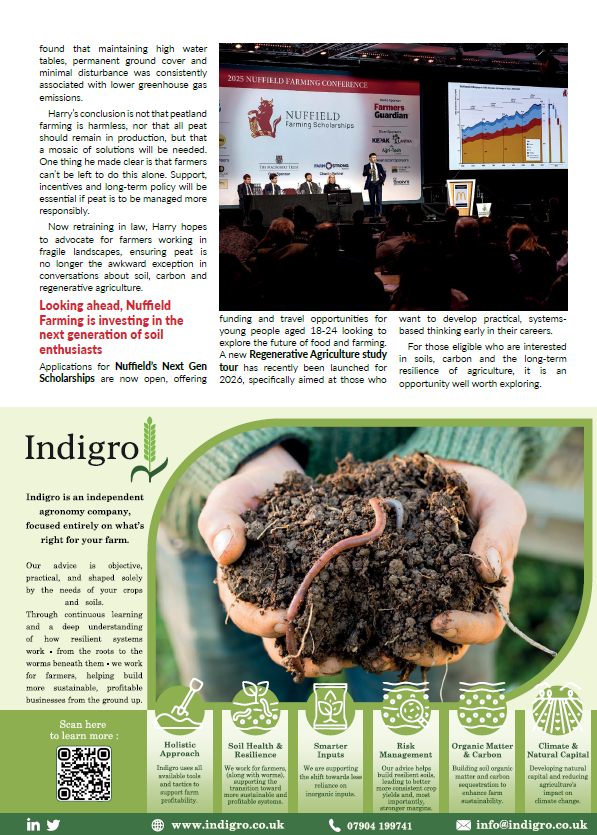
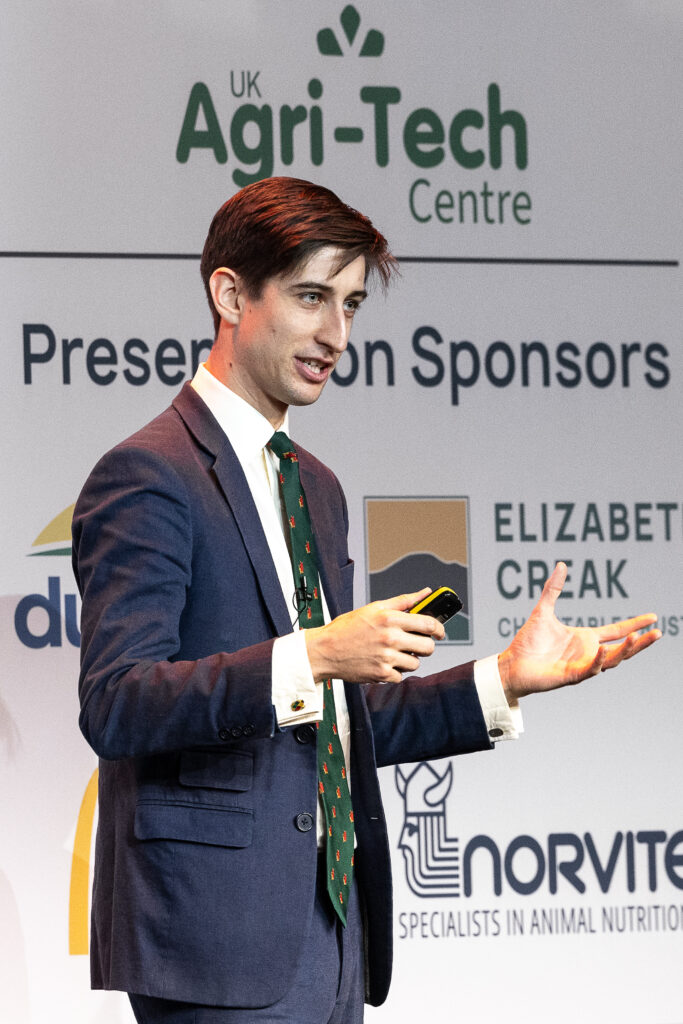
Tom Scrope: Why Farmers Change
Tom went into his Nuffield Farming travels convinced that data and software would be the answer. After travelling 6,616 miles across Europe, Australia and South America learning from farmers, advisors, researchers and policymakers he realised that whilst software and data are inherently useful they were not the driving force behind the reason for change.
His findings highlight a three-step framework: motivation, advice, and funding.
Motivate: The spark that drives action
These six motivators kept coming up:
- external pressures (drought, price shocks)
- personal crises or transitions
- charismatic educators
- strong peer communities
- benchmarking
- immersive courses like “Grazing for Profit”
Advise: practical, trusted guidance
Tom found that well-run farmer groups were the closest thing to a silver bullet for soil practice change. Their success depended heavily on skilled facilitators, peer accountability, and good networks enabling swift knowledge spread.
Fund: supporting risk in transition
Soil-friendly farming often pays long-term but carries short-term risk. Tom highlighted England’s SFI as a world-leading model, and water companies as major private-sector drivers, while noting that carbon markets remain immature.
He uses these insights through his work at Soil Benchmark, a digital platform which helps farmers and agronomists create data-driven soil and nutrient management plans, supporting consultants, farmers, and growers in using soil data and benchmarking tools to inform decisions.
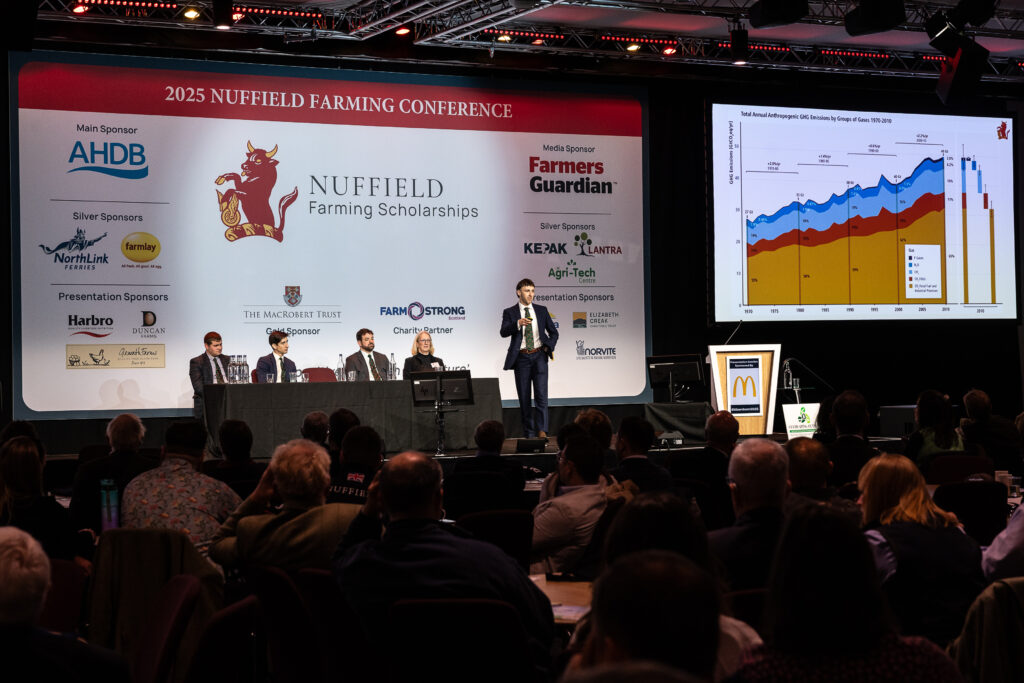
Harry Winslet: For Peat’s Sake! Do we need a new approach to peatland agriculture?
Harry originally comes from London, far removed from the Cambridgeshire soils he would later come to know when working at G’s, Europe’s largest fresh produce supplier. Through his undergraduate and master’s degrees, Harry became increasingly interested in how a changing climate would reshape the way we live, and more urgently, how we would continue to feed ourselves.
His Nuffield travel took him across the UK, Europe, Canada, Brazil and Southeast Asia to explore whether peatland farming could be done differently.
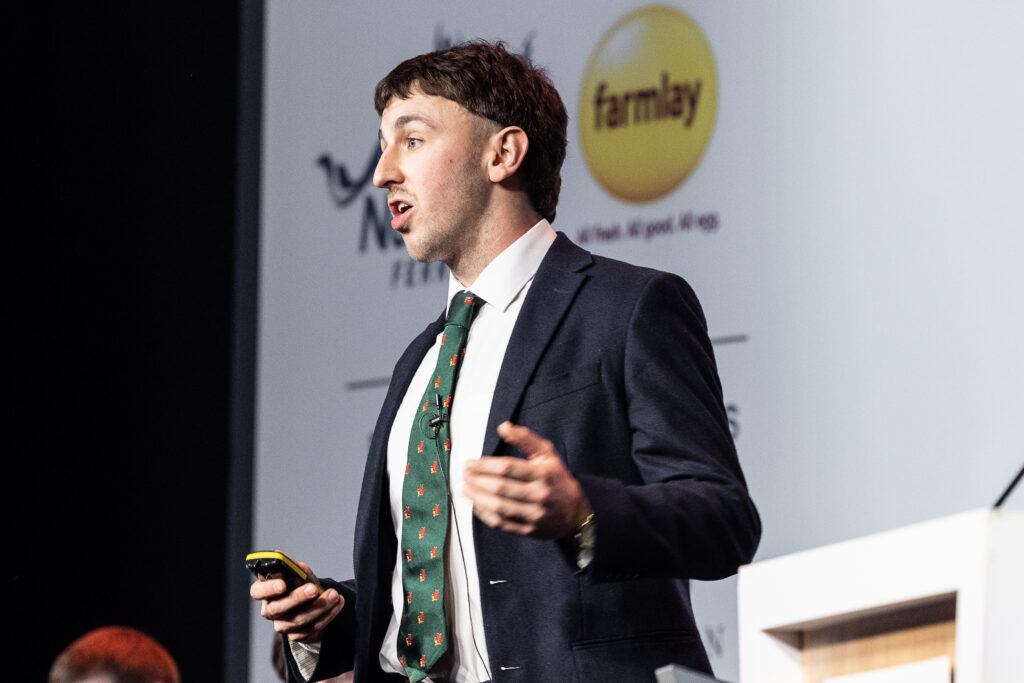
In their natural state, peatlands are stable carbon stores. “Peatlands in and of themselves are not an environmental crisis,” Harry says. “That only occurs when we drain them for agriculture.” Drainage introduces oxygen, triggering oxidation and releasing carbon dioxide at scale. In temperate regions, drained peat emits around 30-35 tonnes of CO₂ per hectare per year, compared to roughly one tonne from mineral soils. In the UK, cultivated peat accounts for nearly 5% of total greenhouse gas emissions.
But peat remains central to food production, with around 40% of the UK’s fresh produce grown on drained peatland. “They’re flat, they’re fertile, they have easy access to irrigation” Harry notes. Walking away from peat entirely would mean moving a third of the UK’s vegetable production elsewhere, bringing its own carbon and food security implications.
In Canada, he saw projects reintroducing carbon through willow coppice. In Indonesia, smallholder farmers were practising paludiculture and agroforestry. Although these systems are under-researched, Harry found that maintaining high water tables, permanent ground cover and minimal disturbance was consistently associated with lower greenhouse gas emissions.
Harry’s conclusion is not that peatland farming is harmless, nor that all peat should remain in production. But that a mosaic of solutions will be needed, one thing he made clear is that farmers can’t be left to do this alone. Support, incentives and long-term policy will be essential if peat is to be managed more responsibly.
Now retraining in law, Harry hopes to advocate for farmers working in fragile landscapes, ensuring peat is no longer the awkward exception in conversations about soil, carbon and regenerative agriculture.
Looking ahead, Nuffield Farming is investing in the next generation of soil enthusiasts.
Applications for Nuffield’s Next Gen Scholarships are now open, offering funding and travel opportunities for young people aged 18-24 looking to explore the future of food and farming. A new Regenerative Agriculture study tour has recently been launched for 2026, specifically aimed at those who want to develop practical, systems-based thinking early in their careers.
For those eligible who are interested in soils, carbon and the long-term resilience of agriculture, it is an opportunity well worth exploring.