Jan 2026
I think my new approach when beginning to write farming content may be to copy and paste the following statement: “We seem to be in a time of great change. We try and formulate a business plan while facing the constant moving targets of the markets and government regulation.” That just never seems to change.
We have been “lucky” in some ways in Scotland because ScotGov doesn’t have the knowhow or budget to change the flawed computer system that controls our agricultural support. It’s slowly developed into a policy to fit a computer system not an industry, and the “computer says no” approach is stopping any progress. If your system fits the computer system you are fine. If not, it’s just bad luck.
On the treadmill of constantly refreshing machinery and keeping control of maintenance costs, I recently looked at replacing my drilling tractor. I admit this tractor is a good spec 234hp machine, but when pricing, I made the mistake of converting the retail price into something I produce. I didn’t use feed wheat or milling oats but malting barley, a so-called premium product here in Scotland. It would take all the output from 1588 tonnes of that premium product to buy the tractor, therein lies one massive problem. I won’t do that comparison again.
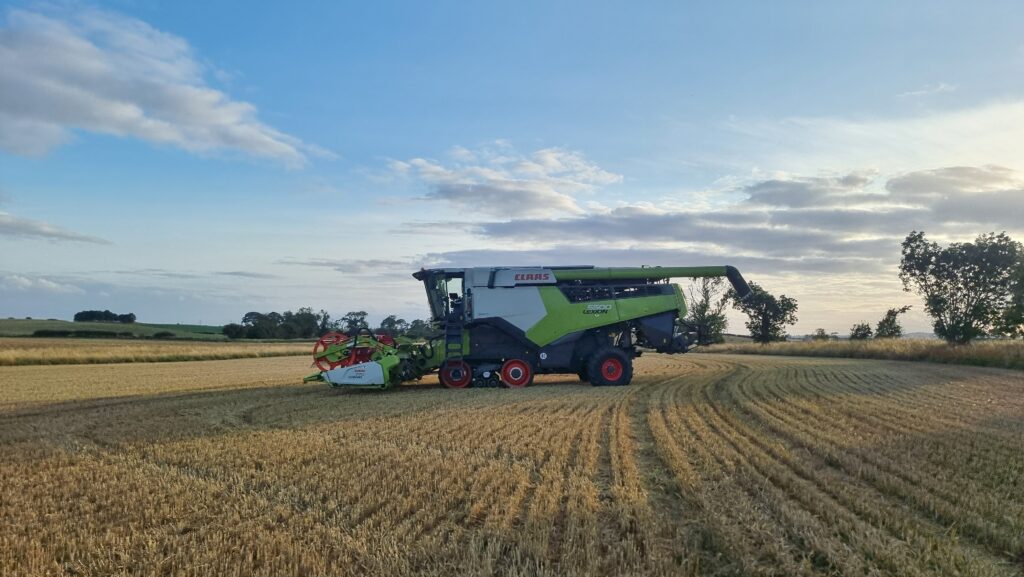
We have been lucky with the weather in this area again this year, avoiding the most extreme drought conditions and having a good harvest overall. Some very big wheat and oilseed yields have cushioned the blow of falling prices. Oats and pulses were also good but malting barley has again thrown up challenges. I direct drilled all my crops again this year, which are: winter barley, winter oilseed, winter wheat, spring beans, spring oats and spring barley. This was the second year running after phasing out the plough and combi drill completely a few years back. I am now seeing bigger yields than ever in wheat, oilseed and beans but the barley has had difficult conditions, making a comparison difficult. The spring barley yields this year, amazingly, were good despite six weeks of no precipitation at a key stage.
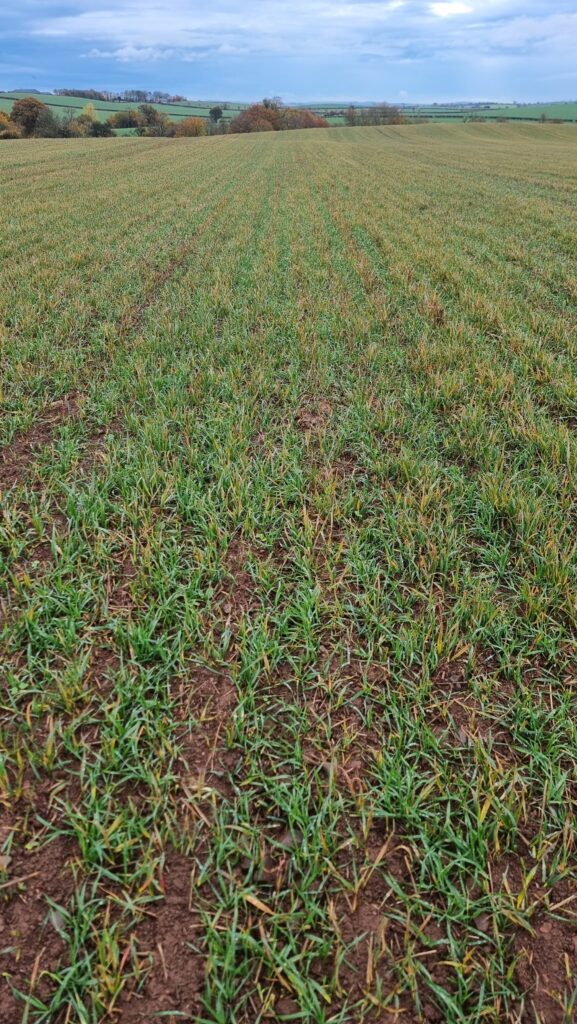
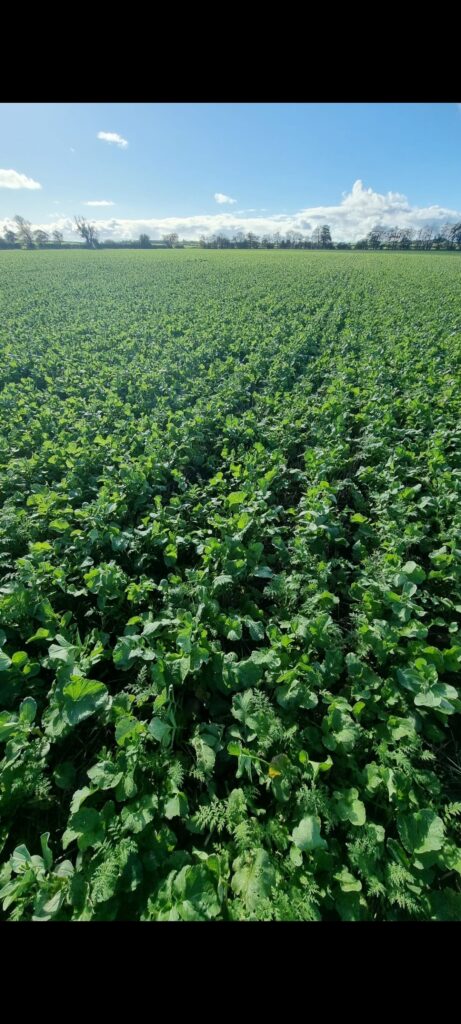
The problem arose with the nitrogen. I put down some N, P and K with the drill at sowing and then the balance after emergence, but even that proved too late this year. Normally, yield would dilute the nitrogen content but, whether it was residual nitrogen or bagged, it was taken up too late. The drill preserved the moisture, and I had a good even crop to start with but the lack of moisture after that meant the fertiliser sat on the top, producing some higher nitrogen spring barley, which isn’t the plan. The barley following a cover crop with a biomass of around 20t/ha had a slight problem: the grazing caused some poaching on lower heavier soils, and this baked a little when the weather dried up before sowing. The temptation is always to run through with some form of cultivation but those who did didn’t see any benefit; they just lost moisture. We are about to put the sheep onto one cover crop this month so I’m hoping for drier conditions underfoot.
I tried a seaweed extract trial over five tramlines in two spring barley fields this year. Two applications of 5l/ha: one at three leaves and then another three weeks later. I was expecting a visual colour difference in the crop but that didn’t happen. The yield maps in one field did show a slight increase in yield and I am hoping to do more trials this year to come to a better conclusion on its benefits.
The spring oats suffered from a stormy few days before harvest, which caused around one fifth of the crop to shed and end up on the ground. This created a problem with the following direct-drilled wheat crop as the dry conditions made a chit very difficult and the oats seemed to take over after seeding. I think the saving grace was the application of chicken muck prior to sowing, which helped the wheat grow through after the oats were sprayed off.
It is obvious to me that my soils are becoming less variable and more resilient with my direct drill system, although not totally extreme-weather proof yet. You can notice the difference in texture, and with the penetrometer, the lack of compaction is noticeable and really heartening to see. Some fields haven’t had any form of cultivation for around eight years, and they are noticeably easier to drill and are producing consistently good yields.
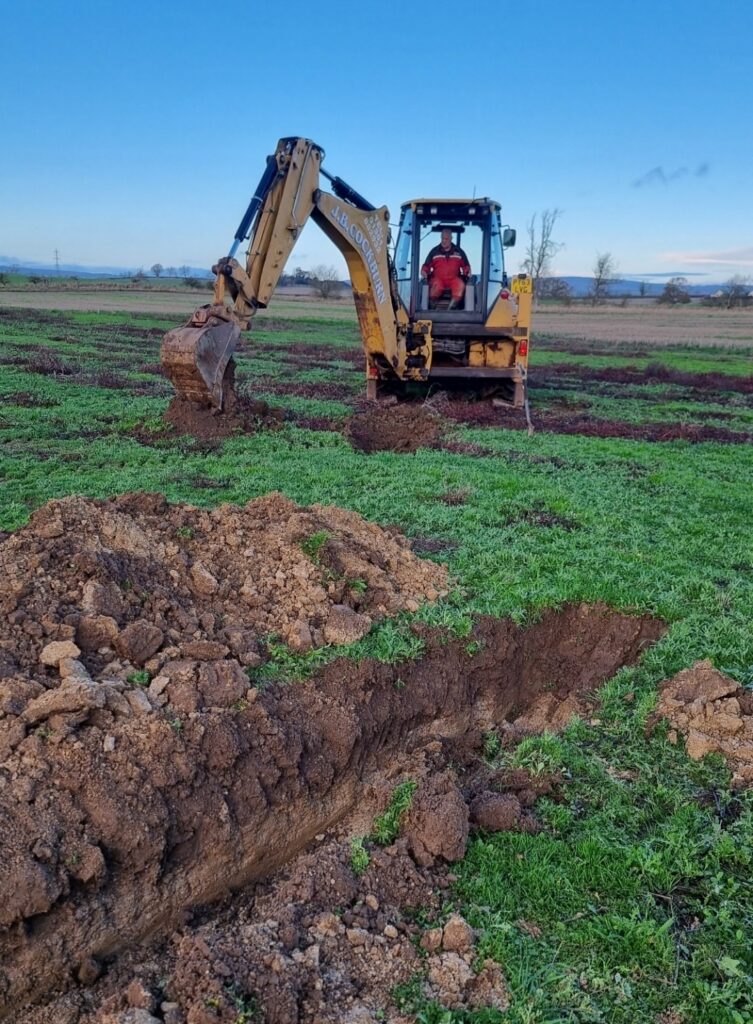
Drainage is still a priority, and I have been eyeing up an area prone to flooding for a while, hoping the jetter would fix the issue. An exploratory dig revealed all kinds of problems, with most drains completely full of silt and clay, so a new system looks to be more cost effective and a necessary investment. The drains we were finding from the two systems in that field were mostly hand dug and some are nine or 10 feet down. It blows my mind the effort required to lay these drains every 10 yards across all my fields. From someone who can’t muster the enthusiasm to dig my own garden, I thank these men for their skill and true resilience; I don’t suppose they needed to go to the gym too often. The very first systems they put in must have made a huge difference to farming in this area. The more recent ones installed in the 80s were done by digger but they don’t have such detailed maps. We now use our drone to picture the system after it is backfilled and that becomes the map. Good drainage is so important, and I am lucky that my father used drainage grants to put newer systems into most fields whenever it was possible. The second most important thing may be lime spreading. I have found the lack of winter ploughing gives me a larger window of opportunity to get lime onto stubbles over the winter months and that is paying off.
Malting barley has caused many problems again this year, with high nitrogen and screenings of up to 40% causing rejections or delaying uplift on many farms, mostly to the north of me. The response from the trade has been very poor: some changing contracts just before harvest and reducing the overall tonnage collected from many farms. Admittedly, the whisky industry is in a difficult period, but it still makes a huge quantity of product every year and its price doesn’t fall with demand. However, ours does. We need a fair-trade price and a contract that reflects the risk. We wrestle with the contradiction that quality and sustainability are key selling points, but the market buys on price and will buy inferior-quality imported goods because the margin is better. And all this while telling farming to “green up” its production methods. Equivalence is a word we should enforce more often. We are proud of our high standards. Nothing should come into this country that hasn’t been produced to UK standards or higher. We need to fix the supply chain; it just doesn’t work for the UK production priorities of quality, traceability, low carbon and provenance.