AHDB-funded trials will provide independent information on the potential of biofungicides in winter wheat. Jason Pole, AHDB Technical Content Manager, explains.
Options are good for disease management because they provide flexibility, add strength to integrated pest management (IPM) and help reduce fungicide resistance risks.
Biofungicides are an emerging area of interest, but they must get the job done or, at least, make a useful contribution to disease management to be taken seriously by most farmers and advisors.
This is why we have invested in a new biofungicides test pilot to establish how to integrate them in spray programmes.
What are biofungicides?
Before I detail the trials, it is worth exploring some definitions.
Biofungicides are biopesticides and, as such, are regulated as plant protection products.
Product labels can only make control claims if the authorisation holder/marketing company has submitted sufficient evidence to back them up.
This means you can have confidence in the product (proving you follow the usage information on the label).
Although also based on natural ingredients, different regulations apply to biostimulants. For such products, no disease control claims should be made, although they may indirectly reduce diseases by improving overall crop health, for example.
The Fungicide Resistance Action Committee (FRAC) classifies fungicides by their mode of action (MoA) group, which defines how and where the fungicide works and reveals four key groups that cover biofungicides.
Three of these cover biological products with multiple modes of action (the BM group), which mainly have a direct impact on pathogen targets. Some may also induce plant defence mechanisms.
Plant extracts (BM 01 group)
These plant-derived products are associated with several pathogen target sites, which include the ability to disrupt fungal structures. This group includes several plant oils, such as tea tree oil.
Living microbes (BM 02 group)
This group is associated with organisms that compete with or disrupt plant diseases. As they are living, they are relatively sensitive to environmental changes. For example, temperature often underpins their performance. This group covers fungal and bacterial organisms, with fungal competitors and antagonists most interesting (from a disease-control perspective).
Metabolites (BM 03 group)
Metabolites are associated with the substances that form following metabolic processes. It is also possible to create synthetic versions of natural metabolites. This group mainly targets cellular processes. At present, FRAC only cites cinnamaldehyde (contributes to cinnamon’s flavour) in this group.
Host plant defence induction (the P group)
This group covers substances that are associated with triggering or amplifying natural defence responses. As such, these products tend to indirectly impact on pathogens. The group is relatively diverse, featuring ten sub-groups: P 01 to P 10, which include various elicitors.
Biofungicide adoption
AHDB Horticulture invested in biopesticide research until levy collection ceased in this sector earlier this decade.
For instance, the AMBER and SCEPTREplus projects screened biopesticides to control commercially important diseases (and pests).
The former focused on protected edible, protected ornamental and hardy nursery stock crops, as biopesticide potential is often established in controlled environments.
The latter also considered field crops and, for example, assessed the potential of Bacillus amyloliquefaciens (formerly subtilis) strain QST 713.
Since then, a wide range of agricultural and horticultural crops have been added to the associated product labels for the management of various fungal diseases.
The work in horticulture laid a foundation for the arable sector, not only by compiling products, but also by developing trial approaches and improving understanding of biopesticide application.
Initial work (not funded by AHDB) has also looked at cereal biofungicides, such as trials that compared conventional programmes with purely biological programmes (Crop Health North project, 2017–20) and ongoing novel biofungicide screens (DEFRA/UKRI work).
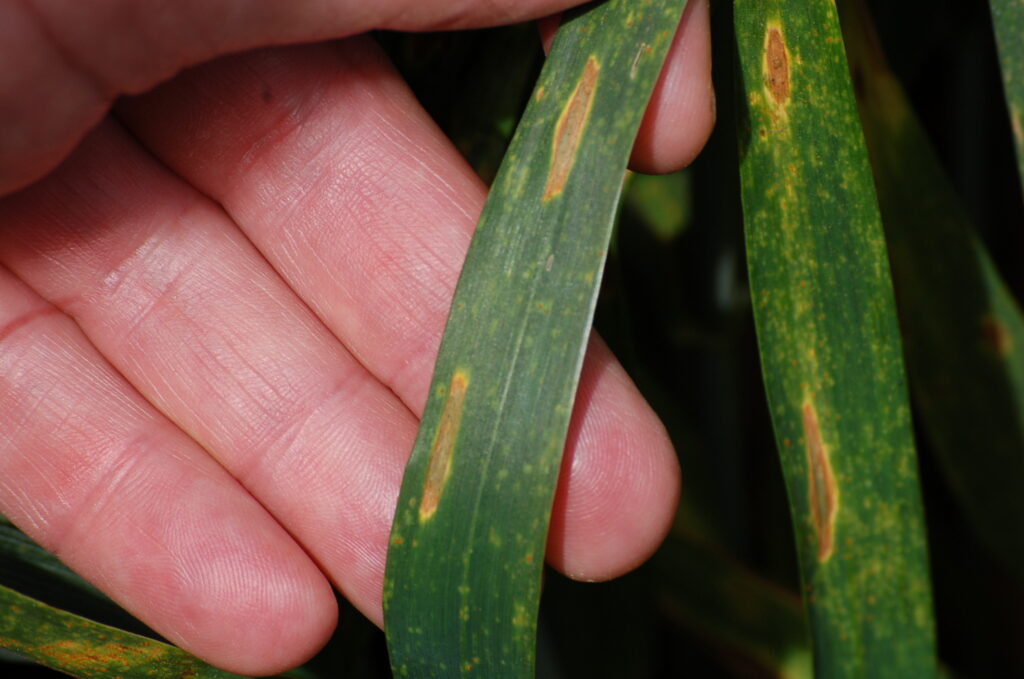
It is early days and very few products are available for commercial UK wheat crops.One example is laminarin (an elicitor of host-plant defences) products, which have label claims for disease control (such as for septoria tritici).
There is clear levy-payer demand for robust biofungicide data, particularly for information on efficacy in field conditions, which needs to consider many factors, such as weather, varietal resistance, disease progression and the wider spray programme.
Wheat pilot
Following a competitive research call in 2025, we awarded a contract (£178,467) for the biofungicides test pilot to a consortium of organisations: SRUC, Niab and ADAS.
This group already manages our extensive network of fungicide performance trials in wheat, barley and oilseed rape and has excellent connections with the agrochemical industry, which will help identify the strongest products to trial (whether they are at or approaching the market).
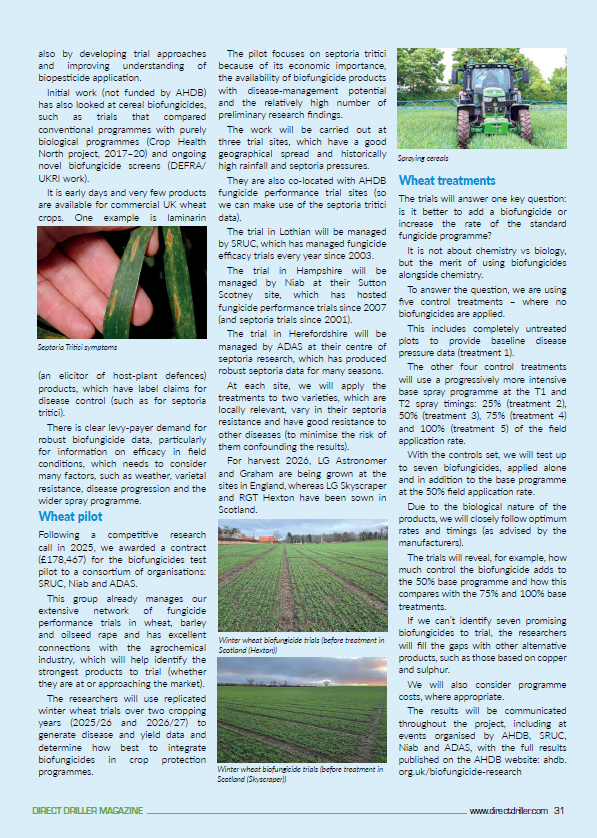
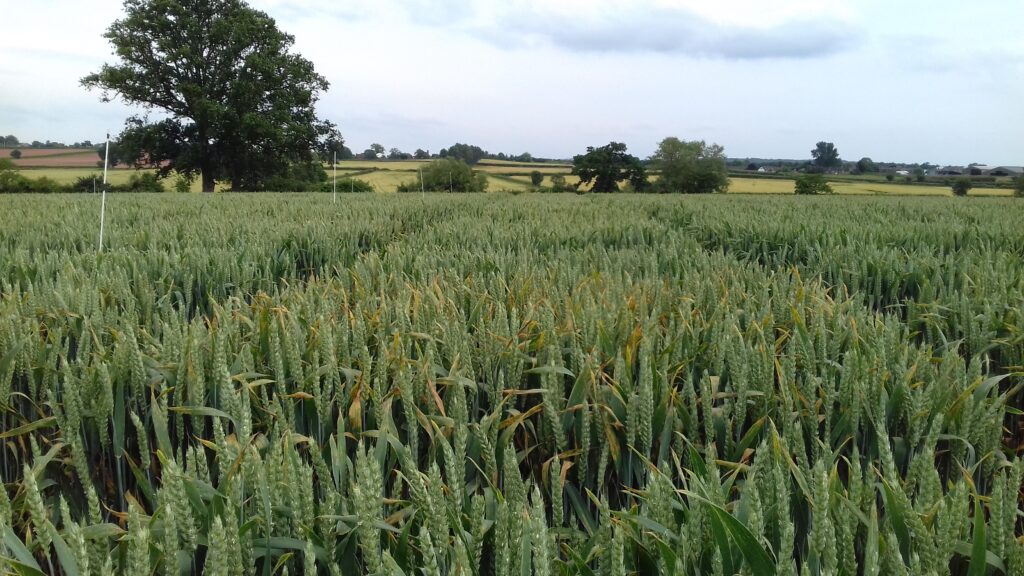
The researchers will use replicated winter wheat trials over two cropping years (2025/26 and 2026/27) to generate disease and yield data and determine how best to integrate biofungicides in crop protection programmes.
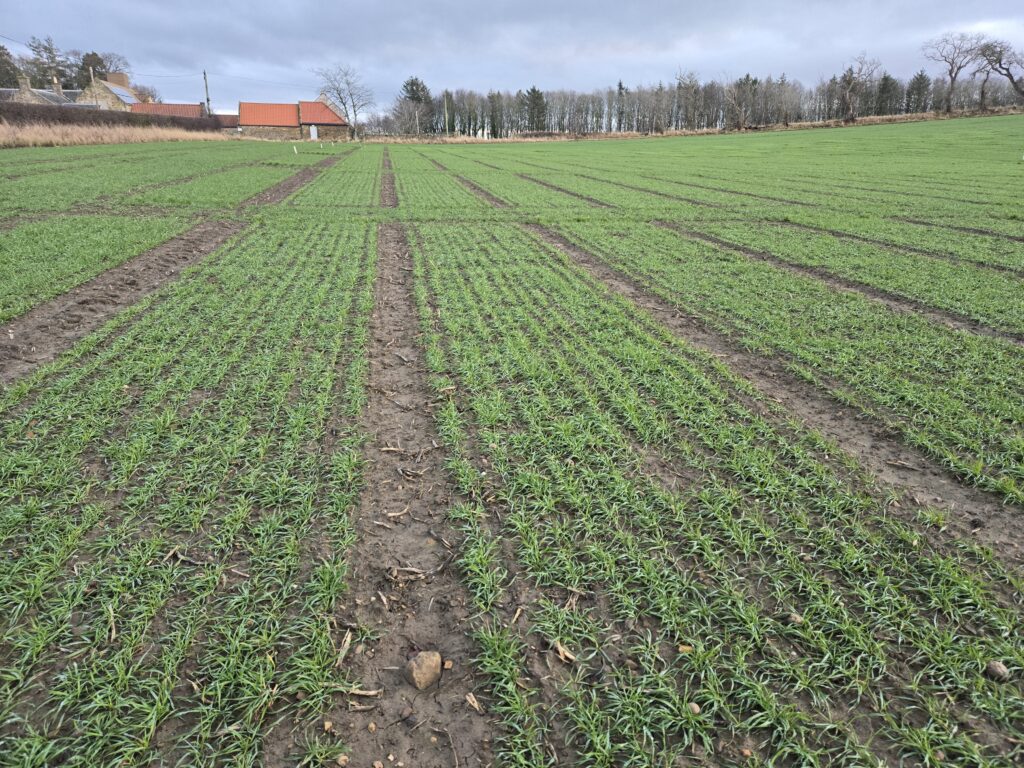
The pilot focuses on septoria tritici because of its economic importance, the availability of biofungicide products with disease-management potential and the relatively high number of preliminary research findings.
The work will be carried out at three trial sites, which have a good geographical spread and historically high rainfall and septoria pressures.
They are also co-located with AHDB fungicide performance trial sites (so we can make use of the septoria tritici data).
The trial in Lothian will be managed by SRUC, which has managed fungicide efficacy trials every year since 2003.
The trial in Hampshire will be managed by Niab at their Sutton Scotney site, which has hosted fungicide performance trials since 2007 (and septoria trials since 2001).
The trial in Herefordshire will be managed by ADAS at their centre of septoria research, which has produced robust septoria data for many seasons.
At each site, we will apply the treatments to two varieties, which are locally relevant, vary in their septoria resistance and have good resistance to other diseases (to minimise the risk of them confounding the results).
For harvest 2026, LG Astronomer and Graham are being grown at the sites in England, whereas LG Skyscraper and RGT Hexton have been sown in Scotland.
Wheat treatments
The trials will answer one key question: is it better to add a biofungicide or increase the rate of the standard fungicide programme?
It is not about chemistry vs biology, but the merit of using biofungicides alongside chemistry.
To answer the question, we are using five control treatments – where no biofungicides are applied.
This includes completely untreated plots to provide baseline disease pressure data (treatment 1).
The other four control treatments will use a progressively more intensive base spray programme at the T1 and T2 spray timings: 25% (treatment 2), 50% (treatment 3), 75% (treatment 4) and 100% (treatment 5) of the field application rate.
With the controls set, we will test up to seven biofungicides, applied alone and in addition to the base programme at the 50% field application rate.
Due to the biological nature of the products, we will closely follow optimum rates and timings (as advised by the manufacturers).
The trials will reveal, for example, how much control the biofungicide adds to the 50% base programme and how this compares with the 75% and 100% base treatments.
If we can’t identify seven promising biofungicides to trial, the researchers will fill the gaps with other alternative products, such as those based on copper and sulphur.
We will also consider programme costs, where appropriate.
The results will be communicated throughout the project, including at events organised by AHDB, SRUC, Niab and ADAS, with the full results published on the AHDB website: ahdb.org.uk/biofungicide-research