Dog & Stick – Survival Mode
Apr 2026
For many arable farms, good management on its own is no longer enough. Right now, combinable cropping feels increasingly like a high-stakes gamble, and survival may depend less on pushing forward and more on stripping the business back to the basics.
There are times in farming when good management really can make the difference. Times when attention to detail, sensible buying decisions, technical progress and a willingness to adapt can still tilt the odds in your favour. I still believe all of that matters, probably more than ever. But I also think there are moments when honesty matters most of all, and right now, honesty tells me that for many combinable crop farms, especially businesses like mine, this is not really a season of progress. It is a season of survival.
That is not me being negative for effect, and it is not me having a moan just because things feel tough. It is simply a realistic view of where the economics of arable farming now sit. On my farm, and I suspect on plenty of others, it feels like we are right in the middle of a perfect storm. Last year’s weather knocked yields back and immediately reduced the amount of output available to spread fixed costs over. Normally, you might hope that if production is down, prices would at least offer some compensation, but that has not really happened in any meaningful way. Commodity prices remain poor, forward prices are hardly exciting, and the market seems remarkably uninterested in the fact that the cost of growing the crop has gone sharply the other way.
At the same time, support mechanisms that many businesses had built into their thinking have either disappeared or become unreliable. BPS has gone or is going, which we all knew was coming, but SFI looked as though it might provide part of the answer, and then suddenly looked a lot less secure. That matters not just financially but mentally as well. For years, we have all been told to become more efficient, more resilient, less reliant on subsidy, more environmentally aware and more innovative. Many of us have done exactly that. We have reduced cultivations, cut metal, challenged machinery costs, improved soils, adopted direct drilling, reduced labour where possible and tried to build businesses that can stand on their own feet. But there comes a point where resilience starts to look suspiciously like being expected to absorb every blow entirely on your own.
And the blows keep coming. Inflation has pushed up costs across the board. Repairs cost more, labour costs more, machinery parts cost more, finance costs more, insurance costs more; everything has ratcheted up. Then, just as margins were already looking wafer-thin, recent events in the Middle East have piled yet more pressure on the system. Reuters has reported that the conflict has disrupted energy markets, cut LNG flows and hit fertiliser trade through the Strait of Hormuz, with urea prices rising sharply as a result.
That is where things start to feel genuinely absurd. Essential inputs such as nitrogen fertiliser have become dramatically more expensive in a very short space of time, but without any matching improvement in forward cereal prices. So, we are now staring at a situation where planting cereal crops this autumn could mean doing so knowing, on the figures in front of us today, that we are likely planting at a loss. The only real justification for doing it would be the hope that prices rise between autumn and next harvest. That is not a sensible or businesslike way to make decisions. It is not sound planning; it is gambling.
I think that is the uncomfortable truth at the heart of where we are. The question is no longer simply whether a farm can grow a crop efficiently. The question is whether growing that crop represents a sensible commercial decision at all. That may sound like an odd thing for an arable farmer to say, but I think it needs saying. At current margins, with current volatility, with policy uncertainty where it is, and with working capital demands rising, planting a crop often feels less like an investment and more like a bet.
Think about what we are really doing. Before the combine has turned a wheel, before we know what the spring and summer weather will throw at us, before world politics has finished moving fertiliser and grain markets around, we have already committed a very large amount of capital. Seed, fertiliser, sprays, labour, diesel, machinery wear, rent, finance, insurance; it all starts stacking up early. By the time the crop is in the ground and established, a sizeable amount of money is already exposed, and exposed without any guarantee of a sensible return. Yes, we can budget. Yes, we can sharpen the pencil. Yes, we can market grain better and improve technical performance. All of that helps. But there comes a point where so much sits outside our control that we have to be honest with ourselves. If the likely margin is thin and the downside risk is huge, then what we are doing starts to look a lot like speculation, just dressed up in muddy boots.
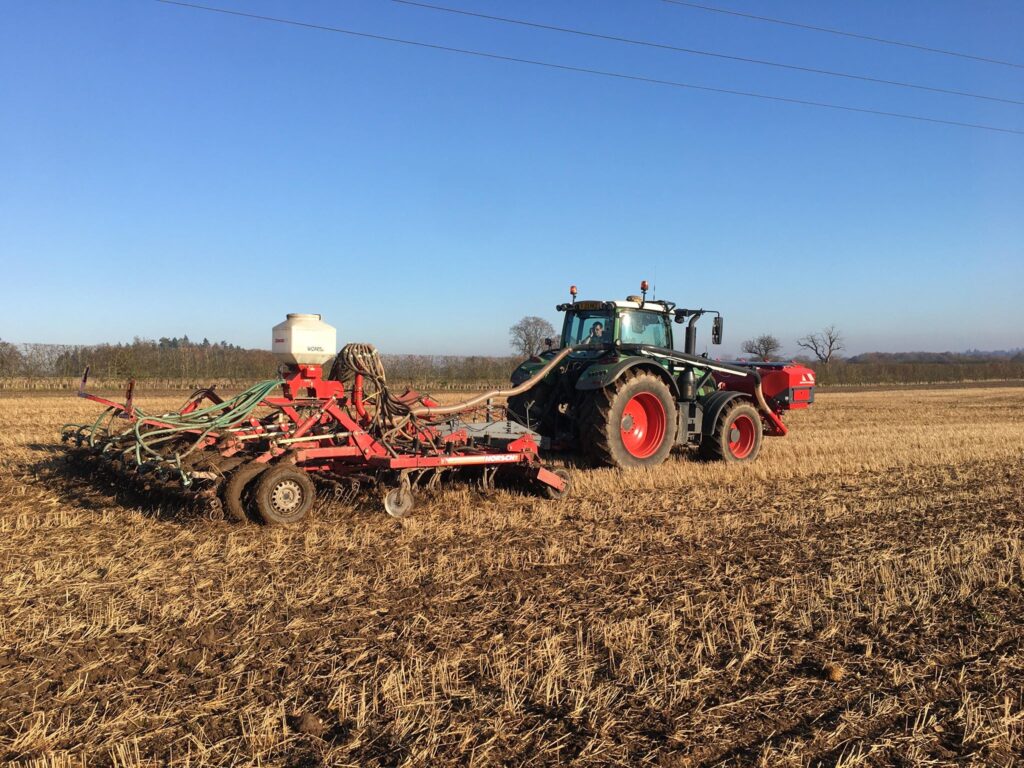
In fact, if someone genuinely wanted to gamble on combinable crops, they could do it far more simply from a desk, trading futures and options. No tractors, no labour issues, no workshop bills, no establishment risk, no weather on the back of your neck all season. The difference is that they would know they were gambling. In farming, we sometimes pretend we are not, because we are producing something tangible, but that does not alter the economics underneath.
Cash flow is where this becomes very real indeed. We can talk all day about margin per hectare and cost of production, and of course, those things matter, but the capital requirement to grow a crop has risen sharply. Even where the budget still suggests there might be a small positive margin left at the end, the amount of cash tied up getting there is much higher than it used to be. Working capital is stretched. Overdrafts are tested. Input credit gets leaned on harder. And all of that is happening before you know what yield you are going to cut or what price you will finally achieve.
A lot of businesses will already be close to the limit of what the bank or merchant is comfortable with. Banks, understandably enough, do not love lending heavily into something that increasingly resembles a bet. If the figures look marginal before the seed is even in the ground, the issue is no longer just profitability; it is whether cropping can be funded properly in the first place. That is a deeply uncomfortable place for a sector to be, because once fundability becomes part of the discussion, you know the economics underneath are in a bad way.
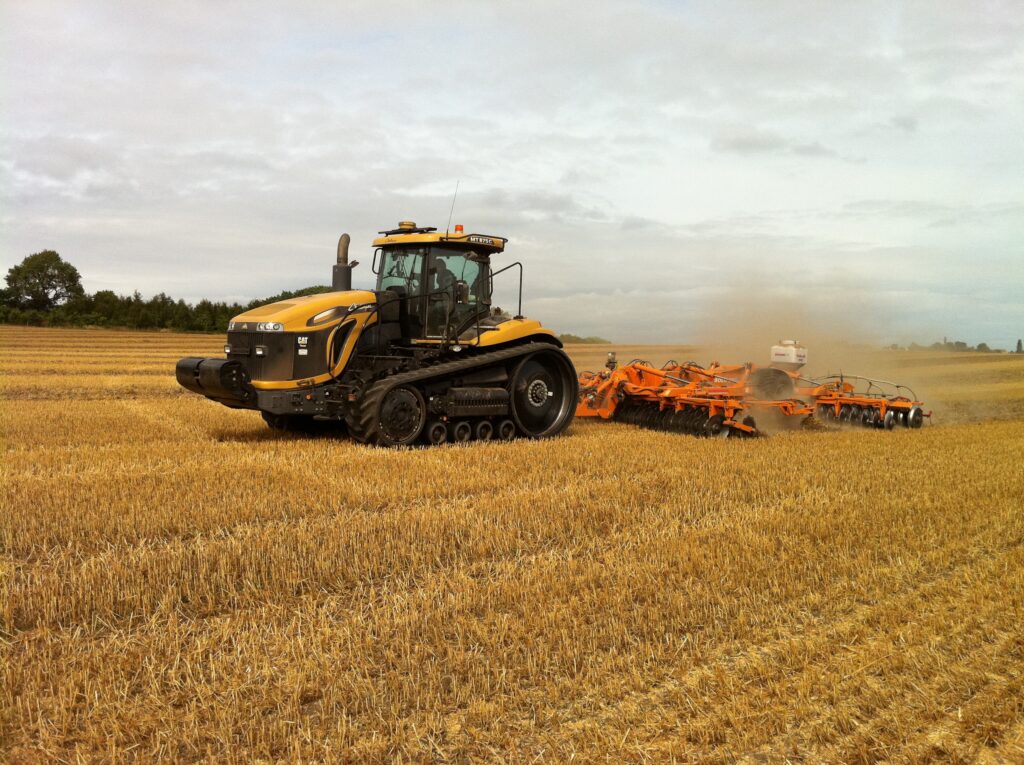
Whenever farming faces a difficult spell, I think it is worth looking backwards as well as forwards. The details change, technology changes, ministers change (generally not for the better), but the basic truths of farm economics rarely do. The solution to many current or future problems usually lies somewhere in history. British agriculture has been through depressions before, and while this one may have its own modern ingredients, the broad lesson is much the same. When output value is poor and margins are broken, survival generally does not come from spending more, adding more complexity or convincing yourself that one more shiny bit of kit will somehow save the day.
That is why I keep coming back to the old phrase, dog-and-stick farmer.
I have seen some people take that too literally, as if it is purely a livestock phrase meaning a chap with a collie and not much else. I think that misses the point completely. To me, dog-and-stick farming is really a mindset, and one that applies just as much to arable as it does to stock. It means that when output is poor, margins are miserable and events well beyond your control are stacked against you, survival comes from stripping the business back to its essentials. Minimum fixed-cost structure, minimum capital spending, minimum unnecessary complexity, minimum financial commitments that have to be fed before the business itself can breathe. In other words, when times are bad enough, the answer is not usually more; it is less.
That way of thinking has increasingly shaped my own decisions. In truth, it sharpened significantly after Rachel Reeves’ Budget in 2024. When the changes around APR and BPR were announced, the incentive to invest felt as though it had disappeared almost overnight. I am not saying nobody should ever buy a machine again, or that investment is always wrong, but the whole lens through which capital spending was viewed changed immediately. If investment was already difficult to justify on a pure return basis, it became even harder to justify if all I might really be doing was storing up a bigger inheritance tax headache for the next generation.
Since then, everything else that has happened – poor yields, low grain prices, uncertainty around support, rising input costs – has only reinforced the same conclusion. This is not the time to be loading the business with more depreciation, more finance payments or more standing costs. So, what have I done? Quite simply, I have spent the absolute minimum possible on capital. Not nothing, because farming still has to function, but as little as I can get away with. We buy the inputs we need. We carry out the repairs and maintenance that are genuinely necessary to keep the operation safe and effective. We keep the core business moving. But beyond that, the wallet stays shut.
I am not interested at the moment in shiny machinery, in expansion for the sake of it, or in investment that looks clever in the yard but quietly adds another burden to the profit and loss account. I do not need another repayment. I do not need another depreciating asset. I do not need another standing cost that has to be fed before the business can feed me. What I need, and what I think many farms need right now, is resilience.
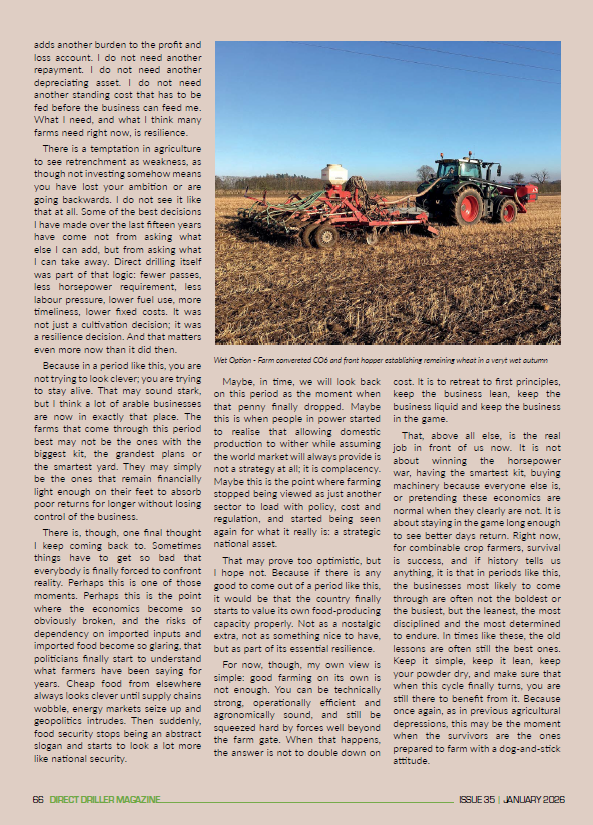
There is a temptation in agriculture to see retrenchment as weakness, as though not investing somehow means you have lost your ambition or are going backwards. I do not see it like that at all. Some of the best decisions I have made over the last fifteen years have come not from asking what else I can add, but from asking what I can take away. Direct drilling itself was part of that logic: fewer passes, less horsepower requirement, less labour pressure, lower fuel use, more timeliness, lower fixed costs. It was not just a cultivation decision; it was a resilience decision. And that matters even more now than it did then.
Because in a period like this, you are not trying to look clever; you are trying to stay alive. That may sound stark, but I think a lot of arable businesses are now in exactly that place. The farms that come through this period best may not be the ones with the biggest kit, the grandest plans or the smartest yard. They may simply be the ones that remain financially light enough on their feet to absorb poor returns for longer without losing control of the business.
There is, though, one final thought I keep coming back to. Sometimes things have to get so bad that everybody is finally forced to confront reality. Perhaps this is one of those moments. Perhaps this is the point where the economics become so obviously broken, and the risks of dependency on imported inputs and imported food become so glaring, that politicians finally start to understand what farmers have been saying for years. Cheap food from elsewhere always looks clever until supply chains wobble, energy markets seize up and geopolitics intrudes. Then suddenly, food security stops being an abstract slogan and starts to look a lot more like national security.
Maybe, in time, we will look back on this period as the moment when that penny finally dropped. Maybe this is when people in power started to realise that allowing domestic production to wither while assuming the world market will always provide is not a strategy at all; it is complacency. Maybe this is the point where farming stopped being viewed as just another sector to load with policy, cost and regulation, and started being seen again for what it really is: a strategic national asset.
That may prove too optimistic, but I hope not. Because if there is any good to come out of a period like this, it would be that the country finally starts to value its own food-producing capacity properly. Not as a nostalgic extra, not as something nice to have, but as part of its essential resilience.
For now, though, my own view is simple: good farming on its own is not enough. You can be technically strong, operationally efficient and agronomically sound, and still be squeezed hard by forces well beyond the farm gate. When that happens, the answer is not to double down on cost. It is to retreat to first principles, keep the business lean, keep the business liquid and keep the business in the game.
That, above all else, is the real job in front of us now. It is not about winning the horsepower war, having the smartest kit, buying machinery because everyone else is, or pretending these economics are normal when they clearly are not. It is about staying in the game long enough to see better days return. Right now, for combinable crop farmers, survival is success, and if history tells us anything, it is that in periods like this, the businesses most likely to come through are often not the boldest or the busiest, but the leanest, the most disciplined and the most determined to endure. In times like these, the old lessons are often still the best ones. Keep it simple, keep it lean, keep your powder dry, and make sure that when this cycle finally turns, you are still there to benefit from it. Because once again, as in previous agricultural depressions, this may be the moment when the survivors are the ones prepared to farm with a dog-and-stick attitude.