Mar 2026
Ryan McCormack
Farmers Weekly Farm Manager of the Year 2025, Dennington Hall Farms in East Suffolk, a 1,600ha arable farm with 12-year rotation and a suckler herd of Red Poll cattle. Woodland, Countryside stewardship Mid-tier, 4x SFI agreement, residential and commercial property and Bruisyard Country Estate (wedding and events business).
Straight after the NFU conference on the 25th February, I left Birmingham and made my way to Heathrow Airport to catch an Etihad flight for a 10-day holiday in the Maldives. Now, I’m not saying I go on many holidays and, to be honest, I’m not even sure I enjoy going away due to having to leave the farm behind with 1,400 lambs grazing cover crops, Red Poll cows calving and land just getting dry enough to travel for the first dose of fertiliser. That said, it is good to get away, relax, and it gives my head some time to clear, re-evaluate and focus.
We travelled via Abu Dhabi to Malé, hopped on a small seaplane and eventually turned up on Thursday afternoon at a picture-perfect island with white sand, clear water and plenty of food and drink. By Saturday morning, a bit of anxiety kicked in when scrolling BBC News to discover that Donald Trump had decided to “bomb, bomb Iran”, which in turn closed all airspace for our scheduled return flight. Thoughts go out to anybody caught up in the middle of a war, and naturally, I had some concern about how I was going to get home safely in a few days’ time. But then came the next thought – what does this mean for us farming back in the UK?
I don’t need to explain to anybody reading this what followed. Fuel and fertiliser prices increased, in some cases doubled, and ordering diesel without knowing the price on delivery became a real concern. It made me think back to the overall theme of the NFU conference and a word that we really need to work towards: resilience.
Every farming business will have a different strategy, different core values, different direction and different outcomes, and resilience will mean something different to each of us. But overall, we all need to be more resilient to withstand the more frequent shocks that we seem to keep facing as an industry and as a nation.
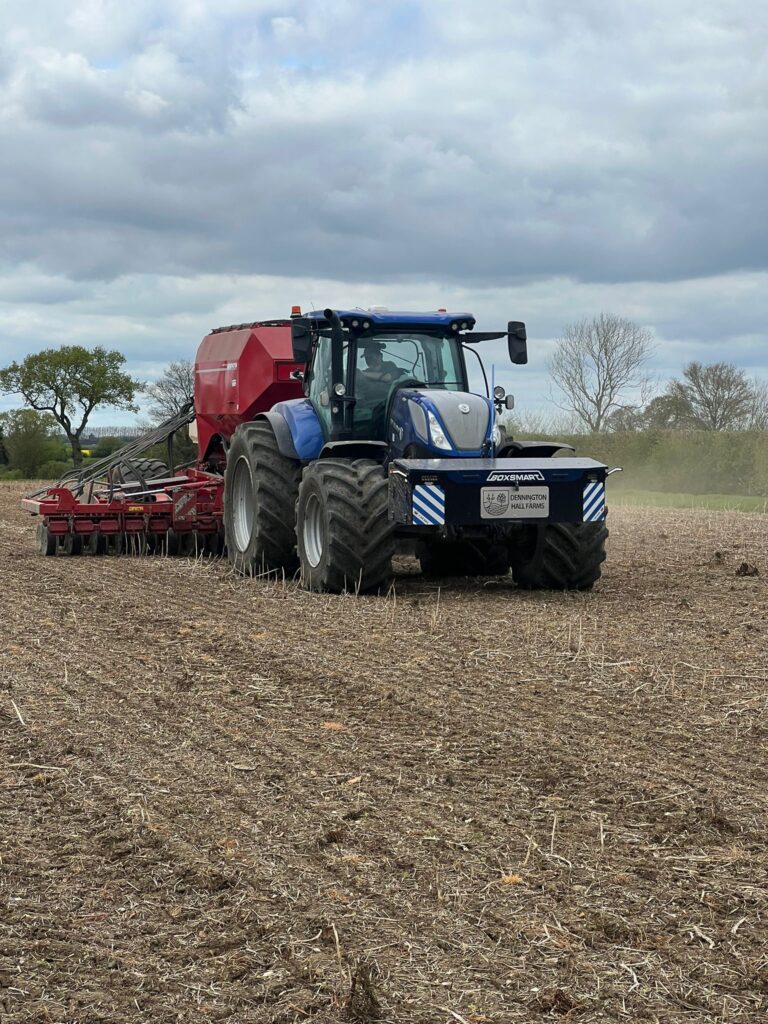
Here at Dennington Hall Farms in East Suffolk, we are putting a real focus on creating what I believe is a resilient business. One of our biggest focuses is our soils. We have matched our machinery to suit the soil type, rotation and our ambition to look after and improve soil health. This includes direct drills, a low-disturbance subsoiler, a grain chaser bin, wider tyres and central tyre inflation on the primary tractors. We are now operating a 12-year rotation, including overwinter cover crops, summer catch crops, rotational muck spreading of FYM, mole ploughing and in-depth soil analysis every four years. Livestock has also been introduced back into the arable system, with mob grazing lambs on cover crops, and when conditions allow, cattle grazing covers as well.
Alongside this, we have recently started an ADOPT-funded project called Roots of Change, partnering with NIAB, Limagrain and Thomas Todd. This project will help us better understand exactly what role cover crops and summer catch crops are playing in the soil, alongside a legume bi-crop, and ultimately the impact on the following crop, with the aim of reducing reliance on fertiliser.
The need to better understand our soils was really brought home to me when I listened to Dr David Purdy speak at our most recent AHDB Monitor Farm event. That night, I actually questioned myself – do I even know what I’m doing, and what impact I am having on the one thing I can’t replace, the soil? Listening to somebody talk about my own soils with such passion and knowledge has really rekindled the passion in me to understand them better. When you truly understand what your soil analysis is telling you, you can then make the right improvements.
I do have a question for all readers. Do you really know what you’re doing? How many of us go through the motions because we’ve always done it that way? Why do we grow the crops we grow? Do we blame the weather for failing crops rather than the decisions we’ve made? Do we actually read into our soil analysis and understand what’s going on below our feet? To create resilience, we probably need to start answering some of these questions. I’m not saying we all need to know everything, but even a rough understanding could lead to different decisions.
Our second focus is around reducing inputs. As mentioned, soil-friendly machinery is helping reduce the need for diesel; improved soil health and FYM are reducing the need for full-rate fertiliser; and with a healthier growing medium, we hope to reduce the need for fungicides. Some of the other work we are doing includes hosting the Limagrain Demo Farm for the East. In my opinion, this could be the future of how farmers choose varieties to grow on their own farms. We have 13 different varieties of wheat growing across three different establishment techniques, six hybrid oilseed rape varieties on full tramline widths, and a number of barley plots. We also have five different Limagrain wheat varieties growing across the farm, following different crops, cultivations and drill dates. On the 4th June, we will open the farm for people to come and see these trials at farm scale.
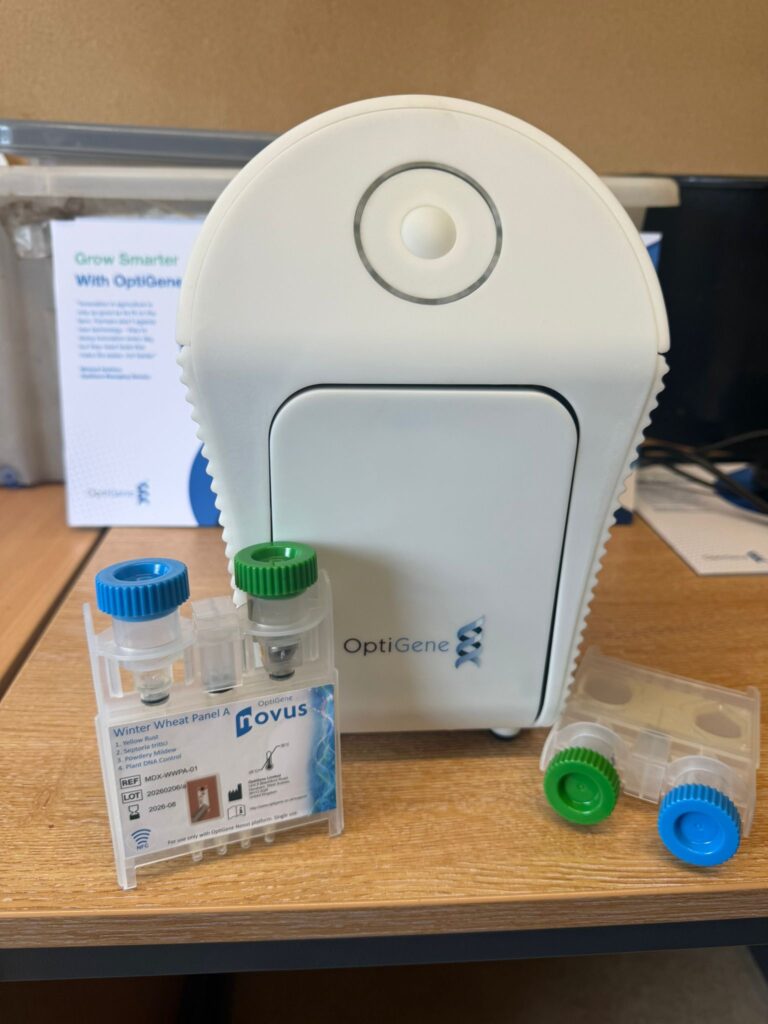
Technology has also been introduced, as we have taken delivery of an Optigene MDx4a plant DNA reader. This allows us to carry out rapid tests, within 30 minutes, from a leaf sample to determine if a pathogen is actually present within the plant and has reached the threshold requiring treatment. It is early days, but I am really excited to feed back to the Optigene team with my findings. It feels a bit like having a crystal ball when it comes to disease monitoring. Plans are also in place to construct new grain storage using biomass heat for drying, building on the two biomass boilers already producing heat and hot water across the estate.
My third focus, and the last one for this article, is adding value. We are growing Wildfarmed wheat on around 50 hectares and learning a lot about supply chain, lowering inputs and the wider effects on soil and the environment. It has been really interesting to try farming differently within the Wildfarmed system. Some of our other crops have also undergone real scrutiny, and we are now growing more seed crops, such as peas, triticale and spring barley, along with a 7ha trial of broad bean seed.
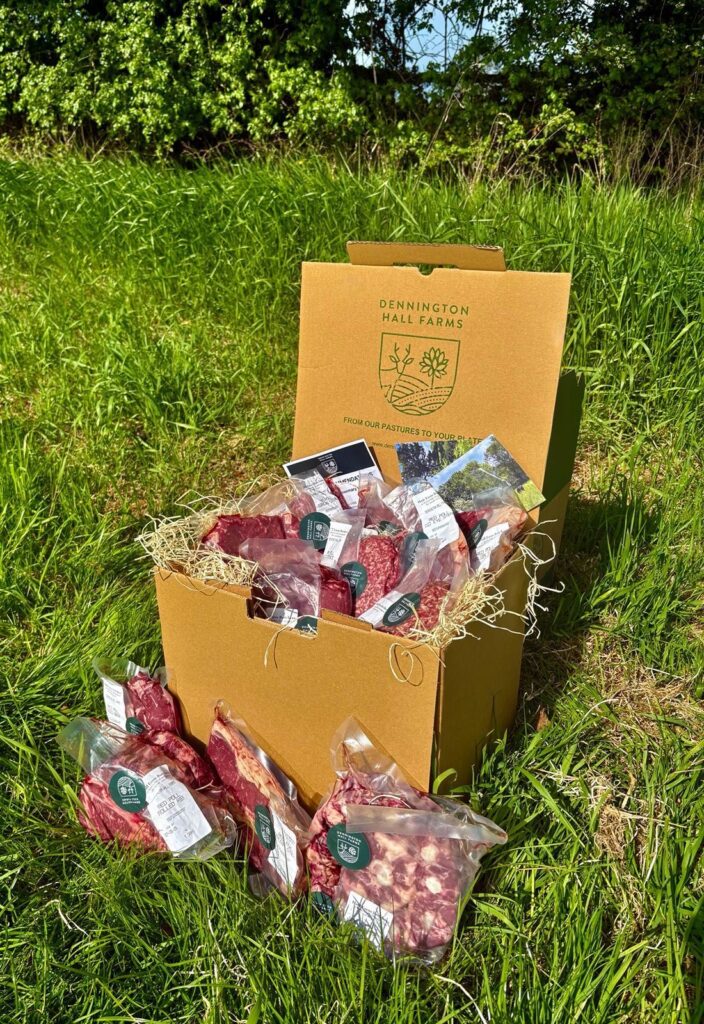
The BASE conference earlier this year also highlighted that we need to look at taking more control of the supply chain – food for thought, quite literally. We have already started supplying our own beef direct to consumers through online meat box sales, with customers able to have it delivered to their doorstep or collected from the farm. Could this happen with some of our crops? Could we add more value? Watch this space.
And finally, yes, I did make it home to sunny Suffolk, although it involved a 14-hour wait in Malé airport and a direct repatriation flight into Manchester. Thankfully, I had paid for extended parking at Heathrow.