Agroforestry is an agroecological-based approach that combines trees and shrubs with crops, livestock or both, to help create diverse, productive and resilient farming models. Farmers are increasingly looking at integrating trees to help with climate resilience, biodiversity benefits and farm productivity, but knowing where to start can feel daunting. Agricology have produced an online Agroforestry Hub which has been designed with an emphasis on making agroforestry more accessible and helping guide the practical application of it according to each unique farm circumstance. The Hub helps farmers and land managers explore, plan and implement agroforestry in the context of all the various agroforestry types: silvopasture, silvoarable, silvohorticulture, woodland grazing and hedgerow management.
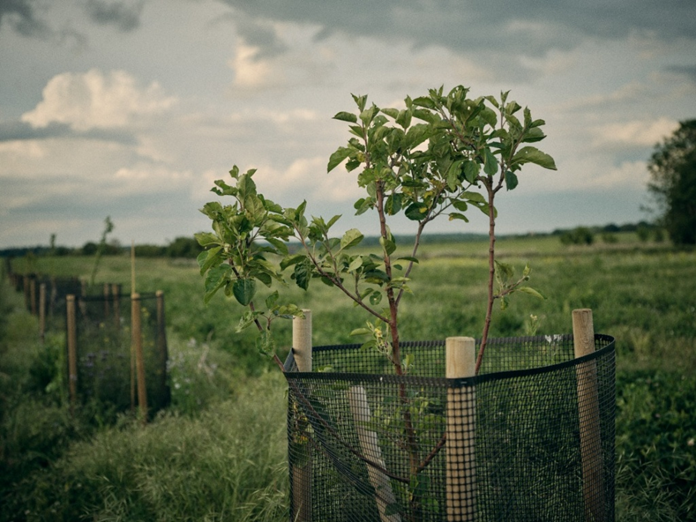
One of many fruit and nut trees growing in a silvoarable system at Hall Farm in Knettishall, Suffolk, as featured in the Agricology farmer profile for James Bucher. Photo credit Duncan Elliott. All Rights Reserved
Structured as a learning journey, it is shaped to help farmers navigate the complexity that is often involved in applying specific practices to a particular farming system. It brings together a wealth of practical knowledge, case studies and research from Agricology’s extensive archive and partner organisations, including the Woodland Trust, Wakelyns, Organic Research Centre, University of Reading, Groundswell, Innovative Farmers, and the Soil Association. By showcasing examples ranging from Wakelyns’ pioneering alley-cropping system to upland crofters planting thousands of native trees, it demonstrates the wide variety of ways agroforestry can be adapted to different contexts and scales.
The Hub features farmer profiles, research summaries, podcasts, videos and toolkits, highlighting both the opportunities and challenges of farming with trees. Divided into easily navigable sections with step-by-step resources, the user can begin with exploring content that offers an introduction to the key components of agroforestry, followed by content relating to some of the different types of agroforestry systems, providing a flavour of the characteristic features of each category. Case studies unique to Agricology, of farmers across the UK practising agroforestry in different forms are showcased, digging into design and management, benefits and challenges, and what motivates and inspires.
The user can also find guidance on design, establishment and maintenance tofeed into planning an agroforestry system, which includes information on tree species selection, and topics to support long-term system health, such as pruning and maintenance, livestock integration and overcoming common challenges. The all-important economic benefits agroforestry can bring, and diversification of farm income are covered, as is information on how trees can support wildlife on your farm and the wider benefits that can come from this. The user can also delve into some key considerations in relation to policy, payment and advice.
To explore the free Agroforestry Hub, visit https://agricology.co.uk/resource/agroforestry-hub/.

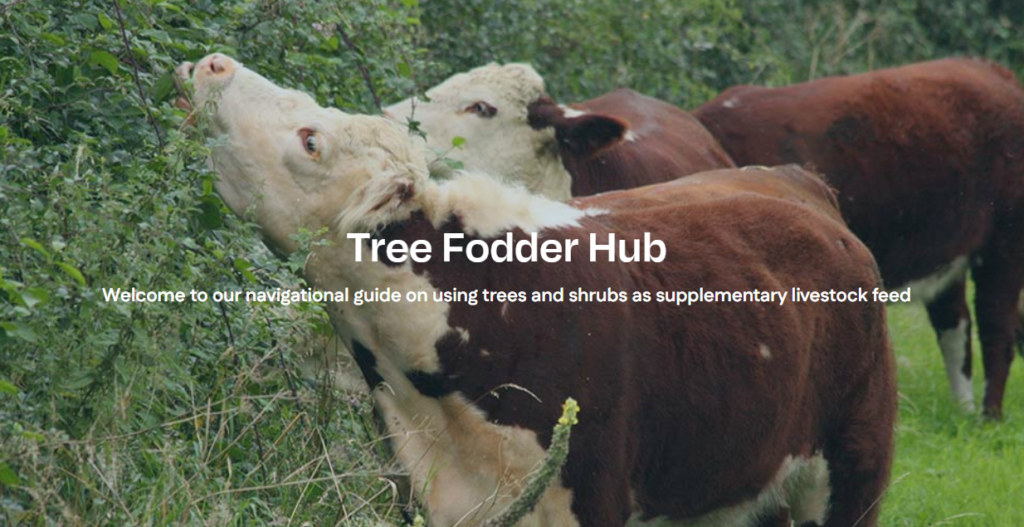
For those interested in tree fodder (a livestock feed derived from trees and shrubs), there is another hub and accompanying technical guide focused on this topic that have just become live on Agricology. They bring together peer-reviewed research and anecdotal evidence of what farmers might need to know when considering integrating tree fodder as a supplementary feed into farming systems.
Explore the Tree Fodder Technical Guide here and the Tree Fodder Hub here . [KN1]
https://agricology.co.uk/resource/tree-fodder-hub