Welcome to Cransley. I have been here a little over a year now, enough time to settle in and get a good understanding of the business, its potential and the expectations of the directors.
The farm extends to a little over 500 hectares, currently all in arable cropping, except for some small areas of woodland, including an SSSI (Site of Special Scientific Interest), and a few grass margins. Soils are predominantly a sandy silt loam with a long history of poultry manure applications. This gives us plenty of fertility; however, they are prone to erosion and capping when we experience heavy rainfall events. There are three broiler sheds on the farm, currently rented out to a third party to manage. The farm gets all the poultry manure from these sheds.
The harvest and autumn of 2025 was one to remember. The combine only took one day off from the start to the finish, with a reasonable tonnage of grain not needing to be dried at all; for the benefit of the southern readers, this is rare.
The easy and early harvest allowed us to establish all the winter oats and wheat early. I stuck with the farm’s current establishment method: the plough and power harrow. This kept the job simple and allowed me to see all the soil turned over. This, I find, is a crude but simple way to assess the state of the soil across the whole farm. I also tried some direct drilling with a Claydon drill. This appears to have worked well, so much so that I purchased a second-hand one over the winter. Like many in our industry, I find the cost of brand-new machinery hard to stomach, particularly when there seems to be a plethora of good used alternatives available at reasonable money.
There are several reasons for this decision. Firstly, the desire to reduce the impact of heavy rainfall events on the soil. As most readers of this article will be aware, the ability to establish a crop successfully, while leaving the soil protected by some crop residue, is very important under these circumstances. Secondly, the design of the drill will allow us to remove any shallow compaction generated by the manure spreaders as the hen pen is applied. Thirdly, this system will allow a reduction in the costs associated with crop establishment, important in a climate of ever-tightening margins. There will be plenty of other benefits like improvements in soil structure, I have no doubt, but they will perhaps take a bit longer to realise.
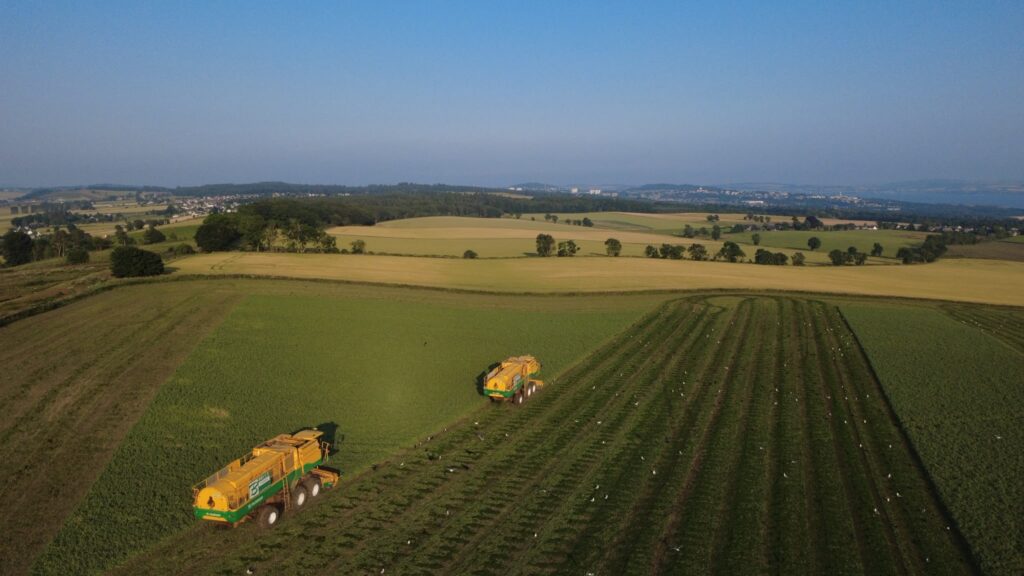
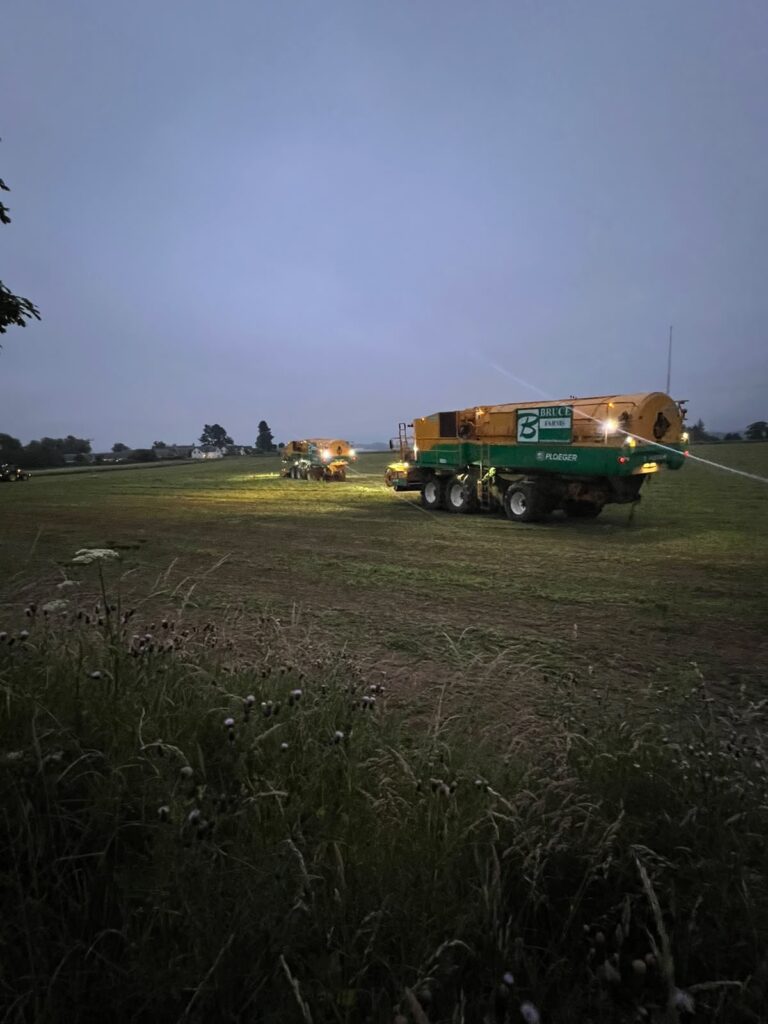
I have tweaked the rotation to allow maximum use of direct drilling, before ploughing for vining peas. (The pea growers are hesitant to move to non-inversion establishment at the moment.) The rotation will be vining peas, winter oats, OSR, winter wheat, spring oats, winter wheat. This sees a reduction in the wheat area by a third. Financially, this should not make a difference when balanced with a reduction in fixed costs; indeed, the overall margin should improve when all ducks line up in time.
We had a go at grazing sheep across some of the established crops over the winter. Unfortunately, we chose the wettest spell of the winter to start… hindsight is great stuff. There was a bit of damage on a couple of fields where the crop was thinned out too much. I think the fragility of the soil under such conditions became obvious during this period. However, we were soon out of this and grazing under better conditions. The results have been pretty much as I expected; visually, the grazed fields have much less disease within the crop canopy.
We had a group of New Zealand farmers visit us in June. The group were members of a forward-thinking organisation called Future Farmers New Zealand (www.futurefarmers.org.nz). They were touring farms in the UK, starting with The James Hutton Institute (www.hutton.ac.uk), which is next door to Cransley. They were following a 12-day itinerary that was very well organised by Rebecca Goodwin of BASE-UK (www.base-uk.co.uk) and finished with two days at Groundswell. All the farm visits were opened up to BASE-UK members. We hosted a group of a dozen people; this is a great number as it allows for some really good conversation with everyone getting involved.
We dug a soil pit with a digger as a discussion point, and so I could get a good look at any damage that grazing sheep in the wet might have done. What we saw was pleasing: no pan created by the sheep, strong rooting down over 600mm, despite there being evidence of a plough pan, and sufficient moisture to see us to harvest. I would have liked to have seen deeper rooting, but that is something that can be worked on. I fully appreciate that we are lucky farming where we do, and I feel for those further south who are suffering in all the heat and dry conditions. I don’t think we will be immune from these events in the future, though; many Scottish soils do dry out quickly, and we seem to stumble from too wet to too dry in a very short space of time. Does this mean there is a bit of work to be done on our soil if we are honest with ourselves? Figures from the YEN (Yield Enhancement Network) suggest that rooting depth and yield are strongly linked, mostly as a result of the plants’ ability to access enough water for full production.
The discussion was wide and varied, with all points of view respected, but still rigorously tested. I find these meetings very invigorating, usually with a long list of ideas floating round my head for weeks afterwards.
Attention is now turning towards harvest; we will probably have something ready to cut by the second week of August. There are plans to broadcast cover crop seed into some standing crops if there is sufficient soil moisture for establishment. If not, then these will be drilled into harvested stubbles. With these cover crops and the winter cash crops to be sown, the plan is to have nearly all the farm benefitting from living roots over the winter, in readiness for more sheep.
I would like to wish you all a safe and successful harvest and autumn season, and hard though it may seem at times, try to take a little time to enjoy it too – harvest is a wonderful time of the year.