Data is the new frontier in agriculture, but the battle lines are already being drawn over who gets to extract its value. Earlier at Groundswell 2026, an AHDB panel discussed the Farm Data Exchange, a system designed to aggregate farm data for supply chains, with AHDB Chair Emily Norton starkly suggesting that providing environmental data will simply become a “condition of doing business”, rather than a monetisable asset for farmers.
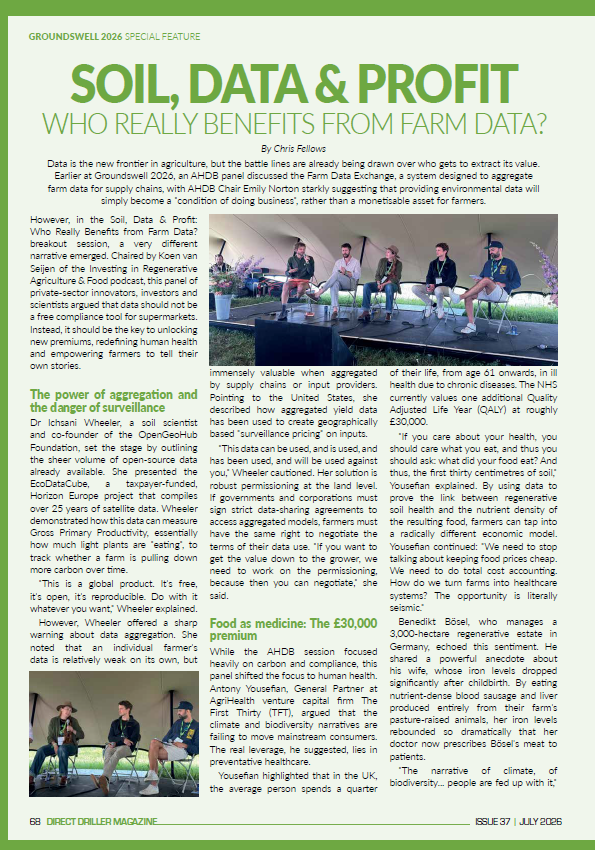
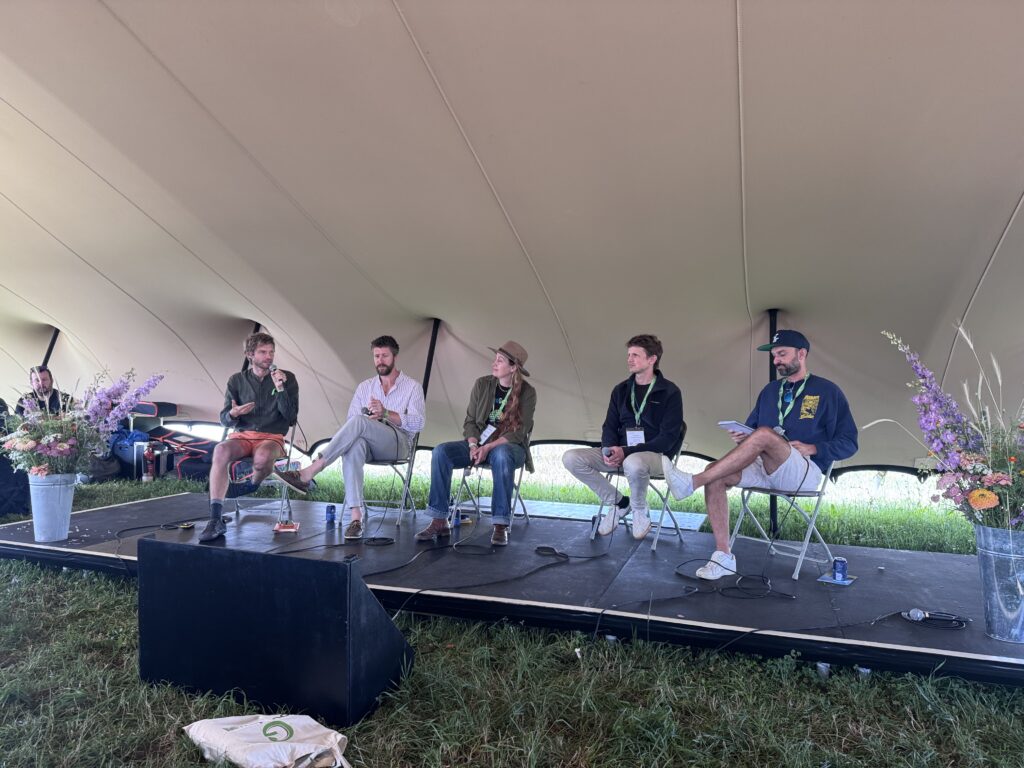
However, in the Soil, Data & Profit: Who Really Benefits from Farm Data? breakout session, a very different narrative emerged. Chaired by Koen van Seijen of the Investing in Regenerative Agriculture & Food podcast, this panel of private-sector innovators, investors and scientists argued that data should not be a free compliance tool for supermarkets. Instead, it should be the key to unlocking new premiums, redefining human health and empowering farmers to tell their own stories.
The power of aggregation and the danger of surveillance
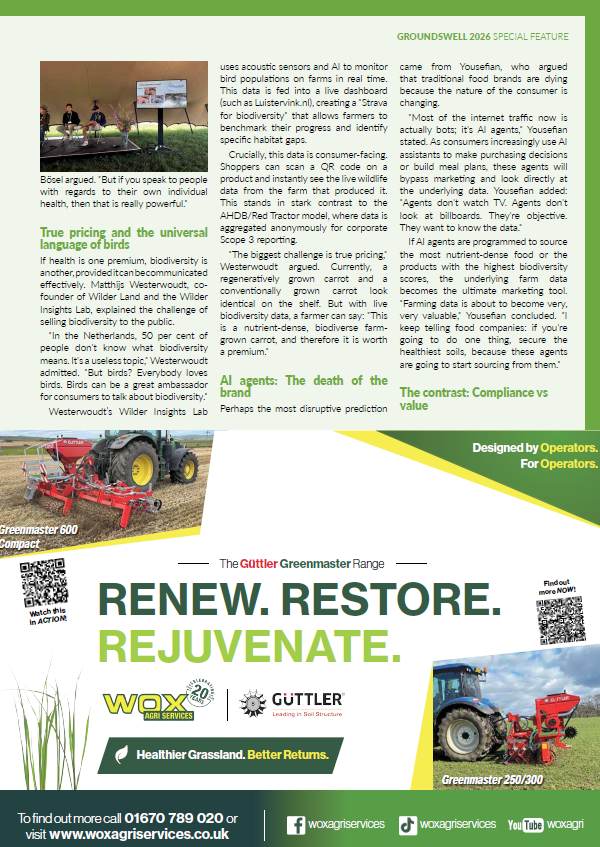
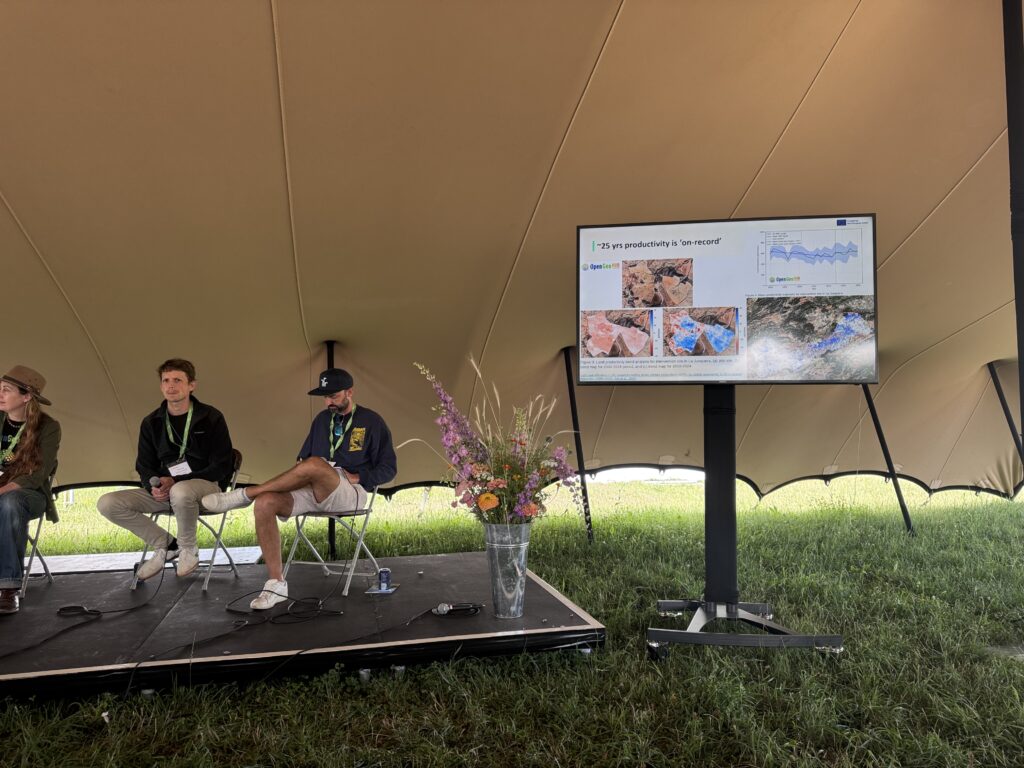
Dr Ichsani Wheeler, a soil scientist and co-founder of the OpenGeoHub Foundation, set the stage by outlining the sheer volume of open-source data already available. She presented the EcoDataCube, a taxpayer-funded, Horizon Europe project that compiles over 25 years of satellite data. Wheeler demonstrated how this data can measure Gross Primary Productivity, essentially how much light plants are “eating”, to track whether a farm is pulling down more carbon over time.
“This is a global product. It’s free, it’s open, it’s reproducible. Do with it whatever you want,” Wheeler explained.
However, Wheeler offered a sharp warning about data aggregation. She noted that an individual farmer’s data is relatively weak on its own, but immensely valuable when aggregated by supply chains or input providers. Pointing to the United States, she described how aggregated yield data has been used to create geographically based “surveillance pricing” on inputs. “This data can be used, and is used, and has been used, and will be used against you,” Wheeler cautioned. Her solution is robust permissioning at the land level. If governments and corporations must sign strict data-sharing agreements to access aggregated models, farmers must have the same right to negotiate the terms of their data use. “If you want to get the value down to the grower, we need to work on the permissioning, because then you can negotiate,” she said.
Food as medicine: The £30,000 premium
While the AHDB session focused heavily on carbon and compliance, this panel shifted the focus to human health. Antony Yousefian, General Partner at AgriHealth venture capital firm The First Thirty (TFT), argued that the climate and biodiversity narratives are failing to move mainstream consumers. The real leverage, he suggested, lies in preventative healthcare.
Yousefian highlighted that in the UK, the average person spends a quarter of their life, from age 61 onwards, in ill health due to chronic diseases. The NHS currently values one additional Quality Adjusted Life Year (QALY) at roughly £30,000.
“If you care about your health, you should care what you eat, and thus you should ask: what did your food eat? And thus, the first thirty centimetres of soil,” Yousefian explained. By using data to prove the link between regenerative soil health and the nutrient density of the resulting food, farmers can tap into a radically different economic model. Yousefian continued: “We need to stop talking about keeping food prices cheap. We need to do total cost accounting. How do we turn farms into healthcare systems? The opportunity is literally seismic.”
Benedikt Bösel, who manages a 3,000-hectare regenerative estate in Germany, echoed this sentiment. He shared a powerful anecdote about his wife, whose iron levels dropped significantly after childbirth. By eating nutrient-dense blood sausage and liver produced entirely from their farm’s pasture-raised animals, her iron levels rebounded so dramatically that her doctor now prescribes Bösel’s meat to patients.
“The narrative of climate, of biodiversity… people are fed up with it,” Bösel argued. “But if you speak to people with regards to their own individual health, then that is really powerful.”
True pricing and the universal language of birds
If health is one premium, biodiversity is another, provided it can be communicated effectively. Matthijs Westerwoudt, co-founder of Wilder Land and the Wilder Insights Lab, explained the challenge of selling biodiversity to the public.
“In the Netherlands, 50 per cent of people don’t know what biodiversity means. It’s a useless topic,” Westerwoudt admitted. “But birds? Everybody loves birds. Birds can be a great ambassador for consumers to talk about biodiversity.”
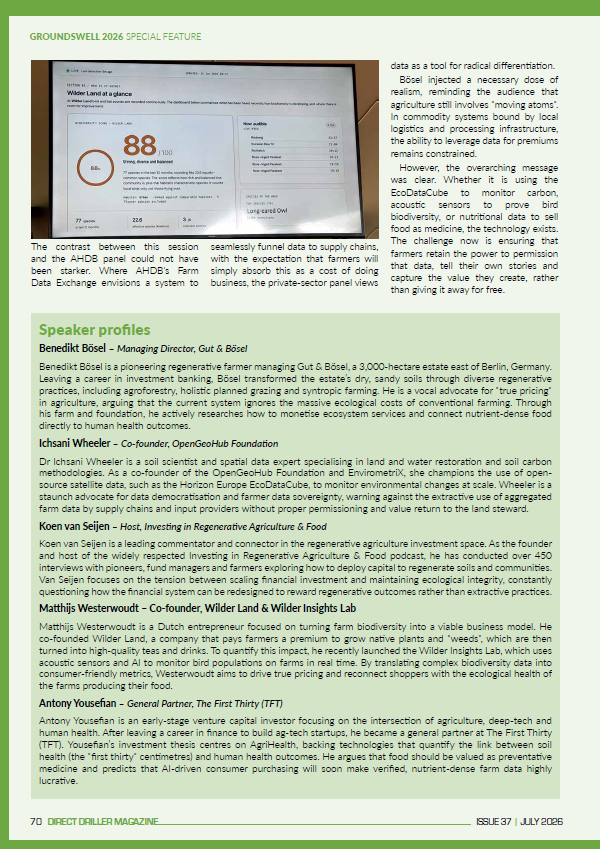
Westerwoudt’s Wilder Insights Lab uses acoustic sensors and AI to monitor bird populations on farms in real time. This data is fed into a live dashboard (such as Luistervink.nl), creating a “Strava for biodiversity” that allows farmers to benchmark their progress and identify specific habitat gaps.
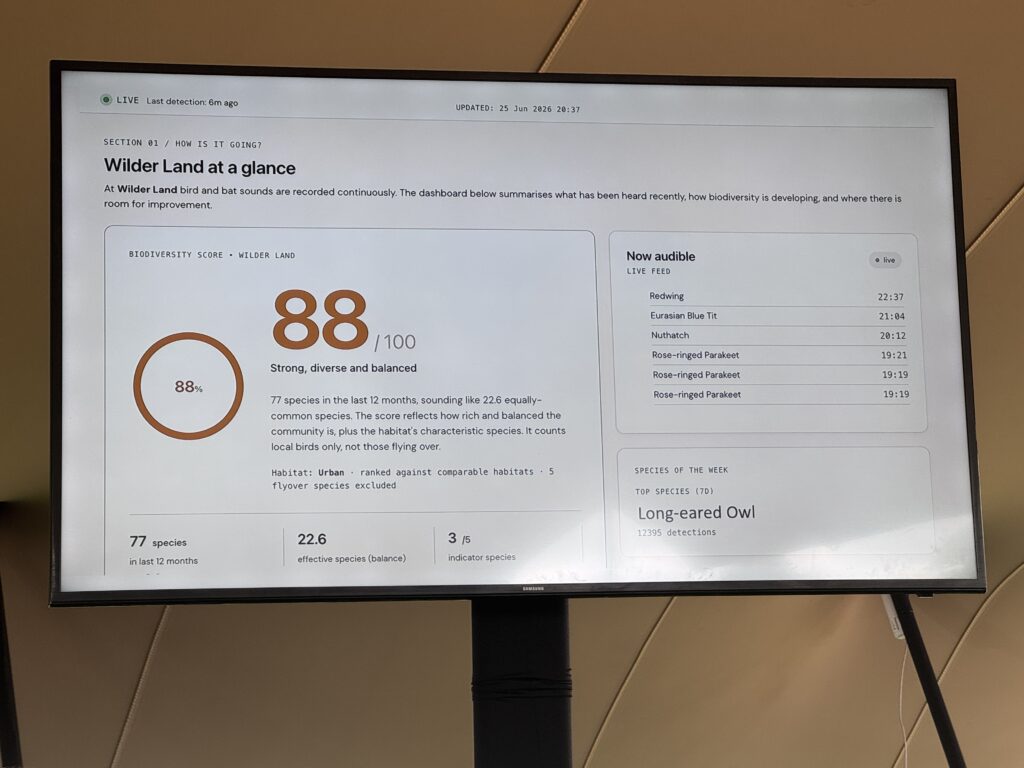
Crucially, this data is consumer-facing. Shoppers can scan a QR code on a product and instantly see the live wildlife data from the farm that produced it. This stands in stark contrast to the AHDB/Red Tractor model, where data is aggregated anonymously for corporate Scope 3 reporting.
“The biggest challenge is true pricing,” Westerwoudt argued. Currently, a regeneratively grown carrot and a conventionally grown carrot look identical on the shelf. But with live biodiversity data, a farmer can say: “This is a nutrient-dense, biodiverse farm-grown carrot, and therefore it is worth a premium.”
AI agents: The death of the brand
Perhaps the most disruptive prediction came from Yousefian, who argued that traditional food brands are dying because the nature of the consumer is changing.
“Most of the internet traffic now is actually bots; it’s AI agents,” Yousefian stated. As consumers increasingly use AI assistants to make purchasing decisions or build meal plans, these agents will bypass marketing and look directly at the underlying data. Yousefian added: “Agents don’t watch TV. Agents don’t look at billboards. They’re objective. They want to know the data.”
If AI agents are programmed to source the most nutrient-dense food or the products with the highest biodiversity scores, the underlying farm data becomes the ultimate marketing tool. “Farming data is about to become very, very valuable,” Yousefian concluded. “I keep telling food companies: if you’re going to do one thing, secure the healthiest soils, because these agents are going to start sourcing from them.”
The contrast: Compliance vs value
The contrast between this session and the AHDB panel could not have been starker. Where AHDB’s Farm Data Exchange envisions a system to seamlessly funnel data to supply chains, with the expectation that farmers will simply absorb this as a cost of doing business, the private-sector panel views data as a tool for radical differentiation.
Bösel injected a necessary dose of realism, reminding the audience that agriculture still involves “moving atoms”. In commodity systems bound by local logistics and processing infrastructure, the ability to leverage data for premiums remains constrained.
However, the overarching message was clear. Whether it is using the EcoDataCube to monitor carbon, acoustic sensors to prove bird biodiversity, or nutritional data to sell food as medicine, the technology exists. The challenge now is ensuring that farmers retain the power to permission that data, tell their own stories and capture the value they create, rather than giving it away for free.
Speaker profiles
Benedikt Bösel – Managing Director, Gut & Bösel
Benedikt Bösel is a pioneering regenerative farmer managing Gut & Bösel, a 3,000-hectare estate east of Berlin, Germany. Leaving a career in investment banking, Bösel transformed the estate’s dry, sandy soils through diverse regenerative practices, including agroforestry, holistic planned grazing and syntropic farming. He is a vocal advocate for “true pricing” in agriculture, arguing that the current system ignores the massive ecological costs of conventional farming. Through his farm and foundation, he actively researches how to monetise ecosystem services and connect nutrient-dense food directly to human health outcomes.
Ichsani Wheeler – Co-founder, OpenGeoHub Foundation
Dr Ichsani Wheeler is a soil scientist and spatial data expert specialising in land and water restoration and soil carbon methodologies. As a co-founder of the OpenGeoHub Foundation and EnvirometriX, she champions the use of open-source satellite data, such as the Horizon Europe EcoDataCube, to monitor environmental changes at scale. Wheeler is a staunch advocate for data democratisation and farmer data sovereignty, warning against the extractive use of aggregated farm data by supply chains and input providers without proper permissioning and value return to the land steward.
Koen van Seijen – Host, Investing in Regenerative Agriculture & Food
Koen van Seijen is a leading commentator and connector in the regenerative agriculture investment space. As the founder and host of the widely respected Investing in Regenerative Agriculture & Food podcast, he has conducted over 450 interviews with pioneers, fund managers and farmers exploring how to deploy capital to regenerate soils and communities. Van Seijen focuses on the tension between scaling financial investment and maintaining ecological integrity, constantly questioning how the financial system can be redesigned to reward regenerative outcomes rather than extractive practices.
Matthijs Westerwoudt – Co-founder, Wilder Land & Wilder Insights Lab
Matthijs Westerwoudt is a Dutch entrepreneur focused on turning farm biodiversity into a viable business model. He co-founded Wilder Land, a company that pays farmers a premium to grow native plants and “weeds”, which are then turned into high-quality teas and drinks. To quantify this impact, he recently launched the Wilder Insights Lab, which uses acoustic sensors and AI to monitor bird populations on farms in real time. By translating complex biodiversity data into consumer-friendly metrics, Westerwoudt aims to drive true pricing and reconnect shoppers with the ecological health of the farms producing their food.
Antony Yousefian – General Partner, The First Thirty (TFT)
Antony Yousefian is an early-stage venture capital investor focusing on the intersection of agriculture, deep-tech and human health. After leaving a career in finance to build ag-tech startups, he became a general partner at The First Thirty (TFT). Yousefian’s investment thesis centres on AgriHealth, backing technologies that quantify the link between soil health (the “first thirty” centimetres) and human health outcomes. He argues that food should be valued as preventative medicine and predicts that AI-driven consumer purchasing will soon make verified, nutrient-dense farm data highly lucrative.