
Mat Hutchings is FMC’s Senior Commercial Technical Manager for the East Midlands and Ireland. Previous to his role at FMC, he was an agronomist covering farms on the south coast.
For many direct drillers, glyphosate remains the cornerstone of successful crop establishment. Its effectiveness has made it arguably the most important tool underpinning modern zero-till systems. Yet as pressure on glyphosate continues to increase both from evolving weed resistance and from regulatory scrutiny, the industry faces an important question. How do we preserve this chemistry for the future?
While glyphosate resistance remains relatively limited in the UK compared with countries such as Australia, the United States and parts of South America, international experience offers a stark warning. In many cases, resistance evolved where glyphosate became the sole or dominant weed control strategy year after year.
In the absence of cultivations, glyphosate does a significant amount of the heavy lifting. Every weed which survives through to maturity and produces seed, provides the chance for a resistant population to arise, increasing the pressure on future glyphosate applications.
So, the answer lies not simply in how we use glyphosate, but in how we hold it up.
One of the most effective ways to achieve this is through robust pre-emergence herbicide programmes containing various modes of action.
Against a backdrop of increasingly constrained weed control strategies, the approval of Fundatis (Isoflex active + Beflubutamid) last autumn stood out as a significant achievement.
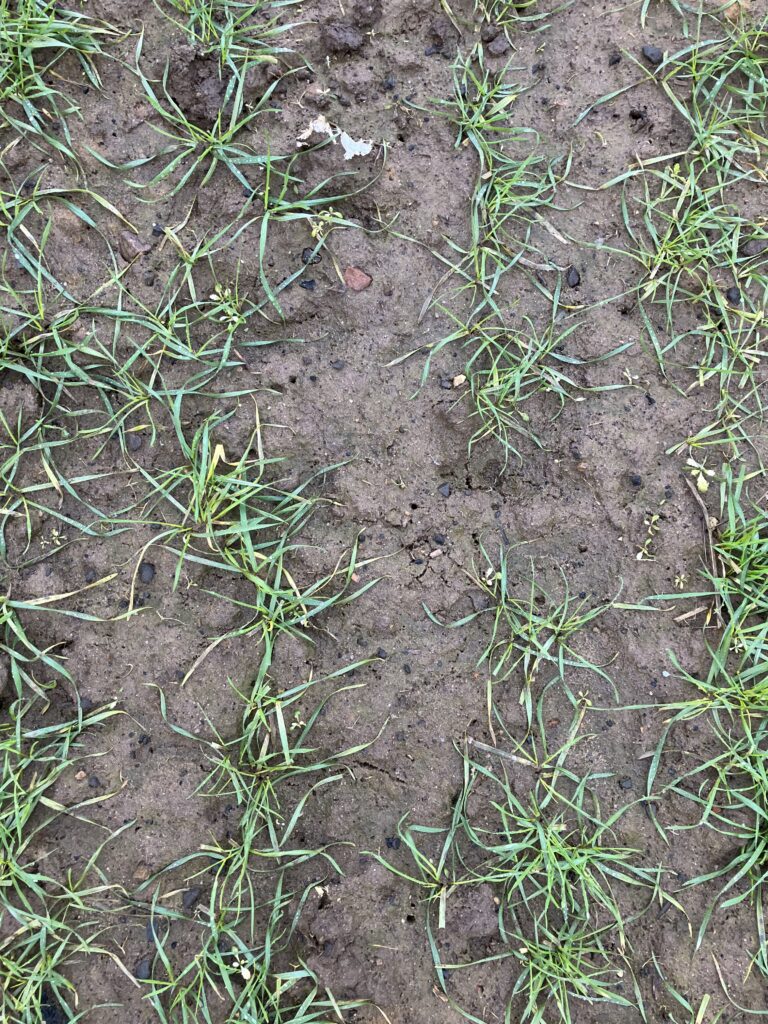
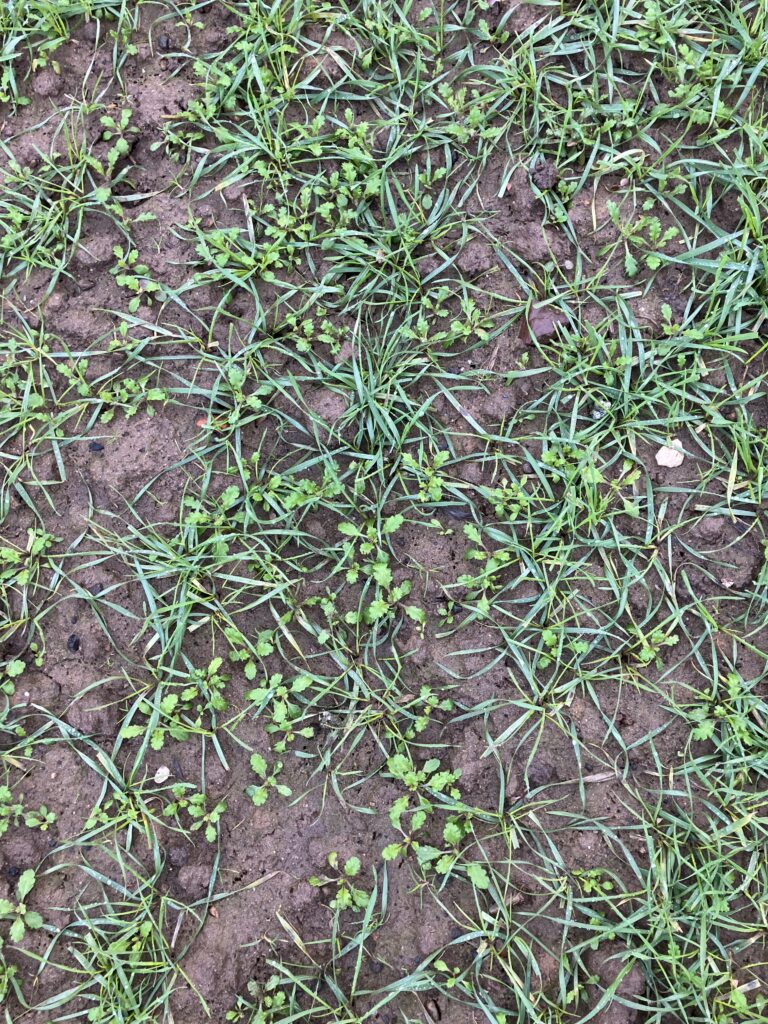
While no product should ever be viewed as a silver bullet, the introduction of Fundatis provides growers with another opportunity to diversify weed control programmes and avoid relying on a very limited number of actives.
It brings two new active ingredients to the GB market, along with a novel mode of action to winter wheat and winter barley autumn weed control programmes, expanding the toolkit available to growers at a time of increasing resistance pressure.
By preventing weed emergence rather than reacting to established populations, residual herbicides reduce the burden placed upon glyphosate throughout the rotation; fewer weeds emerge, fewer seeds return to the soil, and fewer plants requiring control with non-selective chemistry later.
With 21 target species on the label, including ryegrass, black-grass, and a range of broad-leaved weeds, Fundatis is a product well-suited to direct drill systems.
Unlike some residual herbicides that can become locked up in surface residues, Fundatis has been tested and proven to work effectively, reaching and working in the upper soil profile even when there is significant residue or trash on the soil surface, as can occur in zero-till scenarios.
It also has good activity on a range of weeds associated with no-till systems, namely ryegrass, even resistant strains, and broad-leaved weed species like groundsel.
The ability to rotate chemistry and reduce repeated exposure to the same active ingredients year after year is a fundamental principle of resistance management, yet one that becomes increasingly difficult when the number of available options continues to shrink.
IPM has always been built around the principle that no single tactic provides a complete solution, and chemistry is no different. Delayed drilling, crop rotation, competitive crops, cover crops and targeted cultivation all have important roles to play.
The answer is not to abandon glyphosate, but to ensure it is used as a part of a broader, integrated weed management strategy.
New chemistry such as Fundatis represents another tool in the armoury, helping growers vary modes of action, prevent survivors and reduce the likelihood of resistance building within weed populations. However, the future of weed control will not be built around a single product, a single active ingredient or a single practice. Like the most resilient farming systems, it will depend on diversity, integration and adaptability. Glyphosate remains one of the most valuable tools available to direct drillers, but preserving its effectiveness means ensuring it is not asked to carry the burden alone.”