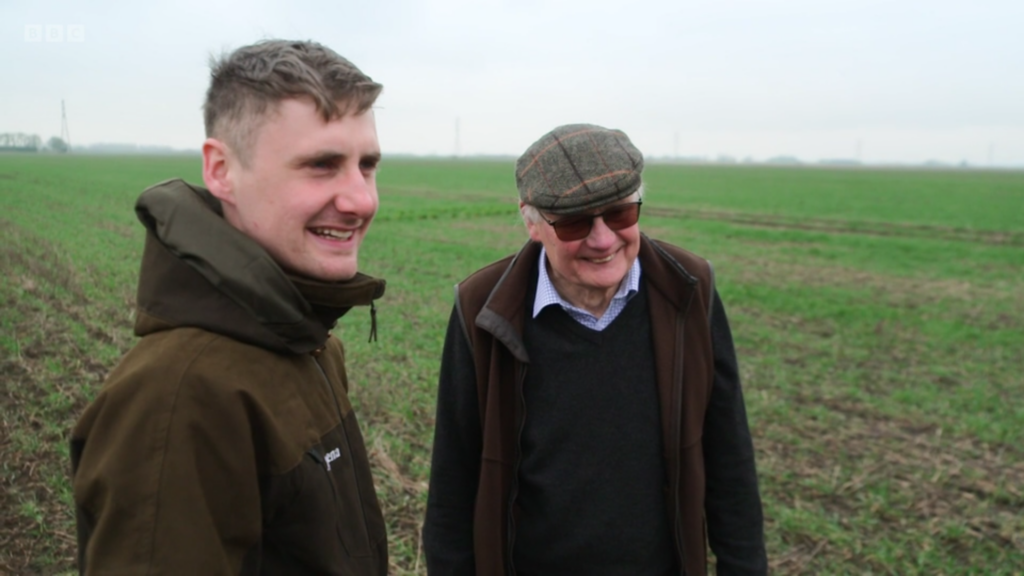
Two generations, one vision
The Gent family has been farming in South Lincolnshire for four generations, but while the mission of growing food remains the same, the world around it has changed beyond recognition.
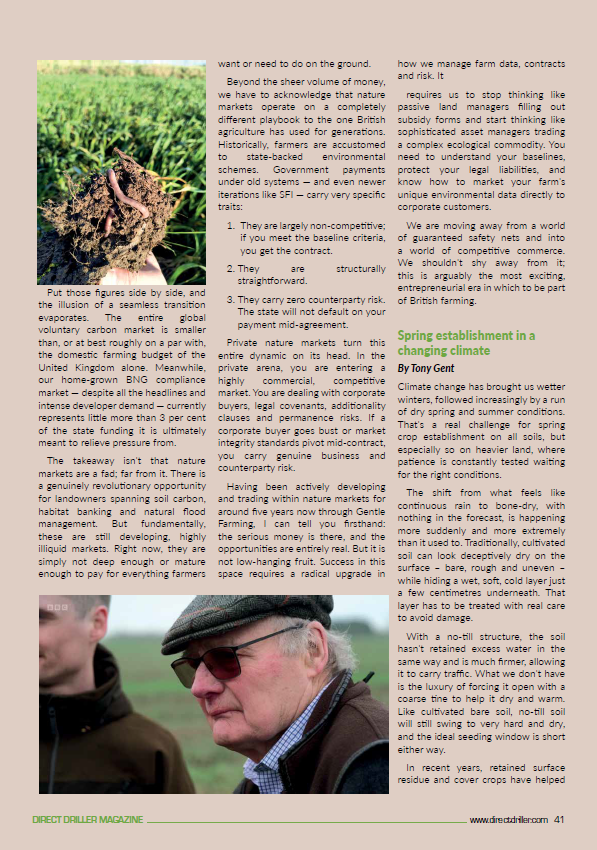
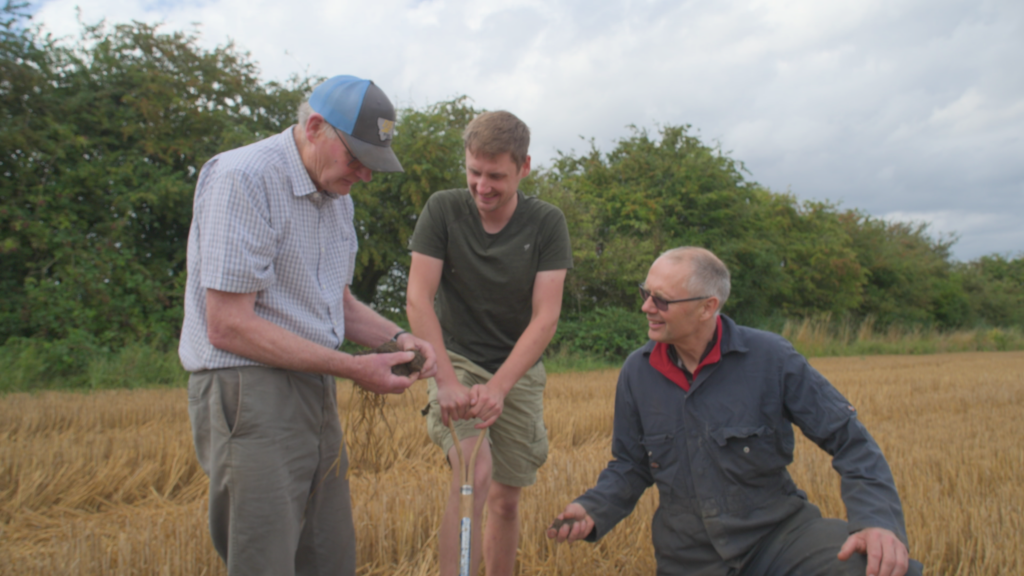
On their 800-hectare family farm, the Gents have been practising no-till farming since 2008. Today they operate under the Gentle Farming brand, born out of a desire to bridge the gap between regenerative practices on the ground and the opportunities this brings in the wider world. By focusing on soil health, carbon sequestration and nature, the aim is to turn environmental stewardship into tangible value.
This time it’s just two of the three generations writing: Tony Gent brings his hands-on experience of spring drilling in a changing climate, while Thomas Gent looks at the hard numbers behind the UK’s emerging nature markets.
Navigating the reality of nature markets
By Thomas Gent
The policy trajectory in British agriculture has reached an unmistakable crossroads. The government’s updated 25-year environmental and agricultural blueprints make one point perfectly clear: with public accounts facing immense structural pressure, the state explicitly expects a substantial portion of future farm income to be generated from private nature markets.
Conceptually, as entrepreneurial farmers, we should welcome this. If corporate balance sheets can be leveraged to fund soil health, carbon sequestration and habitat restoration, rather than relying solely on the British taxpayer, why wouldn’t we want that? It represents a massive potential injection of capital into rural economies.
However, as we transition into this new era, we need to strip away the environmental rhetoric and look at a cold, hard mathematical reality. Right now, there is a fundamental issue of scale that the wider agricultural industry is entirely ignoring.
Let’s look at the actual numbers shaping our landscape:
- The UK agricultural budget: following the 2025 Spending Review, Defra now has a commitment of over £2.7 billion a year for sustainable farming and nature recovery from 2026/27 onwards.
- The global voluntary carbon market (VCM): recent estimates from Fortune Business Insights and Roots Analysis put the entire global VCM at somewhere between $1.6 billion and $2.8 billion (roughly £1.25–2.2 billion) — worth noting that market-sizing methodology varies enormously between analysts, with some estimates running much higher and others much lower.
- The UK biodiversity net gain (BNG) market: while growing at a staggering pace since becoming mandatory, the latest analytics from Biodiversity Units UK show the total BNG transaction market at around £93 million annually — closing in on the £100 million mark.
Put those figures side by side, and the illusion of a seamless transition evaporates. The entire global voluntary carbon market is smaller than, or at best roughly on a par with, the domestic farming budget of the United Kingdom alone. Meanwhile, our home-grown BNG compliance market — despite all the headlines and intense developer demand — currently represents little more than 3 per cent of the state funding it is ultimately meant to relieve pressure from.
The takeaway isn’t that nature markets are a fad; far from it. There is a genuinely revolutionary opportunity for landowners spanning soil carbon, habitat banking and natural flood management. But fundamentally, these are still developing, highly illiquid markets. Right now, they are simply not deep enough or mature enough to pay for everything farmers want or need to do on the ground.
Beyond the sheer volume of money, we have to acknowledge that nature markets operate on a completely different playbook to the one British agriculture has used for generations. Historically, farmers are accustomed to state-backed environmental schemes. Government payments under old systems — and even newer iterations like SFI — carry very specific traits:
- They are largely non-competitive; if you meet the baseline criteria, you get the contract.
- They are structurally straightforward.
- They carry zero counterparty risk. The state will not default on your payment mid-agreement.
Private nature markets turn this entire dynamic on its head. In the private arena, you are entering a highly commercial, competitive market. You are dealing with corporate buyers, legal covenants, additionality clauses and permanence risks. If a corporate buyer goes bust or market integrity standards pivot mid-contract, you carry genuine business and counterparty risk.
Having been actively developing and trading within nature markets for around five years now through Gentle Farming, I can tell you firsthand: the serious money is there, and the opportunities are entirely real. But it is not low-hanging fruit. Success in this space requires a radical upgrade in how we manage farm data, contracts and risk. It requires us to stop thinking like passive land managers filling out subsidy forms and start thinking like sophisticated asset managers trading a complex ecological commodity. You need to understand your baselines, protect your legal liabilities, and know how to market your farm’s unique environmental data directly to corporate customers.
We are moving away from a world of guaranteed safety nets and into a world of competitive commerce. We shouldn’t shy away from it; this is arguably the most exciting, entrepreneurial era in which to be part of British farming.
Spring establishment in a changing climate
By Tony Gent
Climate change has brought us wetter winters, followed increasingly by a run of dry spring and summer conditions. That’s a real challenge for spring crop establishment on all soils, but especially so on heavier land, where patience is constantly tested waiting for the right conditions.
The shift from what feels like continuous rain to bone-dry, with nothing in the forecast, is happening more suddenly and more extremely than it used to. Traditionally, cultivated soil can look deceptively dry on the surface – bare, rough and uneven – while hiding a wet, soft, cold layer just a few centimetres underneath. That layer has to be treated with real care to avoid damage.
With a no-till structure, the soil hasn’t retained excess water in the same way and is much firmer, allowing it to carry traffic. What we don’t have is the luxury of forcing it open with a coarse tine to help it dry and warm. Like cultivated bare soil, no-till soil will still swing to very hard and dry, and the ideal seeding window is short either way.
In recent years, retained surface residue and cover crops have helped us manage that drying period. There are two ways to handle cover crops ahead of seeding. The first is to leave them in place to draw off excess moisture and support soil biology as the ground warms, then destroy them at seeding, either chemically or with a roller crimper. This approach only really suits lighter soils; on heavier land the structure at depth may be fine, but the surface stays too wet and sticky.
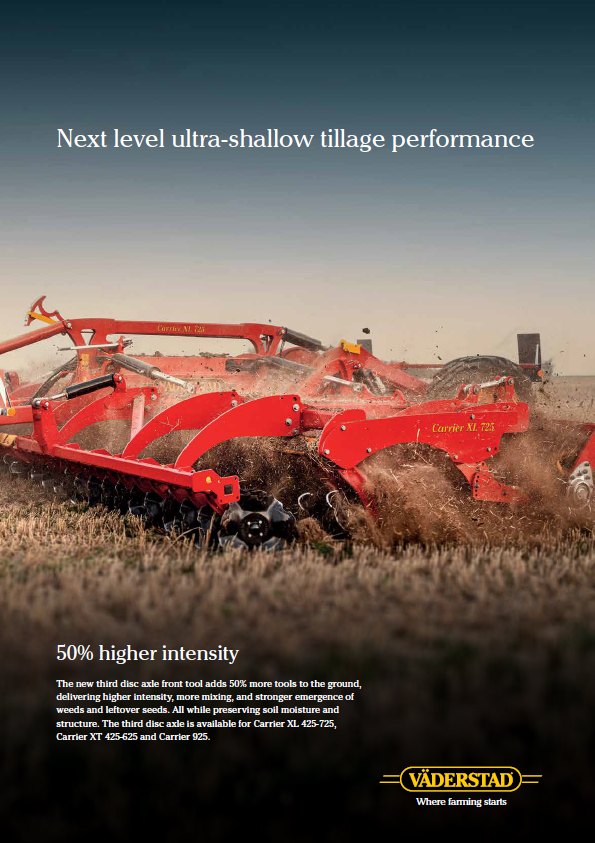
For our soil, the method that works best after years of experience is to manage the density of the cover crop carefully enough to let sun and wind reach the surface and dry out the top crumb, but with enough shade to soften the extremes between wet and dry. Combined with a good build-up of root structure, worms and biology, this is the best compromise we’ve found for spring seeding.
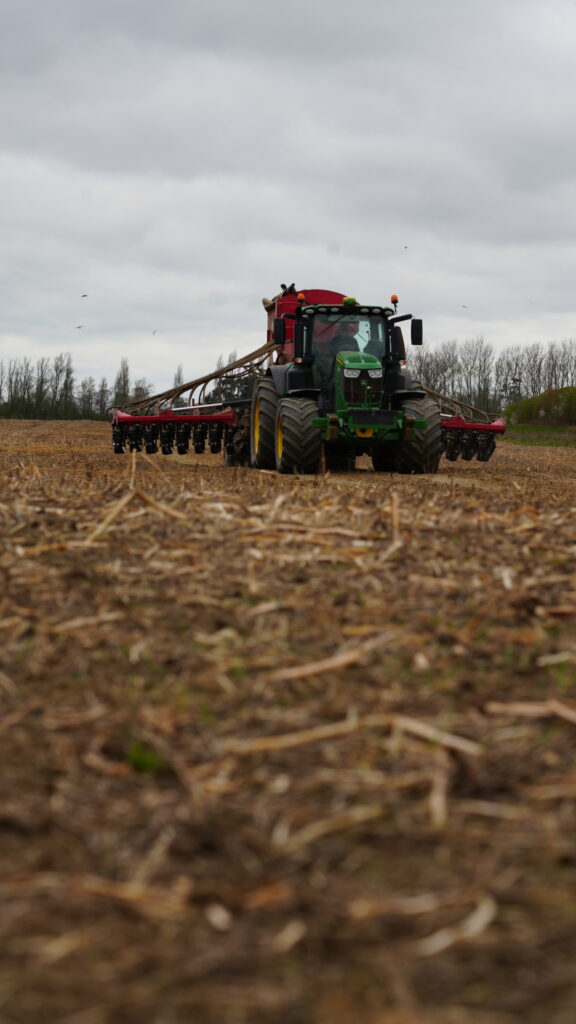
When it comes to putting seed in the ground, the rule of thumb is that the larger the seed, the better it copes. Spring beans are usually first in, sown a little deeper than wheat, though not much, given how firm the no-till soil is. That keeps them in warmer soil and lets them root quickly into the moisture underneath. Beans are the ultimate test of soil structure and moisture retention, and we find they respond exceptionally well to soil that’s had years to build structure under no-till, even in heavily trafficked tramlines.
Spring wheat can be drilled into no-till ground before conventional cultivation would allow, giving it an early start on heavy soil, with worms and biology quickly repairing any damage caused by compromised timing.
Spring oats go in last, being the most tolerant of both timing and drier establishment conditions. They establish quickly and produce strong, robust growth.
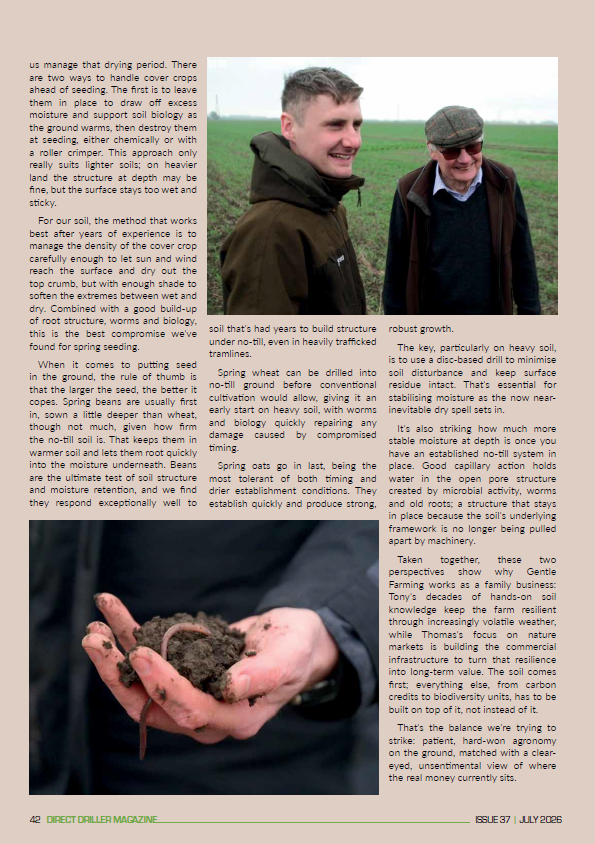
The key, particularly on heavy soil, is to use a disc-based drill to minimise soil disturbance and keep surface residue intact. That’s essential for stabilising moisture as the now near-inevitable dry spell sets in.
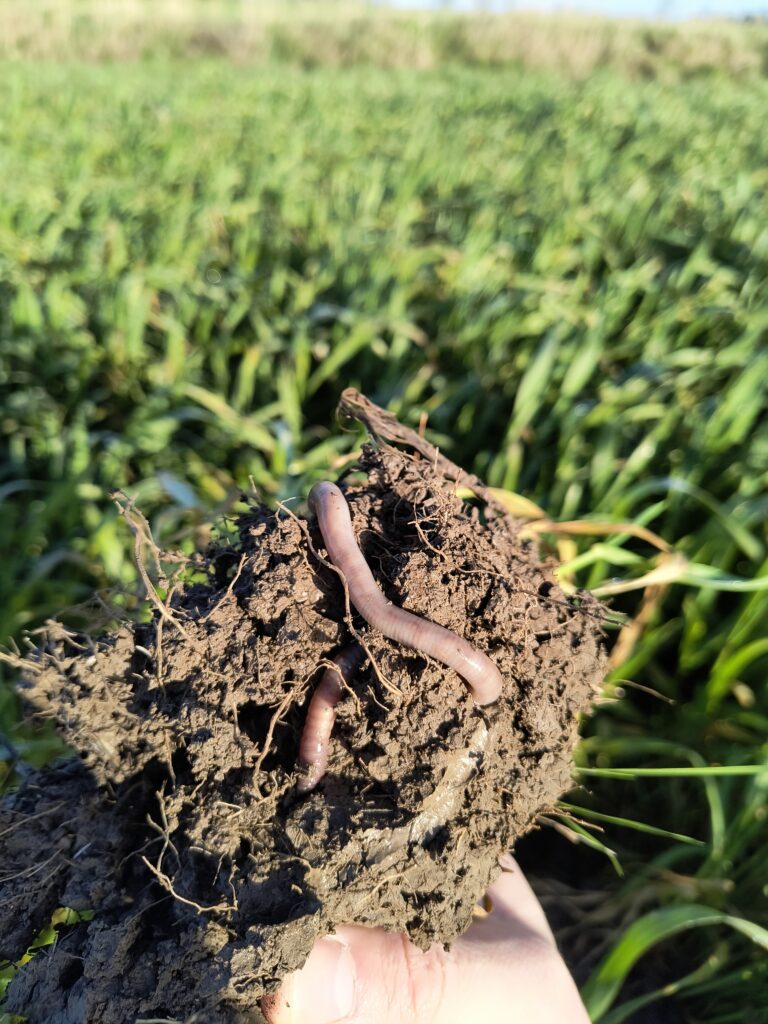
It’s also striking how much more stable moisture at depth is once you have an established no-till system in place. Good capillary action holds water in the open pore structure created by microbial activity, worms and old roots; a structure that stays in place because the soil’s underlying framework is no longer being pulled apart by machinery.
Taken together, these two perspectives show why Gentle Farming works as a family business: Tony’s decades of hands-on soil knowledge keep the farm resilient through increasingly volatile weather, while Thomas’s focus on nature markets is building the commercial infrastructure to turn that resilience into long-term value. The soil comes first; everything else, from carbon credits to biodiversity units, has to be built on top of it, not instead of it.
That’s the balance we’re trying to strike: patient, hard-won agronomy on the ground, matched with a clear-eyed, unsentimental view of where the real money currently sits.