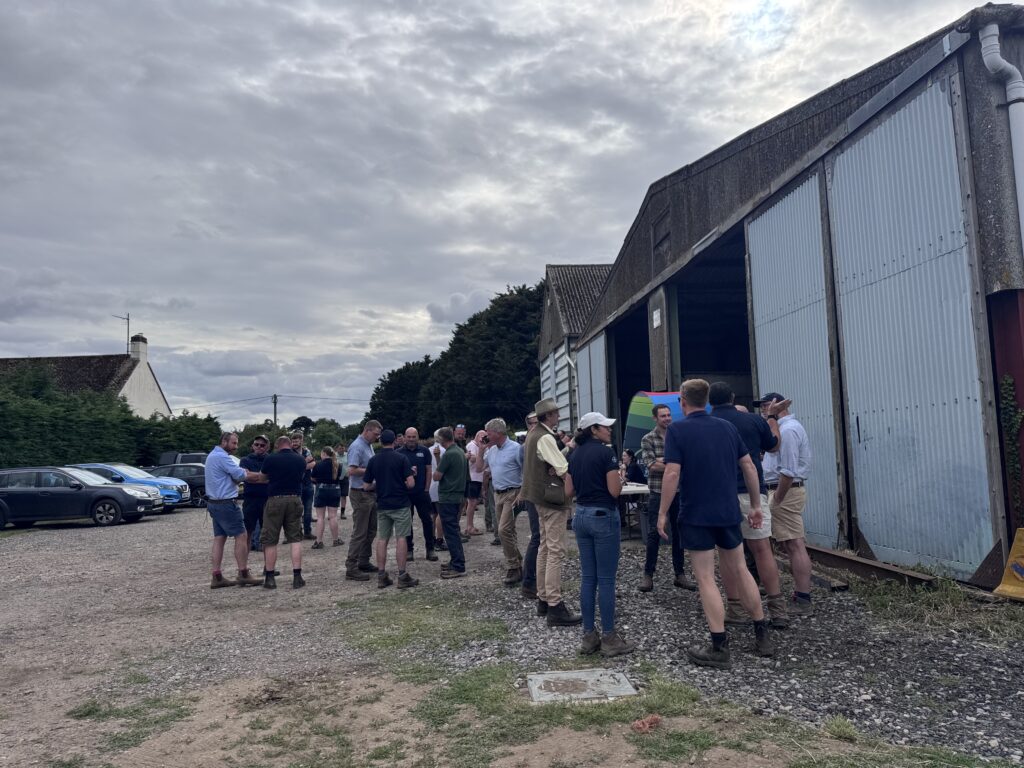
Following the Limagrain and Agrovista demonstration days, which highlighted a growing industry frustration with the Recommended List (RL) and a shift towards lower-input systems, the Bayer demo day at Hinton in Oxfordshire offered a stark reminder of the chemical pressures driving these changes.
As the industry faces a potential “cliff edge” of European pesticide regulation and evolving disease threats, the conversation at Hinton made it clear: farmers can no longer rely on chemistry to bail out poor genetics, and the RL must evolve to prioritise security over absolute yield.
The EU Reset: A looming chemical cliff edge?
The day began with a sobering update on the so-called “EU reset” and the divergence between UK and EU pesticide approvals. Since Brexit, the UK’s Chemicals Regulation Division (CRD) has continued to approve products efficiently, resulting in a growing list of actives, such as isoflucypram (Plaxium) and pydiflumetofen (Miravis), that are available in the UK but face years of delays in Europe. However, given that the UK and EU follow the same process for evaluating new products, it is likely that products already approved in the UK would also get approval in the EU. In fact, as part of the reset, if the EU were being sensible, they could fast track all the products the UK has already done all the work on. But I won’t hold my breath on that one.
The concern is that if the UK government aligns strictly and immediately with EU approvals, farmers could face a sudden loss of crucial chemistry. “If it was a cut-off deal, you would lose flufenacet, you’d lose cinmethylin, you’d lose Miravis and you’d lose Vimoy all in one go,” attendees were warned. “And that’s just not really sustainable, is it?”
While the immediate autumn and spring seasons look secure, the message was clear: the long-term chemical toolbox is shrinking. This puts immense pressure on cultural controls and genetics to pick up the slack.
There was, however, some positive news regarding glyphosate. Bayer is increasingly confident that the CRD will mirror the EU’s recent 10-year re-approval, though pre-harvest desiccation for ripening is likely to be lost. Crucially, attendees were warned against the rising trend of adding citric or fulvic acids to glyphosate to lower pH. “You’re burning the leaf and stressing it and killing it prematurely,” experts noted, warning that it leads to crystallisation and a suboptimal dose entering the plant.
Pre-ems: Stacking modes of action
With the future of key actives like flufenacet uncertain, the focus for autumn residuals is shifting towards stacking different modes of action and utilising actives with different physical properties.
Bayer highlighted the role of aclonifen (Proclus), which differs significantly from flufenacet. While flufenacet is highly water-soluble and relies on being washed down to the root zone, aclonifen is relatively insoluble, sitting on the soil surface to be taken up by emerging shoots. This makes it highly effective in dry surface conditions. Furthermore, it boasts a half-life of around 80 days, significantly longer than the 30-35 days of flufenacet, providing extended protection.
This strategy of stacking chemistry perfectly complements the cultural controls discussed at the Agrovista Lamport day, where delayed drilling and minimal soil disturbance are used to reduce grassweed pressure before the sprayer even enters the field.
The yellow rust dilemma and RL frustration
The most animated discussion of the day, however, mirrored the conversations at both Limagrain and Agrovista: the breakdown of yellow rust resistance and the failings of the Recommended List.
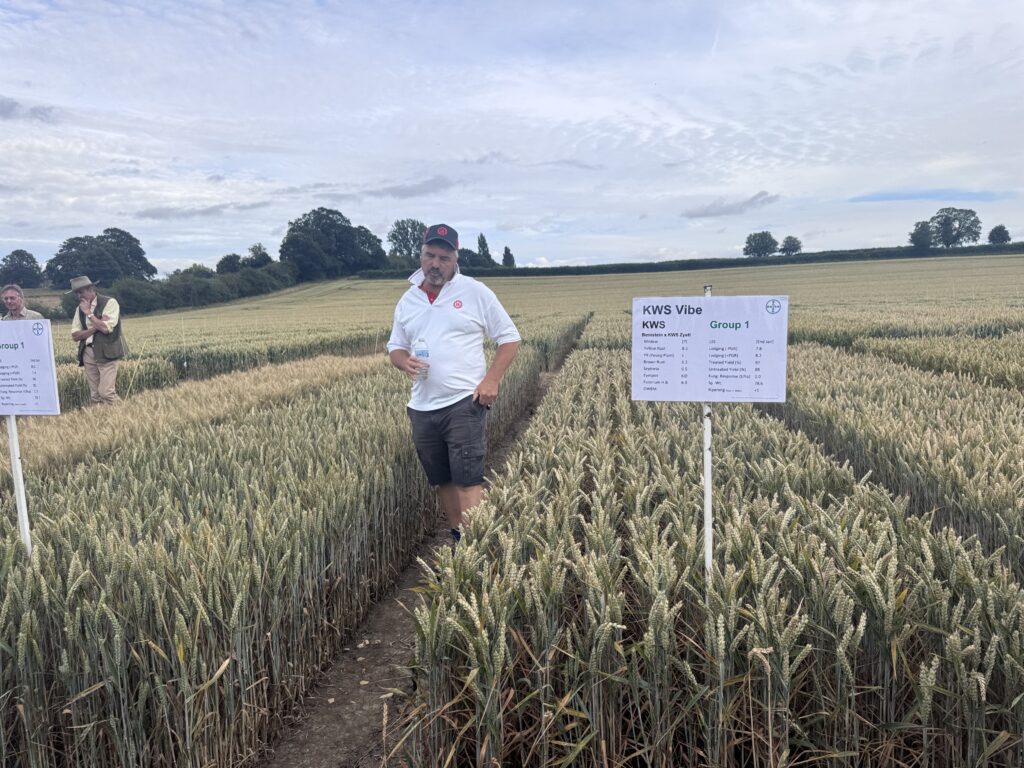
The aggressive new “Warrior” strains of yellow rust have decimated the resistance ratings of many popular varieties. As was pointed out at Hinton, the 1-9 disease scores on the RL are based on “adult plant resistance”, which is only guaranteed to kick in by growth stage 55 (when the ear is half emerged). Before that, the crop is vulnerable, rendering the RL scores a “complete waste of time” for early-season management.
This vulnerability brought the conversation back to the RL selection process. Echoing the frustration at the Limagrain event, Ron Granger again pointed to the variety Rebellion. “It did 106 last year… Cleaner variety, highest untreated yield. Minus two [days maturity], didn’t get on the list,” he again noted. “Should’ve got on the list… Shows the vagaries, doesn’t it?”
The consensus was that the RL is still too heavily weighted towards peak treated yield, forcing breeders to push “dirty” varieties that yield 110 per cent while sidelining cleaner, more secure varieties like Rebellion or Lotus because they fall slightly short of the yield target.
“It’s not all about yield anymore; it’s about security on farm,” it was argued. “When we have a wet season… we can’t get on to cover disease. And if we’d had the yellow rust two years ago, it would’ve been rotten.”
Blends: A tool, not a cure-all
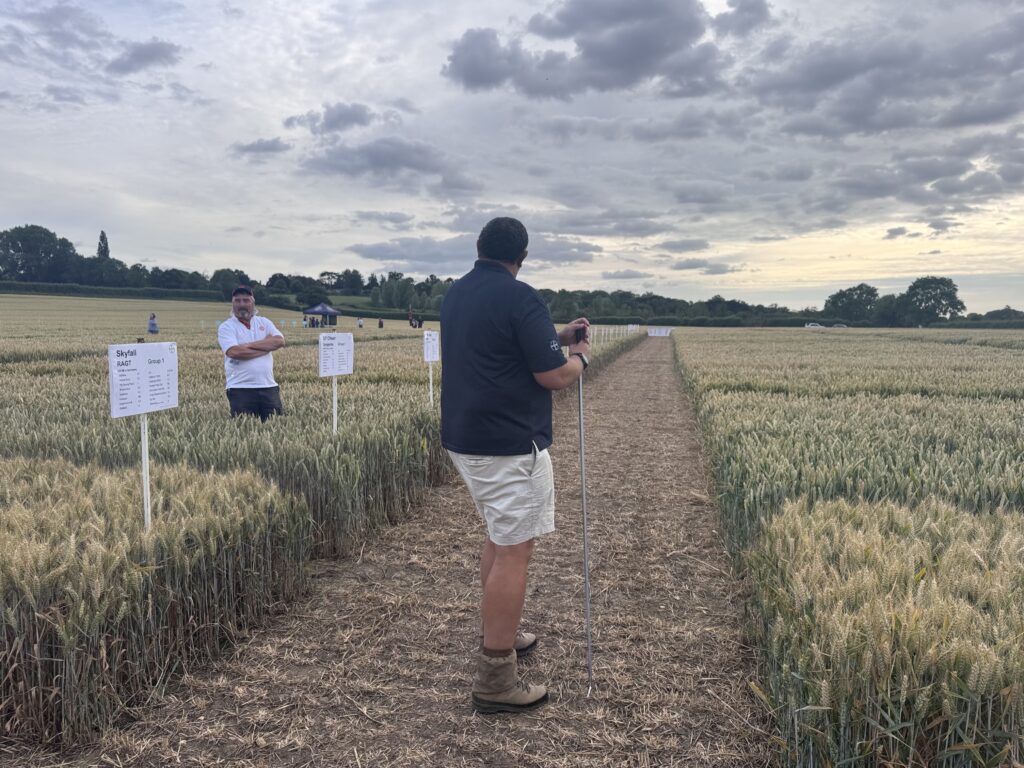
With chemistry under threat and clean genetics struggling to make the RL, variety blends were again discussed as a risk management tool. However, the advice was identical to that given at Limagrain: do not use blends to hide dirty varieties.
“I do have a problem where you put three dirty varieties with a clean variety, ’cause I think you’re gonna break genetics,” Ron again warned. The recommendation is to blend clean varieties with different resistance mechanisms. “If one breaks down, pull it out and stick another clean in. Because that way you’re securing genetics.”
Conclusion: A system under strain
Across the three demonstration days, Limagrain, Agrovista and Bayer, a unified narrative has emerged. The UK farming sector is transitioning towards lower-input, more resilient systems, driven by policy changes, chemical revocations and the sheer cost of high-input farming.
Yet, the primary tool for variety selection, the AHDB Recommended List, remains anchored in a high-input, peak-yield philosophy. Whether it’s forcing “Sprinter Wheats” into spring categories, ignoring the value of early maturity and untreated yield, or prioritising 110 per cent yielders over secure disease resistance, the RL is increasingly viewed as out of step with the realities of modern farming. If the industry is to navigate the shrinking chemical toolbox and evolving disease threats, it needs a variety selection system that values resilience and security as highly as it values absolute yield.