Every pass changes the soil. The question is whether that change helps the next crop or simply burns more diesel.
That thinking sits behind the design of AMAZONE’s drilling and cultivation machinery. There is no single establishment system that will suit every field, soil type or season. What matters is giving the operator enough control to make the right intervention, at the right depth, for a clear agronomic reason.
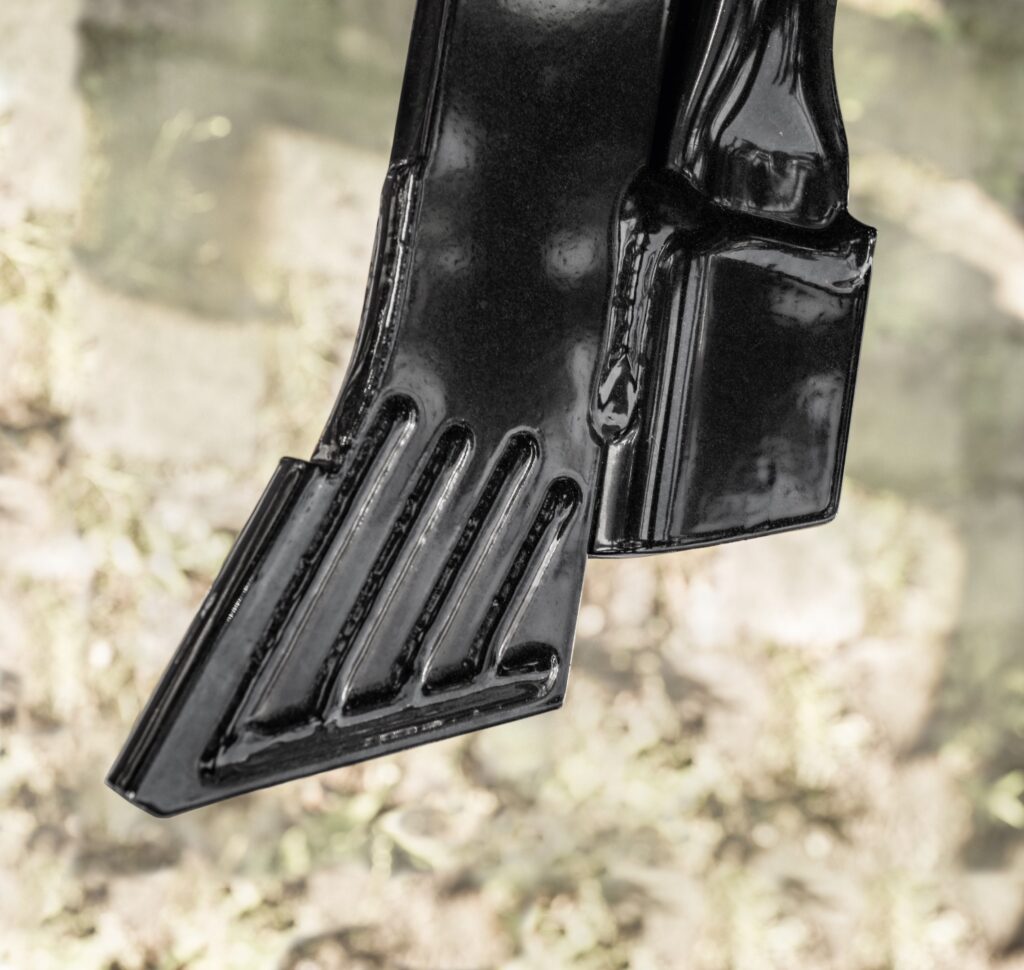
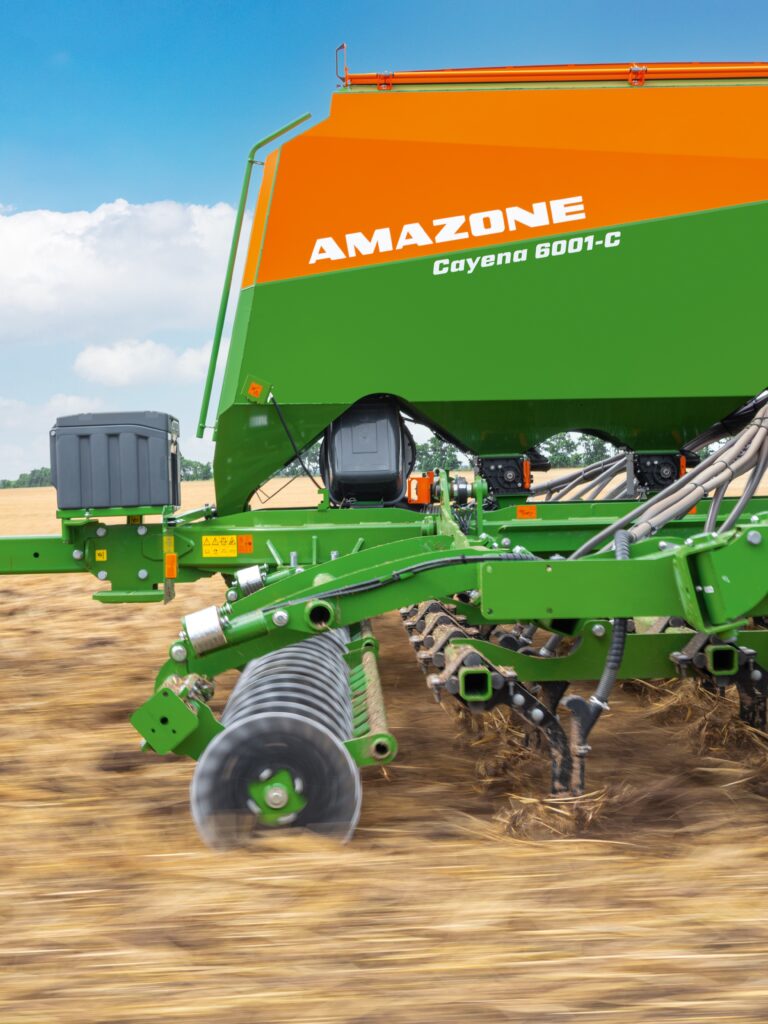
The Cayena is a good example. Its narrow TineTeC coulters are designed to penetrate firm ground while moving relatively little soil, making the drill suitable for both direct drilling and reduced-tillage systems.
Limiting soil movement can help conserve moisture and avoid encouraging an unnecessary flush of weeds. But low disturbance is not an achievement in itself. A coulter still has to penetrate, hold a consistent depth and leave the seed in proper contact with the surrounding soil. Hairpinned straw, an open slot or variable drilling depth will compromise establishment, regardless of how little soil appears to have moved.
The Cayena’s coulters are arranged across three rows, creating clearance between the tines for straw and cover crop residue. Optional cutting discs ahead of the coulters can provide an additional cutting effect where surface material is particularly challenging. The tine itself remains relatively simple, with fewer components passing through the ground and fewer places for damp residue to catch and build up.
That clearance is increasingly important. A drill might be working behind well-chopped cereal straw one day and into a dense, terminated cover crop the next. Residue length, moisture and distribution can change considerably, even within the same field. Coulter layout and residue clearance are therefore agronomic considerations, not simply engineering specifications.
Behind the coulters, the seed row is covered before being reconsolidated by the large rear matrix tyre packer. This is particularly important in dry conditions or where the soil has not been cultivated ahead of the drill. The aim is to create reliable seed-to-soil contact and retain moisture around the seed, without excessively pressing or smearing soil that is too wet.
Direct drilling will remain the right choice across many fields, but it cannot correct every problem. Compaction, ruts, uneven surfaces and poorly distributed residues do not disappear simply because a direct drill passes over them. Often cultivation is still justified, the important part is knowing what problem is being addressed before putting steel into the ground.
For very shallow residue management, the TopCut can chop and bruise material while working only within the upper couple of centimetres. That can help to manage cover crops, accelerate residue breakdown and encourage volunteers or weed seeds to germinate without carrying out a conventional cultivation pass.
Where more mixing is needed, the Catros compact disc harrow can cut across the full working width while keeping the depth controlled. Small changes in depth and forward speed can make a considerable difference to the amount of soil moved. The objective should be to create the condition required for the next operation, rather than producing a fine seedbed simply because the machine is capable of doing so.
Where the need for deeper cultivation has been identified, the Ceus combines discs and tines to manage surface residue and loosen the affected layer in one pass. The tine depth should be set just below the pan, not just as deep as the tractor can comfortably pull it.
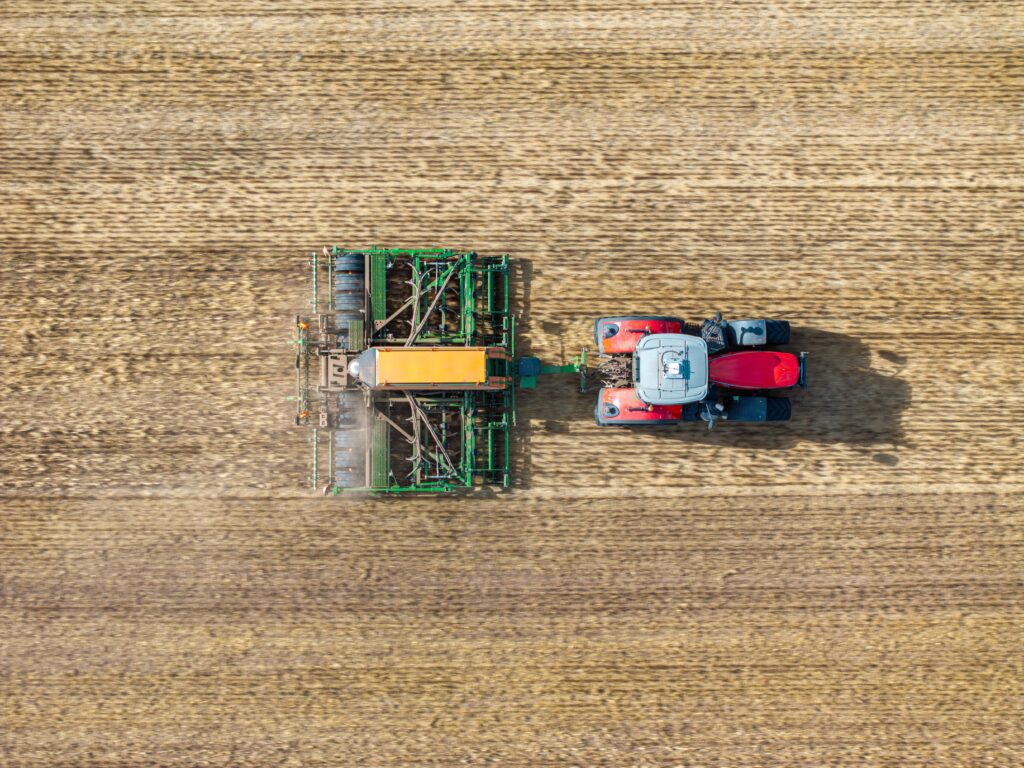
Working well below the problem adds draft, diesel use and wear. It also disturbs soil that may already be functioning perfectly well. This is where machinery design has to support agronomy rather than dictate it. In one field, the correct approach may be to drill directly with the Cayena. In another, it may be a shallow pass to manage residue, or targeted loosening where genuine structural damage has been found.
The measure of a machine is not how much soil it can move. It is how precisely it allows the operator to achieve the result the field actually needs.