It is with a sad heart that I feel I must share with you that I am no longer a farm manager at Brewood Park Farm. Since my accident, it feels like I have been kicked and put down so many times, and just when you try to take a breath, somebody is ready to kick you again. After being involved with the farm for 44 years, I feel as if another piece of my body has been amputated! Having a love for the land you farm and nurture for so many years, it becomes part of you, almost as if you share the same heartbeat. The connection and bond travel deep within your soul. Mourning this loss is another hurdle I will have to climb over. I have overcome so many in my time that I am sure I will get over this one and move on yet again. I will now devote my time to advising other farmers in the UK and around the world, be that on farm or via Zoom through my website, timpartonfarming.com. Luckily, I have the equipment to get out and about on farm or just jump on the farm transport provided; where there is a will, there is a way!
I will of course continue giving talks to try and help people start their transition into a regenerative way of farming, or should that just be a new path in farming – I don’t like to label things anymore. Once you label something, you create division, such as someone thinking their label is better, when in reality we should all be working together to learn from each other. To create a farming system where our soils prove naturally what the plant needs, and we are the caretakers, leaving the soil/ecosystem in a better place for generations to come.
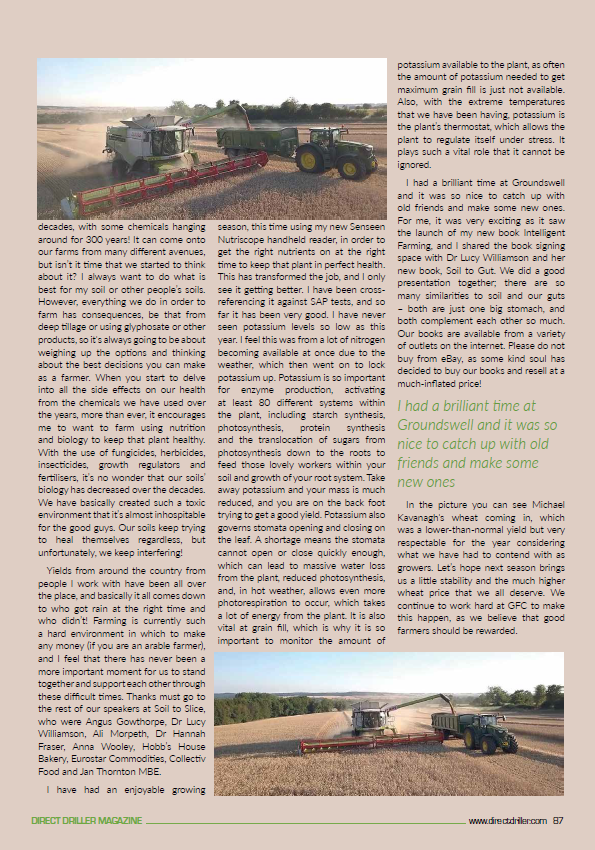
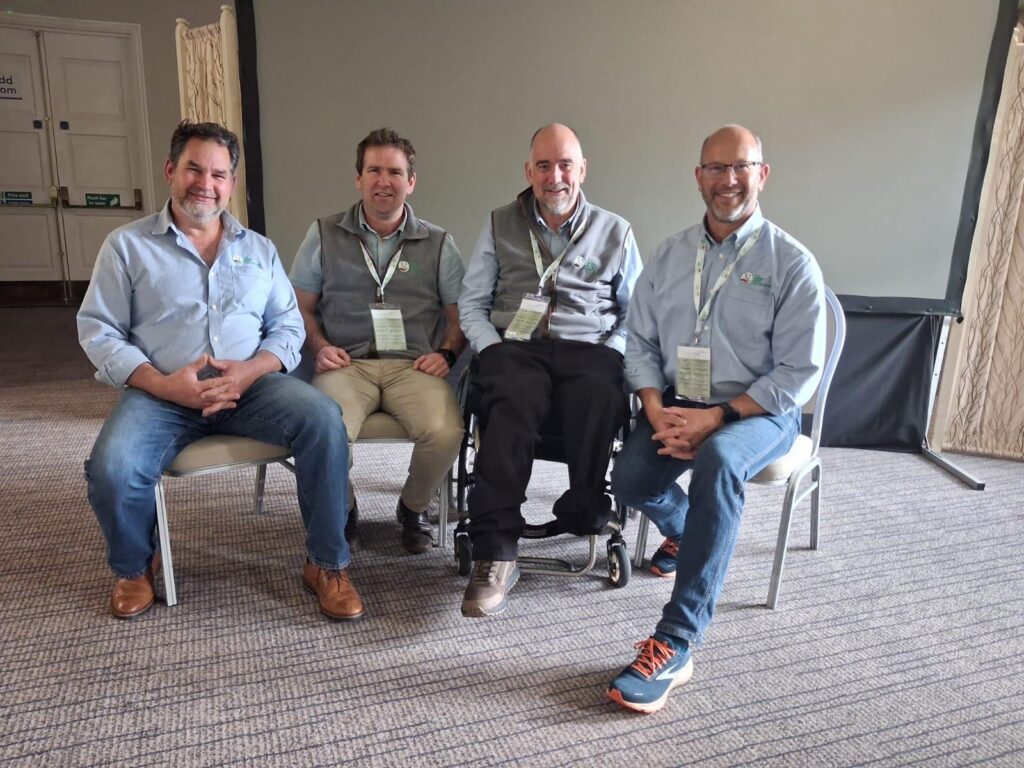
The Green Farm Collective’s Soil to Slice Conference was, I think, one of the best conferences we have put on. It was held in the fantastic venue of the Great Yorkshire Showground, which gave us loads of parking and ample space for the conference.
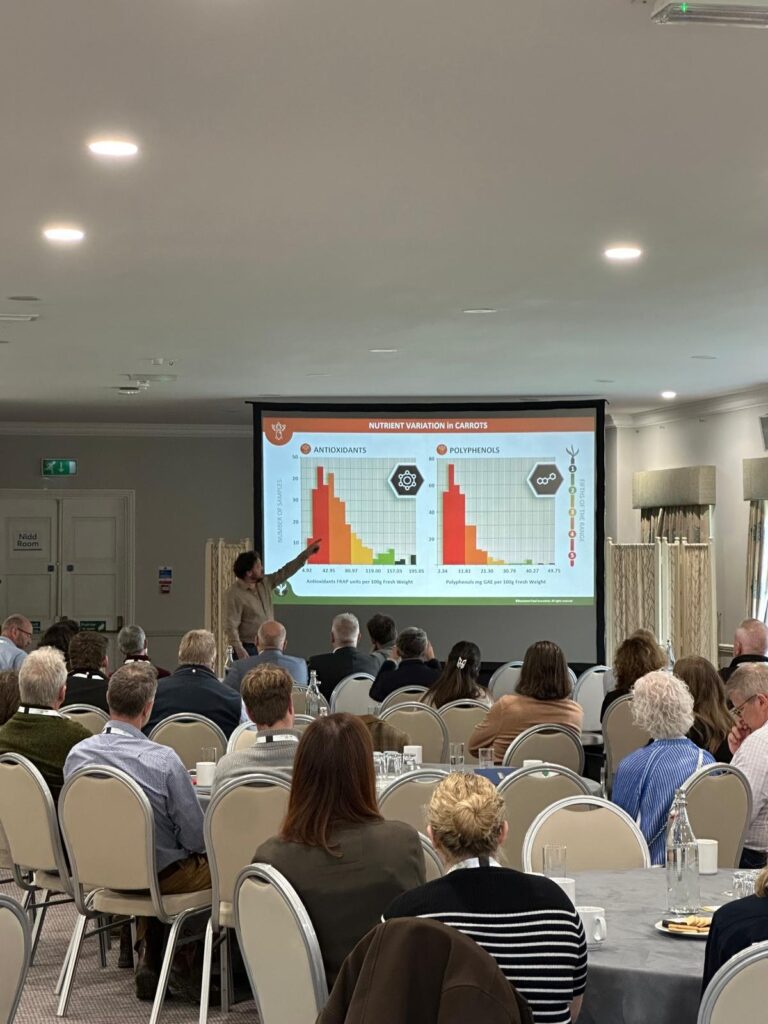
We had my good friend Dan Kittredge come in from the United States to talk about nutrient density and the work he is doing to show how a working soil can put so many more vital nutrients for our bodies into our food. It is always a delight to hear Dan speak and see the figures and proof that his work can provide in showing what a working soil can give to the nutrient content of our food.
All our speakers were fantastic, which made it such a special day. I feel the standout point for me was from farmer Verity Megginson, who I work with on the agronomy side. Verity gave a fantastic talk on how her farm had changed by altering her system and the number of inputs going onto the farm. She also works as a physio and explained very well how important food is to the human body. The take-home question was “Are you, as a grower, prepared to eat what you have produced?” This is a very powerful thought in my opinion and one every conscious farmer should ask themselves. This may create resentment in some people I know, as challenging beliefs always brings up anger (or can do). A lot of people would stand up and very proudly say, “Yes, of course I would.” I would have been one of those people 20 years ago, but the more I have found out about how important food is and what it can do for our bodies, the more I question the amount of toxicity we have created within our soils, building up over decades, with some chemicals hanging around for 300 years! It can come onto our farms from many different avenues, but isn’t it time that we started to think about it? I always want to do what is best for my soil or other people’s soils. However, everything we do in order to farm has consequences, be that from deep tillage or using glyphosate or other products, so it’s always going to be about weighing up the options and thinking about the best decisions you can make as a farmer.
When you start to delve into all the side effects on our health from the chemicals we have used over the years, more than ever, it encourages me to want to farm using nutrition and biology to keep that plant healthy. With the use of fungicides, herbicides, insecticides, growth regulators and fertilisers, it’s no wonder that our soils’ biology has decreased over the decades. We have basically created such a toxic environment that it’s almost inhospitable for the good guys. Our soils keep trying to heal themselves regardless, but unfortunately, we keep interfering!
Yields from around the country from people I work with have been all over the place, and basically it all comes down to who got rain at the right time and who didn’t! Farming is currently such a hard environment in which to make any money (if you are an arable farmer), and I feel that there has never been a more important moment for us to stand together and support each other through these difficult times. Thanks must go to the rest of our speakers at Soil to Slice, who were Angus Gowthorpe, Dr Lucy Williamson, Ali Morpeth, Dr Hannah Fraser, Anna Wooley, Hobb’s House Bakery, Eurostar Commodities, Collectiv Food and Jan Thornton MBE.
I have had an enjoyable growing season, this time using my new Senseen Nutriscope handheld reader, in order to get the right nutrients on at the right time to keep that plant in perfect health. This has transformed the job, and I only see it getting better. I have been cross-referencing it against SAP tests, and so far it has been very good. I have never seen potassium levels so low as this year. I feel this was from a lot of nitrogen becoming available at once due to the weather, which then went on to lock potassium up. Potassium is so important for enzyme production, activating at least 80 different systems within the plant, including starch synthesis, photosynthesis, protein synthesis and the translocation of sugars from photosynthesis down to the roots to feed those lovely workers within your soil and growth of your root system. Take away potassium and your mass is much reduced, and you are on the back foot trying to get a good yield. Potassium also governs stomata opening and closing on the leaf. A shortage means the stomata cannot open or close quickly enough, which can lead to massive water loss from the plant, reduced photosynthesis, and, in hot weather, allows even more photorespiration to occur, which takes a lot of energy from the plant. It is also vital at grain fill, which is why it is so important to monitor the amount of potassium available to the plant, as often the amount of potassium needed to get maximum grain fill is just not available. Also, with the extreme temperatures that we have been having, potassium is the plant’s thermostat, which allows the plant to regulate itself under stress. It plays such a vital role that it cannot be ignored.
I had a brilliant time at Groundswell and it was so nice to catch up with old friends and make some new ones. For me, it was very exciting as it saw the launch of my new book Intelligent Farming, and I shared the book signing space with Dr Lucy Williamson and her new book, Soil to Gut. We did a good presentation together; there are so many similarities to soil and our guts – both are just one big stomach, and both complement each other so much. Our books are available from a variety of outlets on the internet. Please do not buy from eBay, as some kind soul has decided to buy our books and resell at a much-inflated price!
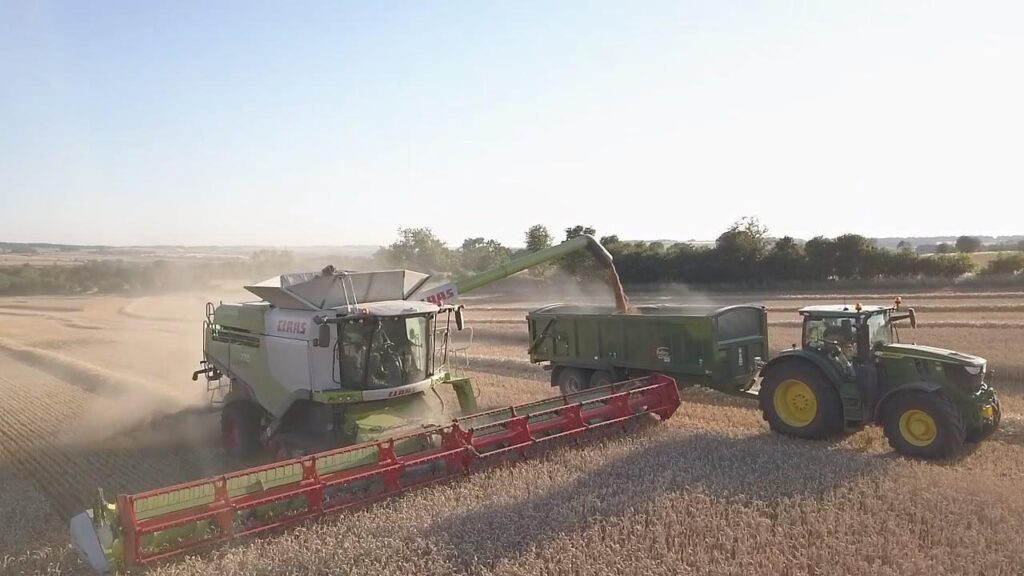
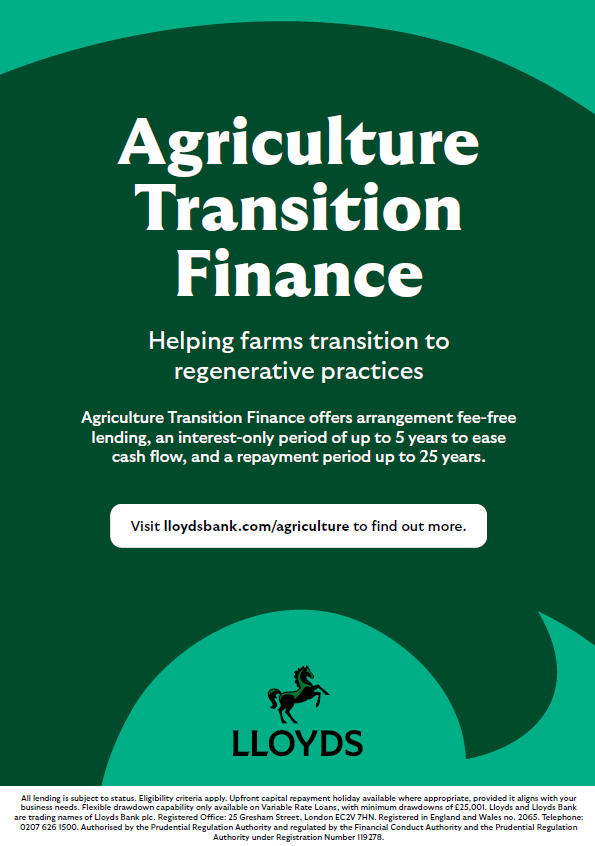
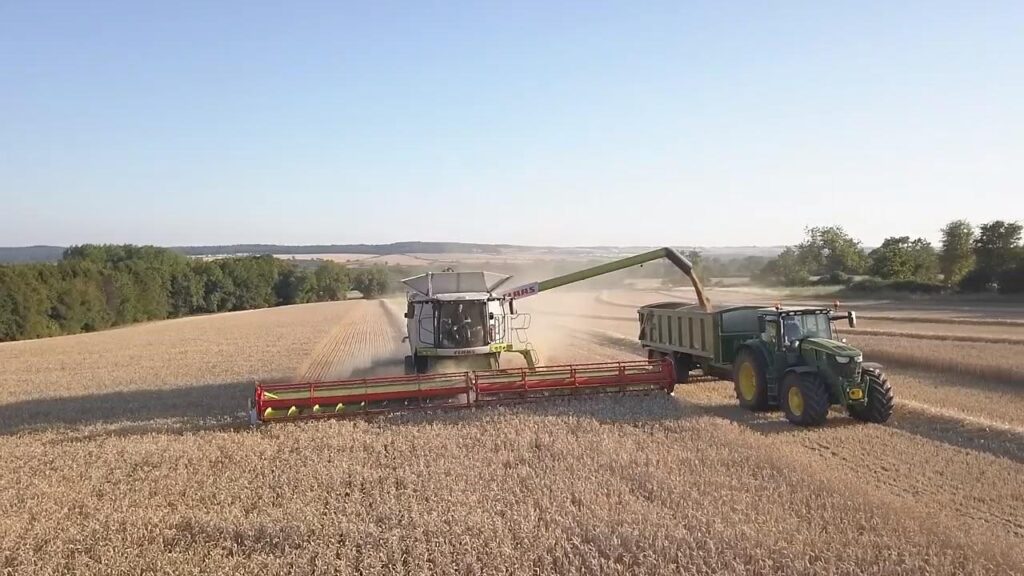
In the picture you can see Michael Kavanagh’s wheat coming in, which was a lower-than-normal yield but very respectable for the year considering what we have had to contend with as growers. Let’s hope next season brings us a little stability and the much higher wheat price that we all deserve. We continue to work hard at GFC to make this happen, as we believe that good farmers should be rewarded.