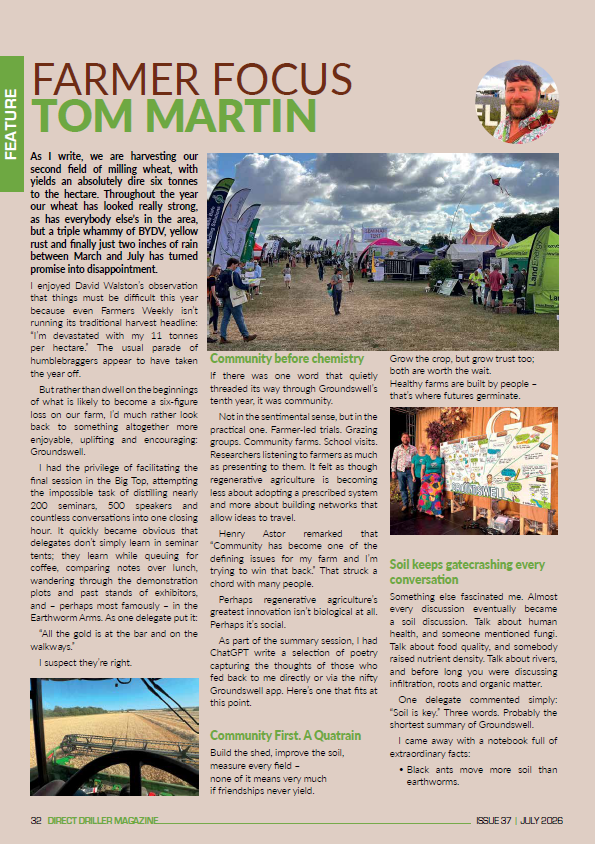
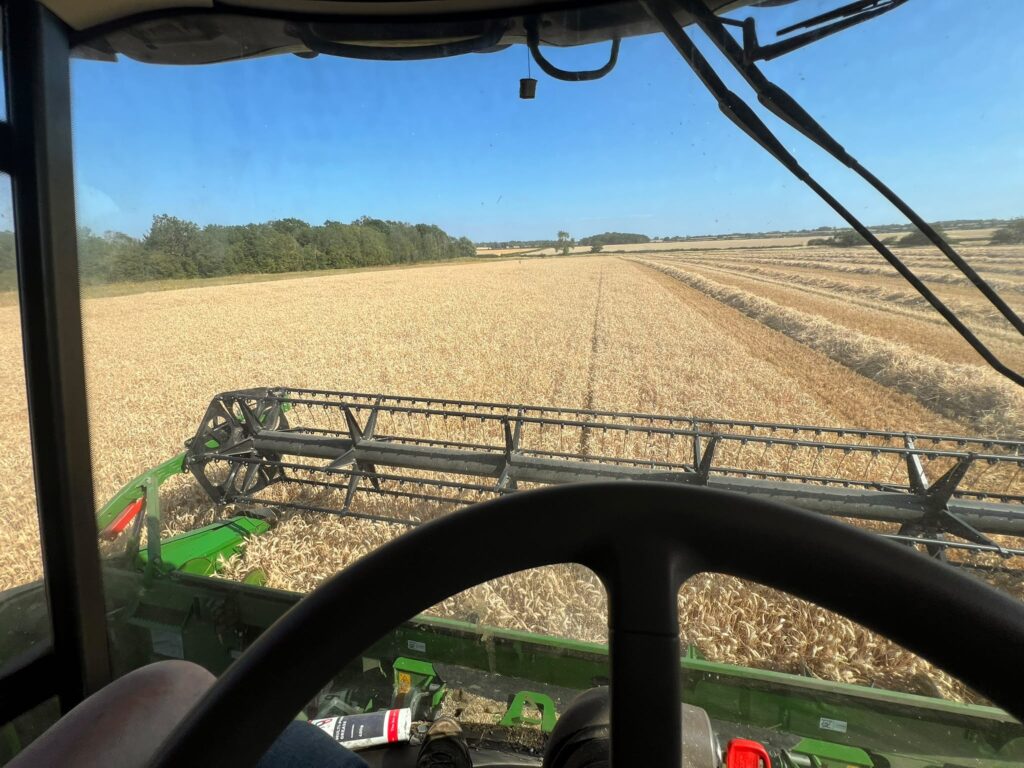
As I write, we are harvesting our second field of milling wheat, with yields an absolutely dire six tonnes to the hectare. Throughout the year our wheat has looked really strong, as has everybody else’s in the area, but a triple whammy of BYDV, yellow rust and finally just two inches of rain between March and July has turned promise into disappointment.
I enjoyed David Walston’s observation that things must be difficult this year because even Farmers Weekly isn’t running its traditional harvest headline: “I’m devastated with my 11 tonnes per hectare.” The usual parade of humblebraggers appear to have taken the year off.
But rather than dwell on the beginnings of what is likely to become a six-figure loss on our farm, I’d much rather look back to something altogether more enjoyable, uplifting and encouraging: Groundswell.
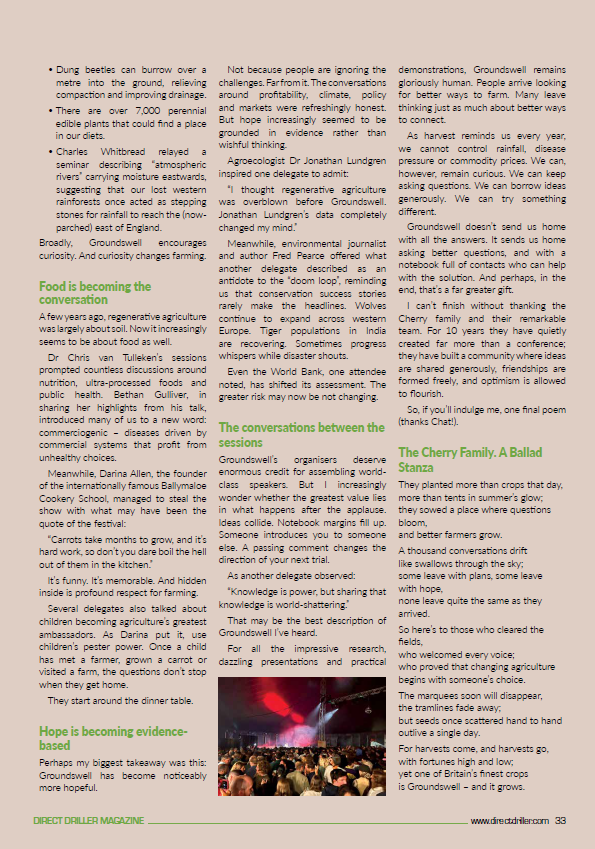
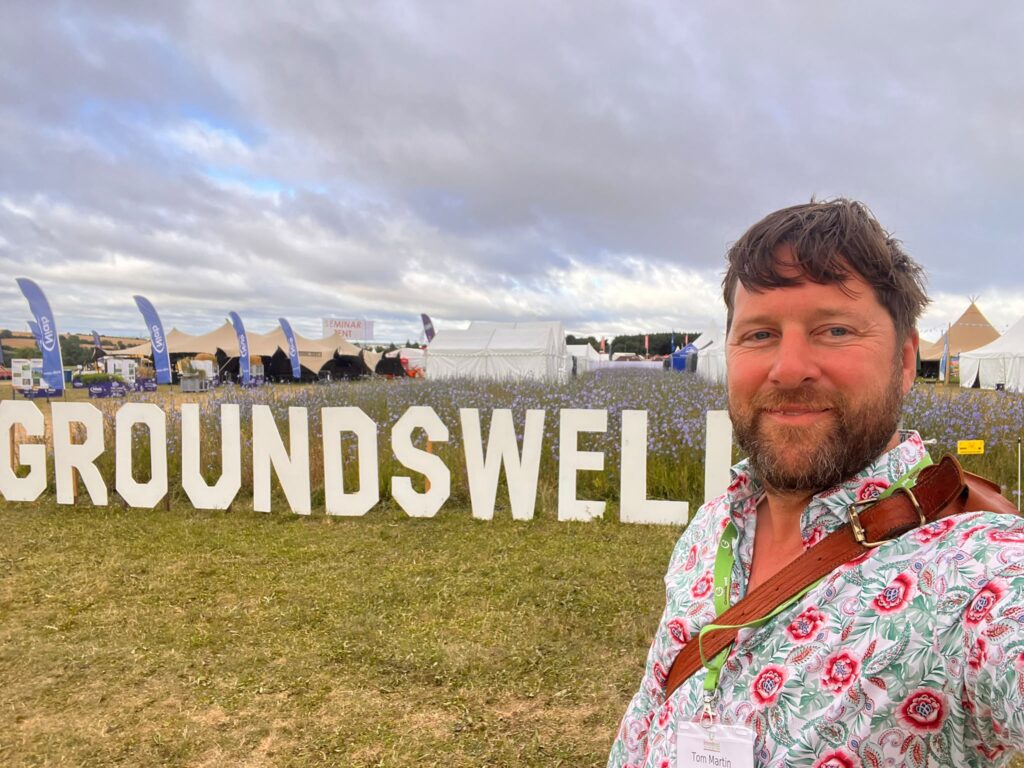
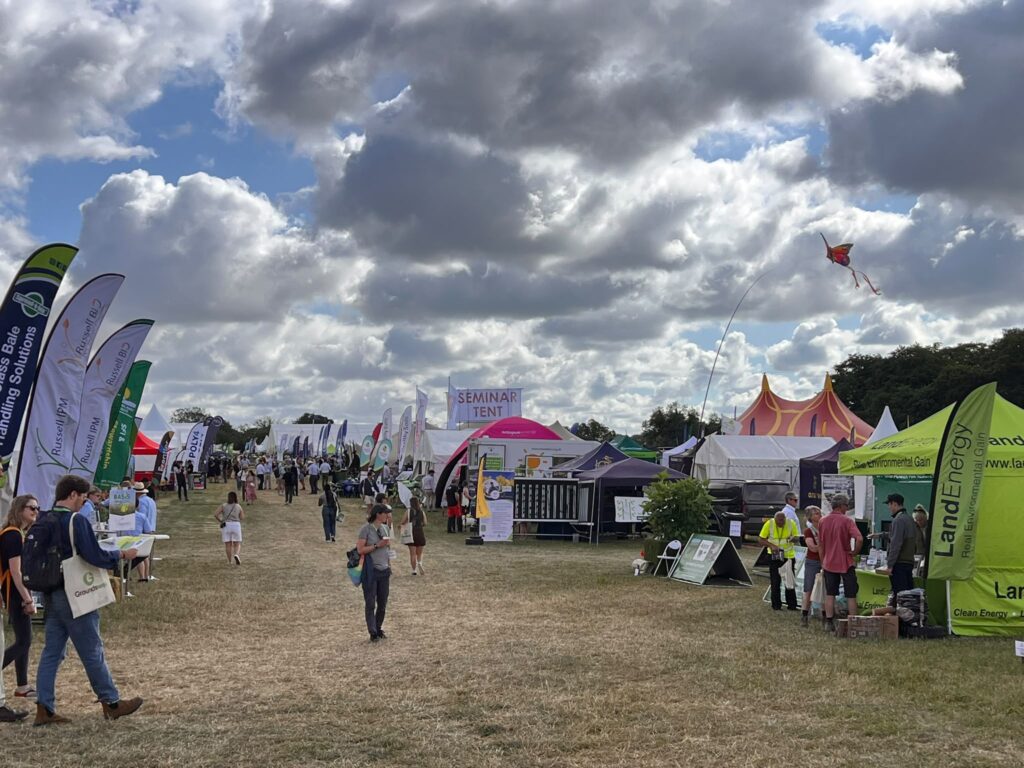
I had the privilege of facilitating the final session in the Big Top, attempting the impossible task of distilling nearly 200 seminars, 500 speakers and countless conversations into one closing hour. It quickly became obvious that delegates don’t simply learn in seminar tents; they learn while queuing for coffee, comparing notes over lunch, wandering through the demonstration plots and past stands of exhibitors, and – perhaps most famously – in the Earthworm Arms. As one delegate put it: “All the gold is at the bar and on the walkways.”
I suspect they’re right.
Community before chemistry
If there was one word that quietly threaded its way through Groundswell’s tenth year, it was community.
Not in the sentimental sense, but in the practical one. Farmer-led trials. Grazing groups. Community farms. School visits. Researchers listening to farmers as much as presenting to them. It felt as though regenerative agriculture is becoming less about adopting a prescribed system and more about building networks that allow ideas to travel.
Henry Astor remarked that “Community has become one of the defining issues for my farm and I’m trying to win that back.” That struck a chord with many people.
Perhaps regenerative agriculture’s greatest innovation isn’t biological at all. Perhaps it’s social.
As part of the summary session, I had ChatGPT write a selection of poetry capturing the thoughts of those who fed back to me directly or via the nifty Groundswell app. Here’s one that fits at this point.
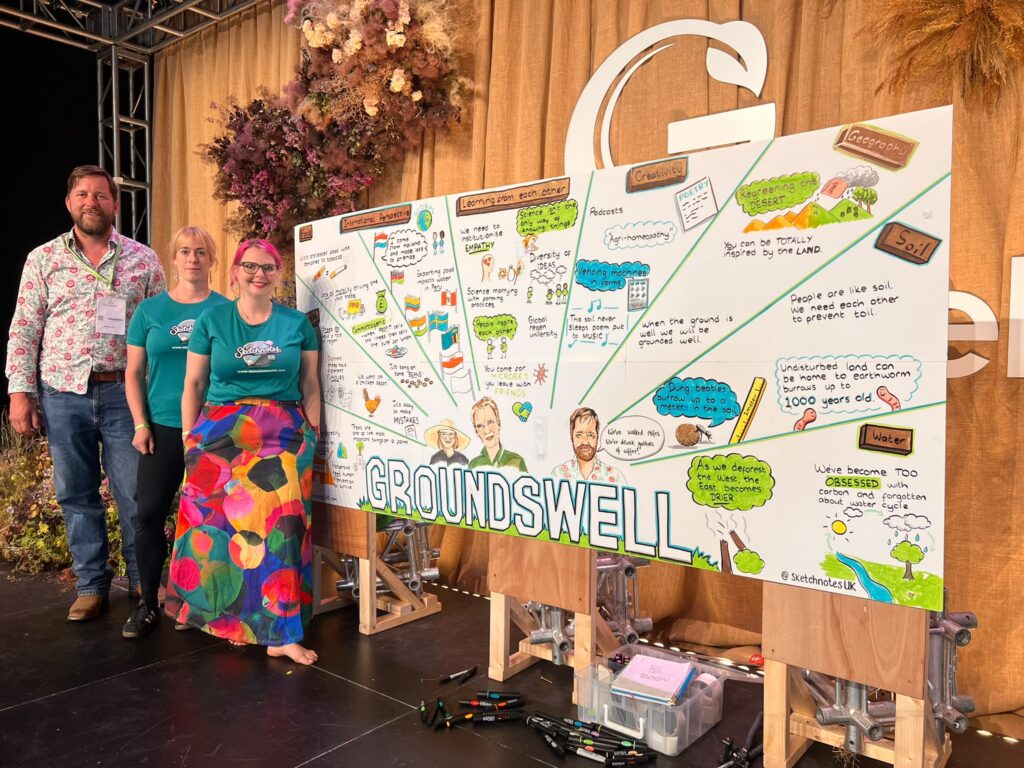
Community First. A Quatrain
Build the shed, improve the soil, measure every field –
none of it means very much if friendships never yield.
Grow the crop, but grow trust too; both are worth the wait.
Healthy farms are built by people – that’s where futures germinate.
Soil keeps gatecrashing every conversation
Something else fascinated me. Almost every discussion eventually became a soil discussion. Talk about human health, and someone mentioned fungi. Talk about food quality, and somebody raised nutrient density. Talk about rivers, and before long you were discussing infiltration, roots and organic matter. One delegate commented simply: “Soil is key.” Three words. Probably the shortest summary of Groundswell.
I came away with a notebook full of extraordinary facts:
- Black ants move more soil than earthworms.
- Dung beetles can burrow over a metre into the ground, relieving compaction and improving drainage.
- There are over 7,000 perennial edible plants that could find a place in our diets.
- Charles Whitbread relayed a seminar describing “atmospheric rivers” carrying moisture eastwards, suggesting that our lost western rainforests once acted as stepping stones for rainfall to reach the (now-parched) east of England.
Broadly, Groundswell encourages curiosity. And curiosity changes farming.
Food is becoming the conversation
A few years ago, regenerative agriculture was largely about soil. Now it increasingly seems to be about food as well.
Dr Chris van Tulleken’s sessions prompted countless discussions around nutrition, ultra-processed foods and public health. Bethan Gulliver, in sharing her highlights from his talk, introduced many of us to a new word: commerciogenic – diseases driven by commercial systems that profit from unhealthy choices.
Meanwhile, Darina Allen, the founder of the internationally famous Ballymaloe Cookery School, managed to steal the show with what may have been the quote of the festival: “Carrots take months to grow, and it’s hard work, so don’t you dare boil the hell out of them in the kitchen.”
It’s funny. It’s memorable. And hidden inside is profound respect for farming.
Several delegates also talked about children becoming agriculture’s greatest ambassadors. As Darina put it, use children’s pester power. Once a child has met a farmer, grown a carrot or visited a farm, the questions don’t stop when they get home. They start around the dinner table.
Hope is becoming evidence-based
Perhaps my biggest takeaway was this: Groundswell has become noticeably more hopeful.
Not because people are ignoring the challenges. Far from it. The conversations around profitability, climate, policy and markets were refreshingly honest. But hope increasingly seemed to be grounded in evidence rather than wishful thinking.
Agroecologist Dr Jonathan Lundgren inspired one delegate to admit: “I thought regenerative agriculture was overblown before Groundswell. Jonathan Lundgren’s data completely changed my mind.”
Meanwhile, environmental journalist and author Fred Pearce offered what another delegate described as an antidote to the “doom loop”, reminding us that conservation success stories rarely make the headlines. Wolves continue to expand across western Europe. Tiger populations in India are recovering. Sometimes progress whispers while disaster shouts.
Even the World Bank, one attendee noted, has shifted its assessment. The greater risk may now be not changing.
The conversations between the sessions
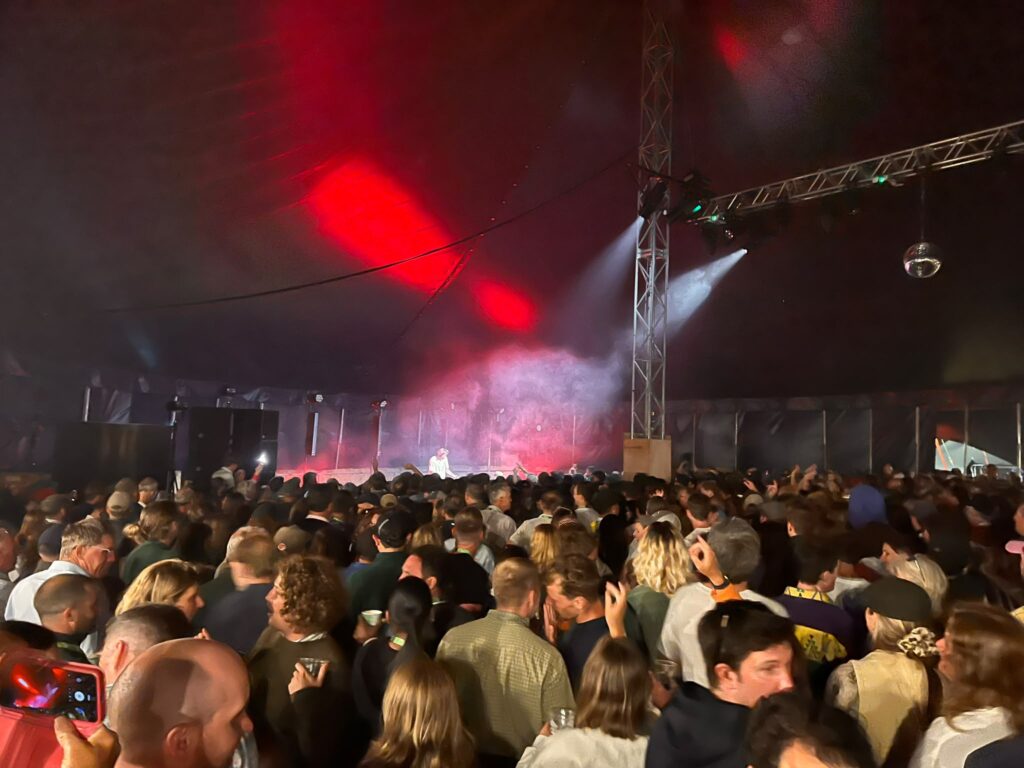
Groundswell’s organisers deserve enormous credit for assembling world-class speakers. But I increasingly wonder whether the greatest value lies in what happens after the applause. Ideas collide. Notebook margins fill up. Someone introduces you to someone else. A passing comment changes the direction of your next trial.
As another delegate observed: “Knowledge is power, but sharing that knowledge is world-shattering.” That may be the best description of Groundswell I’ve heard.
For all the impressive research, dazzling presentations and practical demonstrations, Groundswell remains gloriously human. People arrive looking for better ways to farm. Many leave thinking just as much about better ways to connect.
As harvest reminds us every year, we cannot control rainfall, disease pressure or commodity prices. We can, however, remain curious. We can keep asking questions. We can borrow ideas generously. We can try something different.
Groundswell doesn’t send us home with all the answers. It sends us home asking better questions, and with a notebook full of contacts who can help with the solution. And perhaps, in the end, that’s a far greater gift.
I can’t finish without thanking the Cherry family and their remarkable team. For 10 years they have quietly created far more than a conference; they have built a community where ideas are shared generously, friendships are formed freely, and optimism is allowed to flourish.
So, if you’ll indulge me, one final poem (thanks Chat!).
The Cherry Family. A Ballad Stanza
They planted more than crops that day, more than tents in summer’s glow;
they sowed a place where questions bloom, and better farmers grow.
A thousand conversations drift like swallows through the sky;
some leave with plans, some leave with hope, none leave quite the same as they arrived.
So here’s to those who cleared the fields, who welcomed every voice;
who proved that changing agriculture begins with someone’s choice.
The marquees soon will disappear, the tramlines fade away;
but seeds once scattered hand to hand outlive a single day.
For harvests come, and harvests go, with fortunes high and low;
yet one of Britain’s finest crops is Groundswell – and it grows.