There is a moment, somewhere around the third conversation of the day at Groundswell, when you stop thinking of it as a farming event and start thinking of it as something else entirely. A reunion. A think tank. A festival. All three at once, perhaps. The 2026 edition, held over two days in July at Lannock Farm in Hertfordshire, offered 179 sessions across two days, from 6am farmland bird safaris and morning yoga (which I didn’t make it to), to late-night music and a World Cup football game (which I didn’t miss). Across that programme, around 430 speakers took to stages, soil pits and demonstration areas to argue, demonstrate, question and occasionally disagree about the direction of British agriculture.
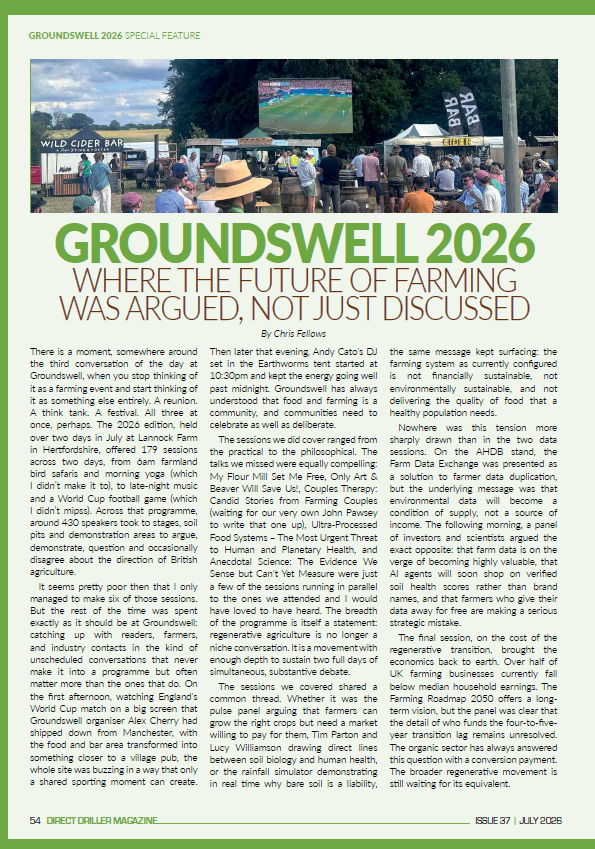
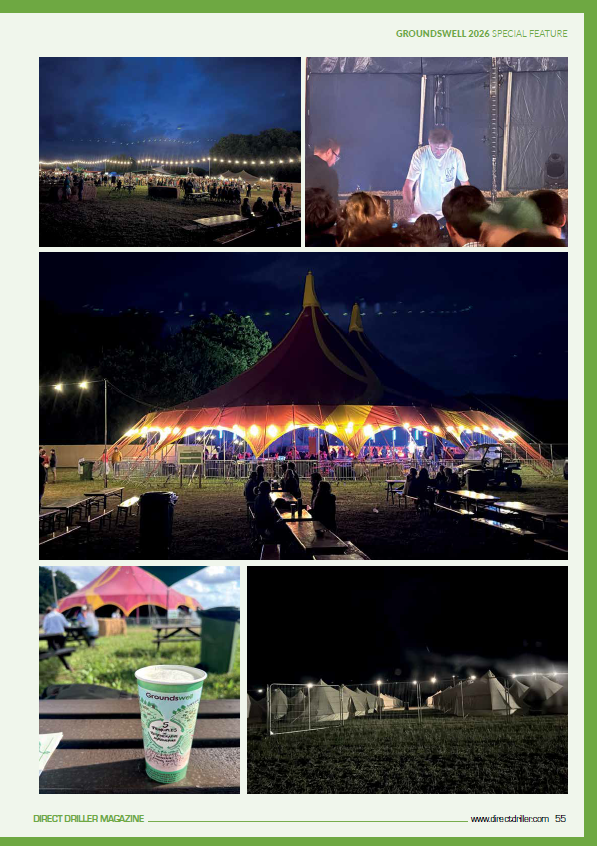
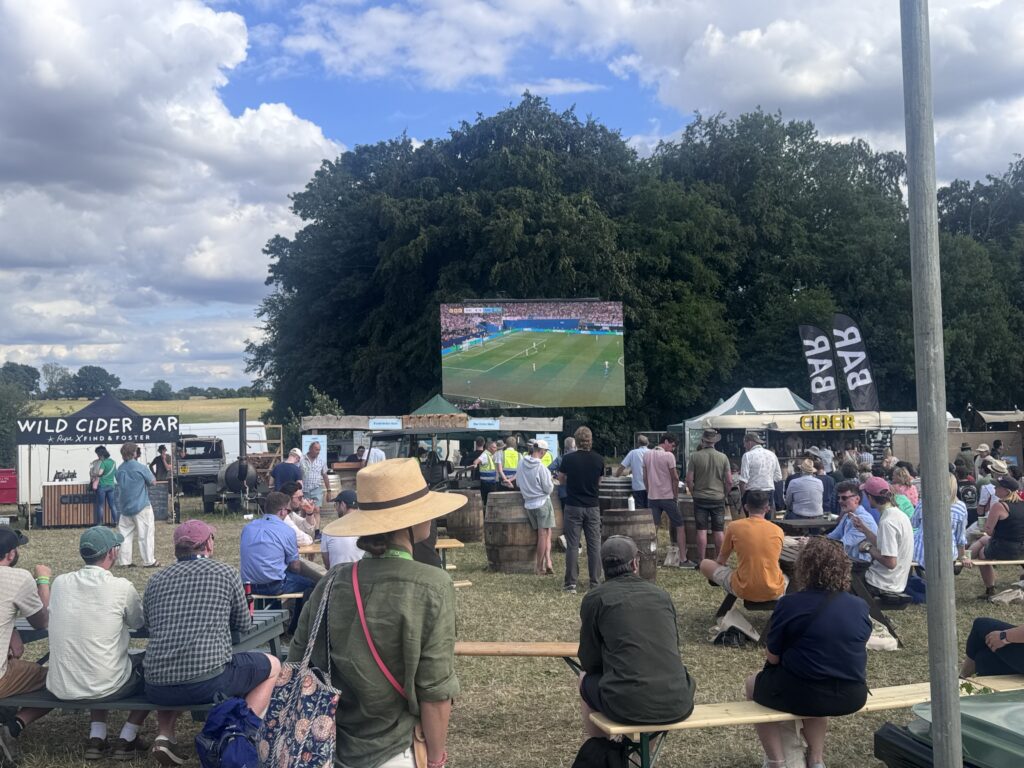
It seems pretty poor then that I only managed to make six of those sessions. But the rest of the time was spent exactly as it should be at Groundswell: catching up with readers, farmers, and industry contacts in the kind of unscheduled conversations that never make it into a programme but often matter more than the ones that do. On the first afternoon, watching England’s World Cup match on a big screen that Groundswell organiser Alex Cherry had shipped down from Manchester, with the food and bar area transformed into something closer to a village pub, the whole site was buzzing in a way that only a shared sporting moment can create. Then later that evening, Andy Cato’s DJ set in the Earthworms tent started at 10:30pm and kept the energy going well past midnight. Groundswell has always understood that food and farming is a community, and communities need to celebrate as well as deliberate.
The sessions we did cover ranged from the practical to the philosophical. The talks we missed were equally compelling: My Flour Mill Set Me Free, Only Art & Beaver Will Save Us!, Couples Therapy: Candid Stories from Farming Couples (waiting for our very own John Pawsey to write that one up), Ultra-Processed Food Systems – The Most Urgent Threat to Human and Planetary Health, and Anecdotal Science: The Evidence We Sense but Can’t Yet Measure were just a few of the sessions running in parallel to the ones we attended and I would have loved to have heard. The breadth of the programme is itself a statement: regenerative agriculture is no longer a niche conversation. It is a movement with enough depth to sustain two full days of simultaneous, substantive debate.
The sessions we covered shared a common thread. Whether it was the pulse panel arguing that farmers can grow the right crops but need a market willing to pay for them, Tim Parton and Lucy Williamson drawing direct lines between soil biology and human health, or the rainfall simulator demonstrating in real time why bare soil is a liability, the same message kept surfacing: the farming system as currently configured is not financially sustainable, not environmentally sustainable, and not delivering the quality of food that a healthy population needs.
Nowhere was this tension more sharply drawn than in the two data sessions. On the AHDB stand, the Farm Data Exchange was presented as a solution to farmer data duplication, but the underlying message was that environmental data will become a condition of supply, not a source of income. The following morning, a panel of investors and scientists argued the exact opposite: that farm data is on the verge of becoming highly valuable, that AI agents will soon shop on verified soil health scores rather than brand names, and that farmers who give their data away for free are making a serious strategic mistake.
The final session, on the cost of the regenerative transition, brought the economics back to earth. Over half of UK farming businesses currently fall below median household earnings. The Farming Roadmap 2050 offers a long-term vision, but the panel was clear that the detail of who funds the four-to-five-year transition lag remains unresolved. The organic sector has always answered this question with a conversion payment. The broader regenerative movement is still waiting for its equivalent.