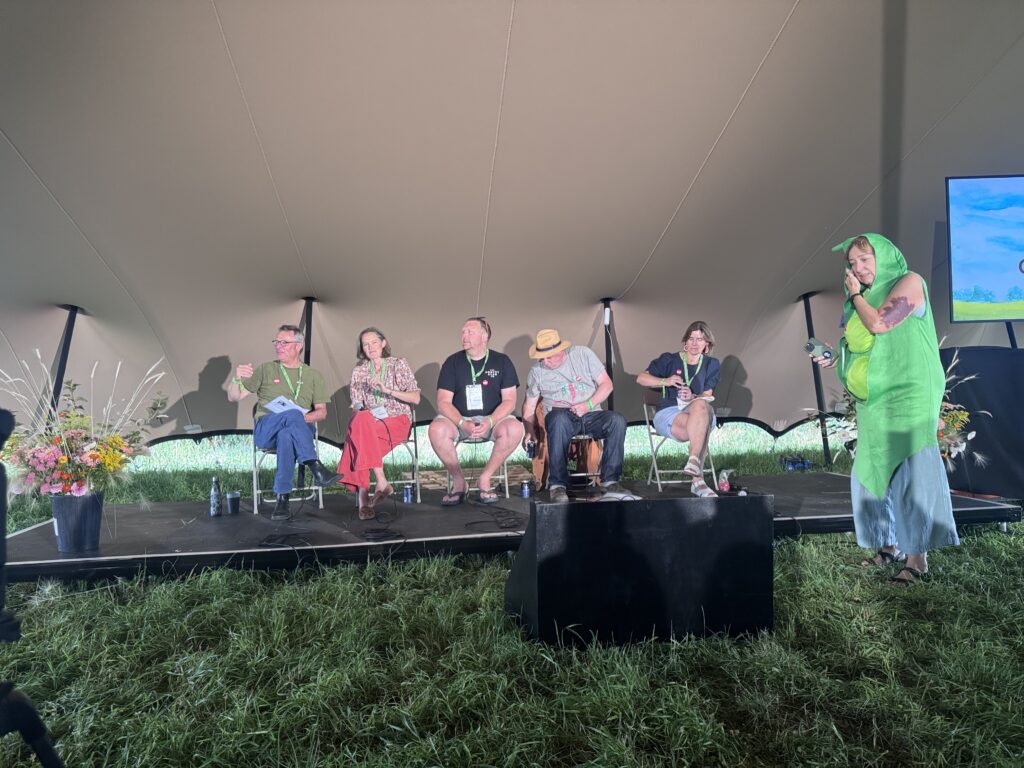
A session at Groundswell exploring the agricultural, nutritional and economic case for growing and eating more beans and pulses in the UK.
For decades, the conversation around UK agriculture has been dominated by wheat, barley and oilseed rape. But as the climate changes and the pressure mounts to reduce reliance on imported proteins and synthetic inputs, a quiet revolution is taking root. Beans and pulses, long relegated to the sidelines of British farming, are stepping into the spotlight.
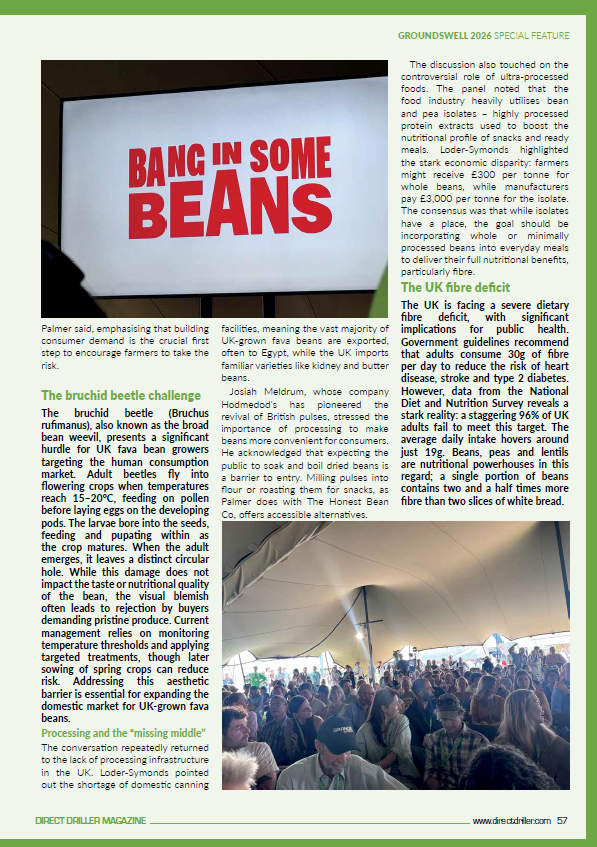
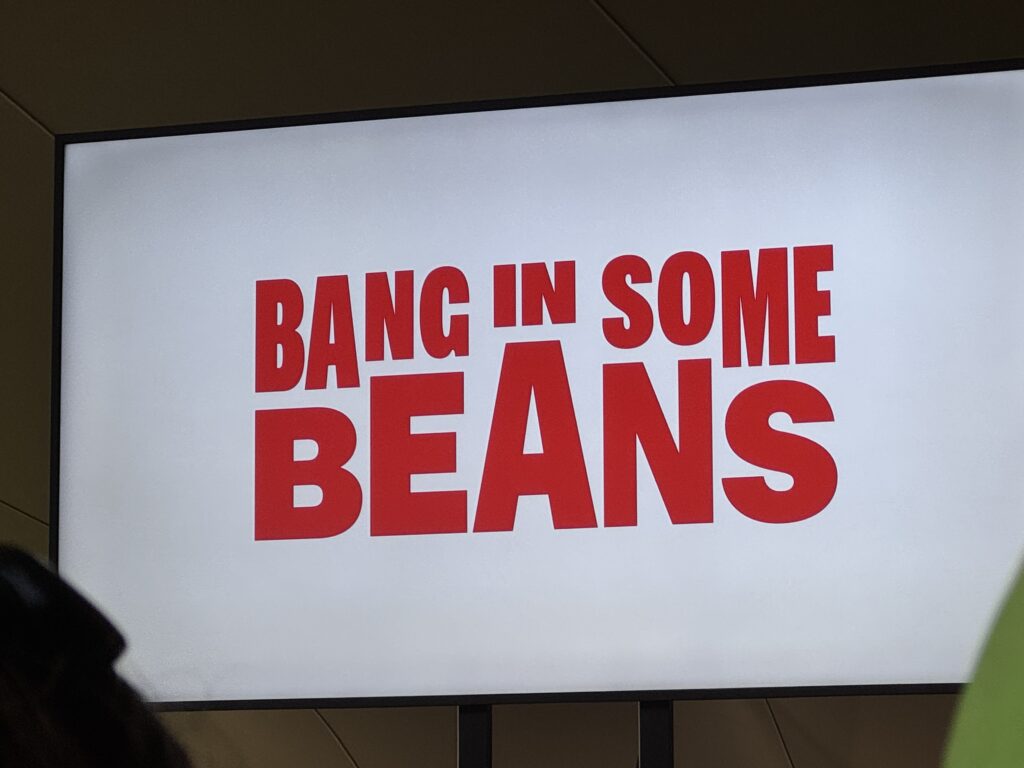
The agronomic case for growing pulses in regenerative systems is robust. They fix nitrogen, break disease cycles and offer a crucial low-input alternative to more demanding crops. Yet, as the recent Groundswell agricultural show highlighted, the conversation often veers away from agronomy and towards consumption. The reality is that we cannot simply “bang in some beans” without a market ready to buy them. The disconnect between what farmers can grow sustainably and what the public is willing to eat remains a significant hurdle.
This session at Groundswell explored the multifaceted challenge of unlocking the UK’s pulse potential. We begin our Groundswell summary with a write-up of a key panel discussion from the event, featuring leading voices from farming, food production and policy. Their insights underscore a central truth: to get more beans into our fields, we must first get more beans onto our plates or into our animals.
Banging the drum for British beans
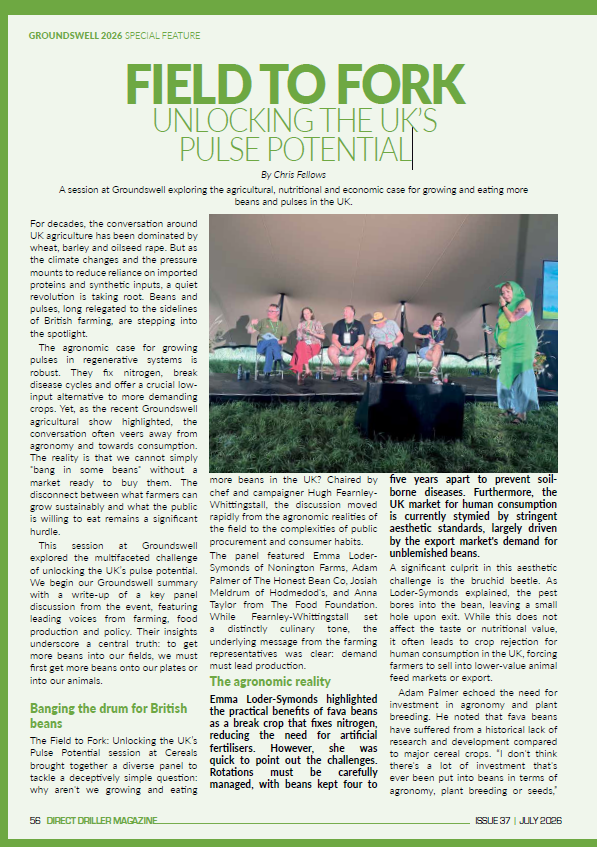
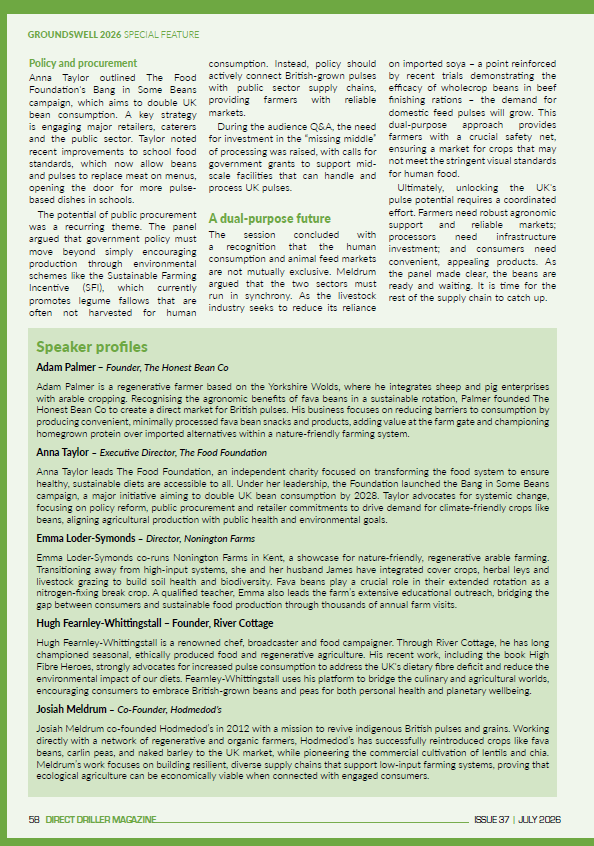
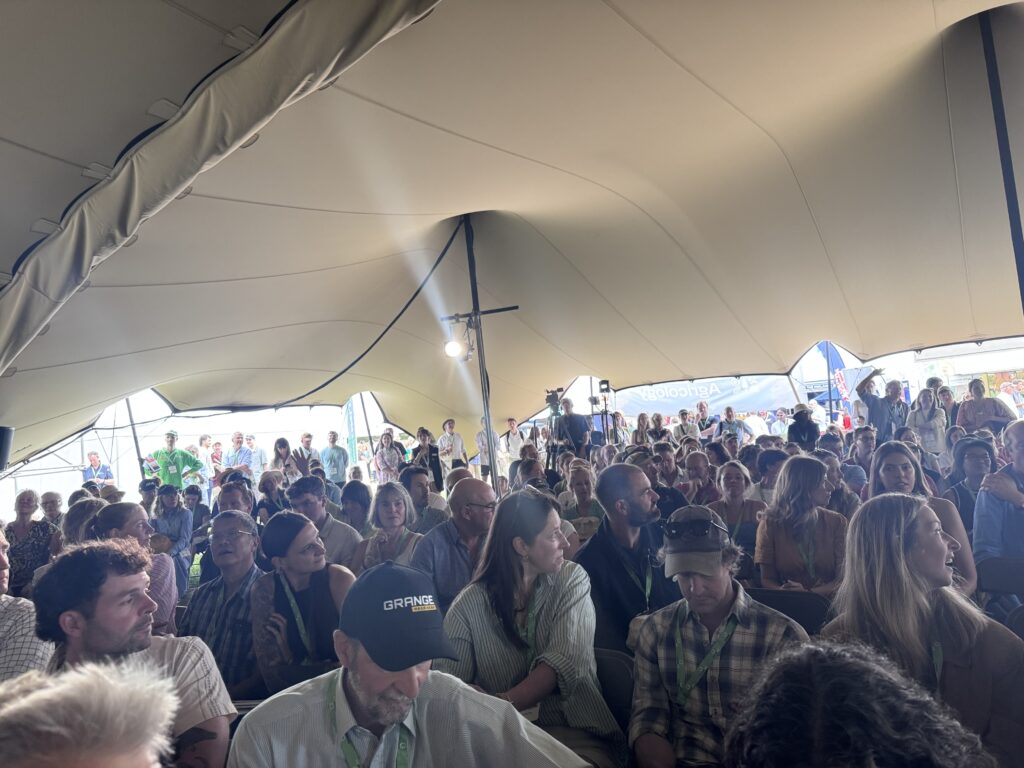
The Field to Fork: Unlocking the UK’s Pulse Potential session at Cereals brought together a diverse panel to tackle a deceptively simple question: why aren’t we growing and eating more beans in the UK? Chaired by chef and campaigner Hugh Fearnley-Whittingstall, the discussion moved rapidly from the agronomic realities of the field to the complexities of public procurement and consumer habits.
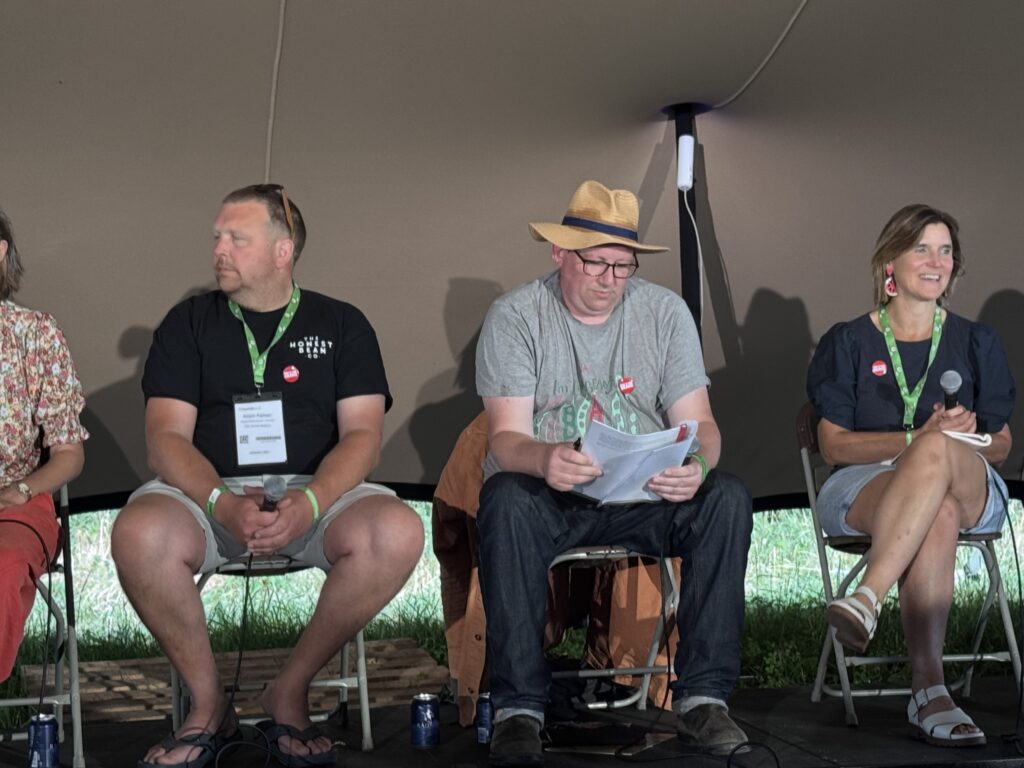
The panel featured Emma Loder-Symonds of Nonington Farms, Adam Palmer of The Honest Bean Co, Josiah Meldrum of Hodmedod’s, and Anna Taylor from The Food Foundation. While Fearnley-Whittingstall set a distinctly culinary tone, the underlying message from the farming representatives was clear: demand must lead production.
The agronomic reality
Emma Loder-Symonds highlighted the practical benefits of fava beans as a break crop that fixes nitrogen, reducing the need for artificial fertilisers. However, she was quick to point out the challenges. Rotations must be carefully managed, with beans kept four to five years apart to prevent soil-borne diseases. Furthermore, the UK market for human consumption is currently stymied by stringent aesthetic standards, largely driven by the export market’s demand for unblemished beans.
A significant culprit in this aesthetic challenge is the bruchid beetle. As Loder-Symonds explained, the pest bores into the bean, leaving a small hole upon exit. While this does not affect the taste or nutritional value, it often leads to crop rejection for human consumption in the UK, forcing farmers to sell into lower-value animal feed markets or export.
Adam Palmer echoed the need for investment in agronomy and plant breeding. He noted that fava beans have suffered from a historical lack of research and development compared to major cereal crops. “I don’t think there’s a lot of investment that’s ever been put into beans in terms of agronomy, plant breeding or seeds,” Palmer said, emphasising that building consumer demand is the crucial first step to encourage farmers to take the risk.
The bruchid beetle challenge
The bruchid beetle (Bruchus rufimanus), also known as the broad bean weevil, presents a significant hurdle for UK fava bean growers targeting the human consumption market. Adult beetles fly into flowering crops when temperatures reach 15–20°C, feeding on pollen before laying eggs on the developing pods. The larvae bore into the seeds, feeding and pupating within as the crop matures. When the adult emerges, it leaves a distinct circular hole. While this damage does not impact the taste or nutritional quality of the bean, the visual blemish often leads to rejection by buyers demanding pristine produce. Current management relies on monitoring temperature thresholds and applying targeted treatments, though later sowing of spring crops can reduce risk. Addressing this aesthetic barrier is essential for expanding the domestic market for UK-grown fava beans.
Processing and the “missing middle”
The conversation repeatedly returned to the lack of processing infrastructure in the UK. Loder-Symonds pointed out the shortage of domestic canning facilities, meaning the vast majority of UK-grown fava beans are exported, often to Egypt, while the UK imports familiar varieties like kidney and butter beans.
Josiah Meldrum, whose company Hodmedod’s has pioneered the revival of British pulses, stressed the importance of processing to make beans more convenient for consumers. He acknowledged that expecting the public to soak and boil dried beans is a barrier to entry. Milling pulses into flour or roasting them for snacks, as Palmer does with The Honest Bean Co, offers accessible alternatives.
The discussion also touched on the controversial role of ultra-processed foods. The panel noted that the food industry heavily utilises bean and pea isolates – highly processed protein extracts used to boost the nutritional profile of snacks and ready meals. Loder-Symonds highlighted the stark economic disparity: farmers might receive £300 per tonne for whole beans, while manufacturers pay £3,000 per tonne for the isolate. The consensus was that while isolates have a place, the goal should be incorporating whole or minimally processed beans into everyday meals to deliver their full nutritional benefits, particularly fibre.
The UK fibre deficit
The UK is facing a severe dietary fibre deficit, with significant implications for public health. Government guidelines recommend that adults consume 30g of fibre per day to reduce the risk of heart disease, stroke and type 2 diabetes. However, data from the National Diet and Nutrition Survey reveals a stark reality: a staggering 96% of UK adults fail to meet this target. The average daily intake hovers around just 19g. Beans, peas and lentils are nutritional powerhouses in this regard; a single portion of beans contains two and a half times more fibre than two slices of white bread.
Policy and procurement
Anna Taylor outlined The Food Foundation’s Bang in Some Beans campaign, which aims to double UK bean consumption. A key strategy is engaging major retailers, caterers and the public sector. Taylor noted recent improvements to school food standards, which now allow beans and pulses to replace meat on menus, opening the door for more pulse-based dishes in schools.
The potential of public procurement was a recurring theme. The panel argued that government policy must move beyond simply encouraging production through environmental schemes like the Sustainable Farming Incentive (SFI), which currently promotes legume fallows that are often not harvested for human consumption. Instead, policy should actively connect British-grown pulses with public sector supply chains, providing farmers with reliable markets.
During the audience Q&A, the need for investment in the “missing middle” of processing was raised, with calls for government grants to support mid-scale facilities that can handle and process UK pulses.
A dual-purpose future
The session concluded with a recognition that the human consumption and animal feed markets are not mutually exclusive. Meldrum argued that the two sectors must run in synchrony. As the livestock industry seeks to reduce its reliance on imported soya – a point reinforced by recent trials demonstrating the efficacy of wholecrop beans in beef finishing rations – the demand for domestic feed pulses will grow. This dual-purpose approach provides farmers with a crucial safety net, ensuring a market for crops that may not meet the stringent visual standards for human food.
Ultimately, unlocking the UK’s pulse potential requires a coordinated effort. Farmers need robust agronomic support and reliable markets; processors need infrastructure investment; and consumers need convenient, appealing products. As the panel made clear, the beans are ready and waiting. It is time for the rest of the supply chain to catch up.
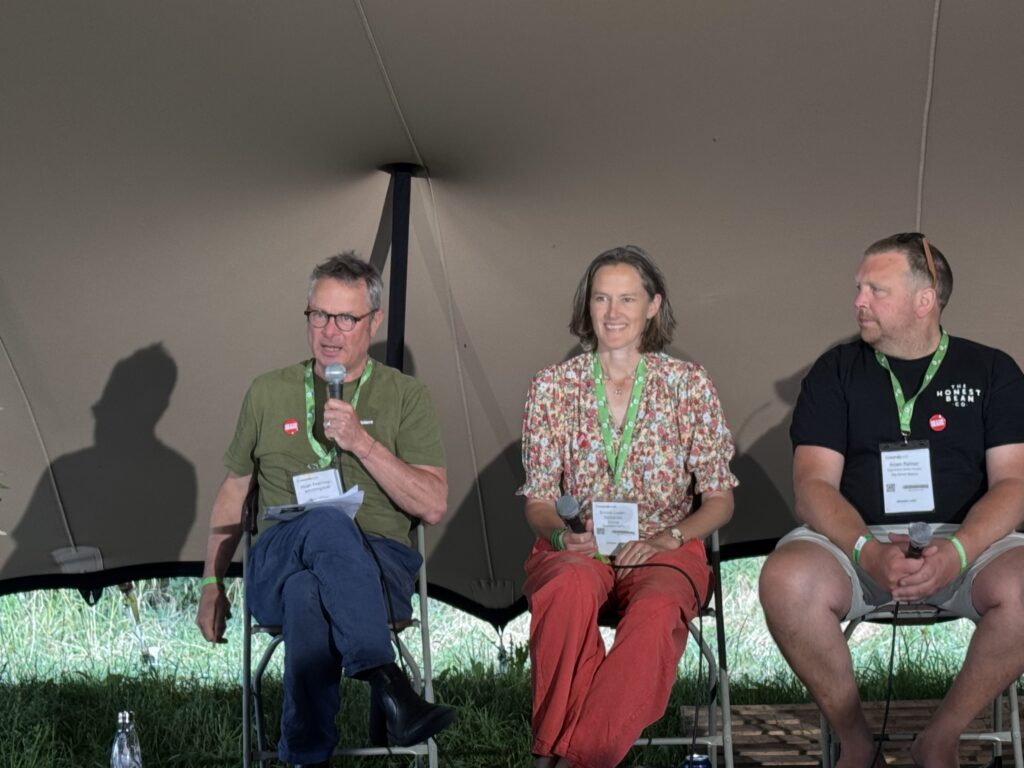
Speaker profiles
Adam Palmer – Founder, The Honest Bean Co
Adam Palmer is a regenerative farmer based on the Yorkshire Wolds, where he integrates sheep and pig enterprises with arable cropping. Recognising the agronomic benefits of fava beans in a sustainable rotation, Palmer founded The Honest Bean Co to create a direct market for British pulses. His business focuses on reducing barriers to consumption by producing convenient, minimally processed fava bean snacks and products, adding value at the farm gate and championing homegrown protein over imported alternatives within a nature-friendly farming system.
Anna Taylor – Executive Director, The Food Foundation
Anna Taylor leads The Food Foundation, an independent charity focused on transforming the food system to ensure healthy, sustainable diets are accessible to all. Under her leadership, the Foundation launched the Bang in Some Beans campaign, a major initiative aiming to double UK bean consumption by 2028. Taylor advocates for systemic change, focusing on policy reform, public procurement and retailer commitments to drive demand for climate-friendly crops like beans, aligning agricultural production with public health and environmental goals.
Emma Loder-Symonds – Director, Nonington Farms
Emma Loder-Symonds co-runs Nonington Farms in Kent, a showcase for nature-friendly, regenerative arable farming. Transitioning away from high-input systems, she and her husband James have integrated cover crops, herbal leys and livestock grazing to build soil health and biodiversity. Fava beans play a crucial role in their extended rotation as a nitrogen-fixing break crop. A qualified teacher, Emma also leads the farm’s extensive educational outreach, bridging the gap between consumers and sustainable food production through thousands of annual farm visits.
Hugh Fearnley-Whittingstall – Founder, River Cottage
Hugh Fearnley-Whittingstall is a renowned chef, broadcaster and food campaigner. Through River Cottage, he has long championed seasonal, ethically produced food and regenerative agriculture. His recent work, including the book High Fibre Heroes, strongly advocates for increased pulse consumption to address the UK’s dietary fibre deficit and reduce the environmental impact of our diets. Fearnley-Whittingstall uses his platform to bridge the culinary and agricultural worlds, encouraging consumers to embrace British-grown beans and peas for both personal health and planetary wellbeing.
Josiah Meldrum – Co-Founder, Hodmedod’s
Josiah Meldrum co-founded Hodmedod’s in 2012 with a mission to revive indigenous British pulses and grains. Working directly with a network of regenerative and organic farmers, Hodmedod’s has successfully reintroduced crops like fava beans, carlin peas, and naked barley to the UK market, while pioneering the commercial cultivation of lentils and chia. Meldrum’s work focuses on building resilient, diverse supply chains that support low-input farming systems, proving that ecological agriculture can be economically viable when connected with engaged consumers.